
Balancing professional responsibilities with breastfeeding goals is a daily reality for many working mothers. As you transition back to the office, finding a breast pump that fits seamlessly into your workday is essential. The Flow V8 has emerged as a popular option among wearable breast pumps, promising hands-free convenience and mobility. However, determining whether the Flow V8 is the right choice compared to other wearable pumps requires looking beyond marketing claims. There is no single “best” pump for every working mother; the ideal choice depends on your daily schedule, office layout, commute conditions, and personal anatomy. By evaluating key specifications—such as suction performance, battery logistics, and physical discretion—you can make an informed, condition-based decision that supports both your career and your breastfeeding journey.
Core Comparison Dimensions for Workplace Pumping
When comparing the Flow V8 against alternative wearable pumps, working mothers must establish clear criteria based on their specific workplace environments. Hands-free pumping during work hours requires a device that offers true mobility, allowing you to type, attend virtual meetings, or move around the office without being tethered to a wall outlet. To evaluate these devices objectively, you must look past generalized online reviews and focus on verifiable manufacturer specifications.
Reading technical specifications requires understanding how suction, battery capacity, and physical dimensions translate to real-world use. For instance, a pump’s physical profile determines how easily it fits inside your existing wardrobe, while its battery capacity dictates whether you can get through a standard eight-hour shift without searching for a charger. Additionally, you must verify the availability of flange sizing options and compatible silicone inserts. Proper flange fit is critical for both comfort and milk expression, and using an incorrect size can lead to pain, reduced output, or tissue damage.
Products mentioned in this guide
![[BEST SELLER] FLOW V8 Handsfree Electric Wearable Breast pump 180mL](https://img.lazcdn.com/g/p/d52157c2e436592cfddb2dd56f0d0eef.png_400x400q80.png_.webp)
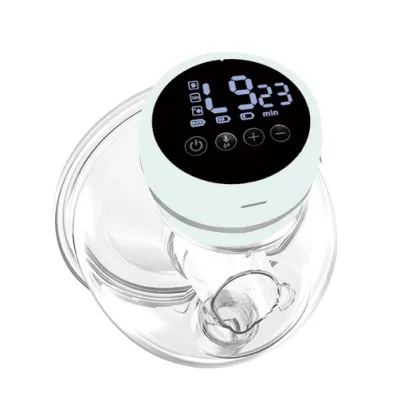
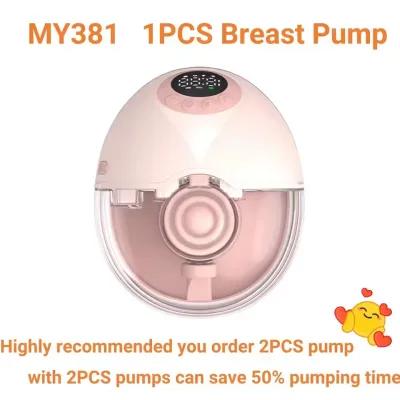
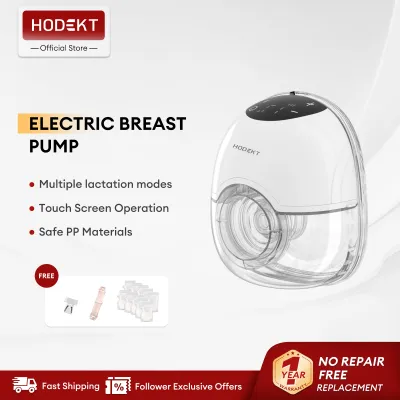
Prices are valid at publication and may change. Please refer to the product page for the latest price.
In tropical climates where high humidity and warm temperatures are common, the materials used in breast shields and pump parts also deserve close attention. Soft, food-grade silicone shields may feel more comfortable against warm skin than rigid plastic alternatives. Before purchasing any wearable pump, check the manufacturer’s documentation to confirm which parts are replaceable, how easily they can be sourced locally, and whether the materials are certified safe for food contact.
Evaluating Suction Strength and Milk Expression
Suction performance is a primary concern for mothers who need to express milk efficiently during short office breaks. When comparing the Flow V8 with other wearable models, start by checking the manufacturer’s stated maximum vacuum pressure, typically measured in kilopascals (kPa) or millimeters of mercury (mmHg). However, a higher maximum suction level does not automatically guarantee better milk expression. In fact, excessively high suction can cause pain and inhibit the let-down reflex, which actually reduces the volume of milk you can express.

A more reliable indicator of performance is the variety and adjustability of expression modes. Most modern wearable pumps, including the Flow V8, offer distinct phases, such as a rapid, shallow stimulation mode to trigger let-down, followed by a slower, deeper expression mode to draw out the milk. Verify whether the pump allows you to adjust cycle speeds and suction levels independently. This level of customization is crucial because it allows you to mimic your baby’s natural feeding rhythm, which varies throughout a single session and from day to day.
It is important to remember that actual milk output is highly subjective and depends on factors beyond motor strength. Your body’s response to a pump is influenced by stress levels, hydration, and how comfortable you feel in your pumping environment. Furthermore, a precise flange fit is the foundation of effective suction. If the flange is too large or too small, the vacuum seal will be compromised, leading to inefficient expression regardless of how powerful the pump’s motor is. Always measure your nipple diameter post-feed and consult the manufacturer’s sizing guide before assuming a pump will work for you.
Battery Life and Charging Logistics at the Office
For a working mother, battery reliability can make or break the pumping experience. When evaluating the Flow V8 and its competitors, compare the stated battery capacity, which is usually measured in milliampere-hours (mAh). However, rather than relying solely on the raw mAh rating, look for the manufacturer’s estimated number of pumping sessions per full charge. A pump that can reliably deliver four to five 20-minute sessions on a single charge is generally sufficient for a standard workday, including the commute.
The charging mechanism itself is another practical consideration for office use. Pumps that utilize standard USB-C ports offer significant convenience, as they can be charged using the same cables and adapters you use for your laptop or smartphone. This eliminates the need to carry proprietary charging bricks or docks in your daily bag. Furthermore, USB-C compatibility allows you to utilize portable power banks, which is incredibly useful if you need to pump during a long commute in traffic or if your office desk is far from a wall outlet.
Keep in mind that battery consumption is not uniform and will vary based on how you use the device. Running the pump at its maximum suction settings, utilizing multiple modes in a single session, or pumping for extended periods will drain the battery much faster than the manufacturer’s baseline estimates. If your daily routine requires multiple long sessions, it is wise to choose a pump with a robust battery or plan for quick top-up charges between tasks. Always verify if the pump can be used while charging, though most wearable models disable operation during charging for safety reasons.
Discretion, Noise Levels, and Under-Clothing Fit
Discretion is often the deciding factor for mothers who plan to pump at their desks or in shared office spaces. The physical profile of the pump—including its bulkiness, cup shape, and motor placement—determines how it sits inside a standard nursing or regular bra. Some wearable pumps feature integrated motors that sit flush within the cup, creating a smoother silhouette under professional attire, while others have top-mounted motors that may protrude more noticeably. You may need to adjust your wardrobe, opting for looser tops or structured blazers, to accommodate the extra volume.
Noise level is another critical aspect of discretion, especially during quiet office hours or phone calls. Check the manufacturer’s stated decibel (dB) rating, keeping in mind that real-world noise can be influenced by how securely the pump is held against your breast. A quiet pump should operate at a low hum that is easily masked by typical office background noise or air conditioning. If possible, seek verified user feedback regarding the pitch and volume of the motor, as some frequencies are more noticeable than others in a quiet room.
Finally, consider the risk of leaking during active movement. While wearable pumps are designed for hands-free use, they are not completely spill-proof during extreme bending or leaning. Check the pump’s design for secure sealing mechanisms, splash guards, or specialized membranes that prevent milk from backflowing into the motor or spilling out of the pour spout. If your job involves physical activity, walking between buildings, or leaning over a desk, a pump with a highly secure, closed-system design is essential to prevent embarrassing spills on your work clothes.
Decision Framework: Which Wearable Pump Fits Your Routine?
Choosing between the Flow V8 and alternative wearable breast pumps requires a realistic assessment of your daily routine and workplace facilities. The Flow V8 may be the ideal choice if its verified specifications—such as its specific suction modes, battery endurance, and flange compatibility—align with your physical needs and schedule. It is particularly suited for mothers who value a balance of reliable suction and straightforward controls, and who can easily accommodate its physical shape within their professional wardrobe.
On the other hand, alternative wearable pumps might be more appropriate if you have specific constraints that the Flow V8 does not address. For example, if you require an ultra-slim profile to wear under fitted clothing, or if your anatomy demands specialized silicone inserts that are not compatible with the Flow V8’s shield design, exploring other brands is advisable. Additionally, some mothers prefer pumps with smart connectivity features, such as mobile app tracking for milk volume and session history, which may vary across different models.
Before investing in any high-end wearable pump, it is highly beneficial to evaluate your physical workplace setup. Under the Expanded Breastfeeding Promotion Act in the Philippines, workplaces are mandated to provide lactation stations with necessary facilities, including refrigeration and electrical outlets. If your office offers a private, well-equipped lactation room, you might find that a traditional double-electric pump is a highly efficient and cost-effective option. Traditional pumps often offer superior suction customization and faster expression times, allowing you to use a wearable pump as a secondary option specifically for commutes or busy meeting days.
Frequently Asked Questions (FAQ)
Can I wash wearable breast pump parts in the office sink?
Yes, you can wash wearable breast pump parts in an office sink, but doing so requires strict adherence to hygiene protocols to protect your baby from harmful bacteria. Before washing, thoroughly clean the sink area and wash your hands with soap and water. Use a dedicated washbasin, bottle brush, and dish soap specifically for your pump parts; never let the parts touch the communal sink surface directly. After washing, rinse the parts thoroughly with clean water and place them on a clean paper towel or a dedicated drying rack to air dry in a clean space.
If your office lacks a clean, private sink area, alternative cleaning methods can be highly effective. Specialized quick-clean breast pump wipes are designed to remove milk residue without water, making them a convenient option for quick cleanups between sessions. Alternatively, if your office pantry has a microwave, you can use microwave steam sterilizing bags to sanitize parts quickly. If immediate cleaning is not possible due to a busy schedule, you can store the unwashed pump parts in a clean, sealed container or zip-top bag inside a cooler or a designated office refrigerator to slow bacterial growth until you get home.
Do wearable breast pumps work for exclusive pumping mothers?
Wearable breast pumps can be a valuable tool for exclusive pumping mothers, but they are generally recommended as secondary devices rather than primary pumps. Most lactation experts advise using a heavy-duty, hospital-grade, or traditional double-electric pump as your primary device, especially during the first few weeks postpartum when your milk supply is being established. Traditional pumps typically offer more robust motors, precise suction adjustments, and more consistent stimulation, which are crucial for building and maintaining a strong milk supply over the long term.
If you choose to use a wearable pump like the Flow V8 for exclusive pumping, it is essential to monitor your milk supply closely and consult a lactation consultant. They can help you assess whether the wearable pump is fully emptying your breasts, which is vital for preventing clogged ducts, mastitis, and drops in milk production. You must also pay close attention to flange fit and wear on the pump’s silicone parts, as exclusive use will cause valves and membranes to degrade much faster, requiring more frequent replacements to maintain optimal suction performance.
Community discussion
Share your experience or ask a question. Comments are reviewed before publication.