
Transitioning your child to a floor bed is a significant developmental step that requires careful planning. While a mat for sleeping for kids offers a flexible, low-profile sleep solution, its safety depends entirely on your child’s age, physical milestones, and the surrounding environment. In a nursery furnished with heavy items like a changing table and a baby chair, an unsecured floor mat can expose a mobile child to serious hazards, including furniture tip-overs, sharp-edge impacts, and entrapment.
For infants under 12 months, floor sleeping mats are not safe due to the high risk of Sudden Infant Death Syndrome (SIDS) and suffocation. For toddlers and older children who have achieved key physical milestones, a floor mat can be a safe and highly functional option, provided the room is meticulously baby-proofed. Before making this transition, consult your pediatrician to ensure your child is developmentally ready, and always verify that any sleep product you purchase complies with local safety standards and manufacturer age recommendations.
To safely implement a floor-bed setup, you must evaluate the entire nursery from a floor-level perspective. This means assessing the structural stability of your furniture, the physical properties of the sleeping mat, and the unique challenges of your local climate. By addressing these factors systematically, you can create a secure, independent sleep space that supports your child’s growth.
Products mentioned in this guide

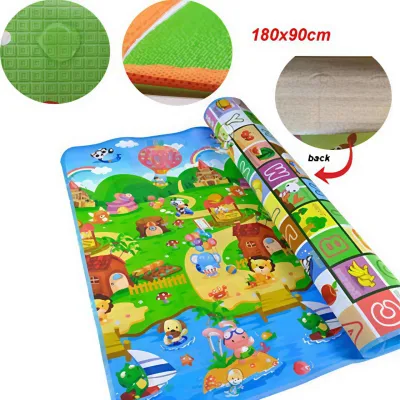

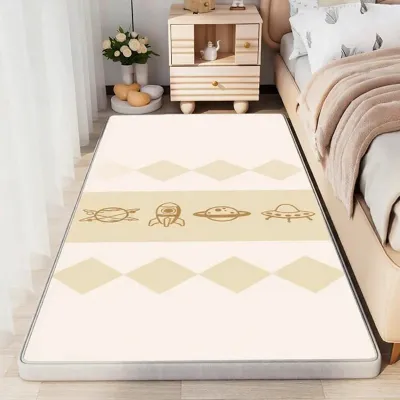

Prices are valid at publication and may change. Please refer to the product page for the latest price.
Age and Milestones: When Is a Floor Mat Safe?
Before introducing a mat for sleeping for kids, you must evaluate your child’s current developmental stage. For infants under one year of age, pediatric health organizations consistently recommend a firm, flat, and elevated sleep surface, such as a crib or bassinet, to minimize the risk of SIDS. Infants lack the motor skills and head control required to rescue themselves if they roll face-down onto a soft surface or become wedged between a mat and a wall. Consequently, floor mats should never be used for unsupervised infant sleep.
The appropriate window to transition to a floor sleeping mat typically begins during toddlerhood, often between 18 months and two years of age. At this stage, children have achieved critical physical milestones, such as the ability to roll over independently in both directions, sit up without support, crawl, and push themselves away from soft objects. These physical capabilities significantly reduce the risk of accidental suffocation or physical entrapment during sleep.
However, transitioning to a floor mat introduces a major behavioral shift: your child is no longer confined by crib rails. Once a toddler realizes they can get up independently, they will explore the room, often in complete darkness or semi-darkness. This means you can no longer view the sleep space as merely the mattress itself; instead, the entire nursery must be treated as a fully secured, enclosed sleep zone where every accessible object is a potential hazard.
Supervision requirements also change during this transition. While a floor bed encourages independence, caregivers must remain vigilant, especially during the initial weeks of the transition. Monitor how your child interacts with the room layout during nap times, and be prepared to adjust the room configuration if you observe your child attempting to climb furniture or access restricted areas.
Furniture Risks: Securing Changing Tables and Chairs
Placing a mat for sleeping for kids in a room with standard nursery furniture introduces distinct physical hazards. The most severe risk is a furniture tip-over. Toddlers naturally seek to climb, and a heavy changing table, dresser, or baby high chair can easily topple if a child pulls on a drawer or climbs the frame. To mitigate this danger, you must anchor all heavy furniture securely to the wall studs using manufacturer-approved anti-tip straps or brackets. Verify the stability of these anchors regularly by applying gentle pressure to ensure they have not loosened over time.

Hard edges and impact injuries represent another common hazard in a floor-bed nursery. When a child sleeps at floor level, they are physically closer to the sharp wooden or plastic legs of changing tables and baby chairs. If your child rolls off the mat during the night or stumbles while waking up disoriented, they can easily strike these hard surfaces. Consider applying high-density foam edge guards to all sharp corners and low-lying furniture edges, or temporarily relocate non-essential hard furniture, such as heavy wooden rocking chairs, to another room.
Entrapment in narrow gaps is a critical safety hazard that is often overlooked. If you place a sleeping mat directly next to a changing table or a heavy baby chair, a small gap is created. A rolling child can easily slide into this space and become trapped between the mattress and the heavy furniture, leading to positional asphyxiation. To prevent this, maintain a clear safety zone of at least 2 to 3 feet (60 to 90 centimeters) around the entire perimeter of the sleeping mat, or ensure the mat fits absolutely flush against a flat wall with zero gap.
Additionally, consider the items stored on or around your changing table. Diaper creams, sanitizers, wipes, and small diaper pins are highly toxic or present choking hazards. Because a child on a floor mat can easily wander over to the changing table, all baby care supplies must be stored in high cabinets or secured drawers that are completely inaccessible to a toddler standing on the floor.
Mat Safety: Firmness, Fit, and Humidity Control
When choosing a mat for sleeping for kids, material firmness is the single most critical safety factor. The mat must be firm enough that it does not conform to your child’s face if they roll over. Avoid soft, plush play mats, thick memory foam pads, or adult mattress toppers, as these materials pose a severe suffocation risk. To verify suitability, press your hand firmly onto the mat; if your hand leaves a deep, lasting impression, the material is too soft for safe sleep. Always check the manufacturer’s labeling to confirm the product is explicitly rated for sleeping and matches your child’s age and weight.
The physical dimensions and placement of the mat within the nursery require careful measurement. If you plan to place the mat in a corner, it must fit tightly against the walls with absolutely no gaps where a child’s limb, torso, or head could become wedged. If a perfect fit cannot be achieved, the safest alternative is to place the mat in the center of the room, far away from walls, electrical outlets, and furniture legs. Ensure the mat has a non-slip backing to prevent it from sliding across the floor when your child steps on or off it.
In the tropical climate of the Philippines, high humidity levels introduce unique environmental risks to floor-level sleeping arrangements. When a mat is placed directly on a tile or wooden floor, body heat and ambient moisture can trap condensation underneath the mattress. This damp environment promotes the rapid growth of mold, mildew, and dust mites, which can trigger respiratory issues and allergies in young children. To prevent this, select a sleeping mat made from highly breathable, hypoallergenic materials.
Maintaining a hygienic floor-bed environment requires a strict cleaning and airing routine. Lift the sleeping mat daily and prop it against a wall to allow both the underside of the mat and the floor surface to dry completely. If possible, use a low-profile, slatted wooden bed base designed specifically for floor beds; this elevates the mat slightly to facilitate continuous airflow while keeping the sleep surface safely close to the floor. Regularly wash the removable mat cover in hot water according to the manufacturer’s care instructions, and vacuum the floor beneath the mat daily to eliminate dust accumulation.
Nursery Proofing: Creating a Safe Free-Roam Zone
Transitioning to a floor bed means your child has unrestricted access to the entire nursery. To ensure their safety, you must perform a comprehensive baby-proofing sweep of the room. Begin by addressing all electrical hazards. Cover every unused electrical outlet with secure, slide-to-lock outlet plates that toddlers cannot easily remove. Keep all electrical cords from baby monitors, white noise machines, and lamps completely out of reach, utilizing cord covers or routing them behind heavy, anchored furniture where your child cannot pull on them.
Window safety is another critical area of concern. Ensure that all window blind cords are completely cordless or secured with tension devices high out of your child’s reach to prevent strangulation. If the nursery windows are low enough for a toddler to reach, install heavy-duty window guards or window stops that prevent the window from opening more than 4 inches (10 centimeters). Keep the sleeping mat positioned far away from windows to prevent your child from using the bed as a launching pad to climb onto a windowsill.
Small objects and choking hazards must be meticulously cleared from the floor and lower shelves daily. This includes small toy parts, coins, hair ties, and decorative items. Inspect the nursery floor before bedtime to ensure no hazardous items have been left behind. If you keep books or toys in the room, store them on low, open shelves that are securely anchored to the wall, and ensure the toys themselves are age-appropriate and free of small, detachable parts.
Finally, secure the exit of the nursery to manage your child’s movements at night. Installing a sturdy, hardware-mounted safety gate at the nursery doorway is highly recommended. This allows you to keep the bedroom door open for ventilation and airflow—which is especially important in warm, humid climates—while safely preventing your child from wandering into high-risk areas of the home, such as the kitchen, bathroom, or stairways. Pair this physical barrier with a reliable video baby monitor to maintain continuous visual and auditory supervision throughout the night.
Frequently Asked Questions (FAQ)
Can I use a regular adult mattress on the floor instead of a kids' mat?
Using a standard adult mattress on the floor for a young child is generally not recommended. Adult mattresses are typically designed with comfort layers that are far too soft for toddlers, increasing the risk of suffocation if the child sleeps face-down. Additionally, adult mattresses are much thicker than dedicated kids’ sleeping mats, creating a taller edge. If a toddler rolls off a thick adult mattress, the drop to a hard floor is more likely to cause injury. Furthermore, the large dimensions of an adult mattress make it more difficult to maintain safe clearance zones around nursery furniture like changing tables and baby chairs.
How do I prevent mold on a floor sleeping mat in a humid climate?
To prevent mold and mildew growth on a floor mat in a humid climate, you must ensure consistent airflow beneath the mattress. Avoid placing the mat directly on a cold tile or concrete floor, as temperature differences maximize condensation. Instead, place a highly breathable, woven rug or a low-profile, slatted wooden base under the mat to elevate it slightly. Make it a daily habit to lift the mat and air it out in a well-ventilated area, preferably near an open window or in a room with an active dehumidifier or air conditioner. Always wash the mattress cover regularly according to the manufacturer’s care instructions and ensure it is completely dry before putting it back on the mat.
Is it safe to leave toys on the floor mat while the child sleeps?
No, you should never leave toys, stuffed animals, pillows, or loose blankets on the floor mat while your child is sleeping. Just like a traditional crib, a floor sleeping surface must remain completely clear of clutter to prevent accidental suffocation, choking, or strangulation. Soft toys and large stuffed animals can easily cover a child’s face during sleep, while hard plastic toys present injury risks if rolled upon. Additionally, a pile of toys on or near the mat can tempt your child to play instead of sleeping, or serve as stepping stones that help them climb onto nearby furniture like changing tables or baby chairs. Keep all toys in designated storage bins away from the sleeping area during bedtime.
Community discussion
Share your experience or ask a question. Comments are reviewed before publication.