
Selecting the right Bebear baby carrier depends entirely on your baby’s current developmental milestones—specifically head control, core strength, and weight—rather than age alone. For newborns, a structured carrier with excellent neck support and a narrow seat is essential. As they reach 4 to 6 months and gain head control, a standard ergonomic carrier with adjustable seat widths is ideal. For toddlers over 12 months, a Bebear hip seat carrier offers the necessary structure to distribute their heavier weight comfortably.
Choosing the right carrier requires understanding how baby carrying affects your child’s developing skeletal system and your own physical comfort. Let’s explore these foundational aspects.
Understanding Your Baby's Developmental and Ergonomic Needs
When carrying a baby, ergonomics are not just about comfort; they are critical for healthy physiological development. A baby’s skeletal system is highly malleable during the first year of life. Misalignment or prolonged pressure on developing joints can lead to long-term issues, making proper positioning the most important factor when selecting and adjusting your carrier.
Products mentioned in this guide
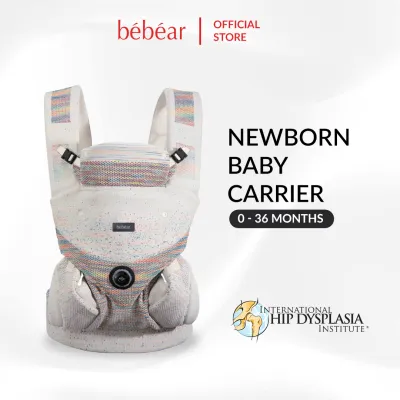
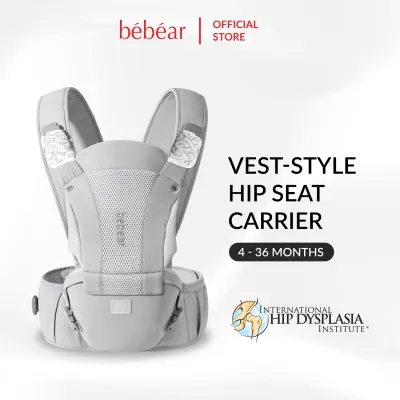
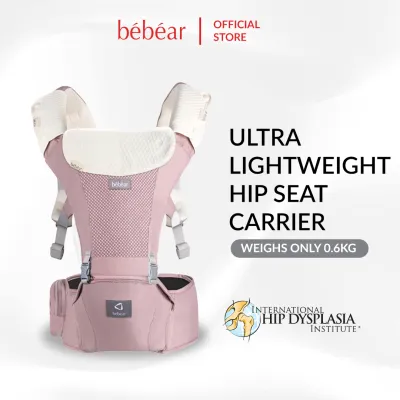
Prices are valid at publication and may change. Please refer to the product page for the latest price.
The Critical Importance of the M-Position
The “M-position”—often referred to as the froggy leg position—is the gold standard for healthy hip joint development. In this position, the baby’s thighs are spread around the caregiver’s torso, and the hips are bent so that the knees are slightly higher than the bottom. This alignment ensures that the head of the femur sits securely in the center of the hip socket, minimizing the risk of hip dysplasia.
- Why it matters: Forcing a baby's legs into a straight, dangling position can pull the thigh bones out of their sockets, leading to abnormal joint wear or dislocation.
- What to look for: A carrier base that supports the baby's thighs from knee to knee, preventing the legs from hanging straight down.
Spinal Support and Neck Control
Newborns are born with a C-shaped spine, which gradually develops the adult S-curve as they learn to hold up their heads, sit, and walk. A carrier must support this natural C-curve rather than forcing the spine into a completely straight line. Additionally, because newborns lack the muscle strength to support their heavy heads, a carrier must provide firm, adjustable neck support to keep their heads stable and prevent their chins from slumping onto their chests, which can compromise their airways.
Caregiver Center of Gravity and Weight Distribution
As your baby grows, their center of gravity shifts outward, which naturally changes how their weight affects your body. Carrying a heavier baby without adequate support can cause you to arch your lower back or round your shoulders, leading to chronic strain. A well-designed carrier distributes the child’s weight evenly across your shoulders, upper back, and hips, utilizing wide, padded straps and a supportive waistband to transfer the load to your pelvic bones rather than your lumbar spine.
Matching Bebear Carrier Categories to Growth Stages
Bebear offers a range of carrier designs tailored to different stages of physical development. Understanding how these categories align with your baby’s growth ensures you select a model that provides the correct level of support and safety.

Newborn to 4 Months: Prioritizing Neck Support and Snug Fit
During the first four months, your baby is in the “fourth trimester,” transitioning to life outside the womb. They require a snug, secure environment that mimics the feeling of being held closely while protecting their fragile neck and spine.
- Ergonomic Design: At this stage, you need a structured carrier that features an adjustable, narrow-seat design or is compatible with an infant insert. This ensures the carrier does not force the baby's legs too far apart while still maintaining the M-position. The back panel must be soft yet supportive enough to hold the natural C-curve of their spine.
- Weight Specifications: Always check the manufacturer's official documentation for minimum weight requirements before placing a newborn in a carrier. Most standard models specify a minimum weight of 3.2 kg to 3.5 kg. If your baby is premature or has a low birth weight, consult your pediatrician before using any carrier.
- Climate Considerations: In the tropical, humid climate of the Philippines, keeping your newborn cool is a major priority. Heavy, multi-layered fabrics can trap heat, leading to heat rash or elevated body temperatures. Look for carriers that utilize breathable, lightweight mesh panels to promote airflow and keep both you and your baby comfortable during outdoor walks or visits to local shopping centers.
4 to 12 Months: Supporting Active Exploration and Growing Weight
Between 4 and 12 months, babies undergo rapid physical changes. They develop strong head and neck control, begin to sit with support, and become highly curious about their surroundings. Their weight also increases significantly, demanding more robust support from the carrier.
- Adjustable Seating: As your baby's legs grow longer, the carrier's seat base must be widened to ensure support still extends from knee to knee. Standard structured Bebear carriers with adjustable seat widths are ideal for this phase, allowing you to widen the seat as your baby grows.
- Caregiver Comfort: With the baby's increasing weight, you will need thicker, padded shoulder straps and a wide, structured waistband. These features help distribute the weight across your hips, preventing shoulder fatigue and lower back pain during extended carrying sessions.
- Carrying Positions: This stage is when many parents transition to outward-facing or back-carrying positions. While outward-facing allows your baby to satisfy their curiosity, it should only be used once they have full, consistent head and neck control (typically around 5 to 6 months). Always verify if your specific Bebear model is designed to support outward-facing and back-carrying modes, and check the minimum weight limits for each position.
12 Months and Beyond: Toddler Comfort and Hip Seat Options
Once your baby reaches toddlerhood, they are likely walking or crawling actively, but they will still tire quickly and want to be carried. This “up-and-down” phase can be physically taxing for caregivers.
- The Hip Seat Solution: Bebear hip seat carriers are specifically designed for older babies and toddlers. They feature a firm, wedge-shaped seat base that attaches around the caregiver's waist. The toddler sits directly on this platform, which effectively shifts their weight off your upper back and shoulders and onto your hips.
- Developmental Readiness: Hip seats are not suitable for newborns or young infants who cannot sit unassisted. Because the hip seat does not provide the same snug, wrapping support as a standard structured carrier, it should only be used once the child has strong core control and spinal stability (typically 6 months or older, but highly recommended for 12 months and beyond).
- Weight Limits: Toddlers grow quickly, so it is essential to check the maximum weight capacity printed on your Bebear carrier's product label. Many hip seat models are rated to support up to 15 kg or 20 kg, but exceeding these limits can compromise the structural integrity of the carrier and cause physical discomfort for the caregiver.
Essential Specifications to Verify Before Purchase
When shopping for a Bebear carrier on e-commerce platforms or at local baby boutiques, avoid relying solely on age recommendations. Instead, use this practical checklist to verify the specifications of individual models:
- Weight and Age Limits: Always prioritize weight thresholds over age guidelines. A baby's weight is a much more accurate indicator of whether they fit safely within a carrier's structural limits. Look for the exact minimum and maximum weight ratings in the product documentation.
- Seat Adjustability: Verify how the seat width is adjusted. High-quality models typically feature Velcro tabs, snaps, or zipper systems under the baby's seat that allow you to narrow the base for infants and widen it for older babies, ensuring the M-position is maintained at every stage.
- Safety Certifications: Look for ergonomic approvals or classifications from recognized pediatric or orthopedic organizations on the product packaging or official description. These certifications indicate that the carrier has been evaluated for hip health and safety, though you should always verify current listings as standards can change.
- Material and Care: In a warm, humid environment, your carrier will inevitably accumulate sweat, drool, and spit-up. Check the care label to ensure the carrier is machine-washable. Models featuring 3D moisture-wicking mesh or removable fabric panels that reveal breathable mesh underneath are highly practical for maintaining hygiene and comfort.
Safe Usage and Comfort Guidelines for Caregivers
Regardless of which Bebear carrier model you choose, adhering to proper safety and usage guidelines is paramount to protect your baby and prevent physical strain on your own body.
The TICKS Safety Rules
This internationally recognized acronym serves as a quick checklist every time you secure your baby in a carrier:
- T – Tight: The carrier should be adjusted snugly so that your baby is held close to your body. Loose fabric can allow the baby to slump, which can restrict their breathing.
- I – In view at all times: You should always be able to see your baby's face simply by looking down. Ensure no fabric, hoods, or clothing covers their nose and mouth.
- C – Close enough to kiss: Your baby's head should be positioned high up on your chest. You should be able to easily kiss the top of their head by tipping your head forward.
- K – Keep chin off the chest: Ensure there is always a space of at least one finger-width under your baby's chin. If their chin is pressed against their chest, it can close off their airway.
- S – Supported back: The baby's back should be supported in its natural curve. Their tummy and chest should be resting gently against your body, preventing them from slumping.
Caregiver Ergonomics and Positioning
To protect your back, always buckle the carrier’s waistband high on your natural waist, rather than low on your hips. Fastening the waistband too low causes the baby’s weight to pull your pelvis forward, leading to lower back strain. Once the waistband is secure, adjust the shoulder straps evenly so that the baby’s weight is balanced across both shoulders. The back strap (or chest clip) should sit comfortably across your mid-back, level with your armpits, to keep the shoulder straps from slipping.
Monitoring for Overheating
In the tropical heat of the Philippines, overheating is a constant risk. When carrying your baby, your body heat combines with the carrier’s fabric, acting as an extra layer of insulation. Monitor your baby closely for signs of heat distress, such as sweating, damp hair, flushed cheeks, or rapid, shallow breathing. Dress your baby in a single layer of lightweight, breathable cotton. Avoid carrying your baby outdoors during the hottest hours of the day, and take regular breaks in air-conditioned or well-ventilated spaces to cool down.
When to Stop and Consult
If your baby shows signs of persistent discomfort, restricted breathing, or unusual fussiness while in the carrier, remove them immediately. Additionally, if you experience persistent shoulder, neck, or lower back pain that does not resolve after adjusting the carrier’s straps, discontinue use. Consult a pediatrician or a certified babywearing consultant to ensure the carrier is suitable for your baby’s development and that you are using the correct fit.
Frequently Asked Questions (FAQ)
Can I use a Bebear hip seat carrier for a newborn?
No, standard hip seat carriers are not safe for newborns. Newborns lack the core strength and spinal stability required to sit on a hip seat, and they do not have the head control to maintain an open airway without complete, snug torso support. For newborns, use a structured carrier designed specifically for infants, or a model equipped with a suitable infant insert, ensuring all minimum weight requirements are met.
How do I prevent my baby from overheating in a carrier?
To prevent overheating in the warm Philippine climate, dress your baby in a single layer of lightweight, breathable cotton clothing. Choose a Bebear carrier model that features 3D mesh panels or roll-up ventilation windows to maximize airflow. Avoid carrying your baby outdoors during the hottest parts of the day, keep them well-hydrated, and take regular breaks in air-conditioned or well-ventilated environments.
Community discussion
Share your experience or ask a question. Comments are reviewed before publication.