
Whether Unilove Vegan Cream’s plant-based ingredients are safe for newborns depends on a careful inspection of its specific ingredient list, the absence of common allergens, and how your baby’s skin reacts during a controlled patch test. While plant-based and vegan formulas avoid animal-derived ingredients, newborn skin is exceptionally thin, highly permeable, and prone to irritation from botanical extracts, essential oils, and synthetic additives. To ensure safety, parents must verify the exact formulation on the packaging, look for fragrance-free labels, and consult a pediatrician before introducing new topical products to a neonate’s delicate skin barrier.
In the tropical climate of the Philippines, high humidity and heat can also influence how a baby’s skin reacts to topical creams. Heavy formulations can trap sweat and sebum, potentially leading to heat rash or clogged pores. Therefore, understanding the balance of ingredients in any baby cream is crucial for maintaining healthy skin without causing secondary irritation.
Understanding "Vegan" and "Plant-Based" Labels in Baby Skincare
When shopping for baby skincare, parents frequently encounter terms like “vegan” and “plant-based” on product labels. A vegan label simply guarantees that the formulation contains no animal-derived ingredients, such as lanolin, beeswax, or animal fats. While this aligns with ethical preferences, a vegan designation does not automatically mean a product is hypoallergenic, organic, or safe for a newborn’s highly sensitive skin.
Products mentioned in this guide
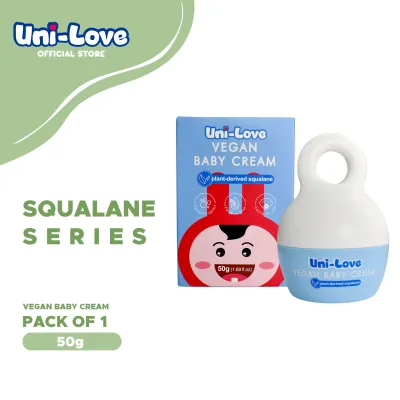
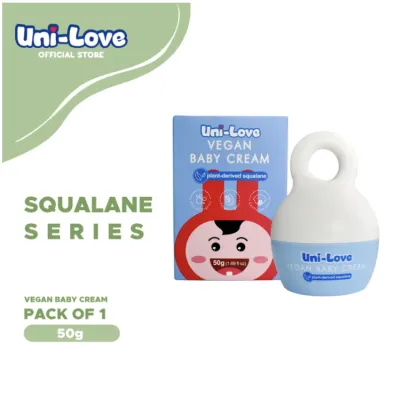
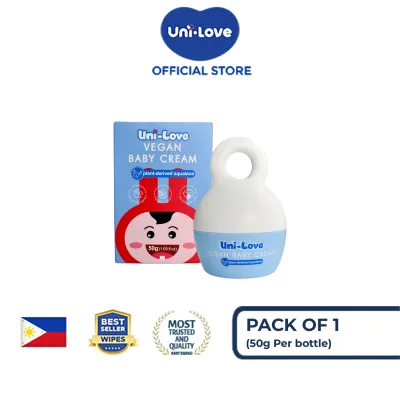





Prices are valid at publication and may change. Please refer to the product page for the latest price.
Many plant-based baby creams utilize botanical emollients like shea butter, coconut oil, or sunflower seed oil to help lock in moisture. These ingredients are often chosen to mimic the natural lipids found in the skin barrier. However, even the most natural plant oils can sometimes trigger contact sensitivity or clog delicate pores if the formulation is too heavy for tropical humidity.
Furthermore, a vegan cream is not necessarily free from synthetic chemicals. Manufacturers must still use preservatives, emulsifiers, and stabilizers to prevent bacterial growth and keep the cream from separating in warm climates. Parents must look beyond the “vegan” claim to verify that these supporting ingredients are mild, non-irritating, and free from harsh synthetic fragrances.
It is also important to distinguish between “vegan” and “pediatrician-tested” or “hypoallergenic.” A product can be entirely plant-based but still contain natural allergens like nut oils or soy derivatives. Hypoallergenic claims indicate that the product has been formulated to minimize the risk of allergic reactions, which is a separate standard from being animal-free.
How to Read and Evaluate the Unilove Vegan Cream Ingredient List
To truly evaluate whether Unilove Vegan Cream is suitable for your newborn, you must examine the physical packaging for the International Nomenclature of Cosmetic Ingredients (INCI) list. This list is typically printed on the back or side of the tube or outer box. Ingredients are listed in descending order of concentration, meaning the components at the top of the list make up the majority of the product.

When reviewing the top ingredients, look for gentle, hydrating bases such as water (aqua) and mild plant-derived lipids. Soothing botanical extracts, if present, should ideally be positioned lower on the list to minimize the risk of sensitization. High concentrations of active botanical extracts are rarely necessary for basic newborn skin maintenance.
Carefully scan the entire list for potential red flags, such as essential oils (like lavender, eucalyptus, or tea tree oil) and synthetic fragrances, which are common triggers for allergic contact dermatitis in infants. Additionally, check for harsh preservatives like parabens, formaldehyde releasers, or high concentrations of alcohol that can dry out a baby’s skin.
Before purchasing or applying the cream, locate the batch code, manufacturing date, and expiration date on the crimp of the tube or the bottom of the packaging. Ensure the product is well within its shelf life, and note the manufacturer’s contact details or distributor information in case you need to report an adverse reaction or verify specific ingredient sourcing.
Safety Considerations for Newborn Skin and Botanical Formulations
A newborn’s skin barrier is structurally different from an adult’s, as it is up to thirty percent thinner and still developing its protective functions. This structural immaturity results in a much higher rate of transepidermal water loss and increased permeability. Consequently, whatever you apply to your baby’s skin is absorbed much more rapidly and deeply into their system.
Because of this high absorption rate, botanical ingredients require extra scrutiny. The common assumption that “natural” equates to “safe” is a misconception in pediatric dermatology. Natural plant extracts contain complex chemical compounds that can act as potent allergens or irritants, especially when exposed to heat and high humidity.
For the first few months of a baby’s life, pediatric dermatologists generally recommend sticking to fragrance-free and essential oil-free formulations. Even natural fragrances derived from flowers or fruits can cause respiratory irritation or skin sensitization. Keeping the skincare routine as simple and chemically inert as possible helps protect the developing skin barrier from unnecessary stress.
In tropical environments like the Philippines, sweat retention is a common issue for infants. Applying thick, occlusive plant oils can block sweat ducts, leading to miliaria, commonly known as heat rash or bungang-araw. Lightweight, non-comedogenic formulations are generally preferred to allow the skin to breathe while maintaining hydration.
Step-by-Step Patch Testing and Application Guidelines
Before applying Unilove Vegan Cream or any new skincare product to your newborn’s entire body, performing a localized patch test is an essential safety step. Start by washing your hands thoroughly with mild soap and water. Apply a tiny, pea-sized amount of the cream to a small, clean area of your baby’s skin, such as the inner forearm or the side of the neck.
Leave the cream on the test area and monitor the spot closely over the next twenty-four to forty-eight hours. Keep the area dry and avoid applying other lotions or oils to that specific spot during the testing period. Observe the baby’s behavior as well, as discomfort or itching might make them fussy even before physical signs appear.
Watch for any visible signs of localized irritation, which may include redness, tiny bumps, swelling, dry peeling patches, or warmth to the touch. If you notice any of these reactions, or if your baby shows signs of discomfort, immediately discontinue use. Wash the area gently with cool water and a mild, soap-free cleanser to remove any remaining residue.
If no reaction occurs after forty-eight hours, you can begin applying the cream to larger areas of the body, but continue to monitor the skin. Apply the cream in thin, even layers rather than slathering it on thickly. This is especially important in warm, humid weather to prevent the product from trapping heat and moisture against the skin.
When to Seek Professional Advice for Newborn Skincare
While over-the-counter plant-based creams can help maintain healthy skin, they are not designed to treat medical dermatological conditions. If your newborn develops persistent dry patches, intense redness, or scaling, they may be experiencing neonatal eczema or cradle cap. These conditions require targeted medical management rather than general cosmetic moisturizers.
Furthermore, if you observe oozing, yellow crusting, pus, or rapid spreading of a rash, these are signs of potential bacterial or fungal infections. Applying a heavy plant-based cream over an active infection can trap moisture and worsen the condition. In such cases, you must consult a pediatrician or a pediatric dermatologist immediately for an accurate diagnosis and appropriate prescription treatment.
Never attempt to self-diagnose or treat compromised skin barriers with commercial baby creams, especially on premature infants whose skin is even more fragile. Delaying professional medical advice can lead to secondary infections or severe discomfort for your baby. Always seek professional approval before introducing any new skincare regimen to a baby with pre-existing skin issues.
Frequently Asked Questions (FAQ)
Can plant-based ingredients cause allergic reactions in newborns?
Yes, plant-based ingredients can trigger allergic reactions or contact dermatitis in newborns. Botanical extracts, seed oils, and natural fragrances contain complex organic compounds that a newborn’s immature immune system and delicate skin barrier may identify as irritants. Always check the ingredient label for potential allergens and perform a patch test before full application.
Is Unilove Vegan Cream suitable for premature babies?
No commercial skincare product, including Unilove Vegan Cream, should be used on premature babies without direct approval from a pediatrician or neonatologist. Premature infants have an exceptionally underdeveloped skin barrier that is highly susceptible to systemic absorption of topical ingredients, chemical irritation, and infection.

Community discussion
Share your experience or ask a question. Comments are reviewed before publication.