
When introducing your baby to solid foods, selecting a safe highchair is one of the most important decisions you will make as a parent. A highchair is not just a convenient seat for mealtimes; it is a specialized piece of nursery furniture designed to keep an active, developing infant secure while they explore new textures and tastes. Because babies naturally wiggle, lean, and push against their surroundings, the structural integrity and safety features of the chair must be your primary focus during the buying process.
In tropical climates like the Philippines, where high humidity and warm temperatures are constant, choosing the right highchair also involves looking at materials that do not trap heat or moisture, while ensuring the structural integrity of the chair remains uncompromised over time. High humidity can affect certain materials, making thorough physical inspections even more critical. Whether you are browsing options at a local nursery store or comparing models on an online marketplace, understanding what makes a highchair structurally sound will help you make an informed and confident decision.
To find a highchair that offers reliable protection, you must evaluate several key engineering aspects, from the harness configuration to the stability of the base. This guide breaks down the essential safety features you should inspect, the physical hazards to avoid, and the daily usage boundaries that keep your little one safe during every meal.
Products mentioned in this guide
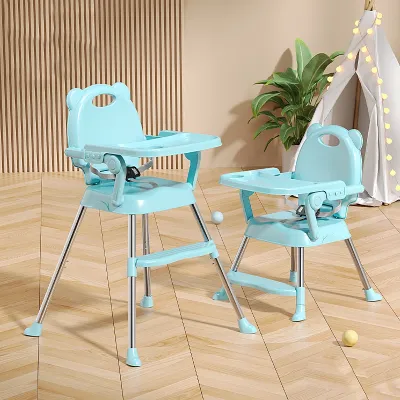
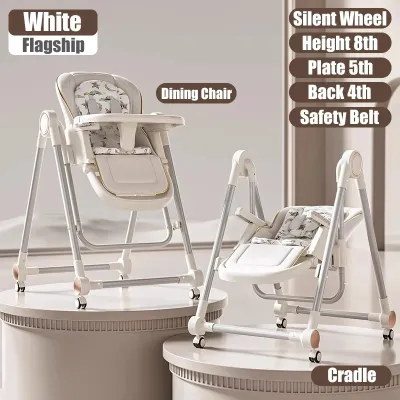
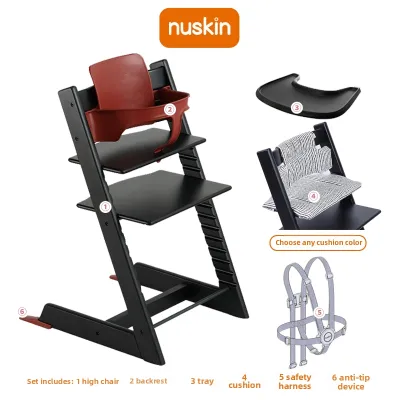
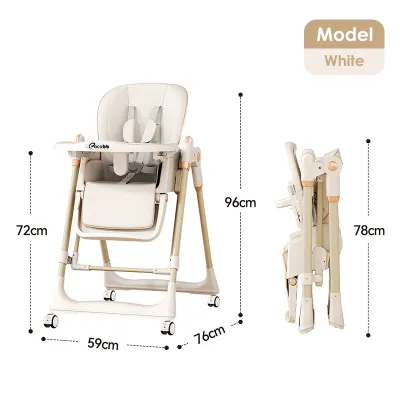
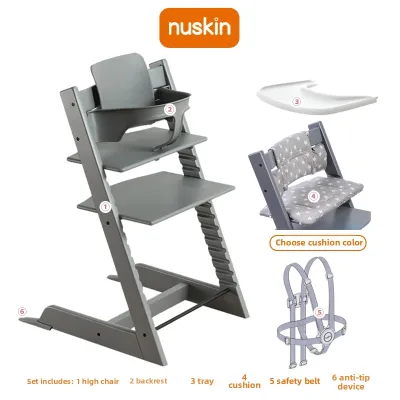
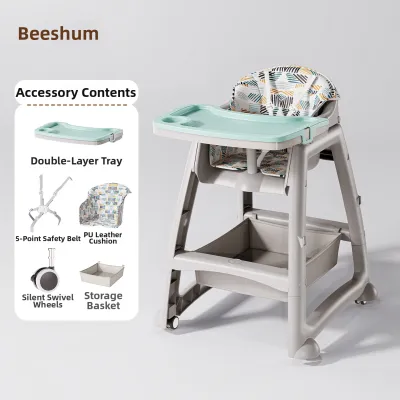
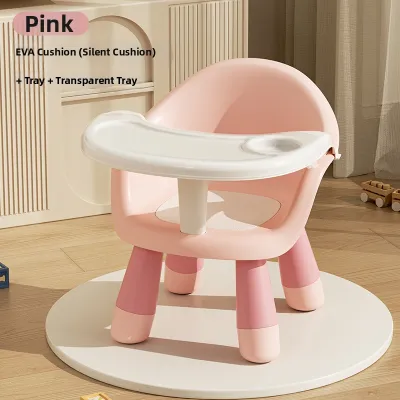
Prices are valid at publication and may change. Please refer to the product page for the latest price.
Harness and Restraint Systems: Keeping Your Baby Secure
The harness system is your primary line of defense against falls, which are among the most common accidents associated with highchairs. A secure, well-designed restraint system keeps your baby firmly positioned in the seat, preventing them from standing up or sliding out. When evaluating different models, pay close attention to how the straps are configured and how easily they can be adjusted as your child grows.
A 5-point harness is highly recommended for infants and active toddlers. This system features straps that secure the baby over the shoulders, around the waist, and between the legs, anchoring them firmly to the backrest and seat. In contrast, a 3-point harness only secures the waist and crotch, leaving the upper body free to lean forward or sideways. Active babies can easily wiggle out of a 3-point harness or tip themselves over the side of the chair, making the 5-point configuration a much safer choice for daily use.
In addition to the harness, a highchair must feature a fixed crotch post. This is a rigid vertical barrier positioned between the baby’s legs that prevents them from slipping downward, a hazard known as submarining. Ensure the crotch post is permanently attached to the chair’s frame rather than the removable tray. If the post is only attached to the tray, the baby will have no crotch restraint when the tray is removed for cleaning or when seating the child, creating a dangerous fall hazard.
Adjustability is another critical factor for both safety and comfort. The shoulder and waist straps must be easy to adjust to accommodate your baby’s rapid growth and varying clothing thicknesses. In warmer tropical weather, your baby might wear light onesies, while cooler rainy days might require thicker layers; the harness must adjust easily to maintain a snug fit in both scenarios. The straps should fit snugly against the baby’s body without pinching, and the webbing material should be durable and easy to wipe clean.
Finally, test the buckle mechanism physically before making a purchase. The buckle should require a firm, dual-action press or a specific level of force that an adult can easily operate but a curious toddler cannot release independently. A secure buckle will lock with a distinct, audible click, giving you visual and auditory confirmation that the harness is fully engaged. Avoid buckles that release too easily or have simple, single-button designs that a child could easily mimic after watching you operate it.
Base Stability and Tip-Over Prevention
The physical footprint of the highchair determines its overall stability and resistance to tipping. Because babies frequently shift their weight, kick their legs, or lean over the sides to look at the floor, the chair must have a solid, well-balanced foundation. A highchair with a narrow or poorly designed base can easily tip over, leading to serious injuries.

When inspecting a highchair, evaluate the width of the base footprint relative to the height of the seat. A safe highchair typically features a wide, flared base that extends well beyond the dimensions of the seat itself. This design creates a low center of gravity, making it significantly harder for the chair to tip over when the baby moves vigorously. While a wider footprint takes up more floor space in your dining area, the added stability is a necessary trade-off for your child’s safety.
Perform a manual stability test in the store or upon assembling the chair at home. Apply gentle lateral pressure to the top of the seat from different angles to see how much the base wobbles. A stable chair should resist tipping and remain firmly planted on the floor, even when pushed from the side. If the chair feels top-heavy, sways excessively, or lifts off the ground with minimal force, it lacks the structural stability required for safe daily use.
For foldable or travel highchairs, the locking mechanisms on the frame are critical. These joints must lock securely into the open position with a visible or audible click. Inspect these locks to ensure they cannot be accidentally disengaged by a child playing nearby or by the weight of the baby shifting inside the seat. A folding chair that lacks robust locking mechanisms can collapse unexpectedly during use, posing a severe risk of injury.
If the highchair is equipped with wheels or casters for easy movement around the kitchen or dining area, check the wheel locks. The wheels must have reliable, independent locking mechanisms that prevent the chair from rolling or sliding when stationary. Unlocked wheels can cause the chair to move unexpectedly when a baby tries to kick against a nearby dining table or wall. Ensure the locks are easy for you to engage and disengage, but sturdy enough to hold the chair firmly in place on your specific flooring type.
Pinch Points, Sharp Edges, and Entrapment Risks
Highchairs feature several moving parts, especially if they fold for storage or have adjustable heights and tray positions. You must carefully inspect these folding hinges and adjustment joints for exposed pinch points. Small fingers can easily get caught in these mechanisms if they are left uncovered or lack protective guards.
The tray attachment and removal mechanism is another common area for finger traps. When sliding the tray onto the armrests, ensure the locking tracks are designed in a way that does not pinch the baby’s hands or thighs. Look for designs where the locking mechanism is fully enclosed or positioned underneath the tray, far out of the child’s reach. Always double-check that your baby’s hands are clear of the armrests before sliding or locking the tray into place.
Measure and inspect the gaps between the seat, the tray, and the armrests. If these gaps are too wide, they can pose an entrapment risk for the baby’s limbs, torso, or head. The space between the tray and the baby’s body should be adjustable but snug enough to prevent the child from sliding into a dangerous position, yet comfortable enough to avoid constriction. Ensure there are no openings where a curious baby could get their head or limbs stuck.
Run your hands along every surface of the highchair to check the finish. All edges, seams, and plastic moldings must be perfectly smooth. There should be no sharp plastic burrs, rough wooden splinters, or exposed metal screws that could scratch your baby’s delicate skin. In humid environments, check that wooden components are sealed with non-toxic, moisture-resistant finishes to prevent warping or splintering over time. Metal parts should be rust-resistant and free of sharp edges or exposed joints.
Verifying Safety Certifications and Manufacturer Labels
Before finalizing your purchase, look for physical safety certification labels directly on the highchair’s frame or underneath the seat. Legitimate manufacturers print or stick these compliance marks directly onto the product to show it has met recognized safety standards for nursery furniture. Avoid products that lack clear manufacturing labels, brand names, or batch numbers, as these are often indicators of substandard quality control.
Check the manufacturer’s specified limits for weight, height, and developmental stages. Highchairs are engineered to support specific weight ranges, and exceeding these limits compromises the structural integrity and stability of the chair. Some chairs are designed only for babies who can sit up unassisted, while others offer reclining features for younger infants; always match the chair’s specifications to your baby’s current developmental stage. Even if a budget-friendly chair costs only ₱1,500, safety features and weight limits must not be compromised.
It is highly recommended to verify the product’s recall status before buying, especially if you are purchasing online or from a distributor. You can search official consumer safety databases using the specific model number and manufacturing date found on the product label to ensure the chair has not been flagged for safety defects. Purchasing from reputable retailers who actively monitor product safety recalls adds an extra layer of protection.
Ensure the highchair comes with a comprehensive, clear instruction manual. The manual should provide step-by-step assembly diagrams, clear safety warnings, and a recommended maintenance schedule. If the instructions are poorly translated, vague, or missing entirely, it is a major red flag regarding the manufacturer’s quality control. Proper assembly is crucial; even the safest highchair can become hazardous if it is put together incorrectly.
Safe Setup and Daily Usage Boundaries
Safe daily usage begins with proper placement of the highchair within your home. Position the chair on a flat, level floor away from potential hazards such as dining tables, kitchen countertops, walls, or heavy furniture. A baby can easily push their feet against these solid surfaces, causing the highchair to tip backward. Keep the chair clear of hot stoves, electrical cords, window blind cords, and sharp kitchen utensils.
No safety feature can replace continuous, active adult supervision. Never leave your baby unattended in a highchair, even for a brief moment to grab something from the fridge. An active baby can shift their weight or attempt to climb out in seconds, leading to severe falls or entrapment if they are not closely watched. Make it a habit to keep your eyes on your baby and remain within arm’s reach whenever they are seated in the chair.
Establish strict household rules regarding the highchair, especially if you have older children. Do not allow older siblings to climb on, hang from, or push the highchair while the baby is seated inside. The extra weight and lateral force can easily overcome the chair’s stability mechanisms and cause a dangerous tip-over. Teach older children that the highchair is a dedicated, safe space for the baby and not a toy or climbing frame.
Know when to immediately stop using the highchair. If your child exceeds the manufacturer’s maximum weight or height limits, or if they demonstrate the physical ability to unbuckle the harness and climb out independently, it is time to transition to a safer seating alternative. Regularly inspect the chair for loose screws, cracked plastic, or frayed straps, and discontinue use immediately if any structural damage is detected.
Frequently Asked Questions (FAQ)
Are second-hand baby chairs safe to use?
Using a second-hand highchair can be a practical way to save money, but it requires extreme caution. Older models may not meet modern safety standards, and their history is often unknown. Over time, plastic components can degrade and become brittle, especially when exposed to heat and sunlight in tropical climates, increasing the risk of structural failure.
Before accepting or buying a used highchair, locate the manufacturer’s label to find the exact model number and date of manufacture. Use this information to check official consumer safety databases for any past recalls. If the label is missing or unreadable, do not use the chair.
Perform a rigorous physical inspection. Check for missing parts, loose screws, and cracks in the frame or seat. Inspect the harness webbing for fraying, wear, or mold, and ensure the buckle still locks securely with a firm click. If any component is damaged or missing, avoid using the chair, as replacement parts for older models can be difficult to source safely.
When should my baby stop using a highchair?
Your baby should transition out of a highchair when they reach the manufacturer’s maximum weight or height limits, which are typically specified in the instruction manual. Continuing to use the chair beyond these limits puts undue stress on the frame and increases the risk of structural collapse or tipping.
Watch for behavioral signs that indicate your child has outgrown the highchair. If your toddler constantly tries to climb out, successfully unbuckles the harness, or vigorously rocks the chair to the point of instability, the highchair is no longer a safe environment.
Once these milestones are met, transition your child to a booster seat secured to a standard dining chair or a low toddler table and chair set. This transition should be based on your child’s ability to sit upright with good balance and follow basic safety instructions, ensuring they remain secure during family mealtimes.
Community discussion
Share your experience or ask a question. Comments are reviewed before publication.