
When your little one starts solid foods—typically around six months of age—choosing the right high chair for baby becomes a top priority. While aesthetic appeal, size, and ease of cleaning often dominate the buying process, safety must remain your primary consideration. An elevated seat introduces unique structural and behavioral risks that require careful evaluation before you bring any model into your home.
Babies are naturally active, curious, and constantly developing their motor skills. Because their center of gravity is relatively high and their core strength is still developing, they can shift their weight suddenly, lean over the sides, or attempt to stand. Understanding how to evaluate structural integrity, restraint systems, and potential design hazards ensures you can select a high chair that provides a secure environment for every meal.
Core Safety Features Every Baby High Chair Must Have
Every reliable high chair for baby must feature a robust combination of physical safeguards designed to keep your child securely in place. When shopping, do not assume a high chair is safe simply because it is sold by a major brand or matches your dining room decor. You should systematically check the harness, base stability, and tray mechanisms against established safety principles.
Products mentioned in this guide
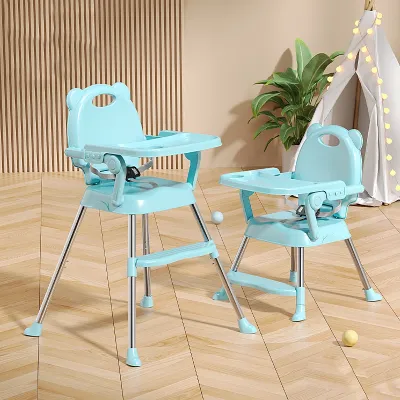
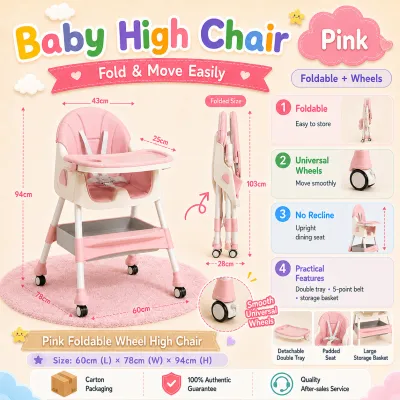
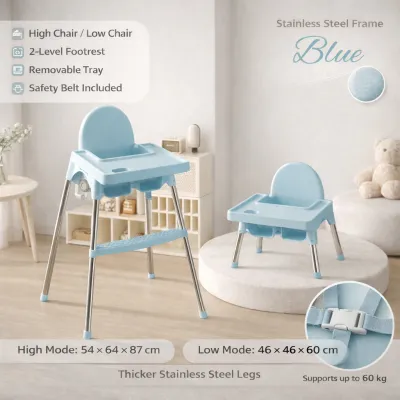
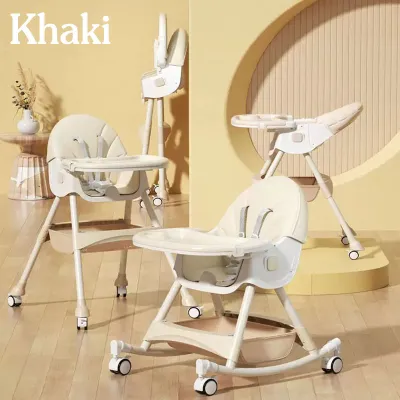
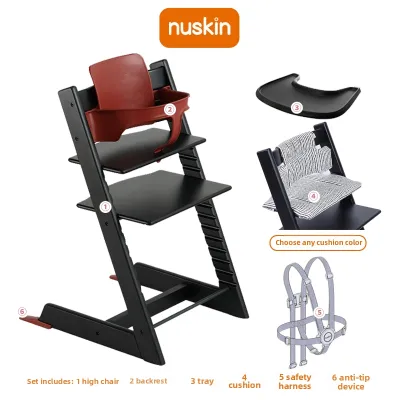
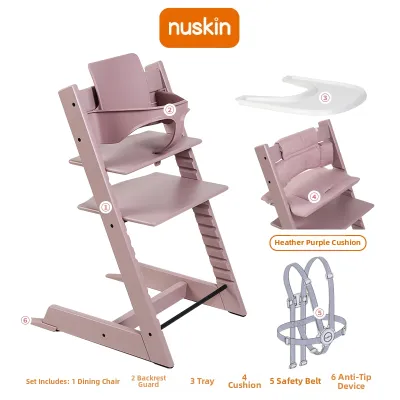
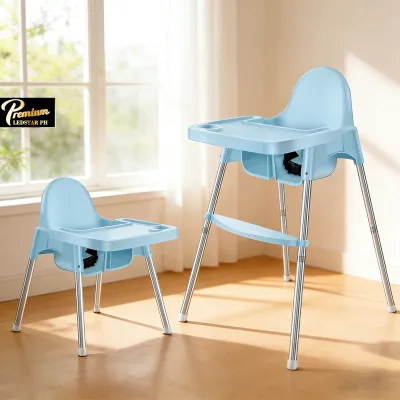
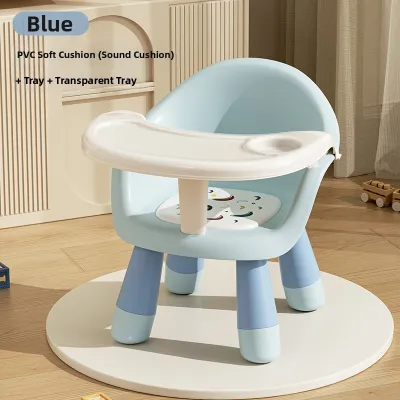
Prices are valid at publication and may change. Please refer to the product page for the latest price.
Reliable Harness Systems
The harness is your child’s primary line of defense against falls, which are among the most common high chair-related accidents. A 5-point harness—consisting of two shoulder straps, two waist straps, and a crotch strap—is the gold standard for infant seating. This system secures the child at the hips and shoulders, preventing them from sliding downward out of the seat or standing up to climb out.
In contrast, a 3-point harness only secures the waist and crotch, leaving the upper body free to lean excessively or wiggle upward. For younger babies who are still building trunk stability, a 3-point system is insufficient. Always prioritize a 5-point harness, especially during the first year of solid feeding when the baby’s movements are less predictable.
Beyond the configuration, pay close attention to the buckle mechanism itself. The buckle must require enough pressure or a specific sequence of movements that an inquisitive toddler cannot easily unfasten it, yet it must remain straightforward for an adult to release quickly in an emergency. Test the buckle in-store if possible, ensuring you can operate it confidently with one hand while holding a baby with the other.
The straps themselves should be made of durable, tightly woven webbing that resists fraying and stretching over time. Because the high chair will face daily spills, purees, and frequent washings, verify that the straps are adjustable to accommodate your growing baby’s clothing, especially during warmer months in the Philippines when lighter clothes are worn. Non-slip adjusters are crucial; if the straps easily slide or loosen under tension when you pull on them, the harness will fail to hold your baby securely during an active moment.
Wide, Stable Base and Locking Wheels
A high chair’s stability depends heavily on its footprint and the distribution of its weight. The base-to-height ratio is a critical engineering factor: a chair with a wide, flared leg design is significantly less likely to tip over than one with narrow, vertical legs. When a baby leans over the side to look at a dropped toy or pushes their feet against the dining table, a wide base absorbs the lateral force and keeps the chair firmly planted on the floor.
If you are considering a model with wheels or casters for easy mobility around your kitchen or dining area, check the locking mechanisms thoroughly. A safe high chair must feature robust, easy-to-engage brakes on at least two of its wheels—ideally all four. Unlocked wheels can cause the chair to roll unexpectedly when a baby moves vigorously, or when an older sibling tries to interact with the baby, creating a serious risk of collisions or tipping.
To evaluate stability, perform a simple physical test if you are shopping in a physical retail store. Gently push the high chair from the top of the backrest in various directions; it should resist tipping and feel solid. If you are purchasing online, carefully review user feedback specifically looking for mentions of wobbling, tipping incidents, or weak wheel locks on different floor surfaces like tiles, wood, or polished concrete common in Philippine homes.
Secure, Adjustable Tray Mechanisms
The feeding tray does more than hold bowls and cups; it acts as a physical barrier. A safe tray must lock securely into its designated tracks and should never disengage with a simple push from the child. If a baby leans forward heavily and the tray pops off, the sudden loss of support can lead to a forward fall, especially if the harness is not properly adjusted.
It is vital to remember that the tray is never a substitute for the harness system. Some parents mistakenly believe that a snug tray is enough to keep a baby in place. Always buckle your baby into the 5-point harness first, and then attach the tray; the tray should only serve as a surface for food and play, not as a restraint.
Inspect the tray’s edges and underside for safety. The tray should feature smooth, rounded corners with no sharp plastic seams or narrow gaps. Gaps between the tray and the main frame of the chair can pinch delicate fingers or trap a baby’s hands as the tray is slid into place. Look for trays with a simple, one-handed release mechanism located underneath or out of the baby’s reach, ensuring smooth adjustments without risk of pinching.
Spotting Hidden Hazards in High Chair Designs
While obvious features like harnesses and wide bases are easy to spot, many high chair hazards are structural and require closer inspection. Manufacturers design chairs with various folding, reclining, and height-adjustment features to maximize convenience, but these moving parts can introduce hidden risks if not properly engineered.

Pinch Points and Folding Hinges
Any high chair that folds for compact storage or features an adjustable seat recline contains hinges, joints, and sliding tracks. These areas are potential “pinch points” where a baby’s small fingers, toes, or skin can become trapped or crushed. When the chair is fully assembled and locked into place, all folding mechanisms should be shielded or designed with enough clearance to keep them out of reach of a seated child.
For folding high chairs, a secondary safety lock is an absolute necessity. This mechanism ensures that if the primary folding latch is accidentally bumped or released, the chair will not collapse while your baby is sitting in it. Before placing your child in a folding chair, always double-check that both the primary and secondary locks are fully engaged.
Inspect the height-adjustment sliders on the frame legs as well. These sliders should lock positively into place with a clear, audible click. Ensure that the locking pins are robust and cannot be easily depressed by an external object or a curious sibling playing near the base of the chair.
Choking Hazards and Detachable Parts
Babies explore their world by putting objects in their mouths, and a high chair is no exception. Examine the chair closely for small, detachable decorative components, loose screws, plastic caps, or rubber feet that could be pulled off by a persistent baby. Any component small enough to fit inside a toilet paper roll poses a severe choking hazard.
Material degradation is another factor, particularly in warm, humid tropical environments like the Philippines. High levels of humidity can accelerate the wear of certain plastics, adhesives, and fabrics. Check for peeling paint, flaking plastic edges, or easily torn vinyl seat covers. A teething baby may chew on the edges of the tray or the seat pad, potentially ingesting small pieces of plastic or foam padding.
Ensure that all structural hardware, such as screws, bolts, and brackets, is deeply recessed or tightly secured. These components should require specialized tools, like an Allen key or screwdriver, to remove. Regularly inspect the underside and frame of the high chair to confirm that no hardware has loosened over time due to daily movement and vibrations.
Footrest and Climbing Risks
An adjustable footrest is highly recommended for ergonomic comfort, as it supports the baby’s feet and prevents their legs from dangling, which can cause discomfort and lead to restless behavior during meals. However, the footrest must be designed and positioned carefully to prevent it from becoming a safety hazard. If a footrest is too high or rigid, an active baby can use it as a step or a leverage point to push themselves upward.
When a baby stands up in a high chair, their center of gravity shifts dramatically, increasing the risk of the chair tipping or the baby falling over the side. To prevent this, adjust the footrest so that your baby’s feet rest flat on the surface while their knees remain bent at a comfortable, safe 90-degree angle. This posture provides the necessary physical support without giving them the leverage needed to stand or climb over the tray.
If your child begins showing signs of trying to stand or climb using the footrest, check that the harness is adjusted snugly. If the behavior persists, you may need to temporarily lower or remove the footrest until the child learns to sit quietly during meals, or consult the manufacturer’s guidelines for alternative configurations.
How to Verify Safety Certifications and Labels
Marketing language can often be misleading, with terms like “safety-approved” or “pediatrician-recommended” used without official backing. To ensure a high chair for baby has undergone rigorous testing, you must look for recognized, independent safety certifications. These certifications prove that the chair has been subjected to mechanical tests simulating tip-overs, structural fatigue, and material safety.
Look for physical labels, stamps, or instruction manual markings indicating compliance with international safety standards. The most common standards include ASTM F404 (the standard consumer safety specification for high chairs in the United States) and EN 14988 (the European safety standard for high chairs). In the local market, check for compliance with standards recognized by the Department of Trade and Industry (DTI), such as the Philippine Standard (PS) mark or the Import Commodity Clearance (ICC) sticker, which verify that imported or locally manufactured goods meet local safety regulations.
A safety certification indicates that the high chair has met strict criteria for stability, harness strength, and the absence of toxic materials. However, a certified chair is only safe when used correctly; a label does not replace active parental supervision. Always view certification as a baseline requirement, not a guarantee against improper use.
Before purchasing, locate the manufacturer’s warning label, which is typically printed directly on the seat frame or the underside of the tray. This label outlines the specific age, weight, and developmental limits for the high chair. For example, many standard high chairs are rated for children up to 15 kilograms (approximately 33 pounds). Never exceed these stated thresholds, as doing so compromises the structural integrity of the frame and increases the risk of mechanical failure or tipping.
Safe Usage Boundaries and When to Transition
Even the most advanced, highly certified high chair for baby cannot prevent accidents if safety rules are neglected during daily use. Establishing clear operational boundaries in your household is essential to keeping your child safe during every meal.
The most critical rule of high chair safety is constant, active adult supervision. A high chair is designed for feeding and structured play, not as a safe containment zone or a babysitter while you leave the room. A baby can choke silently on food or work their way into a dangerous position in a matter of seconds. Never leave your child unattended in a high chair, even for a brief moment to grab a napkin or answer the door.
Position the high chair in a safe location within your home. Keep it at a safe distance from walls, kitchen counters, heavy tables, or large appliances. Active babies often enjoy pushing off these solid surfaces with their feet, which can easily cause the high chair to tip backward. Additionally, ensure the chair is placed far away from potential hazards such as electrical cords, window blind cords, hot liquids, or household appliances like electric fans, which are common in Philippine households.
Knowing when to transition out of a high chair is just as important as knowing how to use it. You should stop using the high chair immediately if your child reaches the manufacturer’s maximum weight or height limit. Other clear transition signals include the child demonstrating the ability to consistently unbuckle the harness, attempting to climb out despite a snug harness, or showing physical strength that allows them to rock or tip the chair. At this stage, transitioning to a secure booster seat attached to a standard dining chair or a low toddler table is the safest course of action.
Frequently Asked Questions (FAQ)
Is it safe to buy a second-hand baby high chair?
Buying a second-hand high chair can be a cost-effective option, but it requires meticulous safety verification. Before using a pre-owned chair, inspect it thoroughly for missing hardware, frayed harness straps, cracked plastic joints, or broken locking mechanisms. You must also locate the model number and brand name to check for historical safety recalls, and ensure you can download the original manufacturer’s instruction manual to verify proper assembly and weight limits.
Can I leave my baby in the high chair while I prepare food?
No, you should never leave your baby unattended in a high chair, even if they are fully secured in a 5-point harness. While it is tempting to use the chair to keep your baby in one place while you cook, the risk of choking on food, sudden slumping, or unexpected mechanical failure requires your full, undivided attention. If you must step away from the immediate feeding area, place your baby in a safe, low-level playpen or take them with you.
Do high chairs expire?
Unlike infant car seats, baby high chairs do not have a strict, universal expiration date printed on them. However, they do have a practical lifespan influenced by material degradation and changing safety standards. Over time, plastic components can become brittle, especially when exposed to sunlight and high humidity, while harness straps can lose their structural strength. If a high chair shows signs of worn joints, cracked frames, or outdated safety features, it should be retired immediately.
Community discussion
Share your experience or ask a question. Comments are reviewed before publication.