
Quick Answer: Core Safety Checks for Toddler High Chairs
When purchasing a high chair for your toddler, safety must always be your primary consideration. The most critical features to verify include a secure 5-point harness system, a wide and stable base footprint, and recognized safety certification marks. A 5-point harness prevents active toddlers from climbing or sliding out of the seat, while a wide base ensures the chair remains upright even during sudden, energetic movements. Always look for physical certification labels on the product itself rather than relying solely on online retail descriptions. Additionally, ensure that any adjustable components lock securely to prevent accidental collapses during mealtimes.
Stability and Base Design: Preventing Tip-Overs and Sliding
A high chair’s physical footprint is its primary defense against tipping over. When evaluating different models, compare wide-base designs with narrow pedestal styles. Wide-base chairs distribute weight more evenly across the floor, making them highly resistant to the sudden shifts in weight that occur when a toddler leans over the side to drop food or reach for a toy. Pedestal designs may save space in smaller dining areas, but they require a heavily weighted bottom to offer comparable stability, which can make them difficult to move.

In many homes in the Philippines, smooth tiled, polished wooden, or marble floors are common. On these surfaces, a high chair can easily slide or shift if it lacks proper traction. Inspect the legs of the chair for robust, non-slip rubber grips that cover the entire contact point with the floor. If the high chair features wheels for mobility, verify that the locking mechanisms are sturdy and easy to engage. The wheels must lock securely on all casters to prevent the chair from rolling backward when your toddler pushes their feet against the dining table.
Products mentioned in this guide
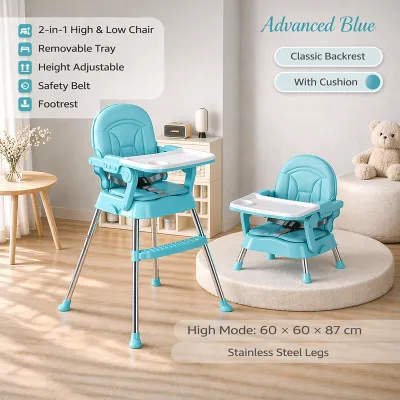
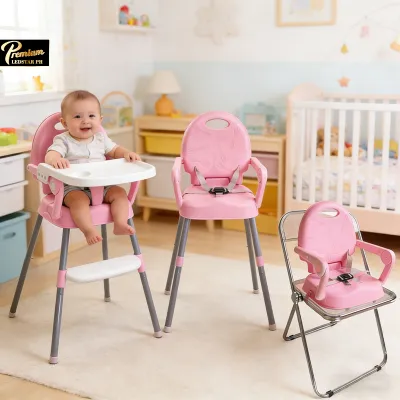
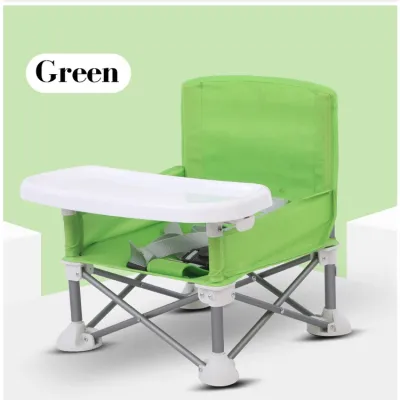
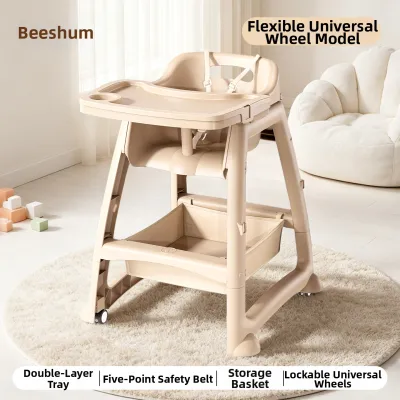
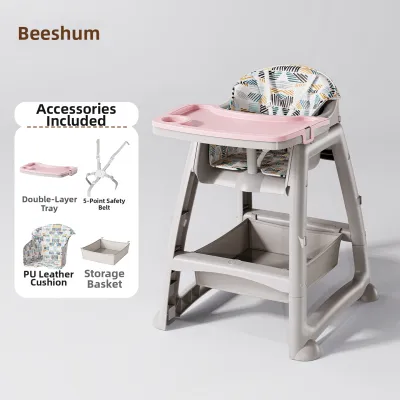
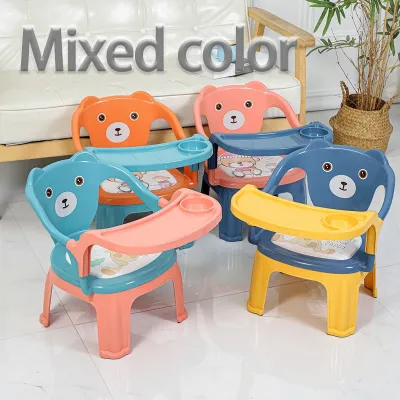
Prices are valid at publication and may change. Please refer to the product page for the latest price.
Before placing your child in any high chair, perform a manual stability test in the store or at home. Apply firm downward and lateral pressure to the backrest and the tray. Observe how the frame responds to this force. If the legs lift off the ground easily or if the frame wobbles significantly, the center of gravity may be too high or poorly balanced. Keep in mind that tropical humidity can cause certain rubberized grips to degrade, become sticky, or lose traction over time, so regular inspection of the feet is necessary to maintain safety.
Harness and Restraint Systems: Keeping Active Toddlers Seated
Active toddlers are notorious for trying to stand up or wriggle out of their seats during mealtimes. This makes the restraint system one of the most vital safety components of any high chair. A 5-point harness, which secures the child over the shoulders, around the waist, and between the legs, is highly recommended over a basic 3-point harness. The shoulder straps prevent the toddler from leaning forward too far or attempting to climb out of the seat, which is a common cause of high chair falls.
When examining the harness, check the adjustability of the straps. The straps must fit snugly against your child’s body, accommodating different layers of clothing without leaving dangerous gaps. The buckle mechanism should require adult-level strength and coordination to release, ensuring that curious toddler fingers cannot undo it mid-meal. Additionally, look for a fixed crotch post built into the seat frame rather than the tray. A fixed post prevents the child from sliding down underneath the tray, which is a major safety hazard.
Never rely on the feeding tray alone to keep your toddler secure in the chair. Trays are designed for holding food and are often easily detachable for cleaning. If a toddler pushes hard enough against the dining table, a poorly latched tray can pop off, leaving an unrestrained child vulnerable to falls. Always buckle the harness completely every single time your child sits in the chair, regardless of whether the tray is attached or how short the mealtime might be.
Identifying Physical Hazards: Pinch Points, Sharp Edges, and Detachable Parts
A thorough physical inspection of the high chair can prevent painful pinches, cuts, and choking incidents. If you are considering a folding high chair to save space in your home, pay close attention to the folding hinges and joint mechanisms. These moving parts should feature pinch-point guards or be completely enclosed. This design prevents tiny fingers from getting caught when the chair is being set up, adjusted, or collapsed for storage.
The tray locking mechanism is another area that requires careful scrutiny. It should lock firmly into place with a distinct click, and the release buttons should be positioned out of your child’s reach or require a dual-action motion that a toddler cannot replicate. If the tray can be easily slid off with a simple push, it poses a risk of sudden detachment.
Run your hands along all the edges, seams, and underside surfaces of the high chair. Ensure there are no sharp plastic flashing lines, exposed metal screws, or rough wooden splinters. Additionally, inspect the chair for small, detachable components such as rubber caps, decorative plugs, or small adjustment knobs. If these parts can be easily pulled off by a child, they present a severe choking hazard. In warm, humid environments, sweat and spilled liquids can accumulate in tight seams, so choosing a design with smooth, easy-to-wipe surfaces also prevents mold and bacterial growth.
How to Verify Safety Certifications and Weight Limits
With numerous products available on various online marketplaces, it is crucial to verify safety claims independently. Do not rely solely on product descriptions written on e-commerce listings. Instead, look for physical certification stickers or engraved marks directly on the high chair’s frame or official packaging. Recognized standards include ASTM International (such as ASTM F404), European Standards (EN 14988), or local quality marks like the Philippine Standard (PS) or Import Commodity Clearance (ICC) marks issued by the Bureau of Product Standards.
These certification marks indicate that the high chair design has undergone rigorous testing for stability, structural integrity, and chemical safety. If a product lacks these visible marks, treat its safety claims with caution. Always cross-reference the manufacturer’s documentation to find the exact weight and height limits specified for that model.
Exceeding the manufacturer’s stated weight limit compromises the structural integrity of the high chair. Over time, the joints, harness anchors, and legs can weaken under excessive weight, leading to sudden structural failure. Regularly monitor your toddler’s growth metrics—such as weight and height—and compare them against the product manual. Once your child approaches the upper limits, it is time to plan for a transition to a different seating arrangement.
Adjustability and Footrests: Supporting Proper Posture and Safety
Proper seating ergonomics play a surprisingly large role in mealtime safety. An adjustable footrest is not just a comfort feature; it provides essential physical support that helps stabilize your toddler’s body. When a child’s feet are dangling without support, they are more likely to fidget, squirm, and attempt to shift their weight to find a comfortable position. A footrest allows them to sit with their hips, knees, and ankles at a stable 90-degree angle.
However, the footrest itself must be secure. Ensure that the footrest locking mechanism can withstand downward pressure. If a toddler stands on the footrest to climb into or out of the chair, a weak footrest could slip or break, causing a fall. Furthermore, some toddlers may use a poorly positioned or unsecured footrest to push themselves upward, potentially tipping the chair backward if the base is not sufficiently wide.
Proper posture supported by a well-adjusted seat and footrest also improves swallowing mechanics. When a child sits upright and stable, the risk of choking on food is significantly reduced. Check that the seat height and depth adjustments lock firmly into place and do not slip when weight is applied. If you notice any slipping or instability in the adjustable parts, stop using those features immediately and consult the manufacturer’s manual for troubleshooting.
Frequently Asked Questions (FAQ)
Is a second-hand high chair safe for my toddler?
Buying a pre-loved high chair can be economical, but it requires extreme vigilance. Before using a second-hand chair, inspect it thoroughly for missing hardware, degraded or brittle plastic, and frayed or stained harness straps. In tropical climates, prolonged exposure to heat and humidity can accelerate the degradation of plastic components, making them prone to cracking under pressure.
Always verify the manufacture date, which is typically printed on a sticker underneath the seat. Avoid chairs that are more than a few years old, as safety standards may have updated. Search online recall databases using the exact brand and model number to ensure the item was not recalled due to safety hazards. Finally, check if the original manufacturer still provides official replacement parts, especially for the harness and buckle.
When should I stop using a high chair and transition to a booster seat?
You should transition your toddler out of a high chair when they meet specific physical or behavioral milestones. The most clear-cut sign is when your child reaches the manufacturer’s maximum weight or height limit specified in the product manual. Other indicators include your toddler constantly attempting to climb out of the harness, or the feeding tray sitting too low and pressing uncomfortably against their thighs.
If your child can sit up reliably without support and prefers to join the family directly at the dining table, a booster seat secured to a standard dining chair may be a safer option. Always consult your high chair’s instruction manual for specific transition guidelines, and ensure that any booster seat used meets current safety standards and is securely strapped to an adult chair.
Community discussion
Share your experience or ask a question. Comments are reviewed before publication.