
Quick Answer: Critical Safety Features for Baby Push Walkers
Selecting a baby push walker requires prioritizing specific mechanical features that protect your child during their first steps. Before making a purchase, verify that the walker includes rear wheel locks or adjustable friction brakes to control rolling speed on smooth floors. A wide, weighted base is equally essential to prevent the unit from tipping backward or sideways when your baby pulls themselves up to stand.
Additionally, look for a sturdy, non-slip handlebar positioned at a height that allows your baby’s elbows to bend slightly while pushing. These core features work together to provide a stable, controlled walking experience, reducing the risk of sudden falls or runaway rolling. Whether you are looking at a budget-friendly model around ₱1,500 or a premium wooden option over ₱4,000, the presence of these safety features remains non-negotiable.
Evaluating Wheel Locks and Speed Controls
Wheel speed is one of the most critical factors in preventing falls when a baby is learning to use a push walker. Without adequate resistance, a lightweight walker can easily roll away from a child, causing them to lose balance and fall forward. Look for models that feature adjustable friction dials or tension screws on the rear wheels, which allow you to customize how easily the wheels rotate.
Products mentioned in this guide
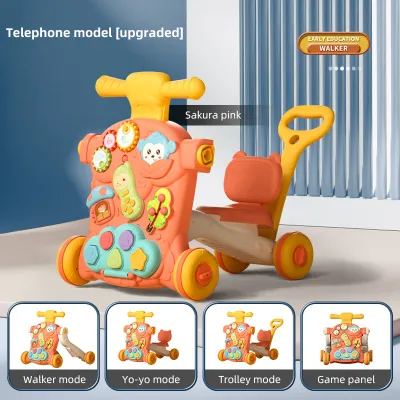
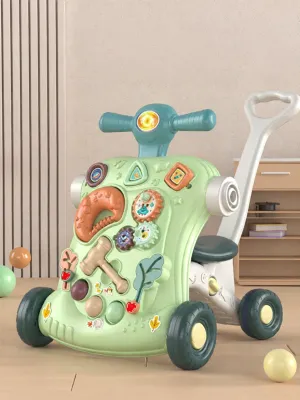
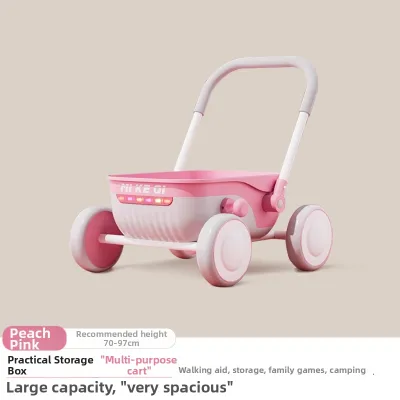
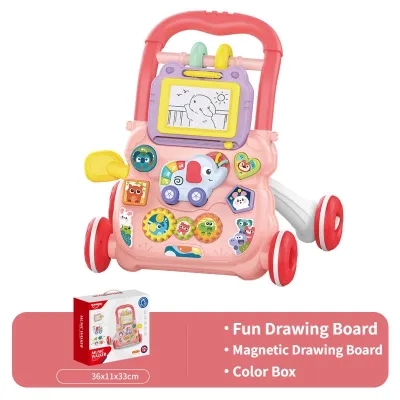
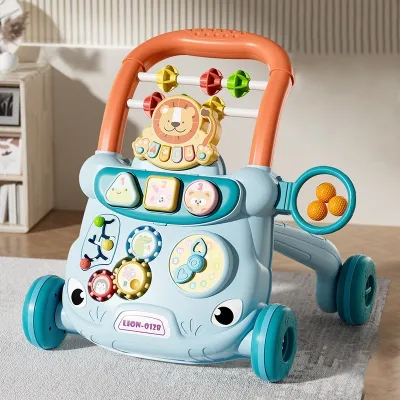
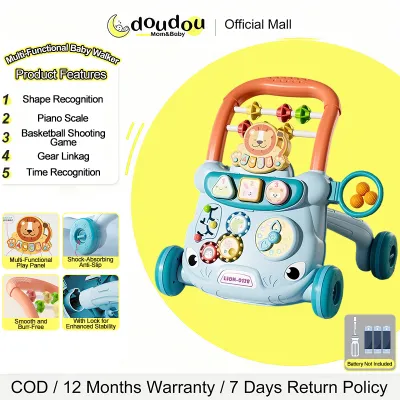
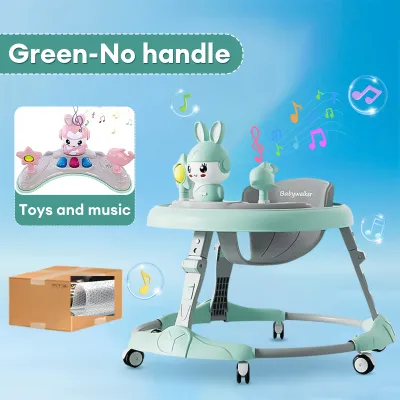
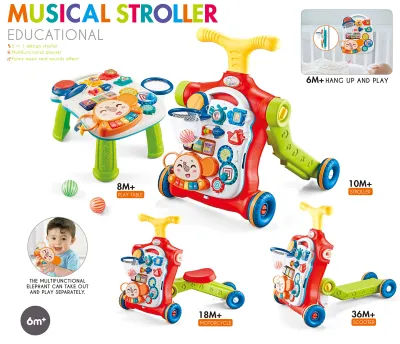
Prices are valid at publication and may change. Please refer to the product page for the latest price.

When evaluating a walker, distinguish between full wheel locks and friction controls. Full wheel locks are designed to keep the walker completely stationary, turning the toy into a fixed activity center for floor play. Friction controls, on the other hand, introduce resistance to the rolling motion, ensuring the walker moves only as fast as your baby’s developing leg strength and coordination can handle.
To test these controls, place the walker on the specific flooring type in your home. In many tropical households, smooth ceramic tiles or polished concrete are common, both of which offer very little natural traction. Adjust the tension settings to ensure the wheels do not spin freely on these slick surfaces. Always consult the manufacturer’s user manual to locate the adjustment screws and verify how to tighten them safely without stripping the plastic threads.
Finally, ensure that any locking or tension adjustment mechanisms are located out of your baby’s reach. The dials should require adult strength or a specific tool to turn, preventing curious toddlers from accidentally loosening the wheels during play.
Assessing Base Stability and Anti-Tip Designs
A stable base is the foundation of a safe push walker, especially during the stage when babies rely on the handlebar to pull themselves up from a sitting position. If the base is too narrow or lightweight, the walker will easily tip backward over its rear axle. When shopping, look for a wide wheelbase where the distance between the front and rear wheels is substantial.
High-quality designs often incorporate a weighted base or a low center of gravity to resist tipping. Some wooden models feature heavy-duty frames, while plastic models may include a hollow compartment designed to be filled with water or sand to add stabilizing weight. Additionally, look for walkers with extended rear axles or anti-tip wheels that protrude slightly behind the handlebar, providing extra leverage against backward falls.
If you are shopping in a physical store, you can physically test the stability of the walker by applying downward and backward pressure on the handlebar. The front wheels should remain firmly on the ground even when moderate force is applied. When browsing online marketplaces, carefully examine the structural diagrams and product dimensions to ensure the base is wider than the handlebar assembly.
Keep in mind that even the most stable walker has physical limits on uneven surfaces. Area rugs, transition strips between rooms, and outdoor patios can catch the wheels and cause sudden tipping. Always inspect the walking path to ensure it is clear of obstacles, loose rugs, and sudden elevation changes before letting your baby use the walker.
Inspecting the Handlebar and Structural Build
The structural integrity of a baby push walker determines how well it withstands daily wear, impact, and the humid conditions common in tropical climates. Start your inspection with the handlebar, which must be securely attached to the main frame without any wobbling. The grip material should be non-slip, textured, and free from cheap foam coatings that can peel, tear, or become a choking hazard if chewed on.
For foldable or adjustable models, pay close attention to the locking joints. Foldable walkers are convenient for storage, but they must feature dual-locking pins or secure latches that prevent the frame from collapsing unexpectedly while in use. A sudden collapse can lead to severe pinching injuries or a hard fall onto the floor.
Carefully run your hands along the entire frame to check for sharp edges, rough plastic seams, or exposed metal screws. Inspect all joints, hinges, and moving parts for potential pinch points where small fingers or toes could get trapped. The gaps between the wheels and the frame should be either completely sealed or wide enough that a baby’s finger cannot get wedged inside.
The frame material itself must be durable and rigid. If you are choosing a plastic walker, ensure the plastic is thick and does not flex or bend when you apply pressure to the sides. For wooden walkers, verify that the wood is smooth, free of splinters, and finished with non-toxic, water-based paint that will not degrade or flake under high humidity.
Checking Activity Toys for Choking and Entanglement Risks
Many modern push walkers double as multi-functional activity centers, featuring built-in toys, gears, beads, and electronic buttons on the front panel. While these features keep your baby entertained, they must be carefully inspected to ensure they do not introduce new safety hazards. Every attached toy must be securely fastened to the main board so that it cannot be pulled off by a determined baby.
Avoid walkers that feature long strings, cords, or elastic bands attached to play phones or pull-toys. These components pose a serious risk of strangulation or limb entanglement. If a model includes a toy phone or a similar accessory, ensure it is either cordless or has a string shorter than the safety limit specified in standard toy regulations.
Carefully inspect the activity board for small, detachable pieces that could become choking hazards. Check that plastic gears are tightly secured with recessed screws and that sliding beads are mounted on thick, unbreakable metal or plastic rods. If any toy shows signs of cracking or loosening, the walker should be repaired or retired immediately.
Additionally, ensure that the design of the activity board does not obstruct your baby’s view. When pushing the walker, the child should have a clear line of sight to their own feet and the path ahead. A bulky front panel that blocks their view can interfere with their spatial awareness, making it harder for them to navigate around furniture and increasing the likelihood of collisions.
Verifying Safety Labels and Developmental Readiness
Before finalizing your purchase, look for recognized safety certification marks on the product packaging or the walker itself. These marks indicate that the product has undergone testing to meet strict safety standards regarding material toxicity, structural strength, and mechanical hazards. Avoid buying unbranded walkers from online marketplaces that lack clear safety labeling or manufacturer contact information.
Always check the manufacturer’s guidelines for age, weight, and height limits. These specifications are not mere suggestions; they are calculated based on the structural limits of the walker and the average physical proportions of babies at different developmental stages. Using a walker for a baby who is too heavy or too tall can compromise its stability and cause structural failure.
It is crucial to understand that push walkers are designed for babies who are already showing signs of developmental readiness. Your baby should be able to pull themselves up to a standing position and cruise along furniture independently before using a push walker. Introducing a walker too early, especially when a baby can only sit up, can strain their developing muscles and joints.
Finally, remember that no safety feature can replace active adult supervision. Read the user manual thoroughly to understand the recommended environment for use. Keep a close eye on your baby at all times while they are using the walker, ensuring they stay far away from stairs, kitchens, pools, and other high-risk areas in the home.
Warning Signs: When to Retire the Push Walker
As your baby grows and gains strength, the push walker will eventually outlive its usefulness and safety margins. One of the clearest signs to retire the walker is when your baby exceeds the maximum weight or height limits specified by the manufacturer. A child who is too tall can easily lean over the handlebar, shifting the center of gravity and causing the walker to flip forward.
Watch your baby’s behavior closely during play. If they begin attempting to climb onto the activity panel, stand on the bottom tray, or use the handlebar as a launching pad to reach high countertops or unsafe furniture, the walker must be removed immediately. At this stage, the walker becomes a climbing hazard rather than a walking aid.
Regularly inspect the walker for visible signs of wear and tear. If you notice cracked plastic, loose or missing screws, splintering wood, or wheel locks that no longer hold tension, it is time to stop using the product. Attempting to patch up a structurally compromised walker with tape or non-standard screws can lead to unexpected failures during use.
Lastly, once your baby transitions to confident, independent walking, they no longer require the physical support of a push walker. At this point, the walker can be safely retired or transitioned into a stationary toy if the activity panel is detachable, allowing your toddler to explore their environment freely and naturally.
Frequently Asked Questions (FAQ)
Are baby push walkers safer than traditional sit-in walkers?
Yes, push walkers are generally considered much safer than traditional sit-in walkers. Pediatric guidelines generally discourage the use of sit-in walkers because they allow babies to move at high speeds before their bodies are developmentally ready, greatly increasing the risk of rolling down stairs or reaching dangerous objects like hot liquids. Push walkers, by contrast, require the baby to actively bear their own weight, balance themselves, and control their pace, which supports natural motor development. However, even with a push walker, active adult supervision is mandatory to prevent accidental falls.
At what developmental stage should I introduce a push walker?
You should introduce a push walker only when your baby has reached the developmental milestones of pulling themselves up to a stand and cruising along furniture independently. These actions demonstrate that your baby has developed the core, leg, and ankle strength necessary to support their own weight. Do not use a push walker as a tool to teach a baby how to stand from a sitting position, as their muscles and joints are not yet ready for the upright pressure, which can lead to poor posture or injury.
Can I use a push walker on carpeted floors or rugs?
Yes, you can use a push walker on carpeted floors, but you must adjust the wheel settings and monitor your baby closely. Thick carpets and plush rugs increase rolling resistance, which can make the walker harder to push and may require you to loosen the wheel friction dials slightly. Conversely, loose area rugs or mats can bunch up under the wheels, creating sudden tripping hazards. Always check the manufacturer’s recommendations regarding suitable floor surfaces and ensure the walking area is flat, dry, and free of loose floor coverings.
Community discussion
Share your experience or ask a question. Comments are reviewed before publication.