
When your baby transitions from crawling to taking those first tentative steps, choosing the right developmental gear becomes a top priority. A baby push walker is an excellent tool to support this exciting milestone, but not all models on the market are designed with the same rigorous safety standards. To ensure your little one remains secure while building their confidence, you must evaluate several critical features before making a purchase.
The most essential safety features to check include structural stability to prevent tipping, adjustable wheel resistance to control speed, non-slip traction suited for smooth floors, and non-toxic, hazard-free materials. By carefully inspecting these physical attributes and understanding your baby’s developmental readiness, you can provide a secure environment for them to explore. This guide breaks down the precise safety elements you should look for to make an informed, confident decision.
Understanding Push Walker Safety and Developmental Readiness
To make the best choice for your child, it is important to first understand how a push walker differs from a traditional sit-in walker. Traditional sit-in walkers suspend a baby in a fabric seat inside a wheeled frame, allowing them to scoot around without supporting their own weight. In contrast, an active push walker requires your baby to stand independently, hold onto a handlebar, and push the toy forward. Pediatricians and child development experts generally prefer push walkers because they encourage natural motor progression, active balance, and healthy weight-bearing through the legs and feet.
Products mentioned in this guide
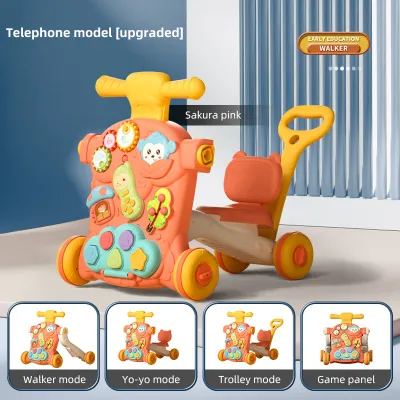
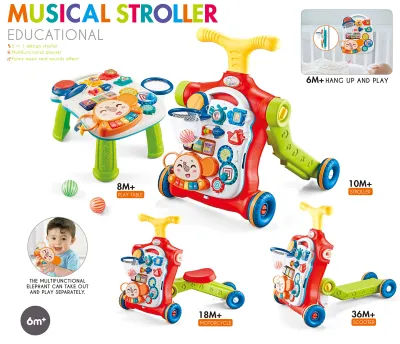
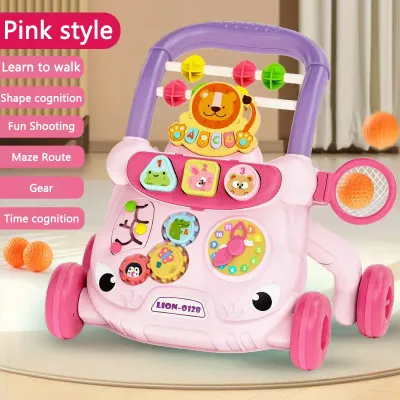

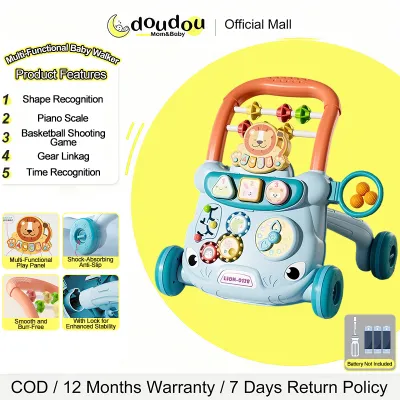
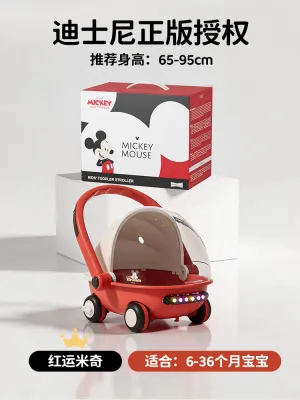
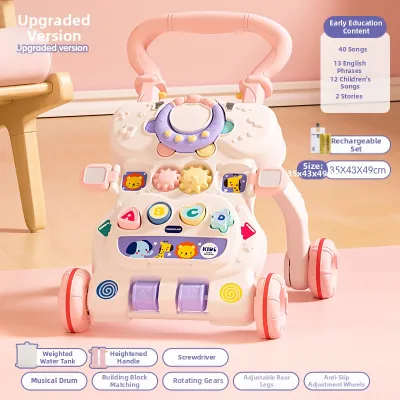
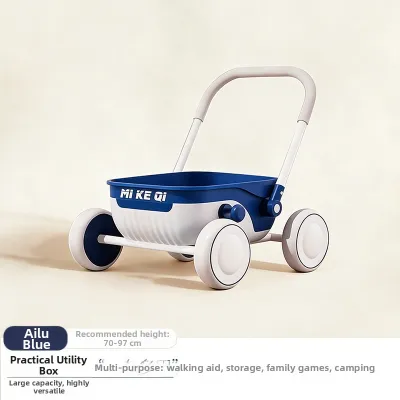
Prices are valid at publication and may change. Please refer to the product page for the latest price.
Before introducing a push walker to your home, you must look for specific signs of physical readiness rather than relying solely on age guidelines. Your baby should be able to pull themselves up to a standing position independently and bear their full weight on their legs while holding onto furniture. This process, often called cruising, indicates that their core, leg, and ankle muscles are sufficiently developed to handle the physical demands of pushing a mobile toy.
Introducing a push walker too early carries distinct developmental and physical risks. If a baby lacks the muscle strength to control their posture, they may lean too heavily on the walker, leading to frequent falls, muscle strain, or improper alignment of their hips and feet. If you notice your baby struggling to maintain an upright posture, exhibiting unusual walking patterns, or persistently walking on their tiptoes, stop using the walker immediately and consult a pediatrician or pediatric physical therapist for personalized guidance.
While manufacturers print recommended age guidelines on the packaging—often starting around 12 months—these numbers are merely general indicators. Your baby’s actual physical development, strength, and balance must serve as the primary safety indicators. Always prioritize your child’s demonstrated motor skills over the age label on the box before allowing them to use any walking toy.
Evaluating Structural Stability and Anti-Tip Features
A stable foundation is the most critical defense against falls and tipping accidents. When evaluating different models, look closely at the walker’s physical footprint. A safe push walker should feature a wide, low-slung base that extends beyond the width of the handlebar. This design creates a low center of gravity, which helps keep the walker firmly grounded even when your baby leans their entire body weight against it.

In addition to a wide base, high-quality walkers incorporate specific rear anti-tip mechanisms to prevent backward flips. These features often include extended rear legs, physical plastic stoppers near the back wheels, or a weighted lower frame. If a baby pulls themselves up using the handlebar rather than pushing from behind, these anti-tip designs prevent the walker from tipping over toward them.
To evaluate the sturdiness of a push walker, it is highly beneficial to test the product in a physical store whenever possible. Apply downward and forward pressure on the handlebar to see if the front wheels lift off the ground or if the frame wobbles. If you are shopping through online marketplaces, carefully review the product’s exact dimensions, weight specifications, and customer feedback to verify if other parents have experienced tipping issues. Prices for these products in the Philippines typically range from budget-friendly plastic options around ₱1,000 to premium wooden models exceeding ₱3,500, with sturdier materials often commanding a higher price.
The handlebar itself must be exceptionally secure and stable. Inspect the joint where the handle connects to the main frame to ensure there is no play or wobbling. A loose handlebar can suddenly shift under your baby’s grip, causing them to lose their balance and fall forward onto the frame.
Checking Speed Control and Wheel Resistance
A major hazard for early walkers is a toy that rolls away too quickly, leaving the baby unable to keep up. To prevent these runaway falls, look for a push walker equipped with adjustable wheel resistance. Many models feature tension screws, adjustable dials, or friction pads on the rear axle. These mechanisms allow you to tighten the wheels to create friction, slowing down the rolling speed for beginners and gradually loosening them as your baby gains coordination and strength.
The material of the wheels also plays a vital role in speed control and traction. In many Filipino households, floors are made of smooth ceramic tiles, polished concrete, or varnished wood, which can be highly slippery. Look for wheels wrapped in textured rubber or non-slip synthetic materials rather than slick, hard plastic. Rubberized wheels grip smooth indoor surfaces effectively, preventing the walker from sliding sideways or rolling forward uncontrollably.
Another valuable feature to look for is a complete wheel lock or braking system. Some walkers allow you to lock the wheels entirely, turning the unit into a stationary play station. This is particularly useful when your baby is still in the early stages of standing and wants to play with the front activity panel without the risk of the walker moving out from under them.
Keep in mind that wheel resistance mechanisms require regular maintenance. Over time, daily use, vibration, and household dust can loosen the tension screws or wear down the friction pads. You should perform a quick manual check of the wheel tightness every few days to ensure the resistance level remains safe and consistent for your child.
Inspecting Materials and Preventing Physical Hazards
Because babies frequently explore their environment with their mouths, the materials used to construct the walker must be completely safe. Verify that the product is made from non-toxic, BPA-free, and lead-free plastics or sustainably sourced wood finished with water-based, non-toxic paints. Look for clear material disclosures in the product manual or on the manufacturer’s official website.
Choking hazards are another common risk, particularly on walkers that feature busy activity panels. Inspect the front of the walker for small, detachable parts, loose beads, or weakly attached plastic toys that could break off under pressure. Every component on the activity panel should be securely molded or screwed into the main frame, with no small pieces that can fit entirely inside a baby’s mouth.
The physical construction of the frame must protect delicate fingers and skin. Run your hands along the entire walker to check for smooth, rounded edges and the absence of sharp corners. If the walker has a folding mechanism or adjustable parts, ensure that all hinges, joints, and folding points are completely covered or out of your baby’s reach to prevent painful finger pinches.
Finally, assess the durability of any integrated mirrors, plastic windows, or electronic components. Mirrors should be made of shatterproof acrylic rather than glass, and battery compartments must be securely fastened with screws. A sturdy build ensures that even if the walker bumps into furniture or falls over, no components will shatter into sharp, dangerous shards.
Creating a Safe Environment for Walker Use
Even the safest push walker requires a controlled environment to prevent accidents. Always limit the use of the walker to flat, level, and dry indoor surfaces. Uneven transitions between rooms, door saddles, or outdoor pathways with gravel and grass can catch the wheels suddenly, causing the walker to tip forward and throw your baby off balance.
You must establish strict boundaries to block access to high-risk zones in your home. Use secure baby gates to close off staircases, balconies, steps, and kitchen entryways. In tropical climates like the Philippines, pay extra attention to open patio doors, pool areas, and rooms containing standing floor fans, space heaters, or low-lying electrical appliances that your baby could reach while standing upright.
Before your baby begins their walking session, clear the floor of potential tripping hazards. Remove loose throw rugs, scatter rugs, electrical cords, and stray toys from the walking path. Ensuring a clear, unobstructed runway allows your baby to focus on their balance without sudden interruptions or obstacles.
Most importantly, remember that a push walker is a developmental tool and never a substitute for active adult supervision. A mobile baby can move surprisingly fast, even with resistant wheels. An adult must remain within arm’s reach at all times to provide immediate assistance, guide the walker away from obstacles, and prevent falls before they occur.
Verifying Safety Labels and Manufacturer Guidelines
When shopping for a push walker, look for recognized safety compliance markings on the packaging or the product itself. These marks indicate that the manufacturer claims the product meets established safety standards, such as ASTM in the United States or EN71 in Europe. However, because labels can sometimes be misleading or counterfeited, you should independently verify these safety certifications by checking the manufacturer’s official documentation or looking up the model on reliable regulatory databases.
Strictly adhere to the manufacturer’s specified weight and height limits. Using a walker that is too small or too large for your baby compromises its structural integrity and balance, significantly increasing the risk of mechanical failure or tipping. If your baby exceeds the maximum weight limit, the frame may bend or the joints may fail under pressure.
Always keep the original instruction manual in a safe, accessible place. This document is essential for correct initial assembly, as improper setup is a leading cause of product instability. The manual also outlines specific maintenance steps, routine safety checks, and model-specific warnings that are crucial for long-term safe use.
Lastly, avoid making any aftermarket modifications to the walker. Do not attach unapproved toys, heavy bags, or homemade weights to the handlebar or frame. Modifying the product alters its engineered center of gravity, which can render built-in anti-tip features completely useless and put your baby at risk.
Frequently Asked Questions (FAQ)
Are traditional sit-in walkers safer than push walkers?
Pediatricians and child safety organizations generally recommend push walkers over traditional sit-in walkers. Sit-in walkers present significant safety hazards, including a high risk of tipping over, rolling down stairs, and allowing babies to reach dangerous heights or hot surfaces quickly. Furthermore, sit-in walkers can delay natural motor development by encouraging babies to walk on their toes and reducing the need to build active standing balance. Push walkers, on the other hand, promote natural weight-bearing and core stability, making them a much safer and developmentally beneficial choice.
Is it safe to buy a second-hand push walker?
Buying a second-hand push walker is acceptable only if you exercise extreme caution and perform a thorough safety inspection. Used baby gear can suffer from hidden structural fatigue, worn-out wheel resistance mechanisms, or missing assembly hardware that compromises stability. Before accepting or purchasing a pre-owned model, check online recall databases to ensure the specific walker has not been recalled for safety hazards. Ensure the walker includes all original parts, has intact safety labels, and possesses a fully functional wheel resistance system before letting your baby use it.
Community discussion
Share your experience or ask a question. Comments are reviewed before publication.