
Finding the right diaper for your baby during their early months is a balancing act between skin health, comfort, and budget. In a tropical climate where high humidity and warm temperatures are daily realities, maintaining diaper dryness is crucial to preventing diaper rash and ensuring uninterrupted sleep. While EQ (often referred to as Equator), Pampers, and Huggies are the most prominent brands on grocery shelves, choosing between their Small-sized offerings requires looking beyond brand popularity.
Without independent laboratory testing data, it is impossible to definitively declare which Small-sized diaper offers superior absorbency or surface dryness. The best choice depends on your baby’s specific body proportions, urination frequency, and how well the diaper’s physical cut prevents leaks. This guide helps you verify the core structural features of Equator, Pampers, and Huggies Small diapers so you can make an informed decision based on your baby’s actual needs.
Core Dryness Features to Verify
To understand how a diaper keeps your baby dry, you must look at its internal architecture. The primary engine of dryness is the absorbent core, which typically combines fluff pulp with Superabsorbent Polymer (SAP) beads. When verifying diaper options, check the packaging or product specifications for channel technology. Modern diapers often feature channels that distribute liquid evenly along the length of the core, preventing the diaper from sagging or clumping in one spot. A clumped diaper reduces the active surface area available for subsequent urinations, which can lead to pooling and skin contact.
Products mentioned in this guide
![EQ Dry Small (3-7 kg) - 40 pcs x 6 packs (240 pcs) - Tape Diapers [Case]](https://img.lazcdn.com/g/p/b7d2a559a7b731cc024aa1fea8c7a3e3.png_400x400q80.png_.webp)
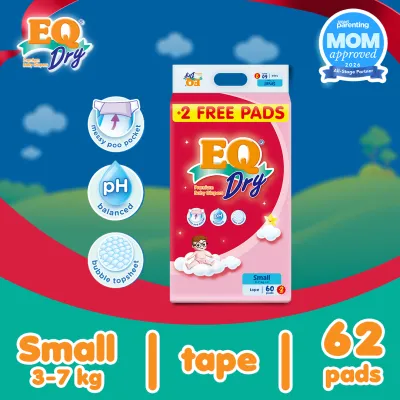
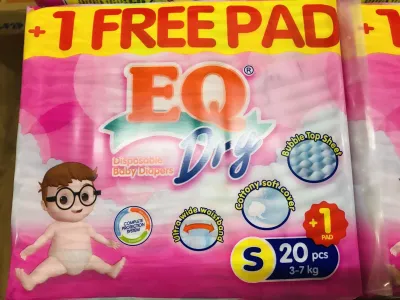
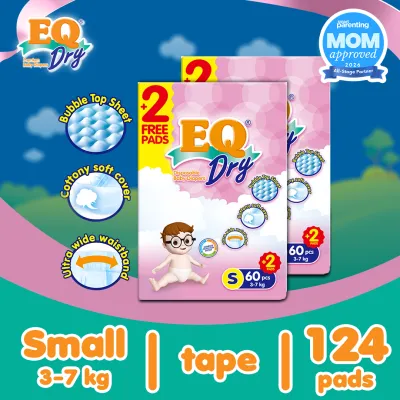
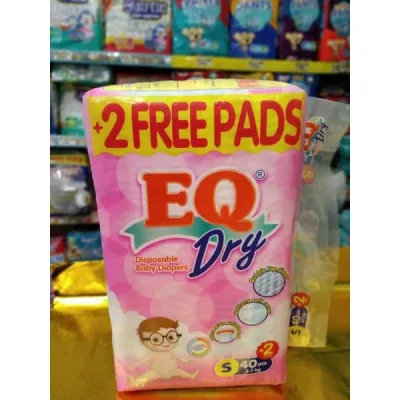
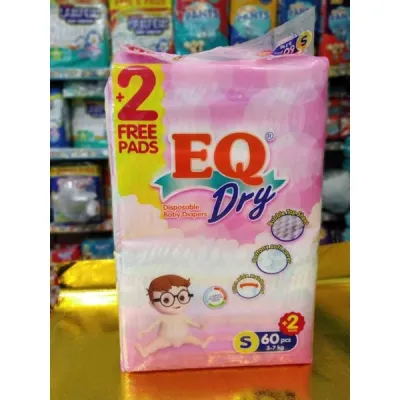
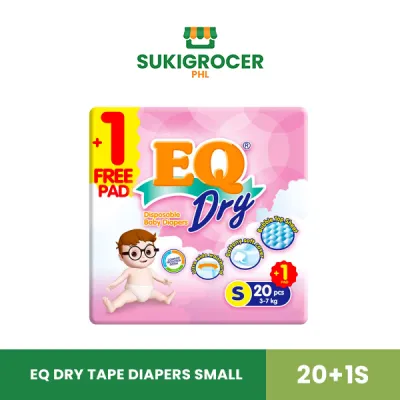
Prices are valid at publication and may change. Please refer to the product page for the latest price.
Next, examine the top sheet, which is the layer directly touching your baby’s skin. Look for descriptions of textured, embossed, or honeycombed top sheets. These three-dimensional patterns are designed to create a physical barrier between the wet core and the baby’s skin, allowing air to circulate and trapping loose stools. A flat, smooth top sheet may feel soft initially, but it can sometimes allow liquid to cling to the surface.
Finally, consider the wetness indicator. This external strip changes color when exposed to moisture, serving as a visual cue for caregivers. While highly convenient, keep in mind that in highly humid environments, some wetness indicators can react to ambient moisture in the air if the diapers are stored in open packages. Always store your diaper supply in a cool, dry place and rely on physical touch and visual inspection alongside the indicator strip.
Fit and Sizing Differences in Small Diapers
Even the most advanced absorbent core will fail to keep your baby dry if the diaper does not fit securely. Small-sized diapers are generally designed for infants transitioning out of the newborn stage, typically covering a weight range of 4 to 8 kilograms. However, because babies grow at different rates and possess unique body shapes—some having rounder bellies while others have chubbier thighs—the physical cut of each brand plays a decisive role in leak prevention.

When comparing EQ, Pampers, and Huggies, pay close attention to the waistband and leg cuffs. A high-quality waistband should offer sufficient elasticity to stretch comfortably around your baby’s abdomen without leaving deep red marks. Look for a gathered elastic waistband at the back, which is particularly effective at preventing “blowouts” when your baby is lying down.
Leg cuffs, or double leak guards, act as the final barrier against side leaks. When fastening the diaper, always run your fingers around the leg openings to ensure the cuffs are flared outward rather than tucked inward. If you notice frequent leaks despite the diaper core not being fully saturated, it is a clear sign of a fit mismatch. A diaper that is too loose creates gaps where liquid can escape before the core can absorb it, while a diaper that is too tight can cause chafing and restrict natural movement.
Skin Sensitivity and Breathability Checks
In warm and humid climates, a diaper’s breathability is just as important as its absorbency. When moisture and body heat are trapped inside a diaper, it creates a warm, damp environment that weakens the skin’s natural barrier, making it highly susceptible to diaper dermatitis and heat rash. To counter this, check the product packaging for terms like “breathable outer cover” or “micro-pores.” These features are designed to allow moisture vapor to escape while keeping liquid securely contained inside.
Caregivers should also verify the presence of added lotions, botanical extracts, or fragrances. While some brands incorporate mild scents or soothing ingredients like aloe vera to mask odors and protect the skin, these additives can sometimes trigger allergic reactions or irritation in babies with highly sensitive skin. If your baby has a history of eczema or reactive skin, look for diapers labeled as fragrance-free, hypoallergenic, or elemental chlorine-free.
Monitor your baby’s skin closely during diaper changes. Mild redness around the waist, thighs, or diaper area is an early warning sign of friction or moisture buildup. If you observe persistent redness, raised bumps, or skin peeling, stop using the current brand or size immediately. For persistent or worsening rashes, always consult a pediatrician or qualified healthcare professional to obtain an accurate diagnosis and treatment plan.
Decision Framework: Which Small Diaper Fits Your Baby?
Selecting the right Small diaper involves matching your baby’s physical characteristics and your daily caregiving routine to the specific design strengths of each brand. Because there is no single diaper that performs perfectly for every infant, use the following framework to guide your choice:
Choose EQ (Equator) if you prioritize a value-focused option for frequent daytime changes. Because frequent changes are the most effective way to prevent diaper rash, having an economical diaper allows you to change your baby as soon as they wet without worrying about high per-piece costs. When calculating your budget in ₱, compare the cost-per-piece of bulk packs. Verify that the diaper’s specific cut aligns well with your baby’s waist and thighs to ensure a secure seal.
Choose Pampers if your baby has a leaner build and you prefer a diaper with a thin, lightweight profile. The brand’s specific channel design and top-sheet texture are engineered to distribute liquid quickly, making it a strong candidate if your baby dislikes the feeling of bulkiness or if you want to minimize bulk under lightweight tropical clothing.
Choose Huggies if your baby is highly active, rolling over, or kicking frequently, and you require robust elastic structures. The brand’s waistband and leg cuff designs are often favored for their snug, secure fit, which helps prevent gaps from forming during active movement.
Before making a bulk purchase, always buy a small trial pack to verify the fit. If your baby is approaching the upper limit of the Small weight range (typically 7 to 8 kilograms), or if you experience frequent leaks despite proper fastening, consider transitioning to a Medium size. If your baby develops a persistent skin reaction, consult a pediatrician to rule out specific material sensitivities.
Frequently Asked Questions (FAQ)
How often should I change a Small diaper to maintain dryness?
To maintain optimal skin dryness and prevent irritation, you should change your baby’s Small diaper every two to three hours, or immediately after every bowel movement. Even if a diaper brand claims long-lasting dryness, leaving a wet diaper on your baby’s skin for extended periods allows bacteria and moisture to break down the skin barrier. Regular, timely changes are far more critical for preventing diaper rash than relying solely on the theoretical absorbency capacity of any diaper brand.
Does a heavier diaper always mean it is keeping the baby drier?
No, a heavy diaper simply indicates that the absorbent core has trapped a significant volume of liquid. It does not guarantee that the surface touching your baby’s skin remains dry. If the diaper’s top sheet lacks effective wicking properties, or if the core has reached its saturation point, moisture can squeeze back out under the baby’s body weight—a phenomenon known as rewet. To ensure true dryness, feel the inner lining of the diaper during changes; it should feel relatively dry to the touch even when the core is heavy.

Community discussion
Share your experience or ask a question. Comments are reviewed before publication.