
When your toddler transitions from crawling to walking, finding the right diaper becomes a daily priority. In the Philippines, where high humidity and active play can quickly lead to leaks or skin irritation, choosing between an eq large pants diaper, Pampers, or Huggies requires looking closely at absorbency, fit, and cost. Every child has a unique body shape, and what works perfectly for one toddler might cause leaks or red marks on another.
This comparison breaks down how these three major brands perform in real-world parenting scenarios. By understanding the design philosophies, sizing variations, and value propositions of each brand, you can make an informed decision that keeps your toddler dry and comfortable throughout the day and night.
Quick Answer: Which Large Pants Diaper Fits Your Toddler Best?
Selecting the ideal large pants diaper depends on your toddler’s specific body shape, skin sensitivity, and your household budget. No single diaper is the absolute best for every baby, as physical development and skin reactions vary. To find the right match, consider your primary parenting priorities and how your toddler is built.
Products mentioned in this guide
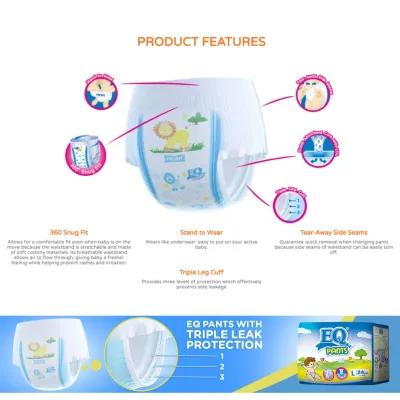
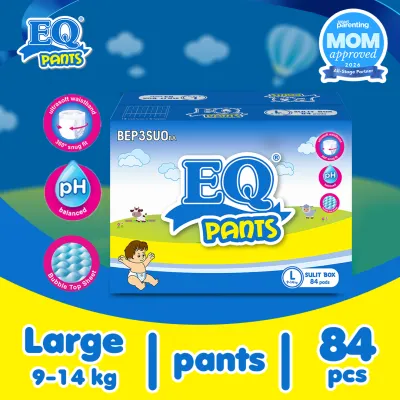
![EQ Pants Large (8-14 kg) - 40 pcs x 6 packs (240 pcs) - Diaper Pants [Case]](https://img.lazcdn.com/g/p/17ae0905fb0086b78f0de7d8a2af1943.jpg_400x400q80.jpg_.webp)
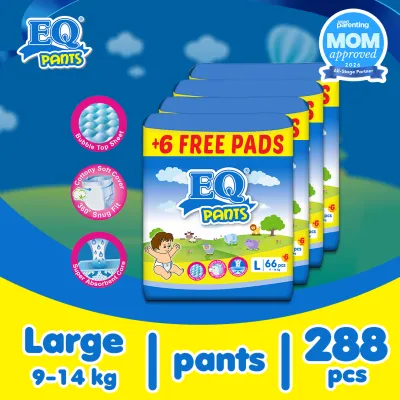
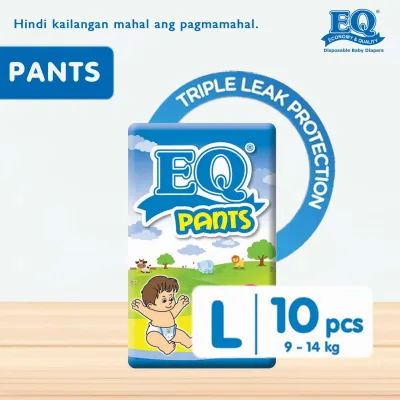
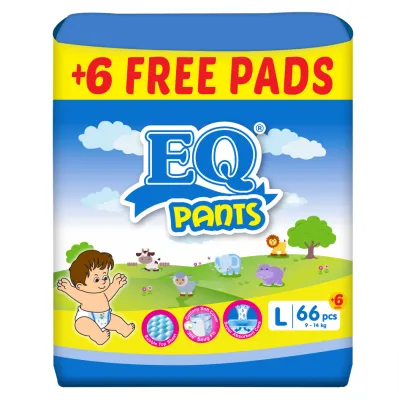
Prices are valid at publication and may change. Please refer to the product page for the latest price.
- Choose EQ if: You are prioritizing budget-friendly bulk buying and need a reliable, cost-effective option for frequent daytime changes. It is highly accessible in local supermarkets and sari-sari stores across the Philippines, making it an excellent choice for families looking to minimize daily diapering costs.
- Choose Pampers if: Your toddler has a slimmer build, and you prioritize a snug, flexible fit with rapid-dry core technologies. It is well-suited for long-duration wear, such as overnight sleep, due to its thin profile and highly absorbent channels.
- Choose Huggies if: Your toddler has chunkier thighs or a wider waist, and you require robust leak-guard barriers. Its softer, wider waistband and pocketed designs are excellent for containing heavy wetting and preventing messy blowouts during active play.
Because diaper performance depends heavily on individual body proportions and movement patterns, purchasing a small trial pack from a local store or online marketplace is the safest first step. Testing a small pack allows you to observe how the elastic sits on your toddler’s skin before committing to a larger jumbo box.
Core Comparison Factors: Absorbency, Fit, and Value
Comparing diapers requires looking beyond the brand logo to evaluate how the materials interact with your toddler’s skin and movement. In a tropical climate, these factors become even more critical for maintaining skin health and preventing discomfort.

Absorbency and Breathability in Humid Climates
High humidity in the Philippines means that heat and moisture can easily become trapped inside a diaper, leading to skin irritation or prickly heat (bungang-araw). A high-quality diaper must feature a breathable outer cover that allows hot air to escape while keeping wetness locked inside. When evaluating absorbency, look for technologies that distribute liquid evenly across the core rather than letting it pool in one spot.
To verify breathability, inspect the packaging for terms like “breathable backsheet” or “micro-pores.” These features help maintain a dry environment next to your toddler’s skin. After your toddler has worn the diaper for a few hours, feel the outside of the diaper; a cool, slightly damp sensation on the exterior often indicates that the breathable cover is successfully allowing heat and moisture vapor to escape.
Absorbency speed is equally vital for active toddlers. A diaper with a quick-dry top layer draws wetness away from the skin instantly, reducing the risk of diaper rash. If you notice that the diaper surface feels wet to the touch during changes, or if the core sags heavily and clumps together, it may be time to look for a brand with a more advanced distribution layer.
Fit, Elasticity, and Skin Sensitivity
Active toddlers who are crawling, walking, or running require waistbands and leg cuffs that stretch and flex with their movements. If the elastic is too stiff, it can cause friction against the skin, leading to painful chafing. Conversely, if the elastic is too loose, gaps will form around the thighs and waist, resulting in leaks when the toddler sits or climbs.
It is important to remember that “Large” sizing is not uniform across different brands. A large diaper from one manufacturer might be designed for a weight range of 9 to 14 kilograms, while another brand might specify 12 to 17 kilograms. Always consult the weight guidelines printed on the packaging rather than relying solely on the letter size, as your toddler’s weight and waist circumference are the most accurate indicators of fit.
When removing your toddler’s diaper, inspect the skin around the waist and thighs. Deep red indentations or marks indicate that the elastic is too tight or that the diaper cut is too narrow for your child’s body shape. If you observe these marks, consider switching to a brand known for a wider, softer waistband or transition to the next size up to protect their delicate skin.
Price per Diaper and Overall Value
Evaluating diaper costs by comparing the price of an entire box or pack can be highly misleading. Because different brands pack varying quantities of diapers into their bags, the only accurate way to compare costs is by calculating the price per piece. To do this, divide the total cost of the pack by the number of diapers inside.
In the Philippine market, diaper prices generally fall into distinct tiers. Budget-friendly options often cost between ₱6.00 and ₱9.00 per piece, while premium lines can range from ₱10.00 to ₱15.00 or more per diaper, depending on package sizes and promotional discounts. Buying jumbo packs or bulk boxes from official brand stores on e-commerce platforms typically yields a lower price per piece than purchasing small convenience packs.
When assessing overall value, consider how often you need to change the diaper. A slightly cheaper diaper that leaks frequently or requires immediate changing after one wetting can end up costing more in the long run due to increased usage and extra laundry. A more absorbent, slightly more expensive diaper that keeps your toddler dry for longer periods may provide better overall value and peace of mind.
Brand-by-Brand Breakdown: EQ Large Pants Diaper, Pampers, and Huggies
Each of the three major brands occupies a distinct position in the market, offering unique design features and material compositions tailored to different parenting needs.
EQ Large Pants Diapers
EQ (often referred to as Equator in some product lines) is widely recognized in the Philippines as a practical, value-driven choice for growing families. This brand focuses on providing reliable protection at an accessible price point, making it a staple in many Filipino households. The EQ large pants diaper is designed to offer straightforward functionality without unnecessary cosmetic additions.
When examining an EQ pants diaper, you will find a functional absorbent core designed for everyday wear. The brand typically utilizes a straightforward distribution layer that absorbs moisture steadily. While it may not feature the ultra-thin profile of premium competitors, it provides a dependable barrier that works exceptionally well for daytime routines where frequent changes are already planned.
Caregivers should monitor the diaper’s fit around the waist and thighs, as the materials used in budget-friendly lines can sometimes feel slightly stiffer than those in premium tiers. Check the leg cuffs to ensure they are fully flared outward after putting the diaper on your toddler. If your toddler has highly sensitive skin, watch for any signs of redness or heat buildup, and ensure you maintain a regular changing schedule to keep the skin dry.
Pampers Large Pants Diapers
Pampers is globally renowned for its emphasis on thinness, flexibility, and advanced absorbency technologies. The brand’s design philosophy centers on keeping the diaper as unobtrusive as possible, allowing active toddlers to move freely without feeling weighed down by a bulky wet core. This makes Pampers a popular choice for parents who prioritize a lightweight fit.
Most Pampers pants diapers feature specialized absorbent channels or gel technology designed to lock wetness away quickly and distribute it evenly across the core. This prevents the diaper from sagging or clumping in the center, which can restrict a toddler’s movement. The waistband is typically highly elastic and conforms easily to slimmer or average body profiles, providing a secure fit that stays in place during vigorous activity.
When purchasing Pampers, it is essential to verify the specific product line, such as their standard dry lines versus their premium care variants. Features like inner lining softness, wetness indicators, and overall absorbency capacity can vary significantly between these product tiers. Always check the packaging details to ensure the specific variant matches your expectations for overnight dryness or daytime play.
Huggies Large Pants Diapers
Huggies is characterized by its focus on robust construction, heavy-duty leak protection, and cushioned comfort. The brand is often favored by parents of toddlers who have rounder bellies or chunkier thighs, as the cut of the diaper tends to be slightly wider and more accommodating than slimmer alternatives. This design helps prevent the elastic from digging into soft skin.
Many Huggies pants diaper lines feature a wide, cloud-like waistband that distributes pressure evenly around the toddler’s middle. Additionally, some variants include a pocketed waistband design at the back, which acts as an extra barrier to catch and contain messy, runny stools before they can escape up the back. The leg guards are typically double-layered and stand tall to provide reliable protection against side leaks.
Because Huggies diapers often feature thicker, more cushioned materials, they may feel slightly bulkier than ultra-thin alternatives. However, this extra cushioning can provide a soft, comfortable shield for active toddlers who spend their days climbing and tumbling. Be sure to check the weight guidelines on the specific Huggies pack you choose, as their sizing boundaries may differ slightly from other brands.
How to Confirm the Right Size and Prevent Leaks
Using the correct diaper size is the most effective way to prevent leaks, blowouts, and skin irritation. Many parents mistakenly assume that diaper sizing is based primarily on age, but physical weight, body shape, and activity levels are the only reliable indicators for transition.
To ensure your toddler’s large pants diaper is performing optimally, look for these physical signs that the diaper fits correctly:
- The Waistband Position: The waistband should sit comfortably just below your toddler's belly button. If it rides too low on the hips or constantly slides down during play, the diaper is likely too small or the elastic has worn out.
- The Two-Finger Test: You should be able to slide two fingers easily under the waistband and the leg cuffs without feeling excessive resistance. If the fit is so tight that you cannot slide your fingers in, the diaper is too tight and can restrict circulation or cause chafing.
- Symmetrical Leg Cuffs: The inner and outer leg guards must be fully extended and flared outward. If the cuffs are tucked inward after you pull the pants up, liquid will easily bypass the absorbent core and leak onto your toddler's clothing.
If you experience persistent leaks even though the diaper is not fully saturated, it is often a sign that your toddler has outgrown the current size or that the diaper’s cut does not suit their body shape. In such cases, consider trying a different brand with a wider or narrower cut, or consult the manufacturer’s weight chart to see if it is time to transition to an Extra-Large (XL) size. If your toddler develops a persistent rash or severe skin irritation, stop using the product and consult a pediatrician or qualified healthcare professional.
Frequently Asked Questions (FAQ)
How do I know if my toddler needs to move up to an extra-large (XL) diaper?
Your toddler likely needs to transition to an XL diaper if their weight approaches or exceeds the upper limit specified on the large diaper package. Physical indicators include the waistband struggling to stretch over the hips, the diaper leaving deep red marks on the thighs, or the back of the diaper failing to cover the buttocks completely. Frequent leaks or blowouts during normal use, despite proper application, also indicate that the current size no longer has sufficient absorbency or coverage.
Are pants diapers better than tape diapers for active toddlers?
Pants diapers are generally highly preferred for active toddlers who can stand, crawl, or walk, as they can be pulled on quickly like underwear, even while the child is moving. The continuous elastic waistband provides a secure, flexible fit that adapts well to constant movement without loosening. Tape diapers remain useful for younger infants who spend more time lying down, or for overnight use when you want to adjust the waist tension precisely, but pants diapers offer superior convenience and ease of use for busy daytime routines.
Community discussion
Share your experience or ask a question. Comments are reviewed before publication.