
Choosing the right diaper for your growing baby is one of the most frequent decisions you will make as a parent. When comparing EQ Dry Small, Pampers Small, and Huggies Small, there is no single, universal winner that fits every infant perfectly. A baby’s unique body shape, skin sensitivity, wetting patterns, and your family’s monthly budget all play critical roles in determining which brand will perform best in your household.
To help you navigate these choices, it is helpful to look at how each brand positions its Small size diaper. EQ Dry Small is widely recognized in the Philippines as an accessible, budget-friendly option that delivers reliable everyday performance. Pampers Small focuses heavily on a slim, flexible fit and rapid moisture absorption to keep babies feeling dry. Huggies Small emphasizes structural security, featuring snug waistbands and specialized features designed to prevent messy blowouts.
To make an immediate decision, you can use a simple priority-based approach:
Products mentioned in this guide
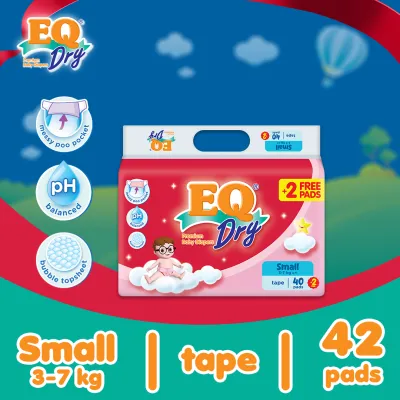
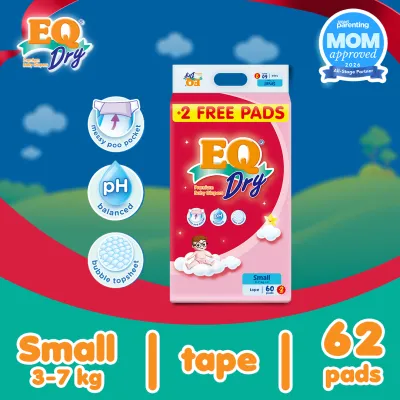
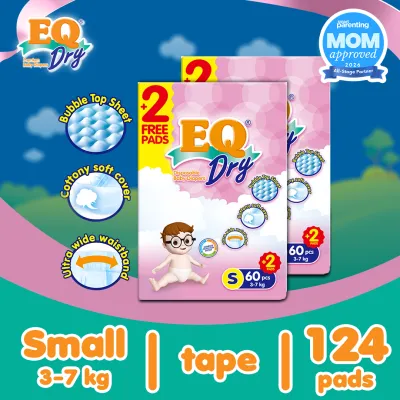
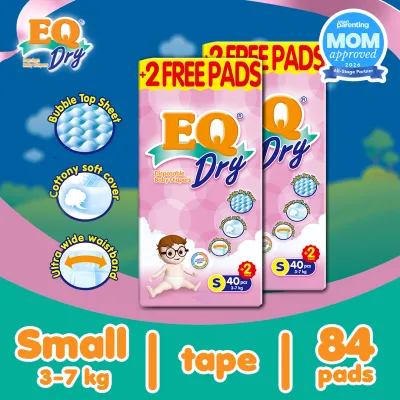
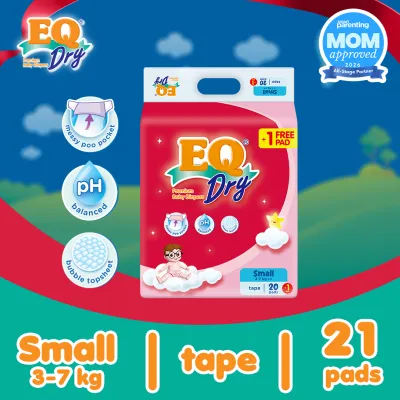
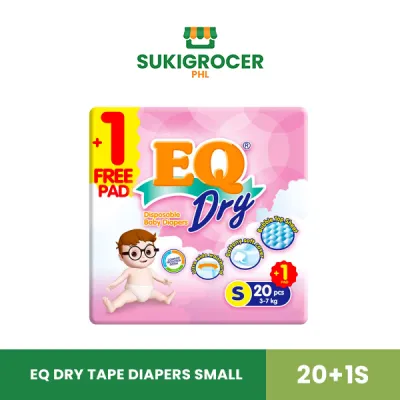
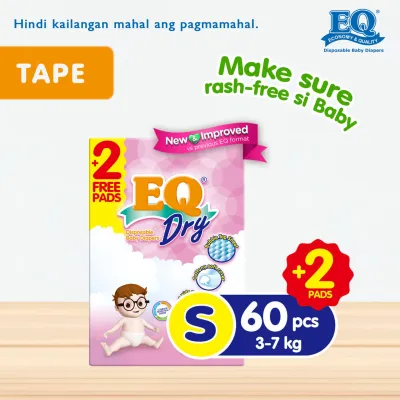
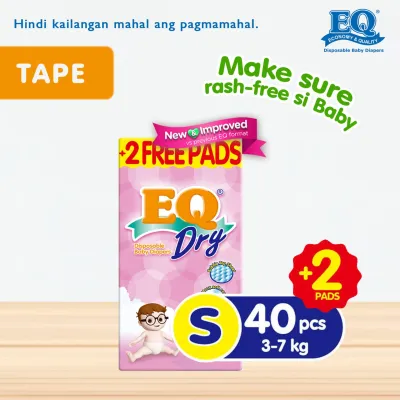
Prices are valid at publication and may change. Please refer to the product page for the latest price.
- Choose EQ Dry Small if your primary goal is to minimize cost per change while maintaining a regular, frequent daytime changing schedule.
- Choose Pampers Small if you prefer a thin, lightweight diaper that allows maximum freedom of movement and keeps the skin dry during active hours.
- Choose Huggies Small if you are constantly dealing with leaks or back blowouts and need a highly structured, secure waistband to contain messes.
Brand Positioning and Core Design Differences of EQ Dry Small, Pampers, and Huggies
Understanding the design philosophy behind each diaper brand helps clarify why they perform differently in daily scenarios. In the Philippine market, EQ Dry Small has established itself as a household staple, particularly for families looking to balance cost and utility. This brand is engineered to provide practical, straightforward protection. Its design features a standard padding distribution that covers the essential wetness zones, accompanied by a clear wetness indicator that helps caregivers identify when it is time for a change without needing to undo the tapes.
Pampers takes a different approach by prioritizing a low-profile, highly flexible design. The brand utilizes advanced absorbent channel technologies that are engineered to distribute liquid evenly across the core rather than letting it pool in one spot. This design philosophy aims to prevent the diaper from sagging heavily between the baby’s legs as it fills, which can restrict movement and cause discomfort. The overall profile of a Pampers Small diaper is noticeably thinner than many of its competitors, making it a popular choice for parents who prefer a less bulky fit under clothing.
Huggies focuses heavily on structural security and containment, which is particularly important during the early months when a baby’s diet consists entirely of liquid milk. The brand is well-known for its secure, stretchy waistbands and its signature pocketed back waistband. This pocket is specifically designed to catch runny stools and prevent them from escaping up the baby’s back—a common parenting challenge known as a blowout. The inner liner of Huggies diapers often features a cushiony, textured surface designed to minimize direct contact between the baby’s skin and wetness.
When selecting any of these brands in the Small size, it is crucial to look beyond the “Small” label and verify the specific weight range printed on the packaging. While most Small diapers are designed for babies weighing between 4 and 8 kilograms, the exact cutoffs and physical fit can vary slightly between brands and product lines. A baby who is at the upper limit of one brand’s weight range may find it fits too snugly, while another brand’s Small might still offer a comfortable, secure fit. Always check the manufacturer’s guidelines on the pack before purchasing a large quantity.
Absorbency and Leak Protection: Observing Real-World Performance
Evaluating how well a diaper absorbs liquid and prevents leaks requires observing its performance under real-world conditions rather than relying solely on manufacturer claims. Effective absorbency is not merely a matter of how much total liquid a diaper can hold; it is about how quickly the core can pull moisture away from the baby’s skin and lock it away securely. In the humid climate of the Philippines, a diaper that leaves the skin feeling damp can quickly lead to discomfort and skin irritation.

To assess absorbency at home, parents can use several practical, observable metrics. First, observe the physical weight and bulk of the diaper after a long period of use, such as overnight. A high-performing core will feel heavy but dry to the touch on the inside, indicating that the liquid has been successfully locked away. Second, perform a simple touch test: gently press a dry tissue against the inner lining of a wet diaper during a change. If the tissue remains dry, the diaper is doing an excellent job of preventing wetness from rewetting the skin. Finally, watch how the diaper behaves during active play; if the absorbent material bunches up or shifts to one side, it may leave empty gaps that are prone to leaking.
Leak protection is also heavily dependent on the diaper’s physical barriers. When examining EQ Dry Small, Pampers, or Huggies, pay close attention to the elasticity of the leg cuffs and the height of the standing leak guards. These guards should stand upright when the diaper is opened and fit snugly around the baby’s thighs without digging in. Huggies diapers often feature a pocketed waistband at the back, which provides an extra layer of defense against leaks when the baby is lying down.
There is an inherent trade-off between diaper bulk and total capacity. A diaper with a thicker, more traditional absorbent core may offer high capacity and feel reassuringly solid, but it can become bulky and heavy when wet, potentially restricting a baby’s natural movements. Conversely, an ultra-slim diaper like Pampers may feel incredibly lightweight and comfortable, but it may require more frequent changes to avoid reaching its capacity limit. Observing how your baby wets—whether they release large amounts of liquid at once or wet lightly and frequently—will help you decide which design matches their pattern.
Comfort, Fit, and Skin Sensitivity
A diaper’s fit and how it interacts with a baby’s delicate skin are just as important as its absorbency. Because babies are constantly moving, stretching, and rolling, a diaper must accommodate these movements without causing friction or leaving gaps. Pampers typically favors a highly elastic, slim profile that stretches easily around the waist and thighs, making it highly adaptable to active babies who move frequently. Huggies offers a more structured, secure fit that holds its shape well, providing a sense of sturdy containment. EQ Dry Small provides a classic, standard fit that offers a balanced middle ground, suitable for everyday wear during normal daily activities.
Skin sensitivity is a paramount concern for parents, especially in the tropical heat of the Philippines where sweat and humidity can exacerbate skin issues. While diaper packaging often features terms like “hypoallergenic,” “breathable,” or “dermatologically tested,” these labels are voluntary marketing terms and do not guarantee that a specific diaper will not irritate your baby’s skin. The most reliable way to verify breathability and skin compatibility is through direct observation of your baby’s skin during daily changes.
Caregivers should establish a routine of checking for physical signs of irritation. Look closely for deep red marks or indentations around the baby’s thighs and waist. These marks indicate that the elastic is either too tight, the diaper size is too small, or the material is too stiff for your baby’s body shape. Additionally, monitor the diaper area closely for any signs of diaper rash, which typically presents as localized redness, small bumps, or warm skin in areas that come into direct contact with wetness or friction.
To maintain skin health, it is essential to follow safe diapering practices. If you notice persistent redness or irritation that does not improve with regular diaper changes and the application of a barrier cream, stop using the current diaper brand immediately. Because every baby’s skin chemistry is unique, a brand that works perfectly for one infant may cause irritation for another. If a diaper rash persists, spreads, or appears painful to the baby, consult a pediatrician or qualified healthcare professional for an accurate diagnosis and treatment plan.
Value for Money: Evaluating Cost and Usage
When managing household expenses, calculating the true value of a diaper goes beyond comparing the shelf price of different packages. To find the most cost-effective option, parents should calculate the cost per individual diaper. This is done by dividing the total price of the pack by the number of diapers inside. For example, a larger bulk pack may have a higher upfront cost but often delivers a significantly lower cost per diaper compared to smaller convenience packs or single-unit purchases.
To secure the best possible rates, it is highly beneficial to look for bulk purchasing opportunities. Buying larger boxes or multi-pack bundles from official brand stores on authorized online marketplaces or during major supermarket sales events often yields substantial discounts and promotional offers. However, parents should be mindful of “hidden costs” associated with cheaper diaper options. If a highly affordable diaper has a lower absorbency capacity, you may find yourself changing your baby every two hours to prevent leaks, whereas a slightly more expensive, premium diaper might comfortably last four to six hours. In this scenario, you would use twice as many budget diapers per day, making the premium option more economical in the long run.
To make an informed financial decision, regularly check current prices, shipping fees, and bundle deals on authorized online retailers, as promotions and discounts fluctuate frequently. It is also wise to factor in the cost of additional supplies, such as baby wipes and diaper rash creams, which may be used more frequently if a diaper does not keep the skin sufficiently dry. Ultimately, true value is not simply the lowest price tag; it is the optimal balance between reliable leak protection, your baby’s physical comfort, and your family’s realistic budget constraints.
Decision Framework: Matching the Diaper to Your Baby's Needs
To help you make a clear and confident decision, you can use a structured framework that matches each diaper brand to specific parenting priorities and baby characteristics. Because no single diaper is perfect for every situation, identifying your primary concern will guide you to the right choice.
Choose EQ Dry Small if:
- You are working within a strict monthly household budget and need to keep diapering costs as low as possible.
- Your baby is a relatively light wetter who does not require heavy-duty overnight absorbency.
- You practice a frequent daytime changing routine, allowing you to replace the diaper as soon as it becomes wet.
Choose Pampers Small if:
- Your baby is highly active, rolling, or starting to crawl, and requires a slim, lightweight diaper that does not restrict movement.
- You prioritize rapid moisture absorption to keep the baby's skin feeling dry to the touch, especially during daytime play.
- You prefer a low-profile design that fits neatly under stylish baby clothes without looking bulky.
Choose Huggies Small if:
- Your baby is prone to frequent back blowouts or has loose, runny stools that easily escape standard waistbands.
- You prefer a highly structured diaper with a secure, stretchy waistband that stays firmly in place.
- You need robust, high-standing leak guards to contain heavy wetting or movement-induced leaks.
Verify first if: Before committing to purchasing massive bulk boxes of any diaper brand, it is strongly recommended to buy small trial packs or single sleeves first. Every baby has a unique anatomical shape, and a diaper that fits one baby perfectly may leak on another of the exact same weight. Testing a small quantity allows you to observe the fit, check for skin compatibility, and evaluate real-world absorbency in your specific home environment before making a larger financial commitment.
Frequently Asked Questions (FAQ)
When should I move my baby from Small to Medium diapers?
While the weight guidelines printed on the diaper packaging serve as a helpful starting point, physical fit indicators are far more reliable signs that it is time to size up. You should transition your baby to a Medium diaper if you notice deep red marks or elastic indentations on their thighs or waist after use. Frequent leaks or blowouts, even when the diaper is not fully saturated, also suggest the current size is too small. Additionally, if the waistband feels tight and you can no longer comfortably fit two fingers between the diaper and your baby’s tummy, it is time to move up.
Can I mix different diaper brands for day and night use?
Yes, mixing different diaper brands is an excellent and highly practical strategy that many parents use to balance cost and performance. You can use a more affordable, lightweight option like EQ Dry Small during the day when you are awake and able to change your baby frequently. Then, you can switch to a highly absorbent, premium option like Pampers or Huggies for nighttime use. This approach ensures your baby stays dry and comfortable during long sleep stretches, minimizing nighttime wake-ups due to wetness, while keeping your overall diapering expenses manageable.

Community discussion
Share your experience or ask a question. Comments are reviewed before publication.