
Quick Answer: Which Formula Brand Should You Choose?
There is no single formula brand that serves as a universal choice for every baby aged 6 to 12 months. The ideal option for your child depends on their digestive tolerance, specific nutritional needs, and your family’s monthly budget.
Enfamil is often selected by parents who prioritize specific cognitive-support ingredients on the label. NAN is frequently chosen for its focus on optimized proteins and digestive comfort. Nido offers options geared toward general growth, though parents must carefully verify the age suitability on the packaging, as many Nido products are formulated strictly for children aged one year and older.
Always consult your pediatrician before switching formulas or introducing a new brand. A healthcare professional is essential to help you address your baby’s unique developmental needs and ensure a safe transition.
Products mentioned in this guide

Prices are valid at publication and may change. Please refer to the product page for the latest price.
Nutritional Priorities for 6-12 Month Olds
Between 6 and 12 months, your baby undergoes rapid physical and cognitive development. During this stage, their natural iron stores begin to deplete, making iron-fortified formulas and iron-rich solid foods crucial to support healthy blood cell production.

Calcium, vitamin D, and zinc also become essential to support growing bones and a developing immune system. As you introduce solid foods, formula milk continues to provide a vital source of hydration and concentrated nutrients.
It is important to remember that formula at this stage complements, rather than replaces, a diversifying solid food diet. When reading follow-on formula labels, often designated as Stage 2, look for the nutrient density per serving to ensure it aligns with the recommended dietary intakes for older infants.
Brand Profiles: What to Check on the Label
Enfamil Options for Older Infants
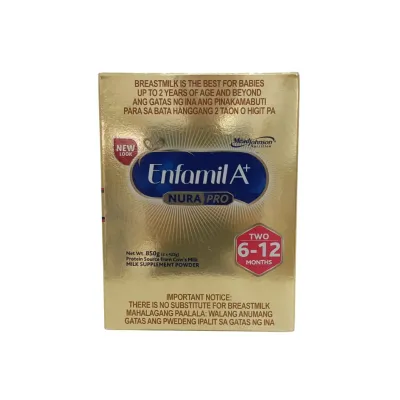
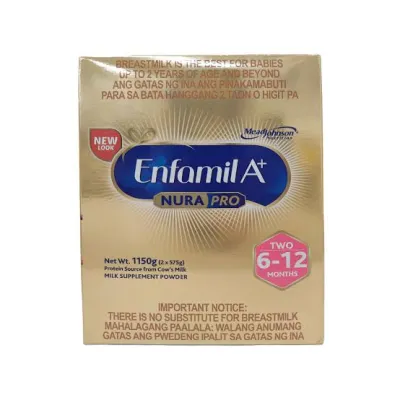
Enfamil’s Stage 2 formulas available in the Philippines are specifically designed for infants from 6 to 12 months. When examining the tin, look for their proprietary nutrient blends, which often highlight DHA (docosahexaenoic acid) and ARA (arachidonic acid) on the front panel.
Parents should verify the ingredient list for specific prebiotics, such as polydextrose and galactooligosaccharides (GOS), which are added to support gut health. Check the nutrition facts table to compare the exact milligrams of DHA per serving against other brands.
Always review the manufacturer’s preparation instructions on the back of the tin. Enfamil formulas typically require a specific scoop-to-water ratio that must be followed precisely to prevent under-nutrition or digestive strain.
Nido Options for Older Infants
Nido is a household name in the Philippines, but parents must exercise caution regarding age suitability. Many popular Nido products, such as Nido 1+, are formulated strictly for toddlers aged one year and older and are not suitable for infants under 12 months.
If you are looking for a Nido product suitable for the 6-12 month stage, you must carefully inspect the packaging for the specific infant or follow-on formula designation. Do not use standard Nido powdered milk blends for infants in this age bracket, as their digestive systems cannot yet process the protein and mineral concentrations of regular cow’s milk.
When evaluating an age-appropriate Nido formula, check the label for added nutrients like iron, zinc, and vitamins A, C, and D. These options are generally positioned as budget-friendly choices for overall growth and immune support.
NAN Options for Older Infants
NAN offers several follow-on formula options for the 6-12 month stage, typically labeled as Stage 2. This brand is widely recognized for its focus on protein quality and digestive comfort.
When reading a NAN label, look for terms like “optipro” or “partially hydrolyzed whey protein.” These indicate that the milk proteins have been broken down into smaller pieces, which may be easier for some infants to digest.
Additionally, check the ingredient list for active probiotic cultures, such as Bifidobacterium lactis. Ensure you verify the exact stage number on the front of the tin to guarantee it is formulated specifically for the 6-12 month age range.
Comparing Key Decision Factors
When comparing the physical labels of Enfamil, Nido, and NAN, focus on the core macronutrients and micronutrients. Compare the amount of DHA, iron, and protein per 100 kcal. While Enfamil often emphasizes brain-development nutrients, NAN focuses on protein optimization, and Nido targets general growth.
If your baby has a sensitive stomach prone to gas or colic, look closely at the protein source on the label. Standard formulas use intact cow’s milk protein. Comfort-focused variants, often found in the NAN line, use partially hydrolyzed proteins. Always check with your pediatrician to see if a specialized comfort formula is necessary.
Formula feeding is a significant ongoing expense. Calculate the cost per serving by dividing the price of the tin by the total number of servings it yields. Nido options are generally more economical, while Enfamil and specialized NAN lines tend to sit at a premium price point. Additionally, consider stock consistency in your local supermarkets or trusted online marketplaces in the Philippines, as sudden supply shortages can make switching brands difficult.
The high humidity in the Philippines can affect powdered milk. Always store opened tins in a cool, dry place, and ensure the lid is sealed tightly after every use to prevent clumping and spoilage.
| Brand & Variant | Key Added Nutrients to Verify | Cost per Serving ₱ | Preparation Notes |
|---|---|---|---|
| Enfamil Stage 2 | DHA, ARA, Prebiotics (GOS/Polydextrose) | Check local retail price | Standard scoop-to-water ratio; mix with lukewarm water |
| Nido (Age-Appropriate) | Iron, Zinc, Vitamins A, C, D | Check local retail price | Verify exact age suitability on packaging before purchase |
| NAN Stage 2 | Optimized Protein, Probiotics (B. lactis) | Check local retail price | Water temperature must not exceed 40°C to keep probiotics active |
Decision Framework: Which Brand Fits Your Baby?
- Choose Enfamil if: You want to prioritize specific label claims related to cognitive development ingredients, your baby tolerates standard milk proteins well, and your budget accommodates a premium price point.
- Choose Nido if: You are looking for a widely available, budget-friendly option focused on general growth and bone health, and you have verified that the specific product is strictly certified for the 6-12 month age bracket.
- Choose NAN if: Your baby has shown mild digestive sensitivities, you want to explore protein-optimized or probiotic-supported options, and your pediatrician has cleared your baby for a standard or partially hydrolyzed follow-on formula.
- Verify First if: Your baby has a diagnosed cow's milk protein allergy, severe reflux, or other medical conditions. Standard commercial formulas are not suitable for these needs, and you must use a specialized therapeutic formula prescribed by your pediatrician.
Safe Transitioning and When to Consult a Pediatrician
When switching your baby from one formula brand to another, or transitioning from Stage 1 to Stage 2, a gradual transition is highly recommended. This allows your baby’s digestive system to adapt slowly, minimizing the risk of gas, constipation, or loose stools.
A typical transition involves mixing the old and new formulas over several days. For example, start with 75% of the old formula and 25% of the new formula for the first two days, then move to a 50/50 mix, and gradually increase the new formula until the transition is complete.
Monitor your baby closely during this period. Look out for signs of formula intolerance, such as persistent diarrhea, severe constipation, unusual skin rashes, vomiting, or excessive fussiness after feeding.
If you observe any of these symptoms, or if your baby refuses to feed, stop the new formula immediately and consult your pediatrician or a qualified healthcare professional. Never attempt to manage severe digestive issues or suspected allergies without professional medical guidance.
Community discussion
Share your experience or ask a question. Comments are reviewed before publication.