
Electric cribs and motorized bassinets have become popular tools for modern parents seeking to soothe their newborns with automated motion. While these devices can be highly effective at calming a fussy infant, safety must remain the primary consideration before making a purchase. Because newborns lack the physical strength and motor skills to rescue themselves from unsafe sleeping positions, any motorized sleep environment requires a thorough safety evaluation. By understanding how these mechanical systems operate and verifying key structural safeguards, you can ensure a secure and comfortable sleep space for your baby.
Understanding Motorized Crib Mechanisms and Newborn Safety
Motorized cribs utilize various mechanical actions, such as gentle swaying, gliding, or subtle bouncing, to mimic the comforting motion of a parent’s arms. When evaluating these devices, the smoothness of the motion is paramount. Jerky, abrupt, or overly rapid movements can startle a newborn, potentially causing overstimulation or physical discomfort. It is essential to choose a model that offers gradual speed transitions and gentle, controlled pathways of movement.
Another critical factor is the noise level generated by the crib’s motor. While some infants find a low, consistent hum soothing, loud or grinding mechanical noises can disrupt delicate newborn sleep cycles. High-quality models typically feature quiet, brushless motors designed to operate at a whisper-soft volume. When testing a crib, listen closely to the motor under load to ensure it does not produce distracting clicks or high-pitched whines that could interfere with your baby’s rest.
Products mentioned in this guide
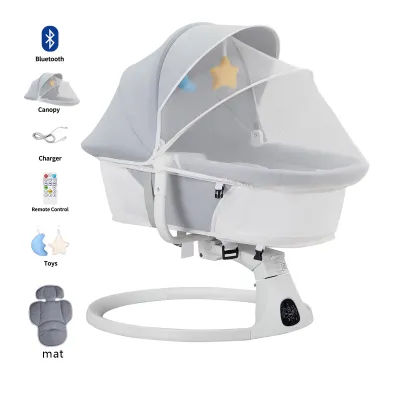





Prices are valid at publication and may change. Please refer to the product page for the latest price.
Newborn physical development also dictates strict requirements for motorized sleep surfaces. During the first few months of life, infants cannot roll over, lift their heads reliably, or reposition themselves if they slide. If a motorized crib tilts too far during its cycle, gravity may cause the baby to slide into a corner or press their face against the side fabric. Consequently, the sleep surface must remain completely flat and level throughout the entire range of motion, preventing any pooling or sliding of the infant.
Essential Safety Features to Verify Before Purchase
When shopping for an electric crib, a built-in automatic shut-off timer is one of the most important safety features to verify. Continuous, hours-long motion is not recommended for infant sleep, as it can mask signs of distress or prevent the baby from entering deep, restful sleep phases naturally. Look for a system that allows you to set a timer for 15, 30, or 45 minutes, automatically transitioning the crib to a stationary sleep surface once your baby has drifted off.

Structural stability is another non-negotiable requirement for any motorized baby furniture. The crib must feature a wide, heavy base that prevents tipping, even when the motor is operating at its highest speed setting or when older siblings bump against the frame. Carefully inspect the joints, folding mechanisms, and gliding tracks to ensure all moving parts are fully enclosed. Exposed gears or pinch points present a severe hazard for curious little fingers and loose bedding.
Power safety and cord management require careful planning, especially in tropical environments like the Philippines where high humidity and frequent use of cooling appliances can crowd electrical outlets. The power cord must be robust, properly insulated, and long enough to reach the outlet without being stretched taut across a walkway. If the model utilizes a battery compartment for cordless operation, verify that the compartment door is secured with a screw to prevent older children from accessing the batteries.
Finally, examine the design of the sleep surface and the surrounding barriers. The mattress must be exceptionally firm, flat, and fit snugly within the frame without leaving any gaps along the edges where a baby’s head could become wedged. The side walls should consist of taut, highly breathable mesh fabric to ensure continuous airflow, even if the baby happens to slide against the side. Avoid any models that include plush, quilted liners or loose pillows, as these significantly increase the risk of suffocation.
How to Check Certifications and Manufacturer Guidelines
Before purchasing any electric crib, especially from online marketplaces or international distributors, you must verify its safety certifications. Look for recognized testing laboratory marks on the product’s physical label, packaging, or official user manual. These marks indicate that the electrical components, structural integrity, and materials have been independently tested and comply with strict international safety standards for infant products.
Manufacturer guidelines provide crucial operational limits that you must follow to keep your baby safe. Locate the specified maximum weight capacity and developmental milestones in the user manual before your first use. Most motorized cribs are designed strictly for the first few months of life; once your baby begins to roll over, push up on their hands and knees, or reach the weight limit, you must immediately disable the motorized features.
Product recalls are another critical aspect of consumer safety that parents must actively monitor. Before finalizing your purchase, search official consumer protection databases and the manufacturer’s website for any active safety notices or recalls associated with the specific model. Even highly rated brands can occasionally face recalls due to mechanical wear or design flaws discovered after release, making a quick online check an essential step in your buying process.
Safe Setup and Daily Usage Boundaries
Proper physical placement of the electric crib within your home is vital to maintaining a safe sleep environment. Position the crib well away from windows, where dangling blind cords, curtains, or direct tropical sunlight can pose immediate hazards. Additionally, ensure the crib is kept clear of wall decorations, shelves, electrical outlets, and other appliances like humidifiers or fan units that could fall or blow air directly onto the baby.
Cable safety must be managed meticulously during setup. The power cord should be routed along the wall and secured so that it remains completely out of reach of both the infant inside the crib and any toddlers playing nearby. Never run power cables under rugs, through doorways, or pinched behind heavy furniture, as this can wear down the protective insulation over time and create a hidden fire hazard.
Knowing exactly when to transition away from the motorized features is key to preventing accidents. As your baby grows, their physical strength and mobility will increase rapidly. The moment you observe your baby attempting to roll over, sit up, or pull themselves up using the sides of the crib, you must discontinue the use of the swaying or gliding motions. At this stage, the risk of the baby falling or climbing out of the shallow bassinet increases dramatically, requiring a transition to a standard, stationary crib.
Frequently Asked Questions (FAQ)
Can I leave my newborn in an electric crib overnight?
While motorized motion is an excellent tool for soothing a fussy newborn, it is not recommended to leave the motion running continuously overnight. Safe sleep guidelines emphasize that infants should sleep on a flat, stationary surface to reduce the risk of deep sleep suppression and physical hazards. Use the crib’s automatic timer to ensure the motion stops shortly after your baby falls asleep, allowing them to rest safely on a stationary surface for the remainder of the night.
Do electric cribs help with infant colic or reflux?
Gentle, rhythmic motion can help soothe a crying baby and provide temporary comfort during periods of fussiness, but electric cribs are not medical devices. They do not cure or treat underlying medical conditions like infant colic or acid reflux. If your baby exhibits persistent symptoms of reflux, frequent spitting up, or inconsolable crying, it is important to consult a pediatrician for professional medical guidance rather than relying solely on mechanical crib features.
What should I do if the motor stops working or makes unusual noises?
If the crib’s motor begins to make grinding, clicking, or unusually loud noises, or if the motion becomes erratic, you should immediately unplug the device and stop using the motorized features. Do not attempt to open the motor housing or perform DIY electrical repairs, as this can void the warranty and compromise safety. Contact the manufacturer’s customer service department directly to inquire about authorized repairs, replacement parts, or warranty coverage.
Community discussion
Share your experience or ask a question. Comments are reviewed before publication.