
The short answer is no; a baby walker is not a developmental necessity. While often viewed as a classic milestone tool, pediatric experts generally view walkers as optional mobility aids rather than essential learning devices. Your baby can successfully transition from crawling to independent walking without ever using one.
Deciding whether to introduce a walker depends entirely on your baby’s physical milestones, your home environment, and your commitment to safety. Before purchasing, it is essential to distinguish between traditional sit-in walkers and push walkers, as they impact physical development in completely different ways.
Sit-In Walkers vs. Push Walkers: Knowing the Difference
Traditional sit-in walkers consist of a fabric seat suspended inside a rigid, wheeled frame. In this setup, the baby’s body weight is supported by the seat, allowing them to glide across smooth floors using their toes. While these devices keep a baby upright, they alter natural movement patterns. Because the seat carries the baby’s weight, they do not build the heel-to-toe walking motion or the balance required for independent walking.
Products mentioned in this guide
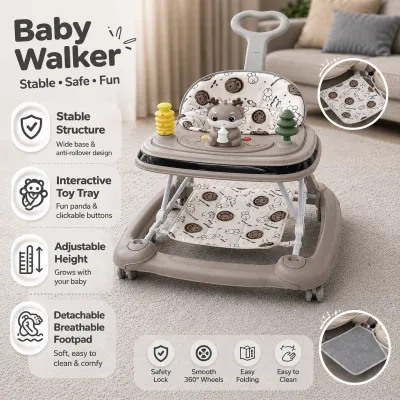
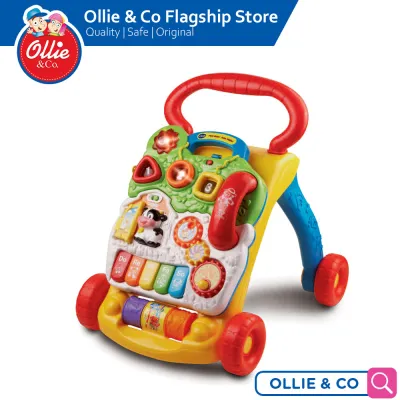
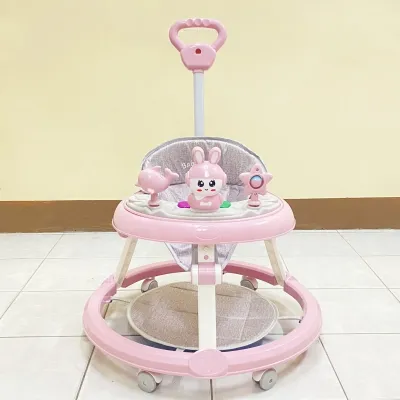
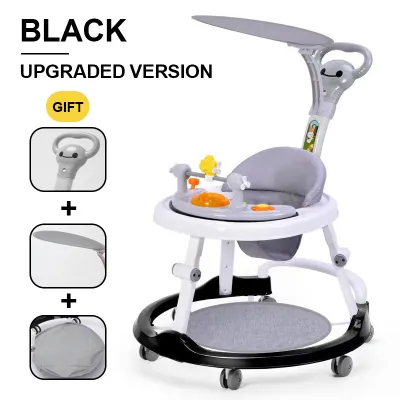
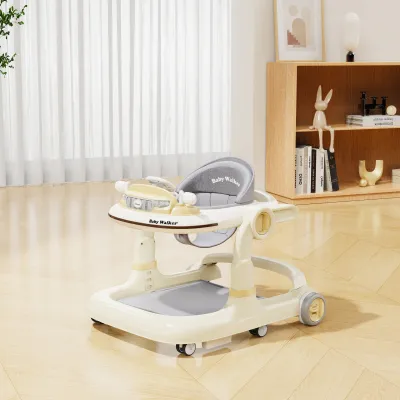
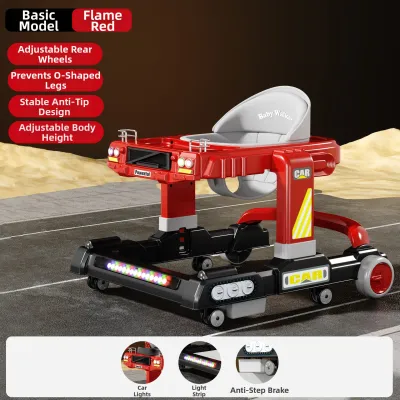
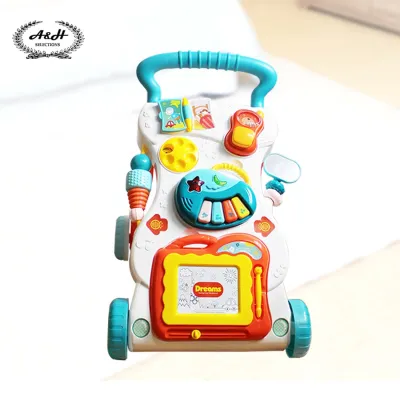
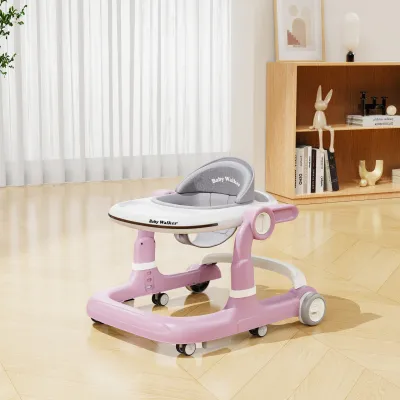
Prices are valid at publication and may change. Please refer to the product page for the latest price.
In contrast, push walkers are active toys that your baby stands behind and pushes forward. These devices feature a sturdy handle attached to a wheeled base, often decorated with interactive activity panels. Because push walkers require the baby to stand upright on their own, they encourage a natural walking posture. The baby must actively engage their core, thighs, and calves to push the toy, which helps build the functional strength needed to walk independently.
When budgeting for baby gear, you might find options ranging in price, but safety features should always dictate your purchase over a low ₱ price tag. Carefully inspect the product packaging and user manual before buying. Look for clear labels indicating compliance with recognized safety standards, structural stability, and specific age or weight limits. Because safety standards and product recalls can change, parents should proactively verify that any model they consider meets current safety guidelines before bringing it home.
Observable Signs Your Baby Is Ready for Mobility Support
Determining when to introduce a mobility toy is not a matter of waiting for a specific month on the calendar. Instead, you must closely observe your baby’s physical capabilities during daily floor play. The most reliable sign of readiness is when your baby begins pulling themselves up to a standing position using sturdy furniture, such as a heavy sofa or crib rails. This action demonstrates that their legs are ready to bear their own body weight and that their joints are developing stability.

Another key milestone is “cruising,” which occurs when your baby takes sideways steps while holding onto furniture for balance. Cruising shows that your baby is learning to shift their weight from one foot to the other, a fundamental skill for independent walking. Additionally, your baby should exhibit strong core strength, meaning they can sit upright for extended periods without tipping over and can easily transition from sitting to crawling on their own.
If your baby displays these motor skills, they may have the physical foundation required to interact safely with a push walker. However, if they still struggle to hold their head up steadily or cannot support their own weight when held upright, their muscles are not yet ready. Always prioritize your baby’s actual physical control and coordination over general age recommendations found on toy packaging.
When to Wait: Signs It Is Too Early for a Walker
Introducing a walker or push toy too early can disrupt your baby’s natural physical progression and introduce safety risks. One of the clearest red flags is poor head and neck control. If your baby’s head wobbles or tilts forward when held upright, their spinal muscles are not yet strong enough to handle the upright posture demanded by a mobility device. Similarly, if your baby’s legs collapse or fold under them when you gently place their feet on the floor, they lack the lower-body strength required for standing play.
Placing a baby in a mobility device before their muscles and bones are ready can lead to poor postural habits. For instance, in a sit-in walker, an unprepared baby may develop a habit of walking exclusively on their tiptoes, which can tighten the Achilles tendons over time. Furthermore, a baby who lacks core stability is much more likely to lose their balance, leading to tipping hazards if they lean too far in one direction while using a push toy.
If you notice any of these signs, the best course of action is to pause any plans to purchase a walker. Instead, focus on providing your baby with plenty of supervised floor time. Allowing your baby to roll, crawl, and play on a flat, firm surface is the most effective way to build the core, back, and neck muscles they need.
Safety Boundaries and Professional Guidelines to Verify
Before introducing any wheeled mobility device into your home, it is highly recommended to consult your pediatrician. Many professional pediatric associations advise against the use of traditional sit-in walkers due to the risk of accidental injuries. Your pediatrician can provide personalized guidance based on your baby’s developmental progress and help you weigh the potential risks against any perceived benefits.
If you decide to use a push walker, you must carefully verify the product’s specifications and safety features. Check the manufacturer’s documentation for the maximum weight and height limits, and ensure the device features a wide, stable base that resists tipping. Some push walkers come with adjustable wheel tension or built-in braking mechanisms that allow you to slow down the wheels, preventing the toy from rolling away too quickly on smooth surfaces.
Supervision and environmental preparation are critical when using any mobility toy. In homes with smooth tiled floors or polished wooden surfaces, wheeled toys can move surprisingly fast. You must establish a secure play area by blocking off all access to stairs, steps, and uneven thresholds with sturdy safety gates. Keep the play area clear of loose rugs, electrical cords, and low tables with sharp corners. Additionally, ensure that the baby cannot access high-risk areas like kitchens, bathrooms, or outdoor patios where hot surfaces, water hazards, or steep drops could lead to accidents.
Effective Alternatives to Support Your Baby's Walking Journey
If you decide that a walker is not the right fit for your family, there are several highly effective alternatives that support your baby’s physical development without the risks associated with wheels. Stationary activity centers are an excellent option. These devices feature a central seat surrounded by interactive toys, allowing your baby to bounce, spin, and stand upright in a fixed location. Because they do not have wheels, they keep your baby safely in one spot while still providing sensory stimulation and leg-strengthening exercise.
Another wonderful alternative is to utilize your existing home environment to encourage natural cruising. You can arrange heavy, stable furniture—such as a solid coffee table or sofa—in a safe configuration that allows your baby to practice stepping from one piece to another. Sturdy, weighted wooden push carts can also offer excellent support, as their weight prevents them from sliding out from under a baby who is still mastering their balance.
Ultimately, the most beneficial tool for your baby’s walking journey is completely free: unstructured, supervised floor play. Spending time on the floor encourages your baby to crawl, which builds bilateral coordination and strengthens the shoulders, core, and hips. Crawling also enhances spatial awareness and cognitive problem-solving as your baby navigates obstacles. By prioritizing floor play and natural cruising, you give your baby the perfect foundation to take their very first independent steps with confidence.
Frequently Asked Questions (FAQ)
Do baby walkers help infants learn to walk faster?
No, baby walkers do not help infants learn to walk faster, and they can sometimes even delay the process. Walking is a complex developmental milestone that requires a combination of muscle strength, balance, and neurological coordination. Traditional sit-in walkers do not teach babies how to balance their own body weight or align their hips and feet naturally. To support your baby’s natural timeline, consult pediatric resources and focus on providing ample opportunities for unstructured floor play, crawling, and cruising.
What is the typical weight and height limit for a push walker?
There is no universal weight or height limit for push walkers, as these specifications vary significantly depending on the manufacturer and the materials used. You must always check the product label, packaging, or user manual for the exact limits of your specific model. As a general rule, you should stop using a push walker immediately once your baby exceeds the stated weight limit, outgrows the height recommendation, or is able to walk completely independently without any physical support.
Community discussion
Share your experience or ask a question. Comments are reviewed before publication.