
Finding the right diaper caddy organizer comes down to balancing your daily caregiving routine, your home’s layout, and the climate you live in. A well-chosen caddy keeps diapers, wipes, rash creams, and small grooming tools organized and within arm’s reach, saving you from stressful searches during diaper changes. To make the best choice, you should look for a size that fits your primary changing space, a layout with adjustable dividers and quick-access pockets, and durable, moisture-resistant materials that can withstand local humidity.
Selecting the wrong size or material can lead to cluttered spaces, sagging compartments, or even mold issues in tropical environments. By diagnosing your specific storage needs and understanding how different features function, you can select an organizer that simplifies your daily workflow.
Assess Your Diaper Changing Routine to Define Your Needs
Before browsing online marketplaces or baby boutiques, take a few days to observe where you actually change your baby. Many parents set up a beautiful, dedicated changing table in the nursery, only to find they perform most diaper changes on the living room sofa, the master bed, or even in the back of the car. If your routine involves moving from room to room, a highly portable caddy with sturdy handles is essential. Conversely, if you live in a multi-story home or a compact condominium in the Philippines, you might benefit from multiple smaller caddies placed strategically on different floors or in key rooms.
Products mentioned in this guide
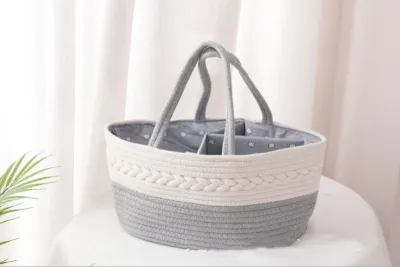
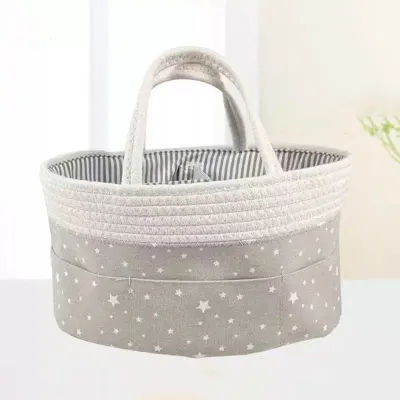
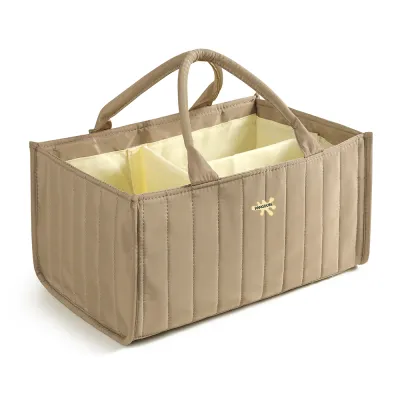
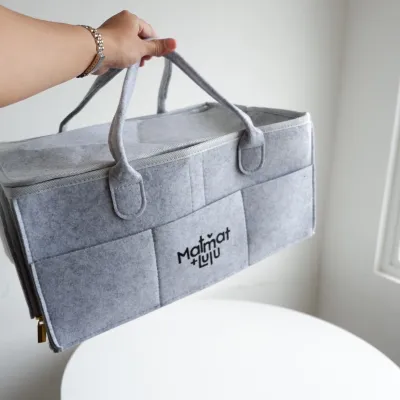
Prices are valid at publication and may change. Please refer to the product page for the latest price.
The volume of daily essentials you use also dictates your baseline storage capacity. A newborn can go through 10 to 12 diapers a day, requiring a constant, high-volume supply nearby. Along with diapers, you must accommodate bulkier items like a full pack of wet wipes, a changing mat, swaddles, and a change of clothes, alongside smaller items like diaper rash creams, sanitizing sprays, and cotton balls. If you prefer to restock your station once a week rather than every morning, you will naturally need a much larger organizer.
Environmental conditions are another critical factor that many parents overlook. In the warm, humid climate of the Philippines, humidity levels can fluctuate dramatically, especially during the rainy season. High humidity can cause open containers to trap moisture, which can compromise the hygiene of dry diapers or encourage mold growth on fabric surfaces. If your home is prone to dampness, you may want to consider a caddy with a zippered cover or choose breathable materials that dry quickly.
To establish a clear baseline before shopping, write down your daily essentials checklist. Note down how many diapers you want to keep on hand, the size of your preferred wipes dispenser, and any specific creams or grooming tools you use daily. This simple list will prevent you from buying an organizer that is either too small to be useful or too large for your actual space.
Determine the Right Size and Capacity for Your Space
Diaper caddy organizers generally fall into three size categories: compact, standard, and large. Each category serves a distinct purpose and suits different living arrangements. Understanding these dimensions helps you avoid the common mistake of purchasing a caddy that is either too small to hold your daily essentials or too bulky to sit safely on your furniture.

Compact or portable caddies are designed for quick trips, car travel, or very small living spaces. These organizers typically measure around 25 to 30 centimeters in length and are lightweight enough to carry with one hand. They generally hold a minimal daily supply of 10 to 15 diapers, a travel-sized pack of wipes, and one or two small tubes of cream. They are ideal for keeping in the car trunk, taking on weekend trips, or tucking into a larger travel bag.
Standard or medium-sized caddies are the most common choice for general household use. Measuring approximately 33 to 38 centimeters in length, they balance storage capacity with a manageable physical footprint. A standard caddy easily holds 15 to 25 diapers, a full-sized wipes dispenser, a changing pad, and several bottles of lotion or cream. This size fits comfortably on most standard changing tables, chest of drawers, or bedside tables without overcrowding the surface.
Large or multi-purpose caddies are designed for heavy stockpiling, families with twins, or parents who want to store toys, swaddles, and breast pump accessories alongside diapering supplies. These models often exceed 40 centimeters in length and feature reinforced bases to handle the extra weight. While they offer maximum storage, they can be heavy and awkward to carry around the house, making them best suited as stationary storage units.
Before finalizing your choice, measure the exact dimensions of the surface where the caddy will sit, such as a changing table shelf, a bedside drawer, or your car’s back seat. Compare these measurements against the manufacturer’s listed product dimensions. Ensuring a proper fit prevents the caddy from hanging over edges, which could cause it to tip over and spill its contents.
Keep in mind that an oversized caddy can quickly become a safety hazard. When packed to capacity with heavy lotions, sanitizers, and water bottles, a large caddy can become surprisingly heavy. This makes it difficult to carry safely, especially when you are holding a baby in your other arm. Choosing a size that matches your actual daily needs, rather than buying the largest option available, keeps your nursery organized and safe.
Evaluate Compartment Layouts for Efficient Organization
A diaper caddy’s internal and external structure determines how quickly you can grab an item during a messy diaper change. When you are managing a squirming infant, every second counts, and a disorganized caddy can make the process unnecessarily stressful. Looking for specific layout features ensures your supplies remain exactly where you need them.
Adjustable internal dividers are one of the most useful features to look for in a diaper caddy. These dividers are usually attached with hook-and-loop fasteners, allowing you to customize the interior space. This flexibility is crucial because diaper sizes change rapidly as your baby grows from a newborn to a toddler. Adjustable sections also let you adapt the caddy over time, transitioning it from a diaper organizer to a toy bin, book basket, or art supply caddy once your child is toilet trained.
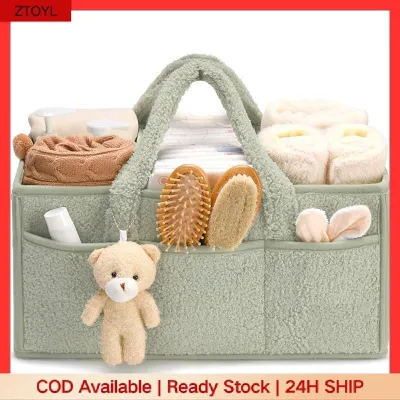
Exterior pockets are essential for high-frequency, quick-grab items. These pockets allow you to store items like diaper rash creams, hand sanitizer, pacifiers, or a digital thermometer on the outside of the caddy. Because these items are kept separate from the main compartment, you can locate and retrieve them instantly with one hand while keeping your other hand safely on your baby.
Inner small compartments or zippered pockets are equally important for keeping tiny essentials organized. Items like baby nail clippers, cotton swabs, nasal aspirators, and small medicine droppers can easily slip to the bottom of a large, open compartment, making them difficult and dangerous to search for in a hurry. Dedicated slots keep these small, sharp, or delicate items secure and visible.
To choose the best layout, map your previously written essentials checklist to the specific zones of the caddies you are considering. Imagine yourself performing a diaper change: the diapers and wipes should occupy the large central compartments for easy access, while creams and sanitizers sit in the outer pockets. If a caddy’s layout does not naturally accommodate your workflow, continue looking for a design that does.
Check Material Features for Durability and Easy Cleaning
The material of your diaper caddy directly affects its lifespan, how easy it is to keep hygienic, and how well it performs in a tropical climate. Since the caddy will hold items that come into direct contact with your baby’s skin, maintaining cleanliness is a top priority.
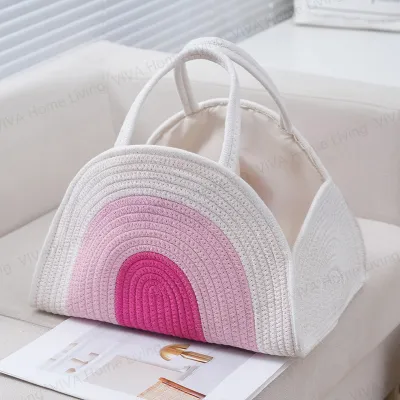
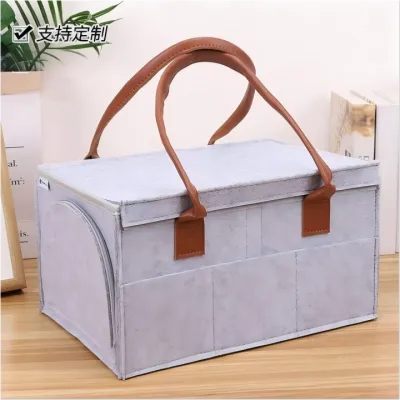
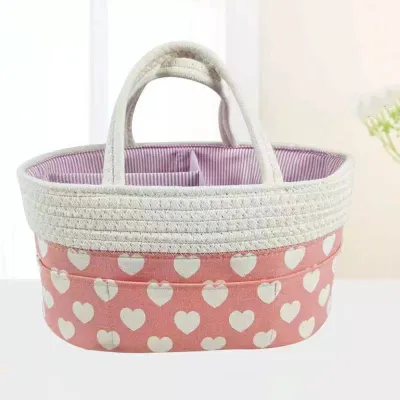
Common materials include felt, canvas, woven cotton rope, and plastic. Felt caddies are soft, lightweight, and highly popular for their modern aesthetic, but they can accumulate lint and absorb liquid spills easily. Canvas is highly durable and often features a structured backing, making it a robust choice for daily transport. Woven cotton rope offers a classic, decorative look that fits well in nurseries, though it can be heavier and more challenging to spot-clean. Plastic or acrylic options are highly utilitarian and exceptionally easy to sanitize, though they lack the soft feel and portability of fabric models.
In a humid environment like the Philippines, cleanability and moisture resistance are vital. Spilled baby oil, leaking lotions, or diaper creams can easily ruin untreated fabrics and create breeding grounds for bacteria. Always check the manufacturer’s care instructions and product labels to see if the caddy features a water-resistant polyester lining or wipe-clean surfaces. If you choose a fabric caddy, ensure the material can dry thoroughly after cleaning to prevent the growth of mold or mildew, which can trigger allergies or skin irritation in infants.
Structural integrity is another key factor to verify. A high-quality caddy should maintain its shape and stand upright even when it is completely empty. Caddies with weak, sagging walls make it difficult to organize items and can collapse when you try to slide a pack of wipes back inside. Look for models with reinforced bases and stiff side panels. Additionally, check that the handles are securely attached, preferably with double stitching, metal rivets, or reinforced fabric loops, to prevent them from tearing under a full load.
Upon unboxing your new diaper caddy, perform a thorough safety and quality check. Inspect the interior and exterior for any loose small parts, stray threads, sharp plastic edges, or rough seams that could scratch you or your baby. Some synthetic materials may carry a strong chemical odor from the manufacturing or shipping process; always follow the manufacturer’s airing-out or initial washing instructions before placing any baby clothes, diapers, or skincare products inside the caddy.
Match Your Diagnosed Needs to the Ideal Organizer
Once you have assessed your routine, measured your space, and evaluated layouts and materials, you can confidently choose the path that matches your lifestyle. Aligning your specific needs with the correct category of diaper caddy prevents buyers’ remorse and ensures a smoother daily routine.
If you fall into Path A, which focuses on an on-the-go lifestyle or small-space living, prioritize portability. Look for a compact, lightweight canvas or treated felt caddy equipped with reinforced, comfortable handles. Ensure it features multiple exterior pockets for quick-access items and a secure, space-saving design that fits easily on a car seat or a small bedside shelf. This setup keeps you agile and prepared, whether you are moving from the bedroom to the living room or heading out for a family road trip.
If you fall into Path B, which centers on a stationary, high-volume setup, focus on structure and capacity. Choose a medium to large caddy made of highly durable, easy-to-wipe materials with a rigid frame that stands firm on your nursery changing table. Prioritize a model with multiple adjustable internal dividers so you can organize large quantities of diapers, wipes, and backup outfits systematically.
Regardless of the path you choose, always verify the exact product specifications, weight limits, and manufacturer care instructions before purchasing. Do not rely solely on stylized promotional images, which can make caddies appear larger or more rigid than they are in reality. Taking the time to check these details ensures you receive a safe, functional, and durable organizer that truly supports your parenting journey.
Frequently Asked Questions (FAQ)
Can I use a regular storage basket instead of a specific diaper caddy?
Yes, you can use a regular storage basket, but it may lack the specialized features that make diaper changes efficient. Dedicated diaper caddies are designed with built-in or adjustable dividers, reinforced carrying handles, and multiple exterior pockets specifically sized for wipes, creams, and small grooming tools. They often feature water-resistant linings to protect against spills.
A regular basket is perfectly fine for stationary storage on a closet shelf where items do not need to be moved frequently. However, if you plan to carry your supplies from room to room or need to find tiny items like nail clippers quickly, a purpose-built diaper caddy organizer offers superior organization and safety.
How do I clean and maintain a fabric diaper caddy in a humid climate?
To clean a fabric diaper caddy, always refer to the manufacturer’s care label first, as some fabrics can be machine-washed while others are spot-clean only. For spot cleaning, use a damp cloth with mild, baby-safe soap, and avoid harsh chemical bleaches or strong detergents that could leave residues harmful to your baby’s sensitive skin.
In a humid climate like the Philippines, preventing mold is essential. After washing or spot-cleaning, place the caddy in a well-ventilated area with good airflow—or under indirect sunlight—until it is completely dry before restocking it with diapers and clothes. Never pack a damp fabric caddy with dry baby supplies, as trapped moisture quickly leads to mildew growth.
Community discussion
Share your experience or ask a question. Comments are reviewed before publication.