
Choosing the right high chair is one of the most significant gear decisions you will make during your child’s first year. Feeding therapy and developmental milestones both intersect at the family dining table, making this seat far more than just a place to hold a bowl of baby food. The decision between a convertible high chair and a standard high chair ultimately rests on how long you want the furniture to last, your available dining space, and your tolerance for daily cleanup routines.
Choose a convertible high chair if:
- You want a single, long-term seating solution that transitions seamlessly from infancy into toddlerhood, childhood, or even adulthood.
- You have dedicated floor space in your dining room or kitchen to accommodate a slightly wider, sturdier base that remains a permanent fixture.
- You are willing to invest a higher upfront amount in exchange for a lower long-term cost-per-use, potentially avoiding the need to buy separate booster seats or toddler chairs later.
Choose a standard high chair if:
Products mentioned in this guide
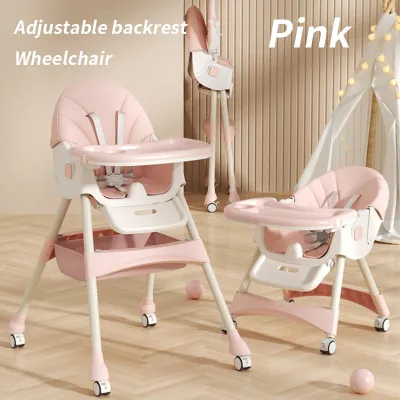
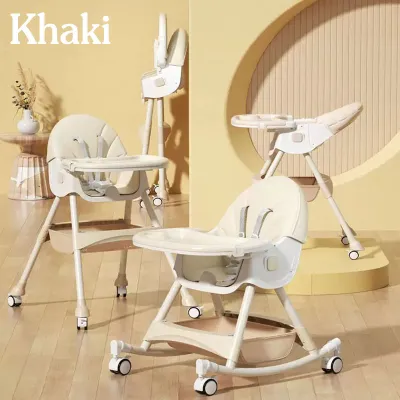
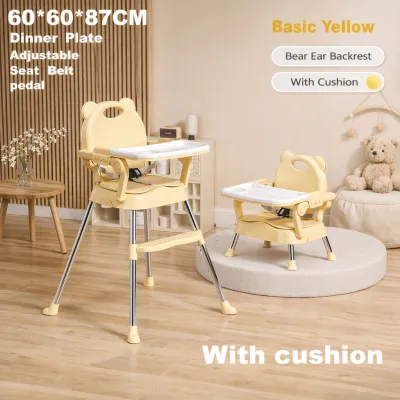
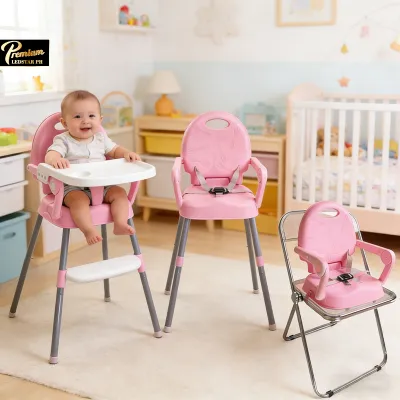
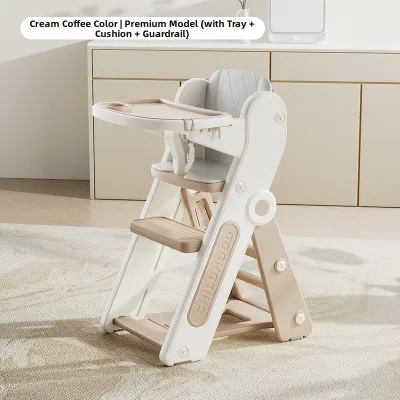
Prices are valid at publication and may change. Please refer to the product page for the latest price.
- You need a lightweight, highly portable, or budget-friendly option designed specifically for the active feeding years (typically from 6 months to 3 years).
- You have limited kitchen space or live in a compact home, such as an urban condominium, where the ability to fold and store the chair between meals is essential.
- You prefer a simple, dedicated mealtime tool that can be easily packed up for trips to visit family or stored away once your child transitions to a regular dining chair.
Verify first if:
- Your dining table height is compatible with the high chair's tray or seat height, especially if you plan to pull the chair directly up to the family table.
- The chair's materials can withstand the specific environmental challenges of your home, such as high humidity levels.
- The manufacturer's documented age, weight, and physical developmental milestones match your child's current abilities.
Understanding the Basics: Standard vs. Convertible Designs
To make an informed investment, it is essential to understand the structural and functional differences between these two primary design philosophies.
Standard high chairs represent the classic approach to infant feeding. These chairs feature a fixed, single-purpose frame designed to elevate an infant to a standard dining height. They typically consist of a metal or plastic frame, a padded seat shell, a removable tray, and a safety harness. The primary design goal of a standard high chair is utility during the active weaning and self-feeding stages, which usually span from around six months of age up to approximately three years. Once the child outgrows the physical dimensions of the seat or exceeds the manufacturer’s weight limit, the chair’s utility ends, and it must be stored, sold, or discarded.
Convertible high chairs, often referred to as “grow-with-me” chairs, are engineered with structural adaptability as their core feature. Rather than serving a single developmental window, these chairs are designed to transform through multiple configurations. A typical high-quality convertible model might start as a traditional high chair for an infant, transition into a booster seat strapped to a standard dining chair, convert into a low toddler chair for play, and eventually become a sturdy youth chair or even an adult-sized stool. This adaptability is achieved through modular components, adjustable seat plates, and movable footrests. It is important to distinguish true convertible chairs—which undergo structural transformations to serve different seating roles—from standard chairs that merely feature a reclining backrest for younger infants.
Regardless of which design catches your eye, safety and developmental alignment must dictate your choice. You should never assume a child is ready for a specific high chair stage based solely on their age or the product’s marketing name. Always consult the manufacturer’s user manual to verify the precise physical milestones required—such as the ability to sit upright unassisted with strong head and neck control—along with the explicit weight and height boundaries for each configuration.
Head-to-Head Comparison: What Matters Most for Daily Use
Evaluating a high chair requires looking past the showroom or the online product listing and imagining how the chair will function during the chaotic reality of daily mealtimes. From the physical space the chair occupies to the effort required to clean mashed sweet potatoes out of tiny crevices, small design details can significantly impact your daily routine.

The following comparison table outlines the general characteristics of both high chair types across the key metrics that matter most to parents.
| Metric | Standard High Chairs | Convertible High Chairs |
|---|---|---|
| Typical Lifespan | Approximately 2 to 3 years (up to toddlerhood) | 5 to 10+ years (often transitions to a youth or adult chair) |
| Floor Space Required | Moderate; many models fold compactly for storage | Larger; typically features a wider, fixed footprint for stability |
| Portability | High; lightweight frames, often with wheels or folding mechanisms | Low to Moderate; heavier build, designed to remain stationary |
| Cleaning Complexity | Moderate; often features removable fabric covers and plastic trays | Varies; can have more joints, wooden parts, or crevices |
| Adjustability | Limited; fixed footrests and basic tray positions | High; multi-level seat heights, adjustable footrests, and tray depths |
| Weight Limits | Varies by model—always check manufacturer specs | Varies by stage—always check manufacturer specs |
Space, Weight, and Portability
The physical footprint of a high chair is a major consideration, particularly in urban households or homes with compact dining areas. Convertible high chairs are built for long-term structural integrity and to support the weight of older children or adults. Consequently, they often feature wider, heavier bases made of solid wood or robust metal. This design provides excellent stability, but it also means the chair occupies a permanent spot at or near the dining table. They are rarely designed to fold, making them a constant visual and physical presence in your dining space. If you have a spacious dining room where the chair can remain in place, this structural permanence is rarely an issue.
In contrast, standard high chairs are frequently engineered with mobility and space-saving convenience in mind. Many models feature lightweight aluminum or plastic frames equipped with folding mechanisms that allow the chair to be collapsed and tucked into a closet, pantry, or behind a door between meals. Some also include integrated wheels, making it easy to roll the chair from the kitchen to the dining table. If you live in a compact apartment or need to keep your dining area clear of baby gear when guests visit, the folding capability of a standard chair offers a distinct practical advantage. Before purchasing, measure your dining area, taking into account the clearance needed for family members to move around the table while the high chair is in use.
Cleaning and Maintenance in Humid Climates
Mealtimes with infants and toddlers are notoriously messy, making ease of cleaning one of the most critical factors in long-term satisfaction. Standard high chairs often feature large, seamless plastic shells and removable, machine-washable polyester seat pads. While fabric covers can protect your baby’s skin from cold plastic, they also present a challenge in humid environments. In the tropical climate of the Philippines, where high humidity levels persist throughout the year, damp fabric seat covers or straps that are not thoroughly dried after washing can quickly become breeding grounds for mold, mildew, and unpleasant odors.
Convertible high chairs present a different set of cleaning considerations. Because these chairs are designed to adapt structurally, they often feature numerous adjustment slots, joints, and crevices where food crumbs, spilled milk, and purees can easily accumulate. Wooden convertible chairs, while aesthetically pleasing and highly durable, require careful maintenance. High humidity can cause wood to expand or warp if it is subjected to standing moisture, and harsh chemical cleaners can strip away protective finishes. When evaluating a convertible chair, check the manufacturer’s care instructions to determine if the wooden components require specific conditioning oils or specialized cleaning methods.
To maintain high standards of hygiene and protect your investment, prioritize chairs with smooth, easily wipeable surfaces, minimal fabric folds, and removable, dishwasher-safe tray liners. Ensure that all harness straps can be completely removed for deep cleaning, as these are often the most neglected areas for food accumulation. Always allow all components, especially fabric cushions and nylon straps, to dry completely in a well-ventilated area before reassembling the chair to prevent mold growth.
Comfort, Posture, and Adjustability
Proper ergonomics during mealtimes are not just about comfort; they are directly linked to safe swallowing and the development of healthy eating habits. Pediatric feeding experts emphasize the importance of the “90-90-90” seating posture: a 90-degree bend at the hips, a 90-degree bend at the knees, and a 90-degree bend at the ankles. A crucial component of this posture is a supportive footrest. When a child’s feet are dangling unsupported, their core muscles must work harder to maintain stability, which can lead to fatigue, restlessness, and a higher risk of choking during feeding.
Convertible high chairs excel in ergonomic support because they are engineered to adapt to a child’s changing body proportions. High-quality models allow you to adjust the height and depth of both the seat plate and the footrest independently. This granular adjustability ensures that whether your child is a six-month-old infant starting solids or a four-year-old toddler joining the family table, their feet remain firmly supported and their posture remains optimal. Additionally, many convertible designs allow you to adjust the depth of the feeding tray, keeping food within easy reach without compressing the child’s chest or abdomen.
Standard high chairs, by comparison, often offer limited ergonomic adjustments. Many feature fixed footrests that younger infants cannot reach, or simple plastic footrests with only two or three wide adjustment intervals. If you select a standard chair with a non-adjustable footrest, you may need to implement aftermarket modifications—such as strapping a firm foam block or a tightly rolled towel to the footrest—to provide the necessary support as your baby grows. Before finalizing your purchase, verify the chair’s adjustability range against the height of your dining table to ensure the chair can be integrated comfortably into your family’s mealtime setup.
The Investment Breakdown: Upfront Cost vs. Lifetime Value
When deciding between these two high chair categories, it is helpful to look beyond the initial price tag and evaluate the purchase through a structured budgeting framework. High chairs are available across a wide spectrum of price bands, from basic utility options to premium designer furniture pieces.
Upfront Cost Considerations
Standard high chairs generally occupy the budget-friendly to mid-range price tiers. Because they are constructed primarily from lightweight plastics and metals, and designed for a single, fixed purpose, their manufacturing and shipping costs are lower. This makes them highly attractive for families who want to minimize their initial nursery expenses or who need to purchase multiple chairs for different locations, such as a grandparent’s home. Convertible high chairs, particularly those constructed from solid hardwoods like beech or oak, represent a premium upfront investment. The complex engineering required to create secure, adjustable joints that can support varying weight loads over a decade naturally commands a higher retail price.
The Cost-Per-Use and Lifetime Value Equation
To determine which option is truly worth the investment for your family, calculate the potential cost-per-use over the lifespan of the furniture.
- Standard High Chair Scenario: If you purchase a mid-range standard high chair and use it for approximately 2.5 years (30 months) before your child outgrows it, the initial cost is spread over a relatively short window. Once the child outgrows the chair, you will likely need to purchase a separate booster seat for dining table use, and eventually a toddler-sized chair or stool for their play desk, adding to your cumulative expenses.
- Convertible High Chair Scenario: If you invest in a premium convertible high chair that transitions from an infant seat to a toddler chair, and finally to a study stool used throughout primary school (a span of 8 to 10 years), the cost-per-use drops significantly. The single piece of furniture replaces the need to buy a high chair, a booster seat, and a youth chair, often representing a more economical choice over the long term.
Factoring in Hidden and Eventual Costs
When comparing options, look closely at what is included in the initial purchase price. Some convertible chairs are sold as modular systems, meaning the basic frame is sold separately from essential accessories like the infant tray, harness system, or seat cushions. Purchasing these components individually can quickly drive up the total cost. Conversely, standard chairs usually come as complete, all-in-one packages. You should also consider the availability and cost of replacement parts. Because convertible chairs are meant to last for years, check if the manufacturer offers replacement harnesses, trays, or cushions, as these high-wear items may need to be replaced if the chair is passed down to younger siblings.
Safety and Stability: What to Verify Before You Buy
Regardless of the style, material, or price point of the high chair you choose, safety is the single most critical factor. A high chair must provide a secure environment that prevents falls, tipping, and physical injury. Because children are highly active during mealtimes—often leaning, twisting, or pushing against the dining table—assessing the structural integrity of the chair is paramount.
The Stability Check
A high chair’s resistance to tipping is directly related to its base geometry and weight distribution. Standard high chairs often rely on wide-angled, A-frame metal legs to distribute weight and prevent tipping. While this design is highly effective, the protruding legs can sometimes present a tripping hazard in tight kitchen spaces. Convertible high chairs typically feature a heavier, more solid base with a low center of gravity. This added weight makes them exceptionally stable and highly resistant to being pushed over by an active toddler. When inspecting a chair, physically press down on the edges and sides to check for any wobble or structural flexing.
The Harness System
A secure restraint system is vital for preventing infants and young toddlers from climbing out of or slipping through the chair. Look for a fully adjustable 5-point harness—which secures the child over the shoulders, around the waist, and between the legs—for the infant and early toddler stages. As your child grows and transitions to later stages of a convertible chair, verify how the harness system adapts. High-quality convertible models allow you to transition to a 3-point lap belt or remove the harness entirely once the child has reached the developmental readiness to sit safely without restraints.
Pre-Purchase Verification Checklist
Before finalizing any high chair purchase, run through this safety and verification checklist:
- Verify Weight and Height Limits: Consult the product documentation to confirm the maximum weight and height capacities for every configuration stage of the chair.
- Look for Safety Certifications: Check the product packaging, instruction manual, or official manufacturer listings for visible safety certification labels indicating compliance with recognized international safety standards (such as ASTM or EN standards).
- Inspect for Physical Hazards: Examine the chair closely for potential pinch points where tiny fingers could get caught during adjustment, sharp edges, and small detachable parts that could pose a choking hazard.
- Assess the Tray Attachment: Ensure the tray locks securely into place and cannot be easily pushed off or dislodged by a child from the inside.
If at any point during use you notice signs of structural wear, loose joints, frayed harness straps, or if your child exceeds the manufacturer’s stated weight limits, you must stop using the chair immediately and consult the manufacturer for replacement parts or professional guidance.
Final Verdict: Aligning Your Choice with Your Family's Routine
Ultimately, there is no single “best” high chair; the right choice is the one that aligns seamlessly with your family’s daily routine, living space, and long-term financial plans.
A convertible high chair represents an excellent investment for families who view baby gear as long-term home furniture. If you have a dedicated dining space, value cohesive interior aesthetics, and want a single, highly adjustable chair that will support your child’s posture from their first spoonful of puree through their school-age homework sessions, the higher upfront cost of a convertible model is well justified.
A standard high chair is the ideal solution for families prioritizing immediate convenience, budget flexibility, and spatial efficiency. If you live in a smaller home where floor space is at a premium, travel frequently to visit relatives, or prefer a straightforward, dedicated feeding tool that can be folded and stored out of sight once mealtime is over, a standard high chair offers outstanding practical value.
Before making your final decision, take the time to measure your dining area, check the height of your dining table, and carefully review the manufacturer’s product manuals. Taking these steps ensures that your chosen high chair will provide a safe, comfortable, and stress-free dining experience for both you and your baby.
Frequently Asked Questions (FAQ)
At what age can my baby start using a high chair?
When introducing a high chair, developmental readiness is far more important than chronological age. Most babies are physically ready to transition to a high chair around six months of age. However, you must look for specific developmental milestones rather than relying on the calendar. Your baby must be able to sit upright unassisted, demonstrate good head and neck control, and show interest in food. Always consult your pediatrician before starting solid foods, and carefully review your specific high chair’s instruction manual to verify the manufacturer’s minimum age, weight, and physical requirements before the first use.
Are convertible high chairs harder to clean than standard ones?
Convertible high chairs can sometimes require more detailed maintenance than standard models due to their adaptable, multi-stage design. The slots, tracks, and joint mechanisms that allow the seat and footrest to adjust can easily trap food crumbs and liquid spills. Standard high chairs often feature simpler, molded plastic shells with fewer joints, making quick wipe-downs easier. To simplify cleanup with a convertible chair, look for models that feature smooth, sealed surfaces, removable and dishwasher-safe tray liners, and minimal fabric seams. Regularly checking and vacuuming or wiping out the adjustment slots will keep the chair hygienic and functioning smoothly for years.
Community discussion
Share your experience or ask a question. Comments are reviewed before publication.