
Choosing the right stair corner guard requires balancing your child’s physical development with the specific material of your staircase. As babies transition from crawling to taking their first tentative steps, hard stair nosings and sharp steps become immediate hazards. By matching the impact-absorption needs of your child’s age group with an adhesive that securely bonds to your specific stair surface, you can significantly reduce the risk of impact injuries.
While stair corner guards are excellent tools for softening sharp edges, they are designed to mitigate the severity of accidental bumps and falls rather than prevent them entirely. They should always be used in tandem with active caregiver supervision and physical barriers, such as securely installed baby gates at both the top and bottom of your staircase.
Assessing Safety Needs by Your Baby's Developmental Stage
A child’s physical capabilities and behaviors shift rapidly during their first two years. A guard that works perfectly for a crawling infant may not withstand the curious hands of a determined toddler. Evaluating your child’s current mobility stage allows you to select a guard with the appropriate thickness, density, and durability.
Products mentioned in this guide
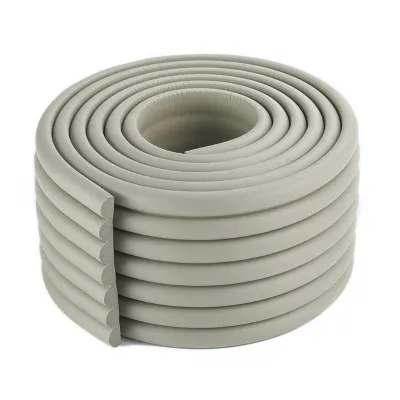
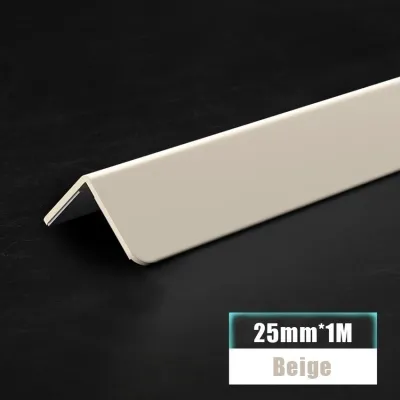
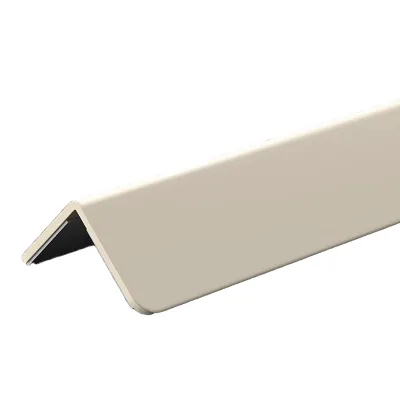
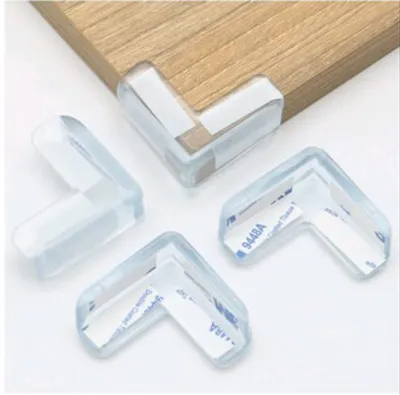
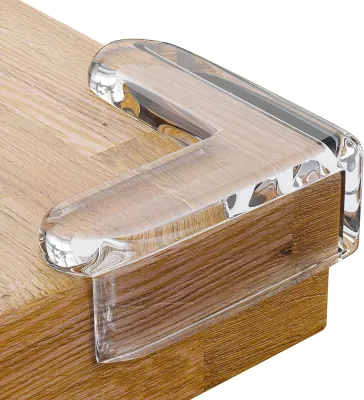
Prices are valid at publication and may change. Please refer to the product page for the latest price.
Crawlers and Early Walkers (High Impact Risk)
Infants who are crawling, pulling themselves up, or learning to cruise along furniture have a high center of gravity and developing balance. When navigating near stairs, they are particularly prone to losing their footing and falling directly onto sharp 90-degree stair edges. For this stage, your primary goal is maximum shock absorption to protect their delicate heads and bodies from severe impact.
Thicker, high-density foam guards (such as those made from Nitrile Rubber or NBR) or soft, wide silicone guards are ideal for early walkers. These materials act as a deep cushion, absorbing the force of a sudden fall rather than letting the child make contact with the hard stair structure beneath. When selecting these guards, ensure they cover the entire horizontal edge of the step (the nosing) where a falling child is most likely to strike. Remember that even the thickest cushioning cannot replace the watchful eye of a parent or caregiver, as falls on stairs can still cause serious injuries.
Active Toddlers and Older Babies (Climbing and Pulling Risks)
As babies grow into active toddlers, their physical strength and curiosity increase. At this stage, they are no longer just bumping into edges; they are actively climbing, pulling, and sometimes chewing on household objects. This behavioral shift introduces new safety risks, particularly the danger of a child tearing off a piece of a guard and swallowing it.
For older babies, prioritize tear-resistant materials and exceptionally strong adhesives. Soft, low-density foams are easily bitten through or peeled away by curious fingers, presenting a severe choking hazard. Look for heavy-duty, bite-resistant silicone or dense, reinforced rubber guards. Always check the manufacturer’s documentation for specific age recommendations, weight limits, and material safety warnings. If you notice any signs of chewing, peeling, or structural degradation, you must address it immediately to maintain a safe environment.
Choosing the Right Stair Corner Guard and Adhesive for Your Staircase Material
An edge protector is only as reliable as the adhesive holding it in place. Different staircase materials require specific adhesive properties to ensure a long-lasting bond without causing permanent damage to your home’s surfaces.

Wood, Laminate, and Engineered Stairs
Wooden stairs, whether made from local Philippine hardwoods like tanguile and mahogany or modern engineered laminates, feature sensitive finished surfaces. These finishes are highly susceptible to scratching, staining, or peeling if the wrong adhesive is applied.
When baby-proofing finished wood, look for damage-free or low-residue adhesive tapes specifically formulated for delicate surfaces. Before applying the adhesive across your entire staircase, always perform a small test in an inconspicuous area, such as the underside of a bottom step. This allows you to verify that the tape can be removed later without stripping the varnish, sealant, or wood stain. Avoid using permanent glues, construction adhesives, or heavy-duty mounting putties, as these will inevitably ruin the wood grain and require costly sanding and refinishing once the baby-proofing phase is over.
Tile, Stone, and Concrete Stairs
Polished concrete, ceramic tile, and natural stone stairs are exceptionally hard surfaces that present a high risk of injury during a fall. While these non-porous materials can generally tolerate much stronger adhesives than finished wood, they present a different challenge: tropical humidity and dust.
In the warm, humid climate of the Philippines, standard double-sided tapes can quickly lose their grip as moisture penetrates the adhesive layer. Additionally, concrete and stone surfaces naturally collect fine dust, which prevents adhesives from bonding correctly. To ensure a secure fit, clean the application area thoroughly to remove all dust, sealants, and ambient moisture. Use heavy-duty, humidity-resistant acrylic mounting tapes designed for non-porous surfaces. Regularly inspect these guards, especially during the rainy season, to ensure the edges are not lifting due to moisture buildup.
Carpeted or Painted Stairs
Carpeted steps and painted staircases present unique installation difficulties because standard flat adhesive guards cannot find a reliable surface to grip.
On carpeted stairs, standard adhesive-backed guards will fail to stick to the loose fibers and will easily peel off under minimal pressure. For painted stairs, strong adhesives carry a high risk of peeling away cured or delicate paint layers upon removal, leaving unsightly patches. If you have carpeted stairs, the most reliable baby-proofing strategy is to prevent access entirely using physical barriers like hardware-mounted safety gates at the top and bottom of the flight. For painted stairs, ensure the paint has fully cured for several weeks before applying any adhesive, and accept that minor paint touch-ups may be necessary once the guards are eventually removed.
Key Features to Evaluate Before Buying
Before purchasing any stair corner guards from an online marketplace or local baby store, evaluate their physical specifications to ensure they meet basic safety and durability requirements.
- Material Density: Do not rely solely on the thickness of a guard. Test the density by squeezing the material firmly between your thumb and forefinger. If the material easily compresses flat until you can feel your fingers meeting, it will not provide adequate cushioning during a heavy impact. Choose high-density foam or resilient silicone that resists complete compression.
- Adhesive Quality: Look for guards that include high-quality, pressure-sensitive adhesives. The adhesive should be non-toxic and formulated to withstand warm, humid conditions without melting, sliding, or emitting strong chemical odors.
- Certifications and Standards: Because baby-proofing products are frequently touched and sometimes chewed, safety certifications are critical. Check the product packaging and manufacturer documentation to verify that the materials are certified BPA-free, lead-free, and non-toxic. Do not assume a product is safe simply because it is marketed for babies; always verify these claims through official product labels.
- Visibility: While many parents prefer clear silicone guards that blend into the staircase, high-contrast colors can actually assist older toddlers. Choosing a guard color that contrasts with your stairs helps developing eyes visually recognize the edge of each step, helping them navigate the staircase more safely as they learn to walk.
Installation and Maintenance for Long-Lasting Safety
Proper installation is just as important as choosing the right guard. Even the highest-quality adhesive will fail if the surface is not prepared correctly.
To install your stair corner guards securely, follow these essential steps:
- Clean the Surface: Wipe down the stair edge thoroughly using rubbing alcohol to remove oils, grease, wax, and dust. Avoid using household spray cleaners, as they often leave behind a slick residue that prevents the adhesive from bonding.
- Dry Completely: Allow the surface to air-dry completely. In humid environments, you may want to wipe it dry with a clean microfiber cloth to ensure no moisture is trapped beneath the tape.
- Apply Firm Pressure: Align the guard carefully, peel off the adhesive backing, and press it firmly onto the stair edge. Apply continuous pressure along the entire length of the guard for at least 30 seconds to activate the pressure-sensitive bond.
- Respect the Curing Time: Do not let your child near the stairs immediately after installation. Adhesives require time to cure and reach maximum bonding strength. Follow the manufacturer's instructions, which typically require waiting 24 to 48 hours before subjecting the guard to any pulling or impact.
Once installed, establish a weekly routine to check the condition of each guard. Inspect the edges for any lifting, peeling, or tearing. If you observe any loose corners, structural damage, or bite marks, remove the compromised guard immediately and replace it with a fresh one. A loose or damaged guard is no longer safe and can quickly become a dangerous choking hazard for your child.
Frequently Asked Questions (FAQ)
Can I use regular double-sided tape instead of the provided adhesive?
You should avoid using standard household double-sided tape for stair corner guards. Regular office or craft tape is not designed to support the weight of dense foam or silicone, nor can it withstand the shear force of a child pulling on it or bumping into it. Using weak tape increases the risk of the guard detaching unexpectedly, which can lead to injuries or create a dangerous choking hazard if a child handles the loose piece. Always use the adhesive provided by the manufacturer or a verified, heavy-duty, baby-safe mounting tape designed specifically for edge protectors.
At what age can I safely remove stair corner guards?
Most families can safely remove stair corner guards when their child is between 3 and 4 years old. However, this timeline is not fixed and depends entirely on your child’s individual coordination, spatial awareness, and ability to understand and follow safety rules. Before removing the guards, observe how your child navigates the stairs. If they consistently use the handrail, step cautiously, and no longer run, play, or lose their balance on the steps, you can begin removing the guards. If you have concerns about your child’s physical coordination or balance, consult your pediatrician for personalized developmental guidance.
Community discussion
Share your experience or ask a question. Comments are reviewed before publication.