
Keeping a curious toddler safe at home requires looking at everyday appliances from a child’s eye level. In many Filipino households, the kitchen is the heart of the home, and the refrigerator is a primary target for little hands. Finding a reliable lock ng refrigerator is essential to prevent accidents, protect your food supply, and keep your peace of mind. In the tropical climate of the Philippines, high humidity and temperature fluctuations can affect how well baby-proofing devices stick and function. Choosing the right lock involves assessing your specific appliance design, understanding how your child interacts with their environment, and selecting materials that can withstand daily wear and tear.
Understanding the Risks: Why the Fridge Needs a Lock
A refrigerator might seem like a harmless appliance, but to an active baby or toddler, it represents a giant cabinet filled with colorful items, interesting textures, and heavy doors. Unsupervised access to the fridge poses several serious safety hazards. First, small food items like grapes, cherry tomatoes, or small packaging caps can easily become choking hazards if a toddler grabs them. Additionally, many families decorate their fridge doors with small magnetic accessories, which can be easily swallowed and cause severe internal injuries.
Beyond choking hazards, the physical structure of the refrigerator presents mechanical risks. Heavy glass jars, condiment bottles, or milk cartons stored on door shelves can easily fall if the door is swung open violently, potentially causing impact injuries or breaking into dangerous glass shards. There is also the risk of structural damage; a toddler pulling on a heavy drawer or glass shelf might cause the shelf to slide out or shatter.
Products mentioned in this guide
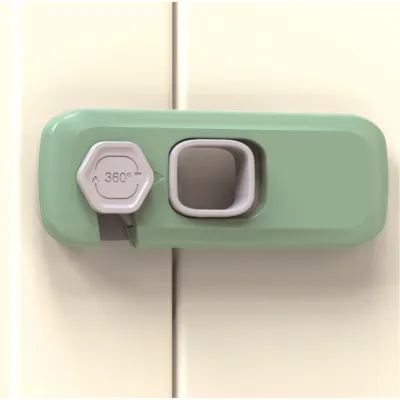
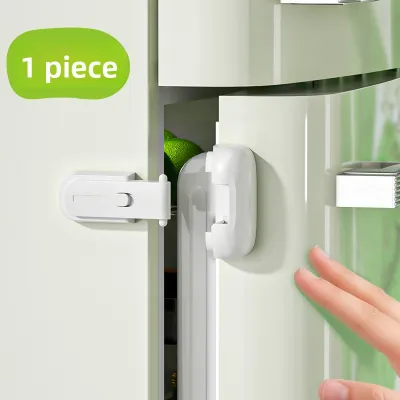
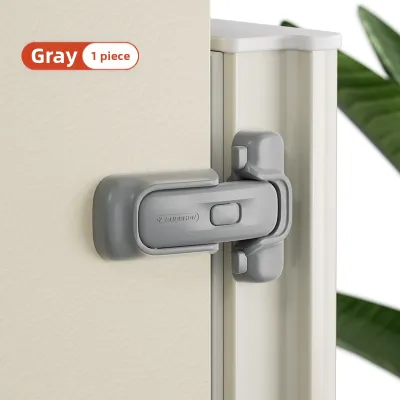
Prices are valid at publication and may change. Please refer to the product page for the latest price.
In extreme cases, larger refrigerators or deep freezers present an entrapment hazard. A curious toddler might attempt to climb inside a lower shelf or drawer, risking suffocation or exposure to dangerously low temperatures. Finally, frequent, unsupervised opening leads to food spoilage, massive energy waste, and unnecessary wear on the appliance compressor, which can be costly to repair or replace in tropical climates where cooling systems already work overtime.
Core Criteria for Selecting a Reliable Refrigerator Lock
Selecting an effective lock ng refrigerator requires evaluating several key performance factors to ensure it stands up to daily use while keeping your child safe. The first and most critical factor is adhesive strength versus surface compatibility. Most baby-proofing locks rely on double-sided adhesive pads to secure themselves to the appliance. You must evaluate whether the adhesive is compatible with your refrigerator’s specific finish, whether it is smooth glass, brushed stainless steel, or textured painted metal. In the Philippines, the ambient humidity can weaken standard adhesives over time, so choosing high-quality, moisture-resistant bonding pads is crucial.

The complexity of the locking mechanism is another vital consideration. The lock must feature a design that is simple enough for an adult to operate with one hand but complex enough to baffle a toddler’s developing problem-solving skills. Double-button releases, sliding latches, or magnetic keys are common mechanisms. While a simple latch might deter a one-year-old, a clever two-year-old may quickly learn to mimic your movements and bypass a basic lock.
Material durability is equally important. Toddlers are remarkably persistent and will often pull, twist, or even chew on baby-proofing devices. The plastic or flexible strap must be thick, non-toxic, and resistant to stress fractures. Cheap, brittle plastics can snap under sudden force, rendering the lock useless and creating a sharp-edged hazard.
Lastly, consider the ease of one-handed operation for caregivers. In a busy household, you will frequently approach the refrigerator while holding a baby or carrying groceries. A lock that requires two hands to open every single time can quickly become a source of frustration, leading to caregivers leaving it unlocked “just for a minute,” which defeats the purpose of baby-proofing.
Matching Lock Types to Your Refrigerator and Household Needs
Not all refrigerator locks are created equal, and a design that works perfectly on one appliance may be completely incompatible with another. Your refrigerator’s door style—whether it is a classic top-freezer, a side-by-side model, or a modern French door design—dictates the type of lock you need. Additionally, you must measure the physical footprint of the lock to ensure there is enough flat, unobstructed surface area on both the door and the side panel of the appliance to establish a secure bond.
Adhesive Strap Locks for Glass and Delicate Surfaces
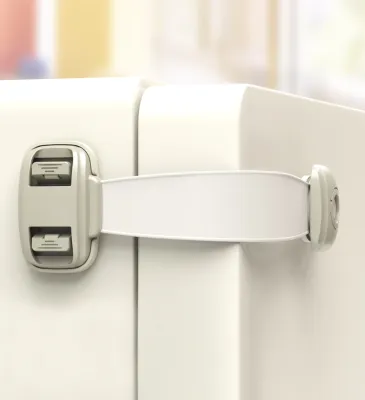
Adhesive strap locks are highly versatile and popular for modern refrigerators, especially those featuring glass doors or delicate finishes that cannot tolerate rigid mechanical clamps. These locks consist of two adhesive anchor points connected by a flexible plastic or fabric strap. They are particularly useful for side-by-side or French door refrigerators, as the flexible strap can easily span the gap between the two doors or wrap around a corner from the side panel to the front door.
To achieve maximum bonding strength, these locks require flat, clean, and non-porous surfaces. Any texture on the refrigerator surface can allow air pockets to form under the adhesive, significantly reducing its holding power. While highly adaptable, strap locks do have limitations. Over time, the flexible strap can degrade, stretch, or fray due to constant tension and exposure to kitchen grease. Furthermore, because the strap hangs loosely when unlocked, it can become an appealing target for teething toddlers who might try to chew on the soft plastic or fabric, weakening the material and introducing hygiene concerns.
Magnetic and Latch Locks for Metal Doors
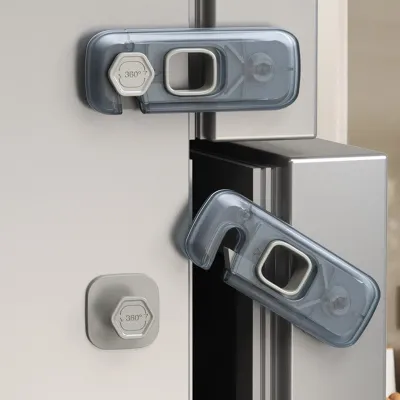
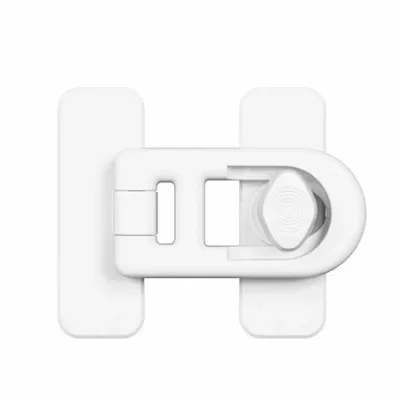
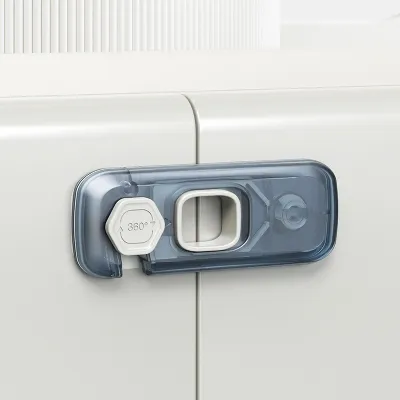
For standard top-freezer or bottom-freezer refrigerators with solid metal doors, rigid magnetic or mechanical latch locks offer a highly secure solution. These locks typically feature a hard plastic body that mounts directly to the side of the refrigerator and latches onto a catch mounted on the door. Because they do not rely on a flexible strap, they provide a rigid physical barrier that resists strong pulling, shaking, and leverage from determined toddlers.
These locks are ideal for heavy-duty use because they do not stretch or sag over time. However, they require precise alignment during installation to ensure the latch engages smoothly every time the door closes. A minor misalignment can prevent the lock from catching properly or cause it to jam. Additionally, because these locks are rigid and apply direct mechanical force to a small area, removing them in the future carries a higher risk of peeling the paint or leaving permanent marks on painted metal doors if not done with extreme care.
Handle-Sliding and Button Locks for Older Toddlers
If your refrigerator features prominent, protruding handles rather than recessed grips or flat panels, handle-sliding or button locks are an excellent alternative. These locks bypass the need for adhesives entirely by securing the handles themselves. For side-by-side refrigerators with parallel vertical handles, a sliding lock can be slipped through both handles and tensioned, preventing the doors from being pulled apart.
These locks rely on complex sliding mechanisms or dual-button releases that require a level of hand strength and coordination that older toddlers have not yet developed. This makes them highly effective against clever children who have already figured out how adhesive latches work. The primary limitation of handle locks is their lack of universal compatibility. They are highly dependent on the specific shape, thickness, and distance between your refrigerator’s handles. Before purchasing, caregivers must carefully measure their appliance handles to ensure a snug fit, as a loose handle lock can allow the doors to open just enough for small hands to slip inside.
Installation and Removal: Protecting Your Appliance Surfaces
Proper installation is the single most important factor in determining whether a refrigerator lock will successfully resist a toddler’s strength. Before applying any adhesive lock, the surface of the refrigerator must be meticulously prepared. Dust, kitchen grease, and condensation will prevent the adhesive from forming a strong bond. Clean the target area thoroughly using a mild degreasing soap, followed by rubbing alcohol to remove any remaining residue. Ensure the surface is completely dry before proceeding, especially in humid tropical environments where moisture can quickly re-accumulate on cold metal surfaces.
Once the surface is clean, peel the backing from the adhesive pads and press the lock firmly onto the designated spot. Apply continuous, firm pressure for at least thirty seconds to help the adhesive flow into the microscopic crevices of the surface. Crucially, you must allow the adhesive to cure completely before subjecting it to any tension. Most manufacturers recommend waiting at least 24 hours before attempting to use or test the lock. Opening the refrigerator door or letting a child pull on the lock during this curing period will permanently weaken the bond, causing the lock to fail prematurely.
When the time comes to remove the lock, you must use safe removal methods to protect your appliance’s finish. Avoid using sharp metal blades or screwdrivers, which can easily scratch the paint or glass. Instead, apply controlled heat using a hair dryer set to a low or medium temperature to soften the adhesive backing. Once warmed, gently peel the lock away from the surface. Any remaining sticky residue can be safely dissolved using a dedicated adhesive remover, eucalyptus oil, or a mixture of baking soda and cooking oil.
If your refrigerator is still under warranty, always check the manufacturer’s guidelines before installing heavy-duty adhesives. Some high-strength adhesives can alter or damage specialized coatings, such as fingerprint-resistant stainless steel, which may void certain cosmetic warranties.
Ongoing Safety Checks and Maintenance for Caregivers
Baby-proofing is not a set-and-forget task; it requires ongoing vigilance and maintenance to remain effective. Caregivers should establish a routine of performing quick visual and physical checks on all home safety devices, including the lock ng refrigerator. Over months of daily use, the constant pulling force exerted by both adults and children can cause adhesives to lift at the edges. Inspect the lock regularly for any signs of peeling, fraying straps, or micro-cracks in the plastic body.
In addition to visual inspections, physically test the locking mechanism yourself. Ensure that spring-loaded buttons still snap back into place quickly and that latches engage securely without sticking. In dusty or humid kitchen environments, airborne grease and flour can accumulate inside the lock’s moving parts, causing them to jam or fail to lock automatically when the door is closed.
As your child grows, their physical strength and cognitive abilities will change rapidly. A lock that successfully deterred a twelve-month-old baby may become an easy puzzle for a two-year-old toddler. Pay close attention to your child’s developmental milestones. If you notice them studying the lock closely, attempting to press the buttons, or using their body weight to pull on the door with extreme force, it may be time to upgrade to a more complex locking system or add a secondary safety measure. If a lock shows any signs of structural failure, replace it immediately to prevent unexpected access to the appliance.
Frequently Asked Questions (FAQ)
Can I use a standard cabinet lock on my refrigerator?
While standard cabinet locks might look similar to refrigerator locks, they are generally not designed to handle the unique demands of a cooling appliance. Refrigerator doors are significantly heavier than cabinet doors and are sealed with magnetic gaskets that create strong suction. Opening a fridge requires overcoming this suction, which exerts much higher tension on a lock. Standard cabinet locks often lack the heavy-duty adhesive or reinforced plastic needed to withstand this repeated force. Furthermore, using an ill-fitting cabinet lock can compress or tear the refrigerator’s rubber door seal, leading to cold air leaks, increased energy bills, and potential food spoilage.
Are there baby-proofing alternatives if my fridge has a smart screen?
Modern smart refrigerators present unique baby-proofing challenges, as toddlers can be highly attracted to glowing touchscreens, water dispensers, and ice chutes. Fortunately, many smart appliances come equipped with built-in electronic child lock features. Activating this digital lock disables the touchscreen and locks the water and ice dispensers, preventing accidental spills and setting changes. If you still need a physical lock to prevent the doors from being opened, plan the placement carefully. Ensure the adhesive pads do not block any sensors, cameras, ventilation grates, or the edges of the smart screen itself, as the heat generated by these electronic components can also degrade adhesives.
How do I clean the fridge door without weakening the lock's adhesive?
Maintaining kitchen hygiene is essential, but cleaning around a refrigerator lock requires a careful approach to protect the adhesive bond. Avoid spraying liquid cleaners, harsh chemical solvents, or water directly onto or near the lock’s adhesive base. Liquid can easily seep underneath the edges of the adhesive pad, gradually dissolving the glue and causing the lock to fall off. Instead, spray your cleaning solution onto a microfiber cloth first, making it damp rather than soaking wet. Carefully wipe around the lock’s perimeter, and use a dry cloth immediately afterward to remove any moisture. Avoid using abrasive scrubbing pads near the lock, as they can fray straps or scratch the plastic housing.
Community discussion
Share your experience or ask a question. Comments are reviewed before publication.