
Selecting the right lock for cabinet doors depends on matching the lock’s physical mechanism to the specific structure of your cabinetry, the material of your doors, and your household’s daily habits. There is no single universal lock that fits every cabinet style. Instead, baby-proofing requires evaluating whether your cabinets have handles, knobs, overlapping doors, or completely flat surfaces, and then choosing a mechanism that secures those specific features without causing unnecessary damage.
In tropical environments like the Philippines, where high humidity and warm temperatures can compromise adhesive backings over time, understanding these mechanical differences is especially critical. A lock that relies solely on a basic adhesive might fail prematurely in a humid kitchen, whereas a screw-mounted or high-grade magnetic lock will remain secure regardless of seasonal weather shifts. By analyzing your cabinetry style first, you can establish a reliable safety barrier that keeps curious toddlers away from household hazards.
Understanding the Main Types of Cabinet Locks
Magnetic Locks
Magnetic locks consist of an internal latch and a catch installed inside the cabinet, which remains locked until an external magnetic key is placed against the outside of the door. This hidden design keeps the aesthetic of your kitchen or bathroom intact and prevents children from seeing or interacting with the locking mechanism. Because there are no external parts, toddlers are less tempted to pull or play with the lock, reducing wear and tear.
Products mentioned in this guide
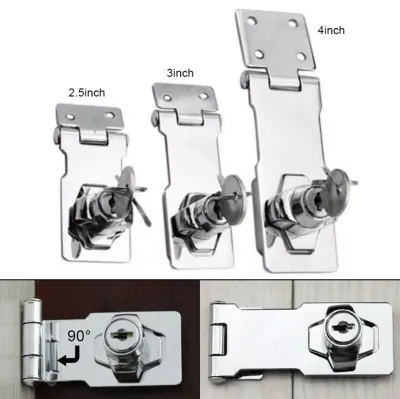
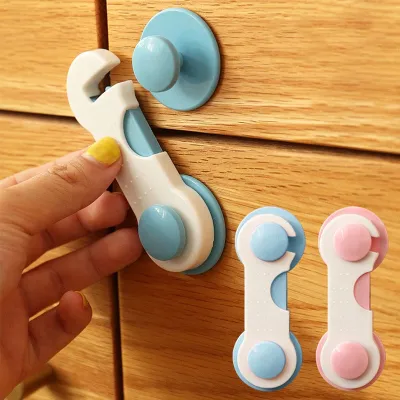
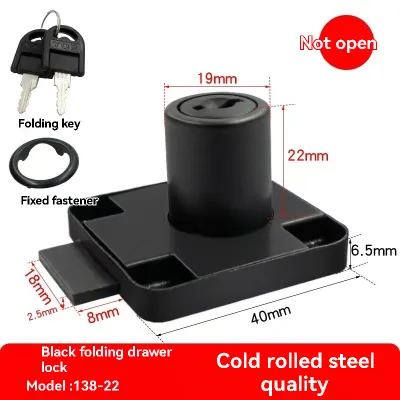
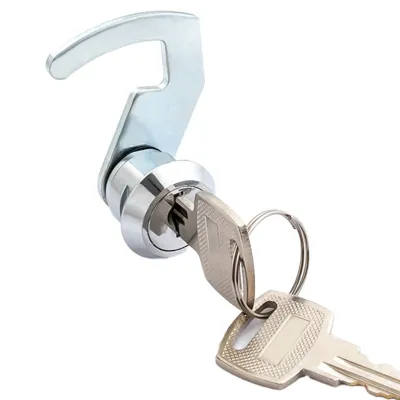
Prices are valid at publication and may change. Please refer to the product page for the latest price.
However, magnetic locks require careful consideration of door thickness and material density. If your cabinet doors are exceptionally thick or made of dense hardwood, the magnetic field may not penetrate sufficiently to release the latch. You must verify the manufacturer’s specified maximum door thickness before purchasing. Additionally, because they rely on a separate key, you must manage the key carefully to avoid locking yourself out of your own cabinets.
Adhesive Strap Locks
Adhesive strap locks feature a flexible plastic or fabric strap anchored by two adhesive pads. They are highly versatile because they can wrap around corners, bridge gaps between double doors, or secure curved surfaces. They are commonly used to secure appliances, drawers, and cabinets with unusual shapes or handles.
The primary trade-off is visibility and aesthetics. Because they are mounted on the exterior, they are fully visible and can alter the look of your living space. Furthermore, their effectiveness depends heavily on the quality of the adhesive and the clearance around your cabinet handles. If a toddler pulls on the strap with significant force, the adhesive bond is the primary point of failure, making it essential to evaluate the weight and contents of the cabinet before relying on this style.
Sliding Latch Locks
Sliding latch locks designed for internal mounting are specialized mechanisms used to secure overlapping doors or cabinets with prominent lip edges. These locks slide along a track or bar mounted inside the cabinet frame, locking the doors together from the inside. They are highly effective at preventing doors from being pried open even slightly, which helps eliminate finger-pinch hazards.
Installing these internal sliding latches requires checking gap tolerance and ensuring precise alignment between the doors and the internal frame. If the gap between overlapping doors is too narrow, the latch mechanism may rub or prevent the doors from closing completely. Conversely, if the gap is too wide, the latch may not engage securely, allowing the doors to wobble or open partially.
Spring-Release Latch Locks
Spring-release latch locks are traditional internal locks consisting of a plastic hook mounted inside the cabinet door and a catch mounted on the frame. When you open the door slightly, the hook catches on the frame, preventing the door from opening fully. To open it completely, an adult must reach through the narrow gap, press down on the flexible plastic hook, and release it.
These locks require verifying internal frame space and structural compatibility. If your cabinets have shallow drawers or lack a solid top frame to mount the catch, installing spring-release latches can be difficult or impossible. They also require a small gap to open before they catch, which means a child can still pull the door open slightly, potentially exposing their fingers to pinching if they let go suddenly.
Matching Lock Mechanisms to Your Cabinet Styles
Cabinets with Knobs or D-Shaped Handles
For cabinets equipped with traditional knobs or D-shaped handles, adhesive strap locks are highly practical choices. When evaluating strap locks, check the handle shape and the clearance behind the handle to ensure the strap loop can wrap securely without slipping off. If the knobs are round and smooth, ensure the strap can be anchored tightly to prevent the child from sliding the lock off the top. For D-shaped handles, ensure the distance between the two handles does not exceed the maximum span of the strap.

Flat, Handle-Less, or Recessed Panel Doors
Modern, minimalist kitchens often feature flat, handle-less cabinets or recessed panel doors that offer no external anchor points for straps or latches. In these cases, magnetic locks are the most effective solution. Because they mount entirely on the inside of the cabinet, they do not require handles or knobs to function. When assessing magnetic locks for these doors, verify the door thickness and ensure the cabinet material does not block magnetic fields. Metal cabinet doors or doors with heavy metal foil veneers can interfere with the magnetic key, rendering the lock inoperable.
Cabinets with Overlapping Doors or Lip Edges
Cabinets with overlapping doors, face frames, or prominent lip edges present unique installation challenges. External latches may not sit flush against these surfaces, which can prevent the locking mechanism from engaging properly. For these styles, consider internal sliding latches. Before installing, measure the lip depth and the internal clearance of the cabinet frame. Ensure that the doors close flush enough for the internal latch to align perfectly with its corresponding catch on the frame, as even a few millimeters of misalignment can cause the lock to fail or jam.
Glass-Front or Fragile Cabinets
Glass-front cabinets require extra care to prevent damage to the delicate glass panels. Avoid any lock mechanism that requires drilling into the door frame near the glass, as the vibration and pressure can easily crack or shatter the pane. Instead, review manufacturer warnings for glass compatibility and evaluate adhesive strength limits. Adhesive strap locks can be used, but you must ensure the adhesive is applied only to the solid wood or metal frame, never directly to the glass itself, as removing strong adhesives later can stress and damage fragile glass surfaces.
Key Factors to Consider Before Buying
Installation Method
When choosing a lock for your cabinet, the installation method is a primary consideration. You must compare drilling versus adhesive mounting based on your living situation and cabinet materials. If you live in a rental property, drilling holes into the cabinetry may violate your lease agreement or forfeit your security deposit. Even if you own your home, drilling into high-end solid wood or custom-lacquered cabinets can permanently alter their appearance and lower their resale value. Always check your cabinet warranties and surface materials before committing to permanent alterations.
Ease of Use for Adults
A baby-proofing lock is only effective if adults actually use it consistently. If a lock is too difficult to open, family members may leave it disengaged, defeating its purpose. Evaluate quick-release features and whether the lock allows for easy, one-handed operation, which is essential when you are carrying a baby or holding kitchen utensils. For magnetic locks, consider the logistics of storing the magnetic keys. If you only have one key and multiple locked cabinets across the kitchen, you may find yourself constantly searching for the key, making a system with multiple keys or a temporary disengage switch highly desirable.
Durability and Holding Strength
Toddlers can be surprisingly strong and persistent when trying to open cabinets. Before purchasing, review the manufacturer’s specifications for maximum pull-force limits and material longevity. Cheap, thin plastic locks can snap under sudden impact or repeated pulling. Look for locks made from thick, durable ABS plastic or nylon. In the Philippines, the combination of high humidity and coastal salt air in some regions can degrade low-quality plastics and adhesives faster, so investing in robust, weather-resistant materials is crucial for long-term safety.
Surface Compatibility
Adhesive locks rely on a clean, secure bond to function properly. You must verify adhesive suitability for your specific cabinet finishes, such as unsealed wood, textured laminate, or high-gloss paint. Adhesives require a smooth, non-porous surface to achieve maximum holding strength. If your cabinets are made of unsealed, rough wood or have a highly textured laminate finish, the adhesive may not bond securely, leading to premature failure. Similarly, high-gloss paint or delicate wood veneers can peel off when the adhesive is subjected to tension, making screw-mounted locks a safer alternative for these surfaces.
Installation and Safety Checks for Caregivers
Surface Preparation
Proper installation is the foundation of any baby-proofing system. For adhesive locks, you must follow the manufacturer’s instructions for cleaning, drying, and curing time before applying any tension. Clean the mounting area thoroughly with rubbing alcohol to remove grease, dust, and cooking oils. In humid tropical climates, ensure the surface is completely dry before applying the adhesive pad. Once applied, press firmly for at least 30 seconds and allow the adhesive to cure—typically for 24 hours—before testing the lock or allowing children near it.
Routine Maintenance
Baby-proofing is not a one-time task; it requires ongoing vigilance. Establish a routine to visually inspect adhesive bonds, mechanical hinges, and plastic components for wear, cracking, or loosening over time. Check that screws remain tight and that plastic latches have not become brittle due to heat or sunlight exposure. If you notice any lifting at the edges of an adhesive pad or a decline in the springiness of a latch, replace the component immediately to prevent sudden failure when a child pulls on the door.
Key Management
For households using magnetic locks, key management is a critical safety protocol. Older babies and toddlers are highly observant and will quickly learn to mimic adult unlocking behaviors if they watch you use the magnetic key. Always store the magnetic keys in secure, elevated, and concealed locations that are completely out of your child’s reach and line of sight. Consider mounting a magnetic key holder high on a nearby wall or refrigerator, well above the reach of a toddler standing on a chair or stool.
Stopping Conditions
Caregivers must recognize when a baby-proofing solution is no longer effective. You should discontinue use and consult the manufacturer or transition to a more secure system if the lock shows signs of structural failure, adhesive degradation, or if your child figures out how to bypass or release the mechanism. Children develop problem-solving skills rapidly; once a toddler successfully operates a lock, that specific barrier is no longer safe, and you must upgrade to a more complex or heavy-duty locking system to maintain a secure home environment.
Frequently Asked Questions (FAQ)
Can I use adhesive locks on painted or veneer surfaces?
Adhesive locks carry a risk of peeling paint, wallpaper, or delicate wood veneer when they are eventually removed. Before applying an adhesive lock, check the product label and manufacturer guidelines for specific surface warnings and exclusions. If your cabinets feature high-value finishes, antique paint, or thin veneers, consider using screw-mounted internal locks, magnetic locks, or alternative non-adhesive placement to avoid permanent surface damage.
Are magnetic locks safe if the baby finds the key?
If a toddler finds the magnetic key, they can easily open any magnetic lock in your home. Older babies and toddlers learn by watching adults and will quickly mimic the motion of placing the key against the cabinet door. To prevent this, plan secure, elevated, and concealed storage for the key when it is not in active use. Additionally, look for magnetic lock systems that feature a built-in disengage switch, allowing you to temporarily disable the lock when childproofing is not needed, which reduces how often you need to handle the key.
What should I do if the adhesive lock keeps failing?
If an adhesive lock repeatedly fails, first review your initial installation steps to identify potential issues like missed surface preparation, inadequate cleaning, or insufficient curing time. In humid environments, moisture can prevent the adhesive from bonding correctly. If the cabinet material or environmental humidity is incompatible with the adhesive pad, or if your child’s pulling force exceeds the adhesive’s limits, transition to a different lock mechanism, such as a magnetic or screw-mounted system, to ensure reliable security.
Community discussion
Share your experience or ask a question. Comments are reviewed before publication.