
The best Lili and Tucker bedding set for a newborn is one that prioritizes a snug-fitting fitted sheet, breathable materials, and wearable blankets or swaddles, while excluding loose quilts, pillows, and bumpers from the active sleep space. Because newborns spend the majority of their first months asleep, their bedding must support a safe sleep environment that minimizes suffocation risks and manages heat and humidity. Rather than buying a pre-packaged multi-piece set that includes decorative but unsafe sleep accessories, parents should focus on building a custom set of essentials—such as fitted crib sheets and sleep sacks—tailored to their specific crib dimensions and the warm tropical climate.
Selecting the right bedding involves understanding how infant sleep safety guidelines intersect with the practical realities of daily baby care. A newborn’s physical development, skin sensitivity, and inability to regulate body temperature mean that every fabric choice and design feature has a direct impact on their well-being. By focusing on high-quality, breathable fabrics and secure fits, parents can create a cozy, stylish, and completely safe nursery that offers peace of mind during every nap and nighttime sleep.
Baseline Safety and Comfort Standards for Newborn Bedding
A safe sleep environment is the foundation of infant care, especially during the first twelve months of life. When preparing a nursery, the primary goal is to establish a sleep space that minimizes the risk of Sudden Infant Death Syndrome (SIDS) and accidental suffocation. The mattress itself must be exceptionally firm, resisting any indentation when the baby lies down. A soft sleeping surface can conform to an infant’s face, creating a dangerous barrier to breathing if they roll over. Parents can test mattress firmness by pressing their hand firmly onto the surface; if the mattress does not immediately spring back into shape when the hand is lifted, it is too soft for a newborn.
Products mentioned in this guide
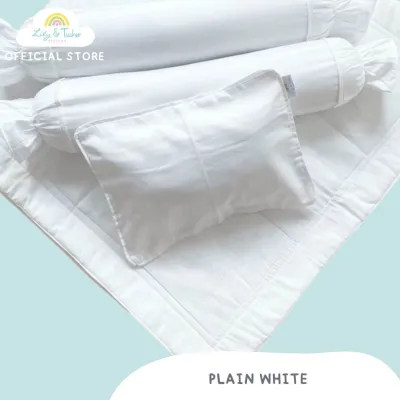
Prices are valid at publication and may change. Please refer to the product page for the latest price.
To complement a firm mattress, the fitted sheet must fit tightly around the corners without any slack. Any loose fabric can bunch up, creating folds that pose a hazard to a newborn who cannot yet lift their head or roll over independently. Parents should verify that the sheet remains completely flat and secure, even when the baby moves. This tight fit is crucial for maintaining an unobstructed airway throughout the night. A loose sheet that slips off the mattress corners can easily become tangled around a baby, presenting a severe safety risk.
Temperature regulation is another critical factor for newborns, who cannot regulate their body temperature as efficiently as adults. In tropical climates characterized by high humidity and warm ambient temperatures, overheating is a significant concern. Bedding materials must allow air to circulate freely, helping to dissipate body heat and prevent sweat buildup. Excessive warmth can lead to heat rash, sleep disruption, and increased safety risks. A baby who is too hot may sleep too deeply, making it harder for them to wake up if they experience breathing difficulties.
To maintain a safe sleep environment, the crib must remain free of all loose items. This means pillows, thick blankets, quilts, sheepskins, and stuffed toys should never be placed in the sleeping area. While these items are often marketed as cozy additions, they represent serious suffocation and entrapment hazards. A bare crib, consisting only of a firm mattress and a tightly fitted sheet, remains the gold standard for infant sleep safety. If additional warmth is needed, parents should rely on wearable blankets or swaddles rather than loose sheets or blankets.
Evaluating Lili and Tucker Bedding Components for Newborn Use
When evaluating the various components offered by Lili and Tucker, parents must look beyond aesthetic appeal to assess how each item performs in a real-world nursery. The fitted sheet is the most critical component of any bedding collection. A high-quality fitted sheet should feature deep pockets and strong, all-around elastic rather than elastic only at the corners. This design ensures the sheet grips the underside of the mattress securely, preventing it from slipping off or bunching up when the baby shifts. Double-stitched seams along the corners also add durability, helping the sheet withstand frequent washing without tearing or losing its shape.

Before purchasing, it is essential to measure your crib mattress precisely and compare those measurements with the product specifications. Standard crib sizes can vary slightly, and even a discrepancy of a few centimeters can result in a sheet that is either too loose or too tight to install safely. A sheet that is too small may pull the corners of the mattress upward, creating gaps along the sides of the crib where a baby could become trapped. Conversely, a sheet that is too large will bunch up, creating dangerous folds of loose fabric.
Swaddles and sleep sacks are excellent alternatives to loose blankets, providing warmth and security without the associated safety risks. When selecting these items from a collection, parents should examine the fabric weight and breathability. For warm tropical nights, lightweight cotton muslin or bamboo-derived fabrics are highly suitable because they allow moisture to evaporate quickly. It is also important to check the thermal rating, often referred to as the TOG (Thermal Overall Grade), to ensure the garment matches the room’s temperature. A low TOG rating (such as 0.5 or 1.0) is ideal for warm climates, preventing the baby from overheating while still providing a comforting layer.
The design of a swaddle or sleep sack must also support healthy physical development. A hip-healthy design allows the baby’s legs to bend freely and flare out at the hips, which is crucial for preventing hip dysplasia. The chest area should fit snugly to prevent the fabric from sliding up over the baby’s face, while the lower portion should offer ample room for leg movement. Zippers should have protective fabric tabs at the top to prevent scratching the baby’s delicate chin and neck. Furthermore, parents must stop swaddling as soon as the baby shows any signs of attempting to roll over, transitioning them to a sleeveless sleep sack to keep their arms free.
Many bedding sets include decorative items such as crib bumpers, matching pillows, and heavy quilts. While these pieces look beautiful in promotional photos, they are not safe for a sleeping newborn. Crib bumpers, even breathable mesh varieties, are no longer recommended due to risks of suffocation, strangulation, and climbing hazards as the baby grows. Parents should plan to use these decorative items strictly for nursery styling when the crib is unoccupied, or repurpose them for supervised tummy time on the floor. A quilt can make an excellent play mat, but it must never accompany a sleeping baby in the crib.
Building a Safe and Practical Newborn Bedding Shortlist
Creating a practical shopping list involves separating essential bedding items from optional accessories that can be purchased later. The absolute essentials for a newborn’s crib include a high-quality waterproof mattress protector, three to four fitted sheets, and several wearable blankets or swaddles. The waterproof protector is vital for shielding the mattress from diaper leaks, spit-up, and spills, which can lead to mold and bacteria growth in humid environments. Choosing a protector with a breathable, non-crinkly backing ensures it does not trap heat or make disruptive noises when the baby moves.
Having multiple fitted sheets is necessary to handle the frequent messes that occur during the first few months. A minimum of three sheets allows you to have one on the mattress, one in the laundry, and one clean spare ready in the closet. For swaddles and sleep sacks, a similar rotation is recommended. Having at least three wearable blankets ensures you are never caught unprepared during late-night diaper changes or consecutive rainy days when laundry takes longer to dry. This practical approach reduces stress and ensures your baby always has a clean, dry place to sleep.
Fabric selection plays a major role in both comfort and skin health, especially for babies prone to eczema or heat rash. Natural fibers like organic cotton and bamboo are highly recommended for newborn bedding. Cotton is durable, easy to wash, and naturally breathable, making it an excellent choice for everyday use. Bamboo-derived fabrics offer exceptional softness and moisture-wicking properties, which can help keep the baby cool and dry in humid weather. Parents should avoid synthetic fabrics like polyester, which tend to trap heat and can irritate sensitive newborn skin.
When planning your purchase, consider your household’s laundry routine and the local climate. In regions with high humidity or frequent rainfall, line-drying clothes can take a significant amount of time. If you do not have access to a mechanical clothes dryer, you may need to increase the quantity of sheets and swaddles in your rotation to ensure you always have dry, clean bedding available. Investing in a few extra high-quality essentials is often more practical than buying a large, multi-piece decorative set that contains items you cannot safely use in the crib.
Verifying Specifications and Care Instructions Before Purchase
Before finalizing any bedding purchase, a thorough inspection of product specifications and care instructions is essential. Parents should carefully read the product labels to verify the exact material composition. Look for 100% natural fibers and check for any specific washing instructions. Some high-quality fabrics may require gentle cycles or low-temperature drying to prevent excessive shrinkage, which could ruin the tight fit of a crib sheet. Understanding these requirements beforehand helps ensure the bedding fits into your daily routine and maintains its safety standards over time.
Quality construction is another critical safety check. Inspect the seams of fitted sheets and sleep sacks to ensure the stitching is tight and secure. Loose threads can wrap around a baby’s fingers or toes, creating a serious hazard known as a hair tourniquet. Zippers, snaps, and buttons must be firmly attached and positioned in a way that they do not rub against the baby’s skin. Zippers should operate smoothly without catching, and snaps should close tightly enough to resist a baby’s movements. Any embellishments or loose decorative elements should be avoided on items meant for the sleep space.
It is also wise to confirm the retailer’s return and exchange policies before making a purchase. If a fitted sheet does not fit your mattress as snugly as required, you must be able to return or exchange it easily. Comparing prices in ₱ across authorized retailers can help you find the best value while ensuring you are purchasing genuine products. Avoid buying from unverified third-party sellers on online marketplaces, as counterfeit bedding may not meet the same safety and material standards as authentic items. Investing in genuine, certified bedding ensures that the materials are free from harmful chemicals and safe for your baby’s delicate skin.
Frequently Asked Questions (FAQ)
Can I use a Lili and Tucker quilt or comforter in my newborn's crib? (FAQ)
No, you should not use a quilt, comforter, or any other loose blanket in your newborn’s crib during their first year of life. Pediatric health organizations consistently advise keeping the sleep area completely free of soft bedding to prevent accidental suffocation, entrapment, and overheating. A heavy quilt can easily cover a baby’s face if they wiggle or roll, creating a dangerous barrier to breathing.
Instead of using these items for sleep, you can find many practical and safe ways to enjoy them in your nursery. A beautiful quilt can be draped over a chair for decoration, used as a soft surface for supervised tummy time on the floor, or used as a stroller cover when you are out for a walk in cooler weather. For sleep, rely on fitted sheets and wearable blankets to keep your baby safe and comfortable.
How do I wash Lili and Tucker bedding to maintain its softness and safety? (FAQ)
To preserve the softness, durability, and safety of your newborn’s bedding, it is best to wash all items before their first use and regularly thereafter. Use a mild, hypoallergenic, fragrance-free detergent specifically formulated for sensitive baby skin. Avoid fabric softeners and bleach, as these products can leave chemical residues that irritate a baby’s respiratory system and skin, and they can also degrade the flame-resistant properties or breathability of certain fabrics.
Always check the individual care labels on each item for specific instructions regarding water temperature and drying. Washing in cool or warm water on a gentle cycle is generally recommended to prevent shrinkage and preserve the fabric fibers. When drying, tumble dry on a low heat setting or line-dry in a well-ventilated area away from direct, harsh sunlight to prevent fading and maintain the elastic’s strength over time.
Community discussion
Share your experience or ask a question. Comments are reviewed before publication.