
The best gate for baby safety depends entirely on where you install it in your home. For staircases, a hardware-mounted gate is the only safe option because it physically bolts to the wall and cannot be pushed over. For doorways and hallways, a pressure-mounted or walk-through gate offers convenience without drilling. For wide, open-plan living spaces, modular panel gates or retractable mesh barriers provide the necessary flexibility.
In many homes, especially those with open-plan layouts, tiled floors, and high humidity, choosing the right barrier requires careful consideration of both safety and structural compatibility. A gate that works perfectly in a bedroom doorway could pose a severe hazard if placed at the top of a flight of stairs. Understanding how different gate designs interact with your home’s architecture is the first step in creating a secure environment for your growing child.
As babies transition from crawling to walking, their curiosity and physical strength increase rapidly. A safety gate must be able to withstand sudden impacts, leaning, and shaking. By matching the specific needs of each area in your house—whether it is a high-traffic hallway, a wide archway, or a steep staircase—with the correct gate type, you can prevent accidents while maintaining a functional flow throughout your living space.
Products mentioned in this guide
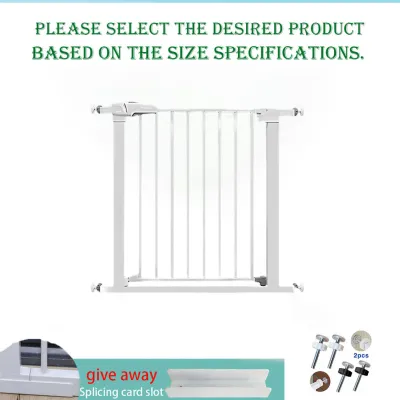
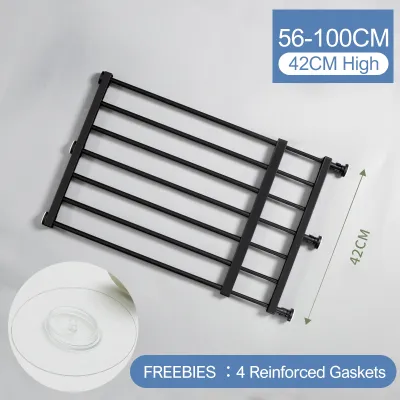
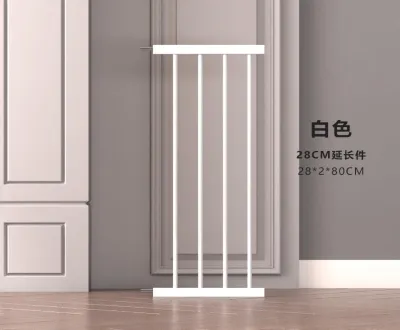
Prices are valid at publication and may change. Please refer to the product page for the latest price.
Key Safety Standards and Design Features to Check
Before comparing different gate styles, it is essential to understand the non-negotiable safety features and certification labels that define a high-quality barrier. When browsing options on an ecommerce platform or in a local baby boutique, look for recognized safety certification labels on the product packaging. These certifications, such as those from ASTM International or European standards (EN), indicate that the gate has undergone rigorous testing for structural integrity, latch strength, and material safety.
The physical dimensions of the gate must align with your child’s developmental stage. Verify the gate’s height relative to your child’s current height and climbing ability. A standard safety gate should stand at least 22 inches (approximately 56 centimeters) tall. If your child is tall for their age or shows an early interest in climbing, you will need a taller model to prevent them from tipping over the top.
The locking mechanism is another critical line of defense. Ensure the latch requires a dual-action motion or adult-level dexterity to open. This typically involves a combination of squeezing, sliding, or lifting that a toddler’s hand size and motor skills cannot coordinate. Avoid gates with simple pressure latches that can be forced open by a determined child pushing with their body weight.
Examine the physical design of the gate panels carefully. Avoid gates with horizontal climbing bars or large gaps where a child’s head, torso, or limbs could get trapped. The spacing between vertical slats should be narrow, ideally under 3 inches (7.6 centimeters), to eliminate any risk of head entrapment. Additionally, ensure there are no sharp edges, exposed springs, or small parts that could become choking hazards.
In tropical climates with high humidity, the durability of the gate’s materials is a major factor. Wooden gates must be checked regularly for warping, splintering, or peeling finishes, which can occur when exposed to moisture. Metal gates should feature a high-quality, rust-resistant coating to prevent corrosion over time, especially if installed near open windows or in semi-outdoor areas like patios.
Securing Stairs: Why Hardware-Mounted Gates Are Required
Staircases represent the highest risk area in any home, making the choice of safety gate here absolutely critical. For both the top and bottom of stairs, hardware-mounted gates are the only acceptable option. These gates are physically screwed into the wall studs or solid wood banisters, creating a permanent, rigid barrier that cannot be dislodged by a child’s weight or a sudden impact.

Pressure-mounted gates are highly unsafe for the top of stairs due to two major risks: dislodgement and tripping. Because pressure gates rely solely on tension to stay in place, a child leaning heavily or pushing against the gate can cause it to slip off the wall, leading to a dangerous fall down the steps. Furthermore, pressure-mounted gates feature a solid metal threshold bar along the floor, which remains in place even when the gate door is open. This bottom bar is a severe tripping hazard at the top of a staircase.
Installing a hardware-mounted gate requires drilling into your home’s structure, which demands careful planning. You must locate solid wood studs behind the drywall or drill directly into solid wood door frames and banisters. If you are mounting the gate to concrete or masonry walls, which are common in many homes, you must use appropriate masonry drill bits and heavy-duty plastic wall anchors to ensure the screws remain firmly seated.
The direction in which the gate opens is another vital safety factor. A gate installed at the top of the stairs must have a built-in swing stop that prevents it from opening out over the staircase. It should only swing inward toward the landing or hallway. This design ensures that even if the gate is left unlatched, pushing against it from the stair side will not cause it to swing open over the steps.
Finally, pay close attention to banister spacing and structural integrity. If your staircase has decorative wooden or metal spindles, drilling directly into them can ruin the woodwork or weaken the railing. In these situations, use specialized banister adapter kits. These kits clamp securely around the spindles using padded brackets, providing a flat, solid wood surface where you can safely screw in the gate’s mounting hardware without causing permanent damage.
Managing Doorways and Hallways: Pressure-Mounted vs. Walk-Through Gates
Doorways and hallways are high-traffic zones that require a balance between reliable security and daily convenience. For these areas, parents often choose between temporary pressure-mounted gates and permanent walk-through designs. Understanding the trade-offs of each will help you select the most practical option for your family’s daily routine.
Pressure-mounted gates are highly popular for temporary setups or rental properties where drilling holes into walls is not permitted. These gates are easy to install, require no tools, and can be moved from one doorway to another as needed. However, they have distinct limitations. They can easily scuff or damage drywall if tightened too much, and they may slide out of position on slick surfaces like polished tiles, glossy paint, or varnished wood.
For busy households, walk-through gates with auto-close features offer immense convenience. These gates consist of a sturdy outer frame that remains fixed in place, with a central door that swings open in both directions. An auto-close mechanism uses gravity or integrated springs to pull the door shut and lock it automatically behind you. This is incredibly helpful when your hands are full with a baby, laundry, or household items.
One major consideration when choosing a walk-through gate is the bottom threshold bar. Because the outer frame must remain rigid, a metal bar runs along the floor directly beneath the swinging door. In a busy hallway, this bar can easily trip family members, especially in low-light conditions. If you are installing a gate in a high-traffic corridor, look for low-profile thresholds or opt for a hardware-mounted walk-through gate that swings entirely clear of the floor, leaving no bottom bar behind.
Accurate measurement is crucial before purchasing any gate for a doorway. You must measure the exact width of the opening at the top, middle, and bottom. Baseboards and decorative trim can make the bottom of a doorway significantly narrower than the top. Choose a gate that includes adjustable tension bolts or extension panels to accommodate these variations, ensuring a snug and level fit.
Covering Open Spaces and Wide Openings: Retractable and Extra-Wide Gates
Modern home designs often feature open-plan living rooms, wide archways, and irregular spaces that cannot be blocked by a standard-sized safety gate. Securing these large areas requires specialized solutions, such as retractable mesh gates, extra-wide multi-panel systems, or modular play yards.
Retractable mesh gates are an excellent space-saving option for wide openings and high-traffic areas. These gates feature a flexible, heavy-duty mesh screen that rolls up completely into a sleek wall-mounted housing when opened. When retracted, they leave the walkway entirely clear, making them ideal for maintaining an open aesthetic. However, because the mesh has some flexibility, these gates are not suitable for high-impact areas or the top of stairs, as a child leaning heavily against the mesh could stretch it or slip underneath.
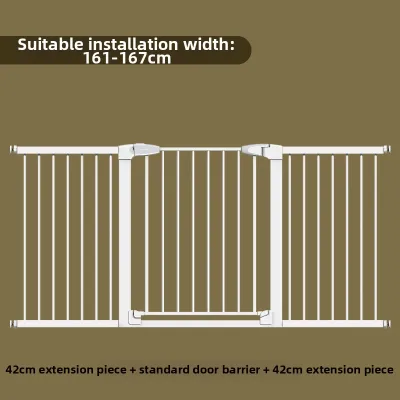
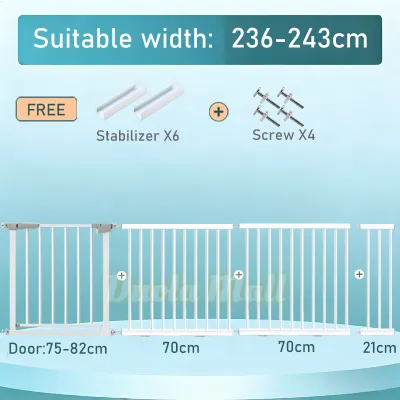
For very wide archways or irregular spaces, extra-wide hardware-mounted gates with multiple adjustable panels are the most secure choice. These systems allow you to angle the panels to navigate around furniture, pillars, or uneven walls. They provide a rigid, physical barrier that can span several meters, effectively sectioning off entire rooms, open kitchens, or areas with potential hazards like home entertainment centers or indoor plants.
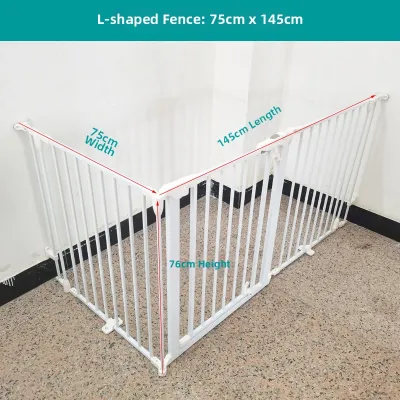
Another versatile solution is the modular play yard or freestanding enclosure. These multi-panel systems can be configured into a closed hexagon or octagon to create a dedicated, safe play zone in the middle of a large room. Alternatively, they can be unlinked and mounted to the walls to block off large, irregular sections of a living space. This flexibility is highly beneficial as your child’s play area needs change over time.
When installing a wide-span gate, always check the maximum extension width and the overall structural stability of the system. As a gate extends wider, it naturally becomes more susceptible to sagging or wobbling in the middle. Look for models that include stabilizing support feet that rest on the floor, or intermediate wall mounts that provide extra anchoring points to keep the entire barrier rigid and secure.
Pre-Purchase Measurement and Installation Checklist
To avoid the frustration of purchasing a gate that does not fit or cannot be safely installed, follow a systematic measurement and preparation process before making your purchase. Taking the time to assess your walls and layout beforehand ensures a smooth installation and a secure barrier.
First, measure the width of the opening at three distinct points: the top, the middle, and the floor level. Walls in residential homes are rarely perfectly straight, and baseboards can reduce the available width at the bottom by several centimeters. Write down these measurements and compare them to the gate’s specifications, ensuring that the gate you choose can adjust to fit the narrowest measurement while still expanding to meet the widest point.
Next, identify the material of the walls or door frames where the gate will be mounted. Concrete or masonry walls require a hammer drill, masonry drill bits, and plastic wall anchors or concrete screws. Drywall requires a stud finder to locate solid wood studs behind the plaster, as mounting a gate directly into hollow drywall is unsafe. Solid wood allows you to screw the mounting brackets directly into the wood using standard wood screws.
Review the manufacturer’s installation manual for specific clearance requirements and the swing radius of the gate. Ensure that the gate door has enough space to swing fully open without hitting nearby furniture, light fixtures, or other doors. If you are installing a hardware-mounted gate, verify that you have the necessary tools, such as a level, a drill, a screwdriver, and a pencil for marking screw holes.
Once the gate is installed, establish a routine for regular maintenance checks. Daily use, changes in indoor temperature, and tropical humidity can cause hardware to loosen or pressure pads to lose their grip over time. Once a week, give the gate a firm shake to ensure it remains securely anchored. Tighten any loose screws or adjustment bolts immediately, and inspect the locking mechanism to confirm it still latches smoothly and securely.
Frequently Asked Questions (FAQ)
At what age should I stop using a baby safety gate?
Most baby safety gates are designed for children between the ages of 6 months and 24 months. This range aligns with the developmental milestones of crawling, pulling up, and learning to walk. Once a child reaches their second birthday, their physical strength, height, and cognitive abilities often allow them to figure out how to climb over or bypass the gate entirely.
Always check the manufacturer’s documentation for specific height and weight limits. As a general rule, once a child’s chin is level with the top of the safety gate, or when they reach a height of 36 inches (approximately 91 centimeters), the gate is no longer safe to use. At this stage, the risk of a child falling over the top of the gate while attempting to climb it is greater than the hazard the gate is meant to prevent.
Pay close attention to your child’s behavior and problem-solving skills. If you observe your child attempting to climb the gate, using the vertical slats as footholds, or showing an understanding of how to operate the dual-action latch, it is time to remove the gate. At this point, transition your safety strategy to teaching stair safety and establishing clear household boundaries.
Can I use a pressure-mounted gate at the top of the stairs if it has a wall cup?
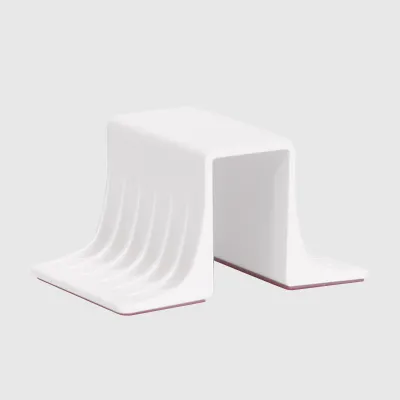
No, you should never use a pressure-mounted gate at the top of a staircase, even if you install it using wall cups. Wall cups are small plastic discs that adhere or screw to the wall to provide a textured surface for the gate’s pressure pads. While they do improve the lateral stability of a pressure gate in standard doorways, they do not provide the structural, mechanical hold required for high-risk areas.
A pressure-mounted gate relies entirely on friction and tension to stay in place. If a child trips and falls against the gate, or if they pull on it with their full body weight, the tension can fail, causing the entire gate to dislodge. At the top of the stairs, this failure would result in both the child and the heavy gate falling down the steps, leading to severe injuries.
Additionally, pressure-mounted gates always feature a solid metal threshold bar along the floor. This bar remains in place even when the gate door is open, presenting a permanent tripping hazard at the very edge of the staircase. For these reasons, safety standards dictate that only hardware-mounted gates, which are screwed directly into the wall studs and have no bottom threshold bar, should be used at the top of stairs.
How do I install a baby gate on a banister with spindles?
Installing a safety gate on a staircase with decorative wooden or metal spindles requires specialized mounting techniques to avoid damaging your home’s woodwork. You should never drill screws directly into delicate spindles, as this can split the wood, weaken the structural integrity of the banister, and lower the resale value of your home.
The most effective solution is to use a banister adapter kit, which is widely available on online marketplaces and at baby specialty stores. These kits typically consist of heavy-duty straps, foam padding, and a solid wooden or plastic post. The straps wrap tightly around the spindle or banister post, clamping the adapter post securely in place without the need for drilling. Once the adapter post is installed, you can safely screw the gate’s mounting hardware directly into it.
Before purchasing an adapter kit, consult the gate manufacturer’s compatibility guide to ensure it fits the specific shape of your banister. Banisters come in various profiles, including round, square, or wrought iron. Ensure the adapter kit you choose is designed to match your staircase’s configuration, and always check the tightness of the straps regularly to ensure the mount remains rigid and secure.
Community discussion
Share your experience or ask a question. Comments are reviewed before publication.