
Caring for a baby with eczema requires a thoughtful, structured approach to skincare, especially in tropical climates where heat, humidity, and sweat can easily trigger or worsen flare-ups. The Aveeno Eczema Therapy line offers a variety of formats designed to address different stages of skin dryness and irritation. Rather than searching for a single, universal miracle product, managing your baby’s eczema effectively involves matching the right product format to their current skin condition and specific daily needs. By understanding how each formulation works, you can build a supportive routine that helps soothe irritation and protect your baby’s delicate skin barrier.
Identifying Your Baby's Specific Eczema Needs
Before selecting any skincare product, it is essential to assess the current state of your baby’s skin, as eczema symptoms can change rapidly. Eczema-prone skin generally fluctuates between periods of daily maintenance and acute flare-ups. Daily maintenance phases are characterized by mild dryness, rough patches, or general sensitivity, requiring consistent hydration to keep the skin barrier intact. In contrast, acute flare-ups involve intense itching, pronounced redness, and highly irritated patches that demand immediate, targeted soothing to prevent the baby from scratching and causing further damage.
The location of the symptoms also dictates how you should manage them. Eczema commonly appears on highly visible or high-friction areas such as the cheeks, outer elbows, and knees. However, in warm and humid environments like the Philippines, sweat can accumulate in skin folds—such as the neck, inner elbows, and behind the knees—making these areas highly susceptible to irritation. Because the skin’s thickness and sensitivity vary across these different body parts, a product that works well on a dry elbow might be too heavy or trapping for a sweaty neck fold. Caregivers must evaluate these localized differences and choose products based on the baby’s current skin condition and age, rather than relying solely on a brand name.
Products mentioned in this guide
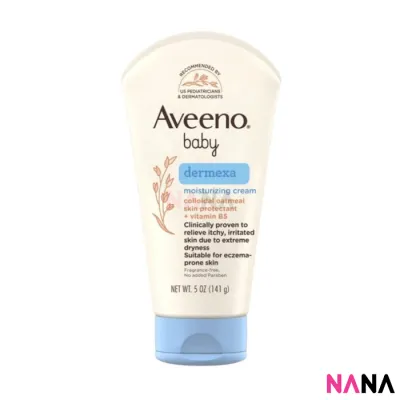
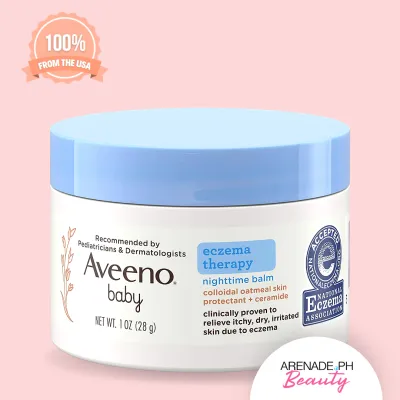
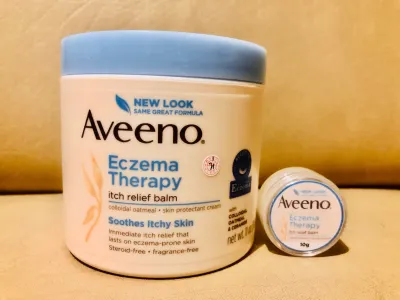

Prices are valid at publication and may change. Please refer to the product page for the latest price.
Matching Aveeno Eczema Therapy Formats to Specific Symptoms
The Aveeno Eczema Therapy range includes several distinct formulations, each engineered to perform a specific task in a baby’s skincare regimen. Creams, bath treatments, and thick balms are not interchangeable; instead, they serve complementary roles. For instance, a lightweight cream is designed for broad, daily application, while a concentrated balm is formulated to provide an intense moisture barrier over stubborn, localized dry patches.

When selecting a product, always check the packaging labels carefully to verify the recommended age limits and specific application instructions. Some formulations are designed for infants of all ages, while others may be recommended only for babies over a certain number of weeks or months. Additionally, because product availability, packaging designs, and exact product names can vary between local retail pharmacies and imported stocks found on online marketplaces, you should focus on the underlying formulation type and active ingredients rather than searching for an exact matching bottle design.
Daily Creams and Lotions for Maintenance
Daily moisturizing creams and lotions form the foundation of any eczema management routine. These products are designed to be applied over large areas of the body to maintain overall skin hydration and support the natural skin barrier. The most effective time to apply a daily cream is immediately after a bath, while the baby’s skin is still slightly damp, as this helps lock in the moisture absorbed during bathing.
When shopping for a daily maintenance cream, look closely at the label to ensure it is explicitly marked as fragrance-free and hypoallergenic. Added fragrances are among the most common triggers for skin irritation in babies with sensitive skin. It is also important to understand the limits of these daily formulations. Daily creams are intended strictly for preventative care and mild dryness; they are not formulated to treat severe, weeping, cracked, or infected skin, which requires professional medical evaluation and targeted prescription treatments.
Bath Treatments for Full-Body Soothing
Bath treatments, particularly those utilizing finely milled colloidal oatmeal, offer an effective way to soothe widespread skin irritation and itching across the baby’s entire body. When dispersed in bathwater, colloidal oatmeal forms a soothing, protective barrier that temporarily relieves itching and helps calm red, irritated skin. This makes bath treatments an excellent preparatory step before applying topical moisturizers.
To ensure a safe and beneficial bath, caregivers should pay close attention to water temperature and soaking duration. The water should always be lukewarm, as hot water strips natural oils from the skin and can severely aggravate eczema symptoms. Limit the bath to a short duration—typically five to ten minutes—to prevent the skin from drying out. After the bath, gently pat the baby’s skin with a soft towel instead of rubbing, leaving the skin slightly damp. Always read the specific product packaging to verify the manufacturer’s age recommendations and precise dilution instructions for the bathwater.
Balms and Ointments for Localized Dry Patches
For stubborn, exceptionally dry patches of skin that do not respond sufficiently to daily lotions, thicker formulations like balms and ointments are highly beneficial. These products have a rich, occlusive texture that creates a dense physical barrier over the skin, trapping moisture and protecting the area from external irritants. They are particularly useful for targeted application on high-friction areas such as the cheeks, elbows, and knees, which are frequently exposed to rubbing from clothing, bedding, or crawling.
While these heavy balms are excellent for dry, exposed patches, they must be used with caution in tropical climates. Applying thick, occlusive ointments to areas prone to heat rash—locally known as bungang-araw—or deep skin folds where sweat accumulates can trap moisture and heat, leading to further irritation or secondary skin issues. Avoid applying heavy balms to the neck folds, armpits, or diaper area unless specifically advised to do so by a qualified healthcare professional.
Reading Labels: Key Ingredients and Safety Checks for Babies
Understanding how to read and interpret product labels is a crucial skill for any caregiver managing a baby’s eczema. Two of the most common and beneficial ingredients found in eczema-focused skincare are colloidal oatmeal and ceramides. Colloidal oatmeal acts as a natural skin protectant that helps soothe irritation and itchiness, while ceramides are essential lipids that help rebuild and strengthen the skin’s natural moisture barrier. Together, these ingredients support the skin’s ability to retain moisture and defend against environmental triggers.
Conversely, caregivers must actively scan ingredient lists to identify and avoid potential irritants. Products containing added synthetic fragrances, artificial dyes, or harsh preservatives should be avoided, as these substances can easily trigger allergic contact dermatitis or worsen existing eczema. When evaluating products in local pharmacies or online stores, look for clear labeling indicating that the product has been pediatrician-tested or dermatologist-tested. Because safety standards and testing certifications can vary globally, verifying these claims on the physical packaging available in your local market helps ensure the product meets acceptable safety thresholds for infant skin.
Building a Daily Skincare Routine for Eczema-Prone Babies
Establishing a consistent, structured daily skincare routine is key to keeping your baby’s eczema under control. A highly recommended approach is the “soak and seal” method. This process begins with a brief, lukewarm bath using a gentle, soap-free cleanser or a colloidal oatmeal bath treatment to hydrate the skin. Immediately after patting the baby dry with a soft towel—leaving the skin slightly damp—apply a generous layer of daily moisturizing cream within three minutes to lock in the moisture before it evaporates.
Before introducing any new product into your baby’s routine, always perform a patch test to check for potential sensitivity. Apply a small, pea-sized amount of the product to a clear patch of skin, such as the inner forearm or behind the ear, once or twice a day for a few consecutive days. Monitor the area closely for any signs of redness, swelling, or irritation. If no reaction occurs, the product is generally considered safe for broader application. Additionally, keeping a simple daily symptom diary can help you track how your baby’s skin responds to different products, changes in weather, air conditioning, or clothing materials, allowing you to refine the routine over time.
When to Stop Use and Consult a Pediatrician
While over-the-counter skincare products are valuable tools for managing mild to moderate dryness, they have clear limitations and do not replace professional medical care. Caregivers must remain vigilant for signs of skin infection, which can develop quickly when the skin barrier is compromised by eczema and scratching. If you notice weeping fluid, yellow crusting, pus, increased swelling, warmth, or rapidly spreading redness, these are red flags that require immediate evaluation by a pediatrician or pediatric dermatologist.
You should also stop using any skincare product immediately if your baby shows signs of an allergic reaction, such as a sudden rash, hives, or a noticeable worsening of skin irritation after application. Moderate to severe eczema often requires prescription-strength topical treatments, such as topical corticosteroids or non-steroidal anti-inflammatory creams, to bring inflammation under control. Over-the-counter moisturizers should be used as supportive care alongside, rather than as a replacement for, a treatment plan prescribed by a qualified medical professional.
Frequently Asked Questions (FAQ)
Can I use Aveeno Eczema Therapy products on a newborn?
Before applying any new skincare product to a newborn, it is highly recommended to consult your pediatrician. Newborn skin is exceptionally thin, delicate, and highly permeable, making it more sensitive to topical applications. Always read the specific product packaging carefully to check for the manufacturer’s minimum age recommendations, as some formulations are cleared for use from birth, while others may be intended for older infants.
How often should I apply eczema cream to my baby's skin?
For babies with eczema-prone skin, consistency is vital. You should apply a daily moisturizing cream immediately after every bath to lock in hydration. Throughout the day, reapply the cream as needed whenever you notice the baby’s skin starting to feel dry or rough. In air-conditioned environments or during dry, windy days, you may need to apply the moisturizer multiple times to maintain an effective skin barrier.
What should I do if my baby's eczema does not improve with over-the-counter creams?
If your baby’s skin does not show improvement after consistent use of over-the-counter moisturizers, or if the symptoms continue to worsen, seek a professional medical evaluation. A pediatrician or pediatric dermatologist can accurately diagnose the severity of the condition, identify potential environmental triggers, and prescribe targeted medical treatments that are necessary to control moderate to severe eczema flare-ups.
Community discussion
Share your experience or ask a question. Comments are reviewed before publication.