
Finding the right toy storage organizer rack for a compact nursery in the Philippines requires balancing space efficiency, accessibility, and durability. In typical urban homes, such as condominiums or townhouses, floor space is highly limited, making it essential to choose furniture that maximizes storage capacity without overcrowding the room. The ideal solution is a vertical, tiered organizer with removable bins that can adapt to your child’s changing needs while resisting the challenges of a warm, humid climate.
When selecting an organizer, you must look beyond aesthetics and focus on how the unit fits into your daily routine. A well-chosen rack keeps toys off the floor, reduces clutter, and creates a safer environment for your baby to crawl and play. By understanding your room’s dimensions and your child’s developmental stage, you can select a storage system that serves your family for years.
Assessing Your Nursery Space and Storage Needs
Before browsing online marketplaces or local furniture stores, take precise measurements of your nursery. Use a metal measuring tape to map out the available floor area, paying close attention to the swing radius of doors, wardrobe panels, and the distance to the crib. Caregivers need a clear, unobstructed walking path of at least 60 to 70 centimeters to navigate the room safely, especially when carrying a sleeping baby at night.
Products mentioned in this guide
![[🇵🇭 Stock&COD] 3/4/5 Layer Movable Trolley with Wheels Snack Storage Rack Baby Product Storage Cabinet Toy Storage Rack](https://img.lazcdn.com/g/p/98271dd2f19919bb1fc7b24b27517cb4.jpg_400x400q80.jpg_.webp)
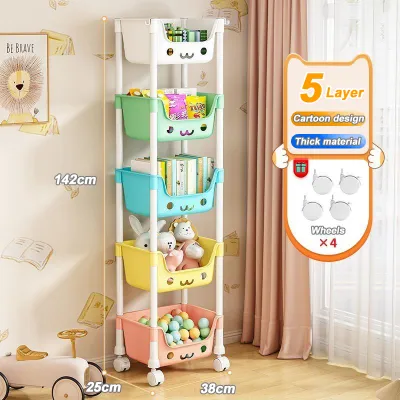
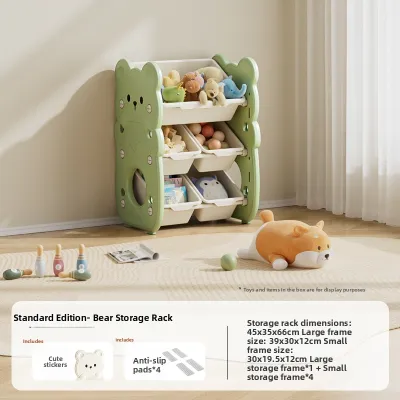
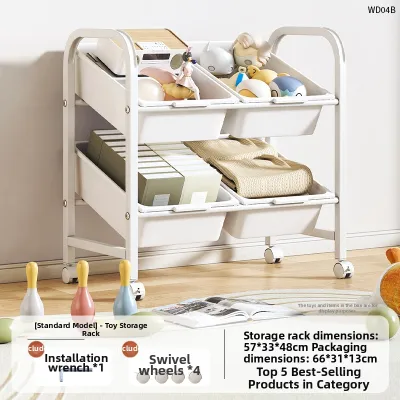
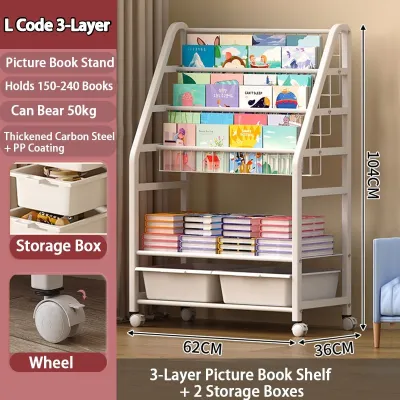
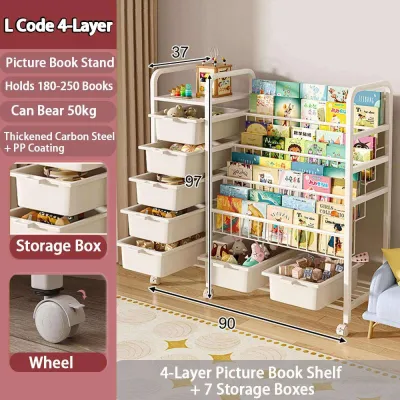
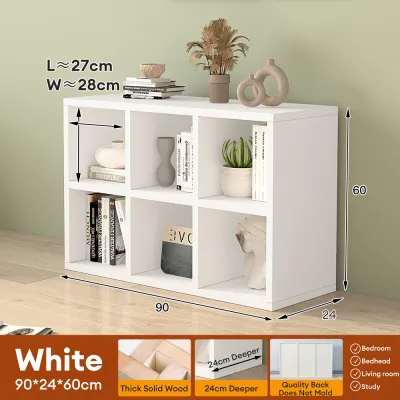
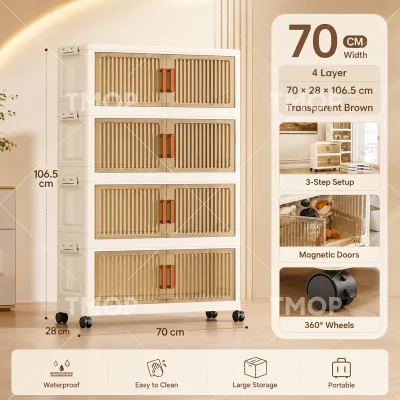
Prices are valid at publication and may change. Please refer to the product page for the latest price.
Consider the height of the room and any architectural features that might limit your options. Low windows, wall-mounted air conditioning units, light switches, and electrical outlets all dictate where a storage rack can safely stand. If you have an awkward corner or a narrow gap between the wardrobe and the wall, these underutilized spots can often accommodate a specialized slim or triangular rack.
Next, estimate your current and near-future toy volume based on your child’s developmental stage. Newborns and young infants typically have fewer, larger items like play mats, activity gyms, and plush toys, which fit well in large baskets. As your baby grows into a toddler, their toy collection will expand to include smaller, multi-piece items like building blocks, sensory toys, and board books. Choosing a rack that can accommodate both large and small items prevents the need to replace the furniture within a year.
Key Features of Space-Saving Toy Organizer Racks
When floor space is limited, vertical storage is your most effective strategy. A tall, narrow toy storage organizer rack utilizes unused wall space while keeping the room’s footprint clear for play. However, you must balance height with accessibility; while caregivers can use upper shelves for items that require supervision, the lower shelves should remain within your child’s reach to encourage independent cleanup habits.

Multi-functional designs are highly valuable in a small nursery. Look for organizer racks that integrate other functions, such as a unit with a flat, sturdy top that can double as a temporary changing surface or a cozy reading bench. Some modular systems combine toy bins with a small bookshelf, allowing you to store bedtime stories and sensory toys in a single, compact piece of furniture.
Adjustability and modularity are crucial for long-term utility. Opt for racks with adjustable shelves or removable bins that allow you to reconfigure the layout as your child’s toy collection changes. Removable plastic bins are particularly practical in the Philippines, as they are lightweight, easy for toddlers to carry, and simple to wash and dry during the humid rainy season. Unlike fabric bins, which can trap dust and moisture, plastic bins can be quickly wiped down with a damp cloth to maintain a hygienic play environment.
Comparing Toy Storage Rack Types for Compact Rooms
Different rack configurations offer distinct advantages depending on your nursery’s layout. Tiered bookshelf-style racks feature flat shelves that hold books upright or accommodate uniform storage baskets. These units typically have a shallow depth, allowing them to sit flush against the wall without protruding into walking paths, making them excellent for narrow rooms.
In contrast, slanted bin organizers use angled rails to hold open plastic or wooden bins. This design makes it incredibly easy for toddlers to see and grab their favorite toys, but the angled setup often requires a deeper footprint. If you choose a slanted bin organizer, verify that the depth of the unit does not block door clearances or create a tight bottleneck in the room.
For rooms with absolutely zero available floor space, wall-mounted shelves and over-the-door organizers are excellent alternatives. Wall-mounted units keep fragile keepsakes, baby monitors, and heavy books safely out of reach, but they require secure installation into wall studs or concrete. Over-the-door organizers with clear pockets are perfect for lightweight items like plush toys, socks, or diapers, though you must ensure they do not prevent the door from latching securely.
If you have unused corners, a dedicated corner storage unit can transform dead space into a highly functional storage zone. Alternatively, modular cube systems offer maximum flexibility; you can stack them vertically in a tight corner or arrange them horizontally under a window, expanding the system with additional cubes as your storage needs grow.
Safety and Installation Checks for Small Spaces
Safety must be your top priority when installing any furniture in a nursery, especially in tight spaces where play areas are close to storage units. Any tall or top-heavy toy storage organizer rack poses a tipping hazard if a child attempts to climb it or pull themselves up. You must verify that the manufacturer includes a reliable anti-tip anchoring kit and follow the installation instructions precisely.
Before mounting any hardware, check your wall material to ensure compatibility. Many homes in the Philippines feature solid concrete or hollow concrete block walls, which require masonry drill bits and heavy-duty plastic wall plugs (tox) to secure brackets. If your nursery has drywall partitions, you must locate the wooden or metal studs or use specialized toggle bolts, as standard screws will pull out of drywall under tension.
Always read the manufacturer’s product labels to verify weight limits for each shelf and bin. To maintain stability, place the heaviest items, such as wooden blocks, puzzles, and heavy books, on the very bottom shelves to lower the unit’s center of gravity. Reserve the upper shelves for lightweight items like stuffed animals, blankets, or empty storage bins.
Finally, perform a thorough physical inspection of the organizer before placing it in the nursery. Run your hands along all edges and corners to ensure they are rounded and smooth, with no sharp splinters, rough plastic seams, or exposed screws. Ensure that removable bins fit securely on their tracks or shelves so they cannot slide off and fall on a crawling child. Verify that all paints, varnishes, and plastics used in the construction are certified non-toxic and lead-free.
Common Sizing and Placement Mistakes to Avoid
One of the most common mistakes when placing a toy storage organizer rack is blocking essential room utilities. Avoid positioning the rack directly in front of electrical outlets, light switches, or wall-mounted fans. In a tropical climate, maintaining good air circulation is vital for preventing mold growth and keeping the nursery comfortable; therefore, do not block windows, air conditioning vents, or natural airflow paths with tall furniture.
Another frequent error is underestimating how the depth of the rack affects the flow of the room. A rack that looks compact online may feel overwhelming once placed in a narrow nursery. To avoid this, use masking tape or cardboard boxes to mock up the physical dimensions of the organizer on your nursery floor before making a purchase, ensuring that wardrobe doors and room doors can still open fully.
Lastly, avoid the temptation to overload the upper shelves of the organizer. Even if the unit is securely anchored to the wall, overloading the top sections makes the furniture unstable and puts unnecessary stress on the wall anchors. Keep the top shelves sparse and lightweight, and regularly audit your child’s toys to donate or store away items they have outgrown, keeping the nursery organized and safe.
Frequently Asked Questions (FAQ)
How do I keep a toy storage rack from tipping over in a small room?
To prevent a toy storage rack from tipping, you must secure it directly to the wall using a heavy-duty anti-tip strap or metal L-brackets. For concrete walls, drill holes using a masonry bit, insert plastic wall plugs, and screw the brackets firmly into place. If mounting on drywall, secure the brackets directly into the wall studs or use high-quality toggle bolts. Avoid using adhesive-based anchors, as high humidity can weaken the adhesive over time, causing it to fail when pulled.
Can I use a toy storage rack as a room divider in a shared nursery?
Using a standard toy storage rack as a freestanding room divider in a nursery is generally not recommended due to severe tipping hazards. Children often use furniture to pull themselves up or climb, and a freestanding unit can easily fall if not anchored to a wall. If you must divide a shared room, use a low, wide, and heavy cabinet specifically designed with an exceptionally broad base, and ensure it is securely anchored to both the floor and an adjacent wall to eliminate any risk of movement.
Community discussion
Share your experience or ask a question. Comments are reviewed before publication.