
Starting solids is a major milestone for your baby, especially in a tropical climate like the Philippines where keeping your little one hydrated and nourished is a daily priority. Navigating this transition requires the right tools to match your baby’s rapid developmental changes. Choosing the appropriate weaning cups and plates involves aligning their physical capabilities with the design features of specialized tableware. By matching your baby’s age and motor skills with the correct products, you can foster independence while minimizing mealtime stress.
As you begin this journey, you will find that tableware is not a one-size-fits-all solution. A cup that works perfectly for a toddler can cause frustration or safety hazards for a six-month-old. By understanding the specific developmental needs of each stage, you can make informed decisions when browsing the nuby official store to select items that support your baby’s growth safely and effectively.
Stage 1: First Purees and Sips (Around 6 Months)
At around six months of age, your baby is just beginning to transition from an all-liquid diet of breast milk or formula to solid foods. During this initial phase, the primary goal is not consumption volume, but rather introducing your baby to the sensation of swallowing different textures and using their tongue in new ways. Their oral cavity is highly sensitive, and their motor skills are still in the earliest stages of coordination.
Products mentioned in this guide
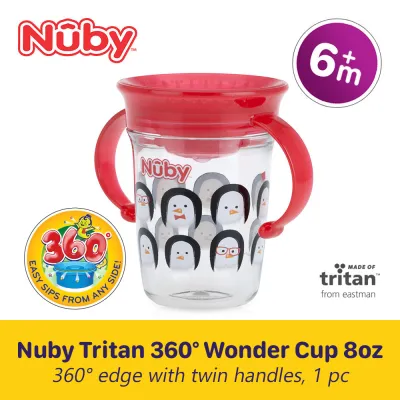
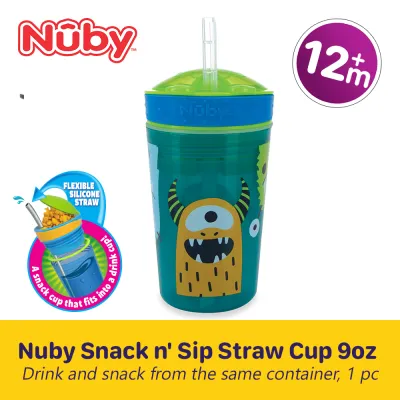

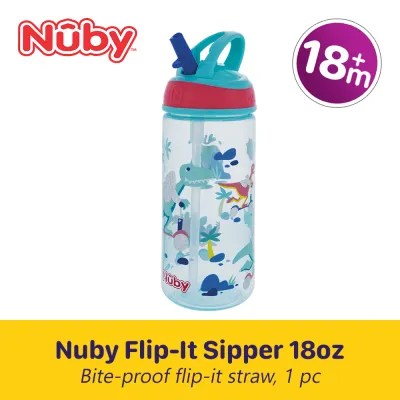
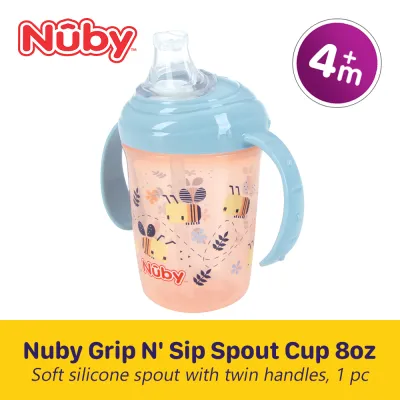
Prices are valid at publication and may change. Please refer to the product page for the latest price.
To protect your baby’s delicate gums, look for starter spoons made from soft, flexible silicone. Hard plastic or metal spoons can cause discomfort if they accidentally bump against sensitive gums, which might lead to food refusal. A small-capacity puree bowl is ideal for this stage, as it holds the tiny portions typical of early feedings and allows you to easily scoop up every drop of food without it spreading thin and cooling down too quickly.
Introducing water alongside solid foods is essential for hydration and helping your baby learn to swallow liquids of different consistencies. Starter cups designed for this stage typically feature very soft silicone spouts that mimic the familiar texture of a bottle nipple or breast. This familiarity helps ease the transition from sucking to sipping. Look for cups equipped with large, easy-grip handles that allow tiny hands to practice holding and tilting the cup, even if you are still providing physical support during the process.
Before purchasing or using any starter tableware, always check the manufacturer’s age recommendations and safety warnings printed on the packaging. Babies at this stage lack the coordination to manage cups and spoons independently without risk. Active adult supervision is mandatory during every feeding session to ensure that your baby does not push utensils too far into their mouth or struggle with the flow of liquid from a starter cup.
Stage 2: Exploring Textures and Self-Feeding (Around 7-9 Months)
Between seven and nine months, babies typically experience a surge in curiosity and physical coordination. They begin to develop the palmar grasp, using their whole hand to scoop up objects, and they often want to take control of the spoon or grab food directly from their plate. This stage is naturally messy, as tactile exploration is a critical part of how babies learn about food textures, temperatures, and consistencies.

To manage the inevitable mess of self-feeding, suction plates and divided bowls are invaluable tools. A strong suction base secures the tableware directly to the high chair tray, preventing your baby from lifting and flipping their entire meal onto the floor. Divided bowls allow you to offer a variety of foods—such as soft fruits, steamed vegetables, and grains—without them mixing together, which helps your baby identify and appreciate distinct flavors and textures individually.
During this stage, you can begin transitioning your baby away from simple spout cups toward more advanced drinking designs. Cups featuring spill-resistant valves or 360-degree drinking edges are excellent for supporting motor skill development. A 360-degree cup allows your baby to drink from any point along the rim, just like an open cup, but the internal valve only releases liquid when lip pressure is applied. This design helps develop mature muscle patterns in the lips and jaw while preventing major spills when the cup is dropped or shaken.
When selecting suction tableware, it is important to verify how well the suction base adheres to your specific high chair or dining table. Suction cups perform differently on textured plastic, smooth wood, glass, or stone surfaces, so testing the grip beforehand prevents unexpected spills. Additionally, check the care labels to confirm if the items are dishwasher-safe. In warm, humid environments, quick and thorough sanitization is crucial, and using a dishwasher can help maintain high hygiene standards for daily-use items.
Stage 3: Independent Eating and Drinking (Around 10-12+ Months)
By the time your baby reaches ten to twelve months and moves into toddlerhood, their fine motor skills are significantly more refined. They are likely mastering the pincer grasp, allowing them to pick up small pieces of food with their thumb and index finger, and they are learning to guide a spoon or fork to their mouth with greater accuracy.
At this stage, you can transition to larger, durable toddler plates that accommodate bigger portions and a wider variety of foods. Look for plates with deep, vertical sidewalls, which provide a barrier that toddlers can push their spoon against to scoop up food independently. This is also the ideal time to introduce straw cups and open cups. Drinking from a straw encourages advanced tongue retraction and lip seal development, which are important milestones for speech and swallowing coordination.
As your toddler becomes more active, safety and product limits remain a top priority. Always review the product specifications regarding temperature limits, microwave heating, and maximum capacity. Some plastics and silicones are not designed to withstand high microwave temperatures or boiling liquids, which can cause the material to degrade or warp over time. Serving food and drinks at safe, moderate temperatures protects both your child and the longevity of the tableware.
Hygiene is another critical factor as cup designs become more complex. Straw mechanisms, sliding lids, and internal valves have small crevices where moisture and food particles can easily become trapped. In a humid climate, this trapped moisture can quickly lead to mold growth. Before buying, confirm that all straw parts and valves can be completely disassembled for deep cleaning, and look for products that are compatible with small straw-cleaning brushes.
Smart Shopping at the Nuby Official Store
When shopping online for your baby’s weaning essentials, navigating the options can be overwhelming. Utilizing the nuby official store ensures you are viewing authentic products with accurate safety and material specifications. To make the best choices for your household, keep a practical checklist in mind as you browse.
First, cross-check the age, weight, and developmental milestones listed on the product description against your baby’s current abilities. Age ranges on packaging are general guidelines, but your baby’s physical readiness—such as their ability to sit upright unsupported or their interest in self-feeding—should dictate which products you introduce. Choosing a cup or plate that matches their current skill level prevents frustration and supports safe learning.
Second, look for explicit material declarations on the product pages. Ensure that all plastic and silicone items are clearly labeled as BPA-free and made from food-grade materials. These declarations verify that the tableware is safe for daily contact with food, especially when exposed to warm purees or warm water during washing.
Finally, carefully review the care and sterilization instructions before finalizing your purchase. Different materials have distinct limits regarding steam sterilization, UV sterilization, boiling water, or top-rack dishwasher cleaning. Selecting products that align with your existing kitchen routine and sterilization equipment saves time and ensures you can maintain a consistent, hygienic cleaning routine without damaging your new tableware.
Frequently Asked Questions (FAQ)
How do I clean and sterilize Nuby weaning cups and plates?
To clean and sterilize your weaning tableware safely, always consult the specific product manual or packaging instructions for temperature limits and approved sanitizing methods. While many silicone and plastic items are top-rack dishwasher safe, some components may warp or degrade if exposed to extreme heat or certain chemical sterilizers. Hand washing with mild, baby-safe dish soap and warm water is generally recommended for daily maintenance.
It is vital to completely disassemble all multi-part cups, including valves, straws, collars, and silicone seals, after every single use. In warm and humid climates, residual milk, juice, or puree trapped in small crevices can rapidly develop mold and bacteria, posing a health risk to your baby. Use specialized small brushes to clean inside straws and narrow valves, and allow all parts to air dry completely in a well-ventilated area before reassembling them.
Regularly inspect all weaning items for signs of wear and tear. Over time, exposure to heat, cleaning agents, and chewing can cause silicone spouts to tear or plastic bowls to become cloudy and scratched. If you observe any structural damage, deep scratches that can harbor bacteria, or tears in flexible components, stop using the product immediately and replace it to ensure your baby’s safety.
When should I transition my baby from a spout cup to a straw or open cup?
Transitioning your baby away from a spout cup depends primarily on their observable motor skills and developmental readiness rather than a strict age limit. Signs that your baby may be ready to upgrade include the ability to hold a cup independently with two hands, bringing objects directly to their mouth with control, or showing a tendency to chew on the soft spout of their starter cup rather than sucking from it.
Every baby develops at their own individual pace, so it is important to avoid comparing your child’s progress to rigid age charts or other children. Some babies transition smoothly from a bottle or breast directly to a straw cup or an open cup with assistance, bypassing spout cups entirely, while others benefit from a gradual step-by-step progression through different cup styles.
If your baby exhibits persistent refusal, struggles to coordinate swallowing, or experiences frequent coughing or choking when attempting to use a new cup type, do not force the transition. Revert to a familiar cup style for a few weeks before trying again. If you have ongoing concerns about your baby’s oral motor development or feeding progress, consult your pediatrician or a pediatric feeding specialist for personalized guidance.
Community discussion
Share your experience or ask a question. Comments are reviewed before publication.