
Selecting a walking chair for baby requires matching the gear to your child’s specific physical milestones rather than their chronological age. In the Philippines, where homes often feature a mix of smooth tiled floors, wooden thresholds, and varying room layouts, finding the right gear means balancing mobility support with home safety. The ideal choice is not a tool that forces early walking, but one that safely complements your baby’s natural strength and curiosity.
As you navigate the options available in local stores and online marketplaces, you will encounter two primary designs: traditional sit-in walkers and active push-behind models. Each serves a distinct developmental phase, and choosing between them depends entirely on your baby’s current motor skills. By focusing on structural stability, adjustable fit, and proper usage guidelines, you can provide a supportive environment for your little one’s physical development.
Understanding Baby Walker Types and Developmental Stages
To choose the right walking chair for baby, you must first understand the fundamental differences between sit-in models and push-behind designs. A sit-in walker features a suspended fabric seat inside a wheeled frame, allowing a baby to sit upright and move by pushing off the floor with their feet. This type is designed for babies who can sit up completely unassisted but cannot yet stand or walk on their own. The primary purpose of this design is to offer a secure upright perspective and basic mobility within a controlled space.
Products mentioned in this guide
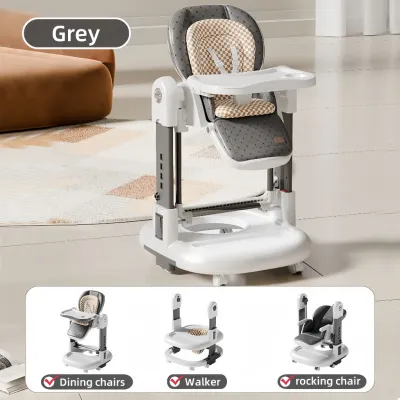
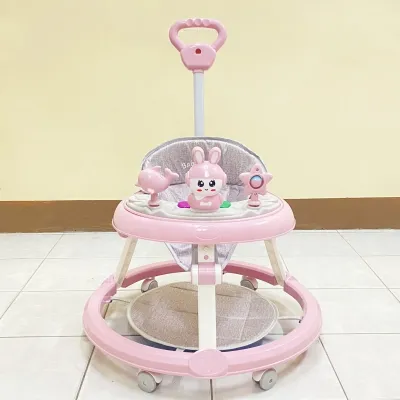
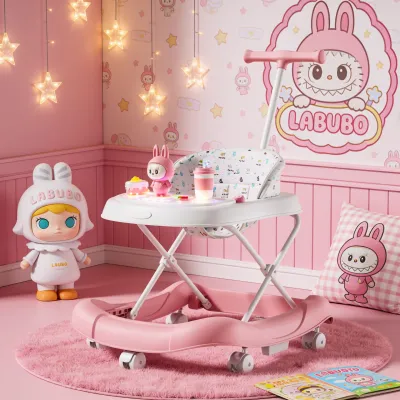
Prices are valid at publication and may change. Please refer to the product page for the latest price.
In contrast, a push-behind walker is a walk-assist toy that your baby stands behind and pushes forward while holding onto a handle. This design is built for babies who are already pulling themselves up to a standing position, cruising along furniture, or taking tentative supported steps. Unlike sit-in models, push-behind walkers require active weight-bearing, balance, and coordination, making them excellent tools for transitioning from supported standing to independent walking.
Recognizing the physical signs of readiness is crucial before introducing either type of gear. For a sit-in walking chair, your baby must demonstrate strong head control and the ability to maintain a seated position without leaning or tipping over. If your baby’s torso slumps forward or to the side when placed in the seat, their core muscles are not yet strong enough, and you should delay using the device. For a push-behind model, look for signs that your baby can bear their full weight on their feet, grip the handle firmly, and take steps forward when supported.
It is important to remember that a walking chair for baby should support natural progression rather than force premature milestones. Forcing a baby into an upright, mobile position before their muscles and joints are ready can lead to poor posture and improper foot alignment. By aligning the gear with your baby’s actual physical capabilities, you ensure that their play sessions are both comfortable and developmentally appropriate. Consult a pediatrician or physical therapist if you have questions about your baby’s specific motor development.
Essential Safety Features to Check Before Buying
Safety must be your primary consideration when selecting any baby gear, especially items designed for movement. When evaluating a walking chair for baby, start by inspecting the base of the frame. A high-quality walker should feature a wide, stable base that is significantly larger than the upper tray or seat area. This wide footprint lowers the center of gravity and prevents the walker from tipping over if your baby leans heavily to one side or bumps into furniture.

Stair-fall prevention is another critical feature to verify, particularly in multi-level homes or spaces with raised thresholds. Look for models equipped with friction strips or rubber stopper pads on the underside of the base. These safety grips are designed to catch on the edge of a step or uneven surface, stopping the walker’s momentum immediately to prevent falls. Even if your home is entirely on one level, these stoppers provide an essential layer of protection against unexpected drops or transitions.
The wheels of the walker require close inspection to ensure they are suitable for your home’s flooring. Look for models that feature adjustable wheel resistance or locking systems. On smooth tiled or polished wooden floors common in many Philippine households, wheels can roll too quickly, causing the baby to lose control. Being able to tighten the wheels to add resistance helps slow down the movement, giving your baby time to coordinate their steps safely.
Finally, you must locate and verify the safety certification labels and manufacturer warnings on the product packaging or the frame itself. Look for recognized international safety standards or local quality marks that indicate the product has undergone rigorous structural testing. Avoid purchasing unbranded or generic models that lack clear safety labeling, assembly instructions, or weight limits. Verifying these certifications before buying ensures that the materials used are non-toxic and that the frame can withstand daily wear and tear.
Evaluating Comfort, Fit, and Adjustability
A walking chair for baby must fit your child’s current physical dimensions perfectly to prevent discomfort and physical strain. The most critical adjustment feature is the seat height. When your baby is positioned in a sit-in walker, their feet must be able to rest flat on the floor with a slight bend in the knees. If only their toes can touch the ground, the seat is too high, which can strain their calf muscles; if their knees are bent too deeply, the seat is too low, which limits their ability to push off safely.
The quality of the seat materials is especially important in the tropical climate of the Philippines. Look for seats made from breathable, moisture-wicking fabrics that allow air to circulate freely, reducing the risk of heat rashes and discomfort during warm afternoons. The seat padding should be firm yet comfortable, providing adequate support for the baby’s lower back and hips. Ensure that the leg openings are smooth and well-padded to prevent chafing against your baby’s delicate skin.
Many modern walking chairs come equipped with activity trays, toy bars, or electronic music modules to keep your baby entertained. While these features are excellent for sensory play, evaluate how easily they can be detached. A removable toy tray allows you to convert the walker into a clean, flat surface for snack times or simple floor play. Removability also makes cleaning much easier, as food crumbs, spills, and drool can be wiped away quickly from the plastic surfaces.
As your baby grows, their physical needs will change rapidly, making adjustability a key factor in the product’s lifespan. Choose a model that offers multiple height adjustment levels so you can raise the seat as your baby’s legs grow longer. Check the manufacturer’s documentation to verify the maximum weight and height limits, and prepare to transition your baby out of the walker as they approach these boundaries.
Purchasing Channels and Delivery Verification
To ensure you are receiving a genuine, safe product, prioritize buying from official brand stores, authorized physical retailers, or verified online marketplaces. Purchasing from reputable sources guarantees that you are getting an authentic item that complies with safety standards, rather than a counterfeit model made with substandard materials. Authorized retailers also provide reliable customer service should you encounter any issues with the product.
When your walking chair for baby is delivered or purchased in-store, perform a thorough inspection before assembling it. Examine the outer packaging for any signs of severe damage, crushing, or tampering. Once opened, lay out all the components and cross-reference them with the parts list in the instruction manual. Ensure that all screws, wheels, seat clips, and safety stoppers are present and undamaged before beginning the assembly process.
Check for intact safety seals and inspect the plastic and metal parts for any sharp edges, rough seams, or manufacturing defects. The frame should lock into place securely without wobbling, and the folding mechanism should operate smoothly while featuring a reliable lock to prevent accidental collapse. If any part appears cracked, bent, or missing, do not attempt to use the walker; instead, contact the retailer immediately for a replacement.
Before finalizing your purchase or assembling the product, confirm the warranty terms and return policies offered by the seller. Reliable brands typically offer a warranty that covers manufacturing defects for a set period. Having access to local customer support in the Philippines is highly beneficial, as it ensures you can easily source replacement parts, such as extra seat pads or replacement wheels, if needed.
Safe Usage Practices and When to Transition
Even the most advanced safety features cannot replace the necessity of constant adult supervision. When your baby is in a walking chair, they can move much faster and reach higher objects than they can when crawling. Keep a watchful eye on your baby at all times, and never leave them unattended in a walker, even for a brief moment. Ensure that older siblings or pets do not push the walker or interfere with your baby’s movement.
Before placing your baby in the walker, prepare the environment by clearing the floor of all potential hazards. Remove loose rugs, electrical cords, toys, and any small objects that could get caught in the wheels or cause a tip-over. Block off access to stairs, steps, balconies, and kitchens using secure safety gates. Keep hot liquids, electrical appliances, cleaning chemicals, and fragile items well out of your baby’s reach, as the added height of the walker allows them to grab objects from tables and countertops.
To support healthy physical development, limit your baby’s continuous sessions in a sit-in walker. Experts generally recommend keeping walker sessions short to prevent overexertion and to encourage your baby to spend plenty of time on the floor crawling, rolling, and playing. Floor play is essential for building the core, shoulder, and back strength required for independent walking, which a sit-in walker does not fully engage.
Knowing when to stop using the walking chair is just as important as knowing when to start. You should transition your baby out of a sit-in walker as soon as they can stand or walk independently, or when they attempt to climb out of the seat. Additionally, monitor your baby’s growth closely; once they exceed the manufacturer’s specified weight or height limits, or if their feet can rest completely flat on the floor even at the highest seat setting, it is time to retire the device.
Frequently Asked Questions (FAQ)
Are sit-in baby walkers safe for hip development?
Proper hip development relies on natural movement and correct leg positioning. When using a sit-in walking chair for baby, ensure the seat is adjusted so your baby’s feet rest flat on the floor, allowing them to bear weight naturally rather than dangling by their crotch. Prolonged use of a sit-in walker can place unnatural pressure on the hips and encourage toe-walking, which may tighten the calf muscles. To support healthy hip joint development, limit walker sessions to short intervals and prioritize floor activities like tummy time and crawling. Always consult your pediatrician if you have concerns about your baby’s physical alignment.
At what age should a baby start using a push walker?
Readiness for a push-behind walker is determined by physical milestones rather than a specific chronological age. Most babies are ready to explore a push walker when they can pull themselves up to a standing position using furniture, bear their full weight on their legs, and take steps while holding your hands. These milestones typically occur around late infancy, but every baby develops at their own pace. Introducing a push walker too early, before your baby has the core strength and balance to control the device, can lead to falls. Wait for these physical cues to ensure a safe and supportive transition to independent walking.
Community discussion
Share your experience or ask a question. Comments are reviewed before publication.