
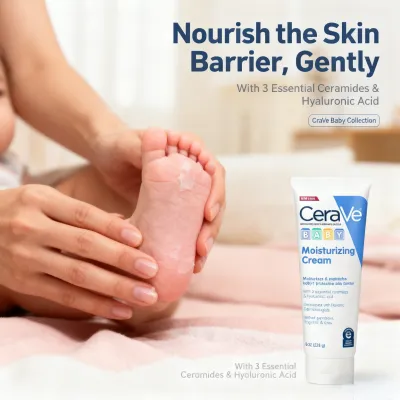
CeraVe Baby Cream is generally safe and highly suitable for newborns, thanks to its minimalist, fragrance-free formulation that focuses on skin barrier support. Because a newborn’s skin is incredibly delicate and still developing, choosing the right moisturizer requires a close look at the ingredient list. While this cream is formulated with gentle ingredients like ceramides and hyaluronic acid, parents must still follow proper application guidelines, perform a patch test, and monitor their baby’s skin for any individual sensitivities.
Understanding what goes onto your baby’s skin is the first step in protecting their health. Newborn skin is highly permeable, meaning substances applied to the surface are absorbed more easily than they would be on adult skin. By analyzing the formulation of CeraVe Baby Cream, you can make an informed decision on whether this specific product aligns with your baby’s daily skincare needs.
Why Newborn Skin Requires Careful Ingredient Selection
The skin of a newborn baby is fundamentally different from adult skin. During the first few months of life, a baby’s skin is still adapting to the extrauterine environment. The stratum corneum, which is the outermost layer of the skin, is significantly thinner in infants than in adults. This thinness makes the skin barrier highly fragile and less effective at blocking external irritants, environmental pollutants, and potential allergens.
Products mentioned in this guide
Prices are valid at publication and may change. Please refer to the product page for the latest price.
Another critical factor is transepidermal water loss (TEWL). Because the infant skin barrier is not fully developed, moisture evaporates from a baby’s skin much faster than it does from adult skin. This rapid evaporation can lead to sudden dryness, flaking, and susceptibility to environmental changes. In tropical climates like the Philippines, high humidity and heat can further complicate skincare routines. While humidity can keep the skin hydrated, excessive heat can cause sweating, which may lead to heat rash if heavy, occlusive creams clog the baby’s underdeveloped sweat ducts.
General pediatric guidelines strongly emphasize a minimalist approach to newborn skincare. Dermatologists and pediatricians advise parents to select products that are entirely free of synthetic fragrances, artificial dyes, and harsh preservatives. A newborn’s immune system is still learning to distinguish between harmless substances and actual threats, meaning exposure to complex chemical formulations can trigger allergic contact dermatitis. Choosing simple, targeted moisturizers helps support natural skin development without overwhelming the baby’s system.
Core Ingredients in CeraVe Baby Cream and Their Functions
To evaluate whether CeraVe Baby Cream is suitable for your newborn, it is helpful to look closely at its active and functional components. The formulation is designed to mimic the natural components of healthy skin, focusing on barrier repair and hydration rather than cosmetic enhancements.

Barrier Support: Ceramides and Niacinamide
The Role of Ceramides Ceramides are naturally occurring lipids (fats) that make up a significant portion of the skin’s natural moisture barrier. They act as the “mortar” that holds skin cells (the “bricks”) together, creating a tight seal that keeps moisture in and irritants out. CeraVe Baby Cream typically contains three essential ceramides: Ceramide 1, Ceramide 3, and Ceramide 6-II. By applying a cream enriched with these specific lipids, you help replenish the baby’s natural lipid matrix, supporting a stronger barrier against environmental stressors.
The Benefits of Niacinamide Niacinamide, also known as Vitamin B3, is another key ingredient included to support the skin barrier. It helps soothe the skin, reduces redness, and encourages the natural production of ceramides within the skin itself. For a newborn, this means extra support against minor irritations and dryness. However, because product formulations can occasionally vary by region, batch, or manufacturing year, caregivers should always verify the exact ceramide and ingredient profile printed on their specific product packaging before the first application.
Hydration: Hyaluronic Acid and Glycerin
Humectants for Moisture Retention Hyaluronic acid and glycerin are powerful humectants, which are ingredients that draw water from the surrounding air and the deeper layers of the skin into the outer stratum corneum. Glycerin is a well-established, highly tolerated ingredient in pediatric skincare that provides deep, reliable hydration without causing irritation. Hyaluronic acid complements this by holding many times its weight in water, helping to plump the skin and maintain a soft, smooth texture.
Lightweight Hydration in Warm Climates Using humectants is particularly advantageous in warm, humid conditions. Unlike heavy oils or thick petrolatum-based ointments that can sometimes trap heat and sweat on a baby’s skin, humectants provide lightweight hydration. This allows the newborn’s skin to breathe naturally while remaining fully moisturized, minimizing the risk of sweat retention or clogged pores that can lead to prickly heat.
Sustained Release: MVE Delivery Technology
Understanding Multivesicular Emulsion One of the unique features of CeraVe products is their proprietary Multivesicular Emulsion (MVE) technology. Traditional moisturizers often release their ingredients all at once upon application, which can lead to rapid absorption followed by a return to dryness a few hours later. MVE technology utilizes concentric spheres that slowly peel away layer by layer over time, gradually releasing the ceramides and humectants onto the skin’s surface.
Practical Benefits for Baby Care This sustained-release mechanism offers a highly practical benefit for busy parents. Instead of needing to reapply moisturizer multiple times throughout the day to combat dry patches, a single application can provide prolonged hydration. This reduces the need to disturb your baby with frequent lotion applications, keeping their skin consistently protected during long sleep stretches or outings.
Safety by Exclusion: What the Formula Leaves Out
When evaluating newborn skincare, what is left out of the bottle is often just as important as what is put in. CeraVe Baby Cream is formulated with a strict focus on safety by exclusion, avoiding several common ingredients that are known to trigger skin reactions in infants.
Fragrance-Free and Dye-Free Formulation Synthetic fragrances and artificial dyes are among the leading causes of cosmetic-induced contact dermatitis in both children and adults. Because a newborn’s skin barrier is highly permeable, volatile fragrance compounds can easily penetrate the outer layers, causing redness, itching, and swelling. CeraVe Baby Cream is entirely fragrance-free and dye-free, making it significantly safer for daily use on sensitive newborn skin.
Exclusion of Parabens and Sulfates Parabens are chemical preservatives widely used in cosmetics to prevent bacterial growth, but they have faced scrutiny regarding their potential to mimic hormones and cause skin irritation. Sulfates, which are harsh cleansing agents or surfactants, can strip the skin of its natural oils, leaving it dry and vulnerable. The absence of these compounds in the baby cream formulation helps ensure that the natural lipid balance of your baby’s skin remains undisturbed.
Verifying Labels and Certifications While the product is designed to be highly compatible with sensitive skin, parents should always check the physical packaging for specific certifications, such as allergy-testing claims or non-comedogenic labels. It is also important to remember that terms like “hypoallergenic” are primarily marketing descriptions rather than strictly regulated medical terms. While they indicate that the manufacturer has formulated the product to minimize allergy risks, they do not guarantee that an individual baby will not experience a reaction. Careful personal observation remains essential.
How to Safely Introduce and Apply the Cream
Introducing any new skincare product to a newborn should be done with care and structure. Following a methodical application routine helps maximize the moisturizing benefits while protecting your baby from potential adverse reactions.
The “Soak and Seal” Method To get the most out of a moisturizing cream, pediatric dermatologists often recommend the “soak and seal” method. Start by bathing your baby in lukewarm water for no more than five to ten minutes, using a gentle, soap-free cleanser. Immediately after bathing, gently pat the baby’s skin dry with a soft cotton towel, leaving it slightly damp. Within three minutes of patting dry, apply a thin layer of CeraVe Baby Cream over the baby’s body. This locks in the moisture from the bath before it has a chance to evaporate.
Performing a Step-by-Step Patch Test Before applying any cream to your baby’s entire body, always perform a patch test to rule out localized sensitivities. First, apply a small, pea-sized amount of the cream to a clean, discreet area of the baby’s skin, such as the inner forearm or just behind the ear. Second, leave the cream on the skin and monitor the area closely for 24 hours. Third, check for any signs of redness, swelling, tiny bumps, or dryness. If the skin remains clear and calm after 24 hours, you can proceed with full-body application.
Application Boundaries and Storage When applying the cream, always avoid the immediate eye area, the mouth, and any mucous membranes. Do not apply the cream to broken, weeping, or bleeding skin unless specifically directed by a healthcare professional. Additionally, proper storage is crucial for maintaining the stability of the active ingredients. In warm, tropical environments, store the cream in a cool, dry place away from direct sunlight. Avoid leaving the product in hot vehicles or near windows, as extreme heat can cause the emulsion to separate, reducing its effectiveness.
Monitoring for Reactions and When to Seek Medical Advice
Even the gentlest skincare products can occasionally cause an unexpected reaction in highly sensitive individuals. Knowing what to look for and when to pause use is vital for your baby’s safety.
Signs of Skin Irritation Caregivers should regularly inspect the baby’s skin after introducing a new product. Signs of an adverse reaction or allergic contact dermatitis include new or worsening redness, small raised bumps or hives, sudden dry or flaky patches, and behavioral signs of discomfort such as unusual fussiness or scratching.
Immediate Action Plan If you notice any of these signs, stop using the cream immediately. Gently wash the affected area with cool or lukewarm water to remove any remaining product residue, and pat the skin dry with a clean towel. Do not apply other scented lotions or home remedies to the irritated area. Keep the skin clean and dry, and monitor it closely over the next few hours.
When to Consult a Pediatrician While minor redness may fade quickly after discontinuing use, certain situations require professional medical advice. If your baby has persistent rashes, suspected infant eczema, cradle cap, or if the skin looks infected (such as oozing or feeling warm to the touch), consult a pediatrician or pediatric dermatologist. Over-the-counter moisturizers are designed for daily maintenance and skin barrier support; they are not substitutes for prescribed medical treatments or medicated creams. Always consult a healthcare professional before attempting to treat chronic or severe skin conditions.
Frequently Asked Questions (FAQ)
Can I use CeraVe Baby Cream on my newborn's face?
Yes, CeraVe Baby Cream is generally safe for use on a newborn’s face, as it is formulated without common irritants like fragrance and dyes. However, you must apply it carefully to avoid the eyes, nostrils, and mouth. Because facial skin can be more sensitive than body skin, it is highly recommended to perform a separate patch test on a small area of the jawline before applying it more widely to the face.
Is this cream suitable for babies with diagnosed eczema?
Ceramide-rich, fragrance-free moisturizers are frequently recommended by pediatricians and dermatologists to help maintain the skin barrier in babies with eczema-prone skin. However, you should consult your pediatrician before applying any over-the-counter cream to active eczema flare-ups. Always check the product packaging to verify if it carries any specific endorsements or seals from recognized national eczema associations.
Does CeraVe Baby Cream contain steroids or active medications?
No, CeraVe Baby Cream is a cosmetic moisturizer and does not contain topical steroids, hydrocortisone, antibiotics, or any other prescription active medications. It is designed solely for daily barrier support and hydration. To ensure absolute safety, always read the full active and inactive ingredient lists printed on the product box to verify the formulation before use.

Community discussion
Share your experience or ask a question. Comments are reviewed before publication.