
As a parent, finding a moment to manage household chores, prepare meals, or simply take a breath can feel like a daily puzzle. In many homes across the Philippines, where daily routines are bustling and multi-generational households are common, an automatic baby swing often seems like the ultimate hands-free helper. If your little one settles down instantly in a baby swing rocker automatic, you might naturally wonder if this soothing device can pull double duty as an everyday baby chair.
However, the direct answer is clear: no, an automatic baby swing should never be used as an everyday baby chair or a primary seating option. While these devices are exceptionally effective at comforting a fussy infant through gentle, rhythmic motion, they are designed strictly for short-term, supervised soothing. Using them as a general-purpose seat for long periods poses significant developmental and physical safety risks. To protect your baby’s delicate spine and airway, you must treat the swing as a temporary comfort tool rather than a standard piece of nursery furniture.
The Short Answer: Swings Are for Soothing, Not Everyday Sitting
To understand why an automatic swing cannot replace a standard baby chair, it helps to look at how these products are engineered. A baby swing rocker automatic is built to mimic the swaying, rocking motion of a parent’s arms. The seat is usually suspended from a frame, creating a dynamic, moving environment that helps lull a crying baby to sleep or calm a restless infant. This motion is highly specialized, relying on a specific center of gravity and kinetic balance to remain safe.
Products mentioned in this guide
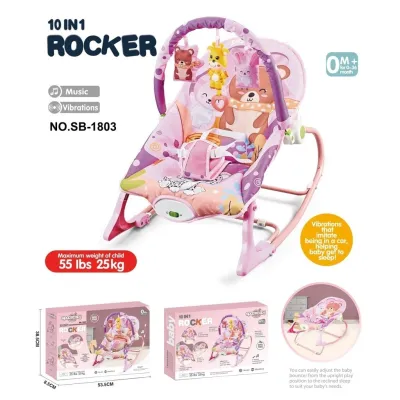
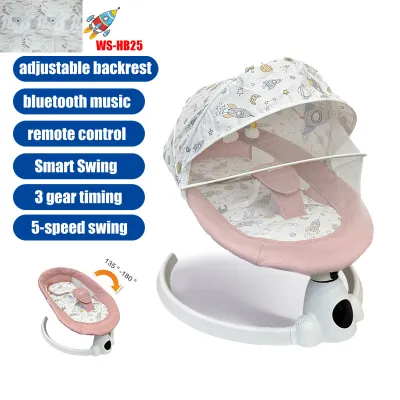
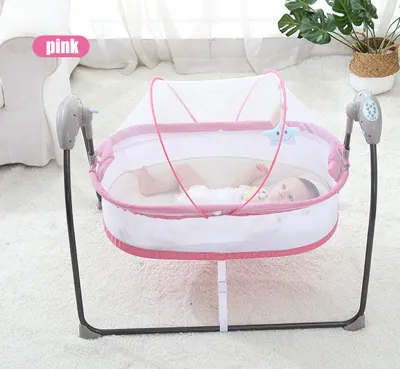
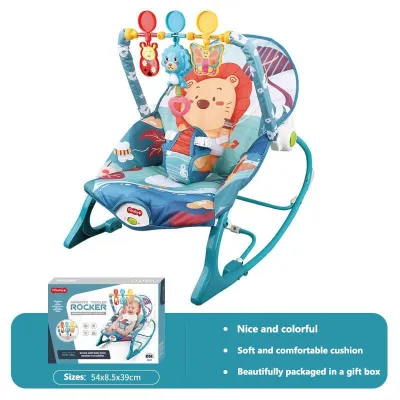
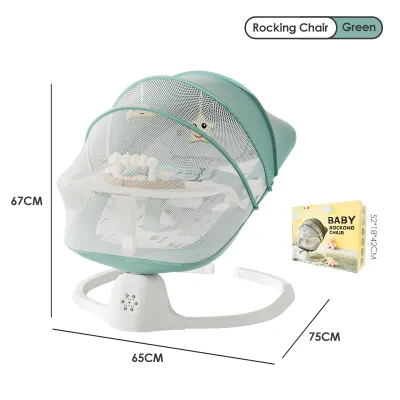
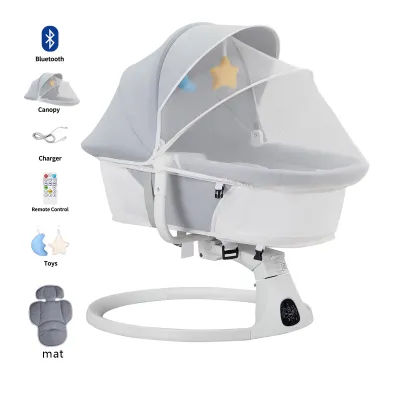
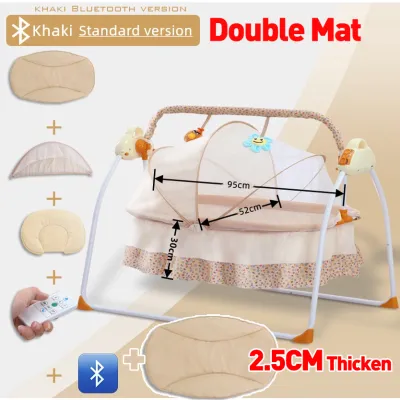
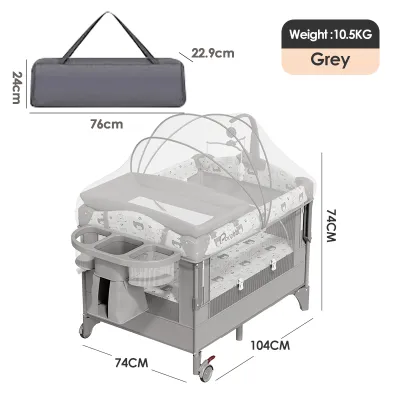
Prices are valid at publication and may change. Please refer to the product page for the latest price.
In contrast, a dedicated baby chair or high chair is designed for static support, active play, or feeding. These stationary chairs feature firm, upright backrests that encourage proper posture, core engagement, and safe positioning. When a baby sits in a standard chair, their muscles are actively working to maintain balance and explore their surroundings. A swing, with its deep, contoured fabric pocket and constant motion, does not provide the structural support needed for everyday sitting, self-feeding, or active playtime.
Using a baby swing as a regular chair often stems from a desire for convenience, especially during warm afternoons when the gentle breeze of a fan combined with the swing’s motion makes a baby highly content. However, substituting a swing for proper developmental seating compromises your baby’s physical progression. It is crucial to view the swing solely as a transitional soothing aid, not a place where your baby spends their active waking hours.
Safe Usage Limits: Time, Supervision, and Context
Establishing strict boundaries around how and when you use your automatic swing is the foundation of infant safety. Because these devices are highly engaging and comfortable for babies, it is easy to lose track of time while attending to other household tasks.

Strict Time Boundaries
You should always consult your specific product manual to verify the manufacturer’s recommended time limits for continuous use. As a general safety standard, pediatric experts recommend limiting a baby’s time in a swing to no more than 30 minutes per session, and a maximum of one hour total per day. Leaving an infant in a semi-reclined, moving seat for extended periods can lead to physical fatigue, muscle strain, and sensory overstimulation. If your baby has spent 30 minutes in the swing, it is time to transition them to a flat play mat for tummy time or a crib for a rest.
Active, Awake Supervision
An automatic baby swing is never a hands-free babysitter. It must only be operated when you are in the same room, fully awake, and actively watching your child. It can be tempting to turn on the swing and step away to prepare a meal in another part of the house, but critical safety incidents can occur in seconds. If you must leave the room, even for a brief moment, take your baby out of the swing and place them in a safe, stationary environment like a playpen or crib.
Context Restrictions and Feeding Hazards
Swings are strictly prohibited for certain daily activities. Most notably, you must never feed your baby while they are in a swing. Whether you are bottle-feeding formula or introducing solid food, the semi-reclined angle of a swing combined with its motion creates a severe choking hazard. Additionally, if you find yourself feeling drowsy, do not leave your baby in the swing. If you are going to sleep, your baby must be placed in their dedicated sleep space.
Safe Floor Placement
Where you set up your baby swing rocker automatic is just as important as how long you use it. The swing must always be placed on a flat, stable, and level floor surface. In many homes, tiled or smooth concrete floors provide the ideal stable base. Never place a baby swing on elevated surfaces such as dining tables, kitchen countertops, sofas, beds, or wooden benches. The kinetic energy generated by the swing’s motion, combined with a baby’s shifting weight, can cause the unit to slide, tip over, or fall from the elevated surface, resulting in catastrophic injuries.
Proper Harnessing and Positioning Guidelines
Securing your baby correctly in the swing is a non-negotiable step every single time you use it. Even if you only plan to soothe your baby for five minutes, proper harnessing prevents accidental falls, slips, and entrapment.
The Harnessing Protocol
Every automatic swing comes equipped with a safety harness, typically a 3-point or 5-point system. You must fasten and secure this harness every single time your baby is placed in the seat, regardless of their age, weight, or how calm they seem. Even a newborn who cannot yet roll can slide down or shift their weight unexpectedly. A 5-point harness is particularly effective as it secures both the shoulders and hips, preventing the baby from climbing or sliding out of the top or sides of the seat.
Adjusting the Straps Correctly
Simply buckling the harness is not enough; the straps must be adjusted to fit your baby’s body snugly. Check the manufacturer’s instructions to verify how to tighten the straps properly. A good rule of thumb is that the straps should be snug enough that you can fit no more than one or two fingers between the harness strap and your baby’s collarbone. Pay close attention to the crotch strap. It must be positioned correctly to prevent the baby from sliding downward, which is a major risk factor for harness-related strangulation.
Maintaining an Open Airway
Infants have large, heavy heads and relatively weak neck muscles. When placed in a semi-reclined seat, their heads can easily slump forward, causing their chin to press against their chest. This position can compress their soft airway, leading to silent suffocation. To prevent this, always adjust the swing seat to the most upright position that is developmentally appropriate for your baby’s age and neck control. If your baby is very young and cannot yet support their head, ensure the seat is reclined to the maximum safe angle allowed by the manufacturer, and monitor their head position continuously.
Prohibited Aftermarket Additions
It is common for parents to want to make the swing seat cozier by adding extra padding. However, you must never place aftermarket inserts, head support pillows, thick blankets, or rolled-up towels into the swing unless they were specifically manufactured and safety-tested for that exact model. In the warm, humid climate of the Philippines, adding plush, non-breathable fabrics also increases the risk of overheating. More importantly, these unapproved items can interfere with the proper fit of the safety harness and pose a direct suffocation hazard if the baby’s face turns into them.
Hidden Risks of Prolonged Swing Use
While a baby swing rocker automatic can feel like a lifesaver during a fussy evening, relying on it as a primary daily seat introduces several hidden physical and developmental risks. Understanding these physiological dangers helps explain why pediatricians and safety experts enforce strict limits on swing usage.
The Danger of Positional Asphyxia
The most critical risk associated with prolonged swing use is positional asphyxia. Unlike adults, infants do not have the muscle strength to lift their heads if their airway becomes restricted while slumping. Because positional asphyxia is silent—meaning the baby cannot cry out or gasp for air effectively—a caregiver might assume the baby is peacefully sleeping when they are actually experiencing oxygen deprivation. This is why continuous, active supervision is mandatory, and why swings are never safe for unsupervised sleep.
Container Baby Syndrome and Developmental Delays
When a baby spends excessive time in restrictive devices like swings, car seats, bouncers, and strollers, they are at risk of developing Container Baby Syndrome. This term describes a range of physical and cognitive developmental delays caused by a lack of active movement. To build the muscles necessary for rolling, sitting, crawling, and walking, babies need to move their limbs freely on a flat, firm surface. Prolonged confinement in a contoured swing seat limits their range of motion and deprives them of essential tummy time.
Plagiocephaly and Flat Head Risks
In addition to motor delays, spending hours in a baby swing can lead to positional plagiocephaly, commonly known as flat head syndrome. A baby’s skull bones are soft and malleable. When their head rests against the semi-rigid surface of a swing seat for extended periods, the constant pressure on the back of the skull can cause it to flatten. Encouraging floor play and limiting swing time allows your baby’s head to develop a natural, rounded shape.
Spinal and Postural Strain
An infant’s spine is born with a single, C-shaped curve. As they grow and begin to lift their head and sit up, the spine naturally develops its mature, S-shaped curves. To support this rapid skeletal development, babies need to spend the majority of their resting and playing hours on flat, supportive surfaces. The curved, suspended fabric of a swing seat does not provide the structural support required for healthy spinal alignment. Over time, prolonged semi-reclined sitting can place unnecessary strain on their developing back and hip joints.
Fall and Entrapment Hazards
As babies grow, they become increasingly curious and active. An older infant who is placed in a swing may attempt to roll over, sit up, or climb out. If the harness is not perfectly adjusted, or if the baby has outgrown the swing’s physical limits, their movements can cause the swing to tip over. Furthermore, active babies can get their limbs caught in the side straps or the swing’s frame, leading to painful pinches, sprains, or entrapment.
When to Retire the Swing: Weight, Height, and Milestones
Like all specialized baby gear, an automatic baby swing has a limited operational lifespan. Knowing when to stop using the swing is essential for preventing structural failures and physical injuries.
Checking Manufacturer Specifications
Every baby swing rocker automatic has strict physical limits set by the manufacturer. Before using your swing, locate the product manual or the safety label printed on the frame to identify the maximum weight and height limits. These limits vary significantly by brand, with many standard swings capping their weight limit around 9 to 11 kilograms. Once your baby reaches either the maximum weight or height limit, you must stop using the swing immediately, as the motor and frame are no longer rated to support their size safely.
Developmental Milestones to Watch
Physical milestones are often more important than age or weight when determining when to retire the swing. You must stop using the swing as soon as your baby exhibits any of the following behaviors:
- Sitting up unassisted: Once a baby can sit up on their own, their center of gravity shifts, making the suspended swing seat highly unstable.
- Attempting to climb out: An active baby who tries to escape the seat can easily tip the entire unit over.
- Rolling over: If your baby can roll over, they can twist themselves into unsafe positions within the harness.
- Unbuckling the harness: If your baby learns how to release the safety buckles, they are no longer secure.
Transitioning to Safe Furniture
When your baby outgrows the swing, transition them to furniture designed for their new developmental stage. For feeding, use a sturdy high chair with a proper footrest and a 5-point harness. For play and relaxation, utilize a spacious playpen, a clean floor mat, or a secure crib. These flat, stable environments give your growing baby the freedom to move, stretch, and develop their motor skills safely.
Frequently Asked Questions (FAQ)
Can a baby sleep in an automatic swing?
No, it is not safe to let a baby sleep in an automatic swing. Swings are not approved sleep surfaces. The semi-reclined angle of the seat poses a high risk of positional asphyxia if the baby’s head slumps forward. If your baby falls asleep while soothing in the swing, you should carefully transfer them to a flat, firm, and independent sleep space—such as a crib, bassinet, or playpen—immediately. Always follow safe sleep guidelines by placing your baby on their back on a firm mattress free of loose blankets, pillows, or toys.
Is it safe to put a newborn in a baby swing?
Yes, you can use an automatic baby swing for a newborn, but you must take extra precautions and keep sessions exceptionally brief. Because newborns have very weak neck muscles and no head control, you must adjust the swing seat to its maximum recline angle to keep their airway open. Keep swing sessions limited to 10 to 15 minutes for soothing, and maintain constant, active supervision. Always verify the manufacturer’s minimum weight requirements before placing a newborn in the swing, as some models are not suitable for very small infants.
Community discussion
Share your experience or ask a question. Comments are reviewed before publication.