
Quick Answer: Which Breastfeeding Pillow Shape Works Best?
Choosing between a C-shaped and a U-shaped breastfeeding pillow depends on your body type, preferred feeding positions, and postpartum recovery needs. Neither design is universally superior; instead, each serves distinct physical requirements during the feeding journey. Finding the right match is essential for preventing long-term muscle strain and ensuring a comfortable feeding experience for both you and your baby.
C-shaped breast feeding pillows feature a classic crescent design that slides easily around the front or side of your waist. They offer targeted, highly portable support that is ideal for standard cradle holds and quick feeding sessions. Because they are lightweight and easy to position with one hand, they remain a popular choice for families who need to move around the home or travel frequently.
U-shaped, or wrap-around, pillows provide a complete enclosure around your midsection, delivering comprehensive waist and lumbar support. This design is highly suited for tandem feeding twins, utilizing the football hold, or supporting mothers recovering from abdominal surgeries like a C-section. The secure fastening mechanisms on most U-shaped models prevent the pillow from shifting, creating a highly stable platform.
Products mentioned in this guide
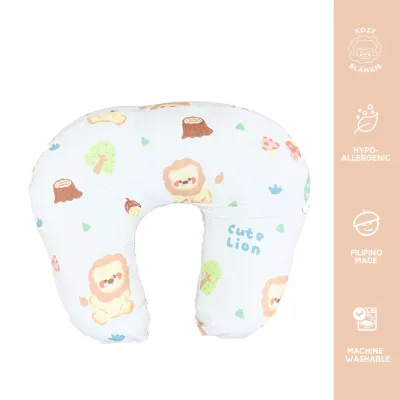
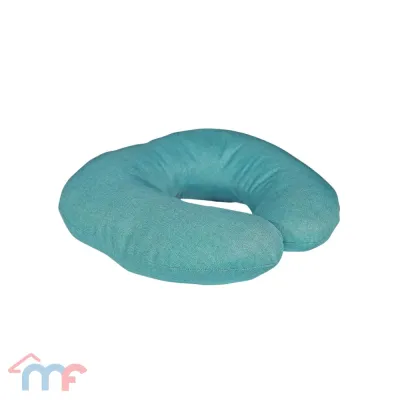

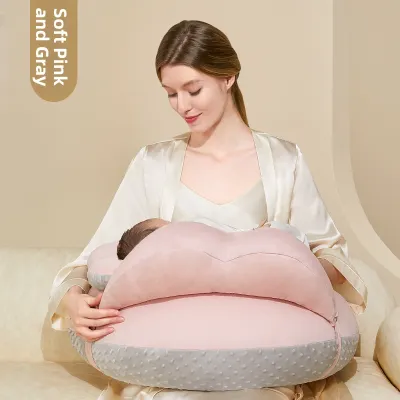
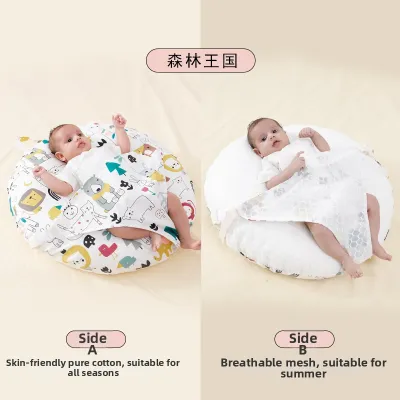
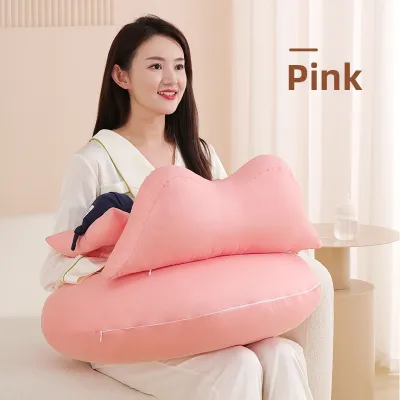
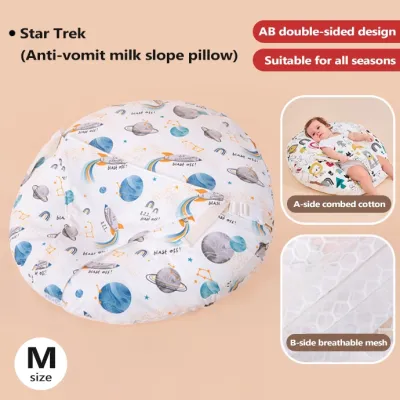
Prices are valid at publication and may change. Please refer to the product page for the latest price.
While shape is a primary consideration, pillow firmness and thickness are equally critical for achieving a proper latch. A pillow must lift your baby to the height of your breast without sagging, preventing you from leaning forward and straining your neck, shoulders, and back. Evaluating how these design elements align with your daily routine will guide you to the most supportive option.
C-Shaped Nursing Pillows: Design, Benefits, and Limitations
The C-shaped nursing pillow is the traditional crescent design that has supported generations of feeding parents. It features an open-back structure, allowing the curved portion of the pillow to rest against your abdomen while the two ends hug your sides. This design relies on the natural tension of the pillow material to cling gently to your waist, making it highly adaptable to various seating arrangements, from deep armchairs to wide sofas.

One of the primary benefits of the C-shaped design is its exceptional ease of use. When caring for a fussy baby, you can easily slide the pillow into place using a single hand. Its lightweight construction makes it highly portable, allowing you to carry it effortlessly from the nursery to the living room or pack it into a vehicle for family outings. For parents who primarily utilize the cradle or cross-cradle holds, the C-shape provides a reliable, contoured surface that mirrors the natural curve of a cradled infant.
However, the open-back design presents specific limitations that may affect your comfort. Because the pillow does not wrap entirely around your torso, it leaves a physical gap at your lower back, offering no built-in lumbar support. If you shift your weight or if your baby moves actively, the pillow can slide forward or gap, requiring you to manually pull it back against your body. Additionally, the standard inner curve of a C-shaped pillow is often fixed, which may feel tight on plus-size frames or slide around too loosely on petite bodies.
In warm, humid climates like the Philippines, the open-back design offers a distinct environmental advantage. Because it does not encircle your entire waist, it allows air to circulate freely around your back and sides. This helps prevent heat buildup during long, skin-to-skin feeding sessions in non-air-conditioned rooms, keeping both you and your baby significantly cooler and more comfortable.
U-Shaped (Wrap-Around) Nursing Pillows: Design, Benefits, and Limitations
U-shaped nursing pillows, often referred to as wrap-around pillows, feature a horseshoe design that completely encircles your midsection. These pillows typically include an adjustable strap, buckle, or hook-and-loop fastener that secures the pillow tightly around your torso. This creates a continuous, 360-degree platform of support that remains locked in place regardless of your physical movements.
The standout benefit of the U-shaped design is its superior ergonomic support. By fastening securely around your waist, the pillow features an integrated backrest that provides firm lumbar support, reducing the physical burden on your lower back and shoulders. The continuous, flat surface extends fully to your sides, making it highly effective for the football hold, side-lying positions, and tandem feeding twins. Because the pillow cannot slip away from your body, it eliminates the gaps where a baby might otherwise slide down or lose their latch.
Despite these ergonomic advantages, the U-shaped pillow has notable drawbacks. It is significantly bulkier than its C-shaped counterpart, making it difficult to store in compact nurseries or pack for travel. Fastening and adjusting the buckle or strap while holding a sleeping or crying infant can be physically challenging and often requires two hands. Furthermore, the wrap-around design can feel highly restrictive, and the secure fit may feel unnecessary for older babies who only require brief top-up feeds.
In terms of thermal comfort, the full wrap-around design can act as an insulator, trapping body heat around your entire midsection. In tropical environments, this can lead to excessive sweating during extended feeding sessions. To mitigate this issue, caregivers should prioritize U-shaped pillows featuring highly breathable, natural-fiber slipcovers, such as 100% cotton or bamboo-derived fabrics, which help manage moisture and heat.
Comparing Support Across Key Nursing Scenarios
Postpartum Recovery and C-Section Comfort
Postpartum physical recovery requires careful management of abdominal pressure and spinal alignment. For mothers recovering from a Caesarean section, protecting the incision site from direct pressure, friction, and sudden impacts is vital for healing and pain management. The choice of nursing pillow shape directly influences how baby weight and pillow pressure are distributed across your healing abdomen.
U-shaped pillows excel in C-section recovery because their adjustable straps allow you to customize the height and tightness of the fit. You can secure the pillow slightly higher on your ribcage or lower on your hips, completely bypassing the sensitive incision area. Because the strap distributes the baby’s weight evenly around your entire waist and back, it prevents the pillow from sagging or resting heavily on your lower abdomen.
In contrast, C-shaped pillows can be more challenging to position safely during early postpartum recovery. Because they lack adjustable straps, they rely on resting directly against your abdomen to stay in place. If the baby shifts or if you lean forward, the inner curve of the C-shape can press directly against your incision, causing discomfort or irritation. If you choose a C-shaped pillow, you may need to use additional bed pillows to cushion your back and sides to prevent the nursing pillow from shifting. Always consult your obstetrician or healthcare provider regarding specific physical support needs during your postpartum recovery.
Matching Shapes to Preferred Nursing Positions
Your preferred feeding positions play a major role in determining which pillow shape will provide the most comfortable experience. Different positions place unique demands on your arms, shoulders, and back, and matching the pillow shape to these positions can greatly reduce physical fatigue.
For the standard cradle and cross-cradle holds, both shapes are highly effective, but the C-shape offers unmatched convenience. It can be positioned instantly, allowing you to transition quickly into a feeding session. The gentle curve supportively cradles the baby’s head and body across your lap, reducing the weight your forearms must carry.
For the football (or clutch) hold, the U-shaped pillow is highly superior. This position requires tucking the baby under your arm, resting their body along your side. The U-shape’s extended side panels provide a wide, stable platform that supports the baby’s entire length, preventing them from rolling outward. Similarly, during side-lying feeds, a U-shaped pillow can be positioned behind your back to provide essential lumbar support, helping you maintain comfortable spinal alignment while you focus on your baby.
Adjusting for Baby’s Growth and Latch Stability
As your baby grows and develops, their physical support requirements during feeding will change dramatically. A pillow that feels perfect for a fragile newborn may feel restrictive or unnecessary as your child gains physical strength and coordination.
Newborns require precise head, neck, and spine alignment to establish and maintain a deep, comfortable latch. Because they lack torso control, they benefit from the highly secure, enclosed environment of a firm U-shaped pillow. The flat, non-slip surface ensures that the infant remains at the correct breast height without rolling inward or sliding into a gap between the pillow and your body.
As babies develop head control and increased mobility—typically around 3 to 4 months of age—their feeding mechanics change. They become more active, stretch their legs, and may find the structured boundaries of a U-shaped pillow restrictive. At this stage, the flexible, open design of a C-shaped pillow becomes highly advantageous. It allows their legs to extend comfortably past your waist while still providing light support under their upper body. Regardless of the shape you choose, always verify that the pillow’s thickness brings the baby directly to your breast, as leaning down to meet the baby is a primary cause of latch issues and maternal back strain.
Decision Framework: How to Choose Your Ideal Nursing Pillow
To select the ideal nursing pillow for your home, evaluate your physical profile, living space, and long-term feeding goals against these targeted guidelines.
- Choose a C-shaped pillow if:
- You prioritize lightweight portability and need to move the pillow easily between rooms or take it on trips.
- You primarily utilize the standard cradle or cross-cradle holds for feeding.
- You have limited storage space in your nursery or living area.
- You live in a warm, humid environment and want to maximize airflow around your back to stay cool.
- Your budget is a primary consideration, as C-shaped options typically range from ₱500 to ₱1,500 on local online marketplaces, making them highly accessible.
- Choose a U-shaped pillow if:
- You are recovering from a C-section and require a customizable fit that protects your abdominal incision from pressure.
- You experience chronic lower back, shoulder, or neck pain and require structured, wrap-around lumbar support.
- You plan to tandem feed twins or frequently utilize the football hold.
- You want a highly stable, non-slip platform that remains securely anchored even when you shift your seating position.
- You are willing to invest in premium ergonomic support, with high-quality U-shaped models generally ranging from ₱1,800 to ₱3,500+ depending on the materials used.
- Verify first if:
- Your body frame matches the pillow dimensions: Standard C-shaped pillows have a fixed inner diameter that may pinch plus-size waists or leave large gaps for petite frames. If your body falls outside average sizing, prioritize U-shaped pillows with highly adjustable straps.
- The cover is removable and washable: Milk spills, spit-up, and sweat are inevitable. Ensure the pillow features a machine-washable slipcover with a covered zipper to protect your baby's skin.
- The fill material matches your support needs: Firm foam provides excellent latch stability for newborns, while polyester fiberfill offers a softer, more pillow-like feel that is highly adjustable but may sag over time. Check the manufacturer's care instructions to determine if the pillow core itself can be washed or spot-cleaned.
Essential Safety and Usage Guidelines for Nursing Pillows
Adhering to strict safety standards is paramount when using any infant support product. Caregivers must understand the physical limitations of nursing pillows to protect their infants from preventable injuries and sleep-related hazards.
First and foremost, nursing pillows are designed strictly for feeding support under active adult supervision. They must never be used for unsupervised infant sleep, lounging, propping, or tummy time. Placing an infant to sleep on a nursing pillow poses severe, life-threatening risks of positional asphyxiation, suffocation, and falls. If your baby falls asleep on the pillow during a feeding session, immediately transfer them to a safe, flat sleep surface, such as a crib or bassinet, that complies with pediatric safe-sleep guidelines.
During use, always maintain active supervision. Keep at least one hand on your baby at all times to prevent them from rolling off the pillow or sliding down into the gap between the pillow and your body. Regularly monitor your baby’s airway, ensuring their chin is not pressed against their chest, which can restrict breathing, and that their nose and mouth remain completely unobstructed.
Caregivers should monitor their baby’s development to determine when to stop using or adjust the pillow. As infants gain independent head and neck control and learn to sit unsupported—typically between 4 and 6 months of age—the pillow may become less necessary. If your baby begins to actively push off the pillow, slide down, or attempt to roll over during feeds, stop using the pillow immediately to prevent fall injuries. Regularly inspect the pillow for structural integrity, checking for torn seams, clumping fill, or broken zippers, and discard the product if it can no longer support your baby safely.
Community discussion
Share your experience or ask a question. Comments are reviewed before publication.