
Quick Guide to Carrier Weight and Harness Specs
Choosing a child carrier backpack for outdoor adventures in the Philippines requires balancing adult comfort with uncompromising safety. Before making a purchase, the most critical specifications you must verify are the minimum and maximum child weight limits, the total load capacity (which includes both your child and your gear), and the security of a five-point safety harness with child-resistant buckles. Always check these specifications against the manufacturer’s official documentation and your child’s physical development rather than relying on general age estimates.
Decoding Weight Limits: Minimums, Maximums, and Total Load
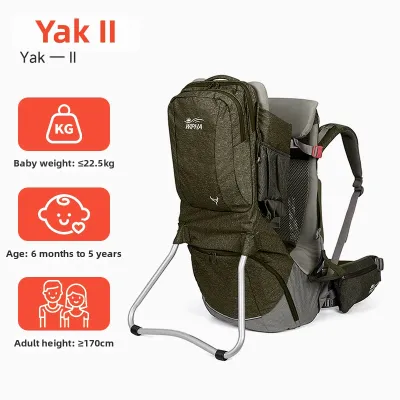
When evaluating a child carrier backpack, understanding the distinction between different weight ratings prevents structural failures and dangerous balance issues. The minimum weight limit is closely tied to your child’s developmental milestones. For safety, a child must possess full head and neck control and be able to sit upright completely unassisted before they can be placed in a framed backpack carrier. Using a backpack carrier too early can lead to slumped positions that compromise the child’s airway.

Exceeding the maximum child weight limit poses severe safety risks. Overloading the cockpit compromises the structural integrity of the metal frame and can stretch or tear the load-bearing fabric. It also prevents the safety harness from positioning the child correctly, increasing the risk of slips or falls.
Products mentioned in this guide
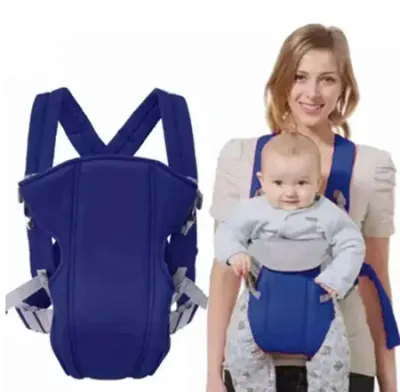
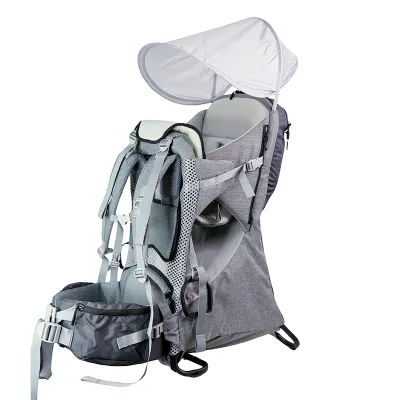
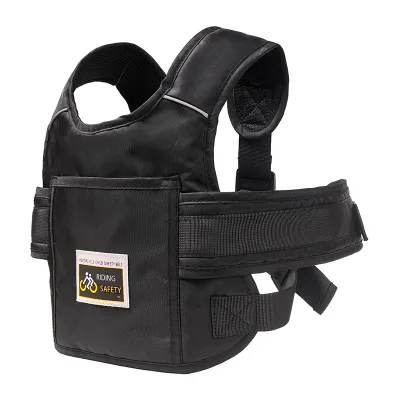
Prices are valid at publication and may change. Please refer to the product page for the latest price.
Equally important is the total load capacity, which represents the combined weight of the child, packed gear, hydration bladders, and the weight of the carrier itself. In warm, humid tropical environments, carrying extra water and sun protection is essential, which rapidly adds to this total weight. Overloading the carrier’s total capacity shifts your center of gravity upward and backward, making it difficult to maintain balance on uneven hiking trails or wet paths.
Before buying, locate and read the permanently attached manufacturer label on the carrier. These labels provide the official, certified weight boundaries for that specific model. Because frame designs, weld points, and fabric strengths vary significantly between brands, never assume one carrier’s limits apply to another.
Evaluating Safety Harness Features and Buckle Mechanisms
A robust safety harness is the primary defense against falls, keeping your child secure even when you bend, stretch, or navigate steep terrain. The gold standard for child carrier backpacks is a fully adjustable five-point harness system. This configuration secures the child at the shoulders, hips, and between the legs, distributing any sudden forces evenly across the strongest parts of their skeletal structure.
Children are naturally curious and highly dexterous, meaning standard buckles can quickly become a hazard. Look for child-resistant or dual-action buckles that require a sequence of movements or adult-level finger strength to release. This prevents a toddler from accidentally unbuckling themselves mid-hike while positioned behind your back where you cannot see them.
Proper positioning of the harness components is critical to preventing slips. The chest clip must be adjustable so it rests at armpit level, preventing the shoulder straps from sliding outward off the child’s shoulders. Additionally, a secure crotch strap or seat height adjuster is vital to prevent the child from sliding downward, which can lead to discomfort or restricted breathing.
Because children grow rapidly, the harness must adjust smoothly to accommodate different heights and varying layers of clothing. Look for breathable, moisture-wicking padding on the shoulder straps and seat area to prevent chafing in hot and humid conditions. However, ensure that the padding is not so bulky that it prevents you from achieving a snug, secure fit against your child’s body.
Verifying Safety Standards and Manufacturer Guidelines
To ensure a child carrier backpack meets rigorous safety requirements, you must look beyond brand marketing and verify official safety standards. Look for permanently attached labels on the carrier that declare compliance with recognized regional or international safety standards, such as ASTM (American Society for Testing and Materials) or EN (European Standards) for frame child carriers. Always verify these compliance claims on the manufacturer’s official website or product packaging before purchasing.
Before every trip, perform a comprehensive safety inspection of the carrier. Check the aluminum frame for any signs of bending, hairline cracks, or loose joints, and examine all fabric seams and webbing for fraying. Test every plastic buckle to ensure it clicks securely into place and does not slip under tension.
Establish clear stopping conditions for using the carrier. You must immediately cease using the child carrier backpack if you discover any cracked buckles, torn webbing, or structural damage to the frame. Additionally, stop using the carrier if your child’s head rises above the top of the backrest, if the harness can no longer be adjusted to fit snugly, or if your child exceeds the manufacturer’s stated weight limits. If you are unsure about the structural integrity or fit of your carrier, consult the manufacturer or a qualified babywearing professional before using it again.
Frequently Asked Questions (FAQ)
Can I use a child carrier backpack before my baby can sit up unassisted?
No, framed child carrier backpacks are not safe for infants who cannot sit up unassisted. The upright seating position and the structure of the cockpit require independent head, neck, and torso control to keep the airway clear and prevent slumping. For younger infants, use an ergonomically supportive front-facing soft structured carrier or wrap that is designed for their developmental stage, and transition to a backpack carrier only when they meet the physical milestones.
Does a higher weight limit mean a better child carrier backpack?
A higher maximum weight limit does not automatically make a carrier superior or safer. Backpacks designed for very high weight limits often feature heavier frames and more robust materials, which add significant empty weight to your load. Consider your own physical limits, as carrying a heavy toddler along with gear on long walks can place substantial strain on your back and shoulders. Choose a carrier that matches your child’s current weight with reasonable room for growth, aligns with your torso length, and fits your typical activity level.
Community discussion
Share your experience or ask a question. Comments are reviewed before publication.