
Choosing the right baby gear can feel overwhelming when your living room is quickly filling up with colorful plastic and plush fabrics. Deciding between a baby bouncer, a motorized swing, and an upright activity jumper (often called a jumperoo) comes down to matching the product’s design with your baby’s current physical milestones, your daily routine, and the layout of your home. Each of these items serves a distinct purpose, ranging from hands-free soothing for a fussy newborn to active, muscle-building play for an energetic older infant.
Understanding these differences prevents you from purchasing expensive gear that your baby might not be ready for or may quickly outgrow. By evaluating how each piece of equipment operates, you can make an informed decision that keeps your baby safe, comfortable, and entertained.
Bouncer, Swing, or Jumperoo: Understanding How Each Works
A baby bouncer is a lightweight, low-to-the-ground seat designed with a flexible frame that responds directly to your baby’s physical movements. When your infant kicks their legs or wiggles their torso, the seat gently bounces up and down in response. Many modern bouncers also feature a small, battery-operated vibration unit built into the seat to help soothe restless infants. Because they do not rely on heavy motors or complex frames, bouncers are exceptionally easy to move from room to room.
Products mentioned in this guide

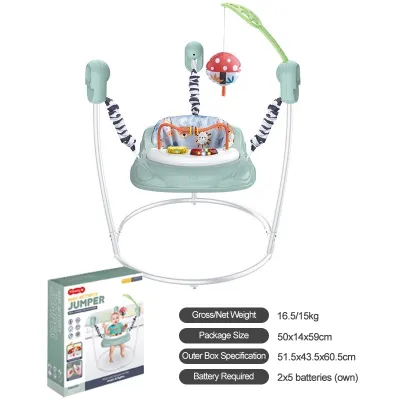

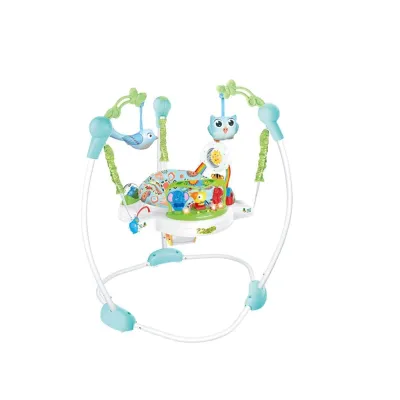


Prices are valid at publication and may change. Please refer to the product page for the latest price.
A baby swing, by contrast, is a motorized unit designed to mimic the rhythmic, swaying motion of a parent’s arms. These devices feature a suspended seat that sways gently from side to side or glides front to back at various speed settings. Swings are primarily engineered for soothing and calming infants who crave continuous, predictable motion. They are typically larger and heavier than bouncers, often requiring a dedicated spot in your living space near an electrical outlet.
An activity jumper, widely known by the popular category term jumperoo, is an upright play center designed for older infants who are eager to explore their surroundings. The seat is suspended by elastic cords or springs attached to a sturdy, stationary frame, allowing the baby to push off the floor with their toes and bounce vigorously. Surrounding the seat is a 360-degree tray filled with interactive toys, lights, and sounds. This gear is built specifically for active play and sensory stimulation rather than relaxation.
Matching the Gear to Your Baby’s Developmental Milestones
Before introducing any active baby gear into your home, you must assess your infant’s physical development to ensure they can use the equipment safely. Newborns and very young infants have fragile neck muscles and lack the ability to support their own heads. During this early stage, reclined bouncers and fully reclined swings are the only suitable options among the three, as they cradle the baby’s body and prevent their head from slumping forward.

As your baby grows, their desire to interact with the world increases, and their physical capabilities change rapidly. An upright activity jumper requires excellent, unassisted head and neck control, which typically develops around five to six months of age. Placing a baby in a jumperoo before they can hold their head steady can lead to severe neck strain and potential injury. You must observe your baby during floor time to confirm they can maintain a stable, upright head posture before transitioning them to this type of gear.
To ensure safety, never rely solely on age recommendations, as babies develop at highly individual rates. Always check the minimum and maximum weight and height thresholds printed directly on the manufacturer’s product labels. Some babies may reach the weight limit of a bouncer before they are developmentally ready for a jumper, requiring you to find alternative floor-play options in the interim.
Evaluating Your Space, Power, and Lifestyle Constraints
Your physical living environment plays a massive role in determining which baby gear is practical for your household. In many homes in the Philippines, space is at a premium, and rooms must serve multiple purposes throughout the day. A traditional baby swing has a wide, sweeping footprint that can easily block narrow hallways or crowd smaller living areas. Activity jumpers also require a significant amount of dedicated floor space, often measuring nearly a meter in diameter, and they do not fold down easily for storage. If you need gear that can be tucked behind a sofa or stored in a closet when guests arrive, a slim, foldable baby bouncer is often the most practical choice.
Power requirements are another crucial factor that affects both convenience and your household budget. Motorized swings and vibrating bouncers require a power source to function. While some swings offer a dual-power option with an AC adapter plug, others run exclusively on large batteries. In the Philippines, where electricity costs are relatively high and frequent battery replacements can quickly add up, choosing a plug-in swing can save you significant money over time. Alternatively, a manual baby bouncer requires no electricity or batteries at all, relying entirely on your baby’s natural movements to create motion.
Portability is essential for parents who need to keep an eye on their baby while moving through different areas of the home. A lightweight bouncer can easily be carried with one hand into the kitchen while you prepare meals, or onto a shaded veranda to catch a cool breeze. Swings and activity jumpers are heavy and awkward to carry, making them poor choices if you plan to move the gear frequently or travel to visit relatives in other provinces.
Recognizing Safety Limits and When to Stop Using the Gear
While baby gear can provide valuable moments of hands-free time for parents, every device has strict safety limits that must be respected to prevent accidents. For baby bouncers, you must stop using the seat the moment your baby attempts to sit up unassisted or reaches the manufacturer’s weight limit. Once a baby can sit up, their center of gravity shifts, making the lightweight frame of a bouncer susceptible to tipping over if the baby leans forward or sideways.
For motorized swings, the primary safety signal to stop usage is when your baby begins attempting to roll over or climb out of the harness. A baby who can roll over can become trapped against the side of the swing seat, posing a serious suffocation risk. Always secure the safety harness snugly during every use, and never leave your baby unattended in a swing, even for a brief moment.
When using an activity jumper, you must monitor your baby’s physical growth and coordination closely. Discontinue use immediately if your baby’s head or chest rises above the top edge of the seat, if they can stand flat-footed on the floor even when the jumper is adjusted to its highest setting, or if they attempt to climb out of the seat. Additionally, general pediatric guidance advises limiting a baby’s time in an upright jumper to short sessions of about 10 to 20 minutes per day. Prolonged suspension in a jumper can place unnatural pressure on a baby’s developing hips and spine, so it is always wise to consult your pediatrician for personalized usage recommendations.
Frequently Asked Questions (FAQ)
Can a newborn use a jumperoo or activity jumper?
No, a newborn cannot safely use a jumperoo or any upright activity jumper. These devices require the baby to have full, unassisted head and neck control, as well as the ability to support their own torso, which typically does not develop until around five to six months of age. Placing a newborn in an upright jumper can cause their head to slump, potentially compromising their airway and putting dangerous strain on their developing spine. Always verify the manufacturer’s minimum age, weight, and developmental milestones on the product label before use.
Are baby swings safe for unsupervised sleeping?
No, baby swings are not safe for unsupervised sleep. Swings are designed exclusively for soothing and awake supervision. Because of the semi-reclined angle of a swing seat, an infant’s heavy head can easily tilt forward onto their chest if they fall asleep, which can restrict their airway and lead to positional asphyxiation. If your baby falls asleep while in a swing, you should gently transfer them to a firm, flat sleep surface, such as a crib or bassinet, as soon as possible to ensure safe sleep.
What if my baby dislikes the motion of a swing?
If your baby resists the motion of a swing, you can try adjusting the settings to find a combination they prefer. Many swings allow you to change the speed, alter the direction of the motion from side-to-side to front-to-back, or adjust the recline angle of the seat. If your baby continues to show discomfort or fussiness despite these adjustments, it is best to stop using the swing. You can transition to a manual baby bouncer, which allows the baby to control the movement, or wait until they are developmentally ready for a stationary activity jumper.
Community discussion
Share your experience or ask a question. Comments are reviewed before publication.