
Finding the ideal balance between protective cushioning and portability is the key to choosing a thick foldable playmat for traveling with a baby in the Philippines. In a country where flooring in hotels, rental homes, and provincial residences is predominantly hard ceramic tile, marble, or polished concrete, a standard thin blanket or travel rug is rarely enough to protect a tumbling infant. A dedicated thick foldable playmat provides a cushioned, hygienic boundary that shields your baby from hard surfaces and outdoor debris, folding down into a manageable size that fits easily into a car trunk or can be carried on public transport.
To make the right choice, you must look beyond brand names and focus on the mat’s core specifications. The ideal travel mat must offer excellent shock absorption, clean easily after outdoor exposure, and withstand the high humidity of a tropical climate. By evaluating material safety, hinge durability, and non-slip properties, you can select a portable play space that keeps your baby safe and comfortable during any journey.
Why a Thick Foldable Playmat is Essential for Baby Travel
When traveling with an infant or toddler, you are constantly adapting to unfamiliar environments. Hotel rooms, vacation rentals, and family homes in the Philippines rarely feature wall-to-wall carpeting. Instead, hard tiled floors are the norm because they keep indoor spaces cool. While practical for tropical heat, these hard surfaces pose a constant hazard for babies who are learning to roll, sit up, crawl, or stand. A thick foldable playmat acts as a portable safety barrier, absorbing the impact of inevitable bumps and falls.
Products mentioned in this guide
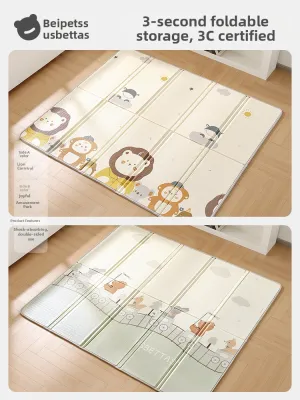
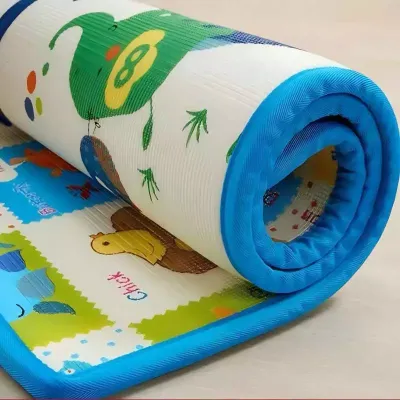
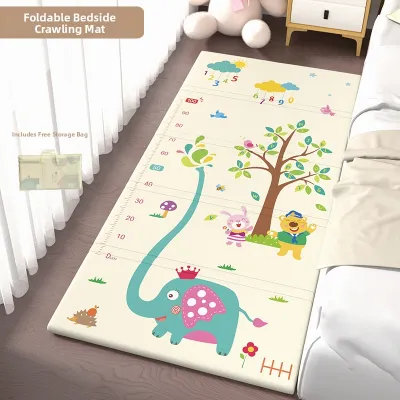
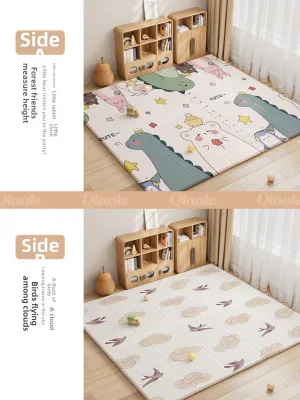
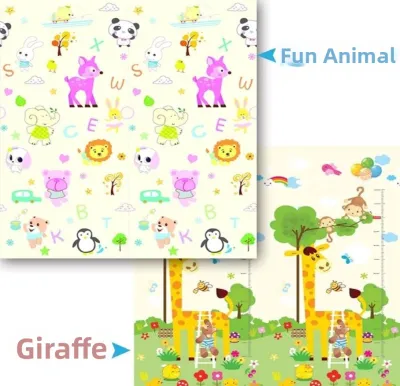
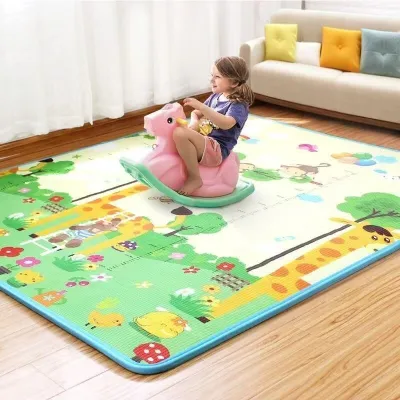
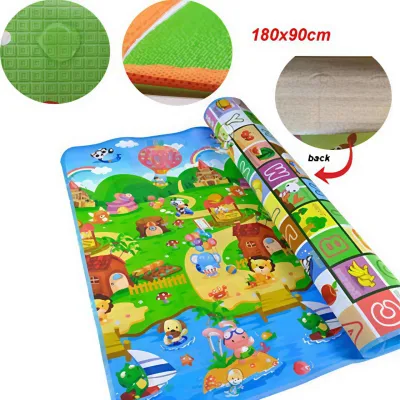
Prices are valid at publication and may change. Please refer to the product page for the latest price.
However, choosing a travel mat requires balancing cushioning against physical bulk. A thicker mat naturally requires more storage space and adds weight to your luggage. Standard home nursery mats are often 4 centimeters thick, which is highly protective but far too bulky to transport. For travel, a thickness of 1 to 2 centimeters is generally the sweet spot. This range offers sufficient shock absorption to protect your baby’s head and joints from hard floors while allowing the mat to fold into a compact, transportable package.
Safety during active play also depends on the structural stability of the mat. A travel mat must be heavy and stable enough to lay completely flat without curling at the edges, which can cause tripping. It must also resist sliding when your baby pushes off the surface to crawl. Always supervise your baby while they are using the playmat, regardless of its thickness. If the mat begins to slide, bunch up, or show signs of wear, stop use immediately to assess the surface conditions or replace the gear.
Key Features to Look for in a Travel-Friendly Playmat
To find a high-quality travel playmat that can withstand the demands of frequent trips, you must evaluate several physical and structural characteristics. Not all foldable mats are built to handle the wear and tear of outdoor use and constant packing.

Material Composition and Weight
The choice of material directly affects how heavy the mat is and how well it cushions your baby.
- XPE (Cross-linked Polyethylene) Foam: This is one of the most popular materials for travel playmats. It is incredibly lightweight, offers excellent shock absorption, and does not easily bottom out under pressure. XPE is also odorless and highly water-resistant, making it excellent for tropical climates.
- TPU (Thermoplastic Polyurethane): Often used as a protective coating over a foam core, TPU is highly durable, scratch-resistant, and feels soft to the touch. While TPU mats are incredibly long-lasting and easy to clean, they are generally heavier than pure XPE options.
- EPE (Expanded Polyethylene) Foam: Often found in budget-friendly mats, EPE is lightweight but tends to lose its cushioning ability over time. It may compress permanently after heavy use, reducing its protective value.
Waterproof and Wipe-Clean Surfaces
Travel playmats must be highly hygienic and easy to maintain on the go. Look for mats with a completely waterproof outer layer that prevents spilled milk, drool, or diaper leaks from soaking into the inner foam. A seamless surface or a mat with tightly sealed heat-pressed edges is ideal, as stitched seams can trap moisture and dirt, leading to bacterial growth.
Portability and Folding Mechanisms
Analyze how the mat folds and how you will carry it. Tri-fold and quad-fold designs are common, but accordion-style multi-folding mats offer the most compact storage footprint. Look for models that fold with the top play surface facing inward; this design prevents the clean side from touching the dirty bottom side when packed. Prioritize mats that include built-in carrying handles, detachable shoulder straps, or a dedicated heavy-duty travel bag to protect the mat from dirt and damage during transport.
Non-Slip Backing
A playmat that slides across a polished wooden floor or smooth hotel tile is a safety hazard. Ensure the mat features a dedicated non-slip backing. This is often achieved through a textured silicone pattern, a high-friction rubberized bottom, or deep embossed textures on both sides of the mat. Before placing the mat down, verify that the floor surface is dry and free of dust, which can compromise the non-slip grip.
Choosing the Right Mat for Your Travel Scenario
Your primary travel destinations should dictate which features you prioritize. A mat optimized for indoor hotel stays may not perform well on a sandy beach or during a rustic provincial visit.
Beach and Park Outings
If you plan to use your mat on grass at a park or on the sand during a beach trip, your primary concerns are cleanability and environmental resistance. Sand and dry grass easily cling to heavily textured surfaces, so look for a mat with a smoother, low-profile texture that allows debris to be shaken off easily. The material must be 100% waterproof to block ground moisture from seeping through. Additionally, check the manufacturer’s guidelines regarding UV exposure, as prolonged direct sunlight can degrade synthetic foams and cause fading.
Hotel and Resort Stays
For indoor staycations, maximize comfort by selecting a mat at the thicker end of the travel spectrum (around 1.5 to 2 centimeters). Since hotel rooms can have limited floor space, prioritize a mat that folds down to a very small footprint. This allows you to easily slide the folded mat under the bed, place it in a closet, or stand it upright in a corner when it is not in use, keeping the living space clear and safe.
Long Road Trips and Provincial Visits
When packing for long drives or visiting family in the provinces, vehicle trunk space is highly valuable. A lightweight, highly compressible folding mat is essential. In these scenarios, a versatile mat can also serve as a temporary, clean changing station or a comfortable rest spot during stopovers. Ensure the folding hinges are highly durable, as frequent packing, unpacking, and temperature shifts in a car trunk can put significant stress on the joints.
A Framework for Comparing Travel Playmat Options
Because the market is filled with various brands and unbranded options, you need a structured way to evaluate and compare products. Use the following framework to assess any thick foldable playmat before making a purchase.
Travel Playmat Comparison Matrix
| Feature | Ideal Travel Specification | Why It Matters | How to Verify |
|---|---|---|---|
| Thickness | 1.0 cm to 2.0 cm | Balances impact protection with folded bulk. | Check product dimensions; perform a squeeze test to ensure it does not easily compress to the floor. |
| Folded Size | Under 80 cm x 40 cm x 15 cm | Must fit comfortably in standard car trunks or luggage compartments. | Measure your vehicle's trunk space and compare it to the manufacturer's folded dimensions. |
| Weight | 1.0 kg to 2.5 kg | Ensures you can carry the mat easily alongside diaper bags and strollers. | Verify the shipping weight or product specifications on the packaging. |
| Material | XPE or TPU-coated foam | Provides non-toxic, odorless, and durable cushioning. | Read the material composition label; avoid cheap PVC if chemical sensitivity is a concern. |
| Hinge Design | Reinforced, heat-sealed seams | Prevents the mat from splitting at the fold lines after repeated use. | Inspect the fold lines for thickness and reinforcement; avoid thin, single-layer plastic hinges. |
| Safety Labels | Non-toxic, BPA-free, Phthalate-free | Ensures the surface is safe for babies who put their mouths on the mat. | Look for recognized testing standard labels on the packaging or product tag. |
Verification and Red Flags
When shopping, always verify manufacturer claims. If a product is advertised as “ultra-thick,” check the exact millimeter measurements in the specifications. Be cautious of common red flags that indicate poor quality or potential safety issues:
- Strong Chemical Odors: A strong, pungent plastic smell that does not dissipate after a few hours of airing out indicates low-quality materials or improper curing. This off-gassing can be irritating to a baby's sensitive respiratory system.
- Peeling Edge Bindings: Inspect the outer edges of the mat. If the protective fabric or plastic tape binding is poorly glued or has loose threads, it can easily peel away, creating a choking hazard if your baby chews on it.
- Flimsy Folding Hinges: The points where the mat folds are its weakest areas. If the hinges look thin, show stress discoloration (whitening of the plastic), or feel flimsy, they are likely to tear after only a few trips.
When reading user reviews on online marketplaces, filter for comments that mention “travel durability,” “crease wear,” and “real-world thickness.” Many users will post photos showing how the mat fits into their vehicles or how the material holds up after several weeks of use, providing valuable real-world context.
Care and Maintenance for Tropical Climates
The high heat and relative humidity of the Philippines present unique challenges for maintaining synthetic foam playmats. If moisture is trapped within the folds of a packed mat, mold and mildew can develop rapidly, ruining the material and posing health risks to your baby.
Cleaning Routines
After every outdoor excursion or indoor play session, establish a quick cleaning routine. Wipe down the entire surface of the mat with a soft cloth dampened with warm water and a mild, baby-safe dish soap or specialized toy cleaner. Avoid harsh chemical disinfectants, bleach, or abrasive scrubbing pads, which can degrade the waterproof coating and wear down the textured surface.
Before folding the mat for storage, it must be completely dry. Even a tiny amount of trapped moisture can lead to mold growth in a warm closet or car trunk. Lay the mat flat or hang it over a chair in a well-ventilated, shaded indoor area. Never submerge the entire mat in water unless the manufacturer’s care instructions explicitly state that the inner foam is fully sealed and waterproof.
Storage Conditions
When you are not traveling, store your playmat in a cool, dry place away from direct sunlight. Do not store the mat in unventilated outdoor storage rooms, hot attics, or inside a car parked in the sun for extended periods. High temperatures can cause the foam to warp, lose its elasticity, or cause the outer protective film to delaminate and peel away.
Handling Creases and Warping
If your mat has been folded tightly for a long journey, it may retain deep creases or refuse to lay completely flat when first unpacked. To resolve this, lay the mat flat on a clean floor in a warm room and place flat, heavy objects (such as books) on the creased areas for a few hours. Never use an iron, a high-heat hair dryer, or place the mat on hot concrete under direct sunlight to remove creases, as excessive heat will melt the synthetic fibers and permanently ruin the foam structure.
Frequently Asked Questions (FAQ)
Can I use a regular thick playmat for travel?
While you can physically transport a standard nursery playmat, it is rarely practical. Standard home playmats are typically designed as large, solid pieces or interlocking puzzle tiles. Solid mats do not fold and are too large to fit into a car, while puzzle mats consist of numerous pieces that are tedious to assemble, easy to lose, and have open seams that let dirt and moisture seep through. Dedicated travel playmats are specifically engineered to fold compactly, feature reinforced hinges to withstand constant packing, and are significantly lighter than their home-use counterparts.
Is it safe to leave a foldable playmat in a hot car?
It is highly recommended to avoid leaving your foldable playmat in a parked car under direct sunlight for extended periods. The interior temperature of a closed vehicle in the Philippines can quickly exceed 50°C. This extreme heat can degrade the physical properties of XPE and PE foams, causing them to shrink, warp, or lose their cushioning ability. Furthermore, high heat can melt or weaken the adhesives used to bond the outer waterproof layers, leading to bubbling, peeling, and structural failure of the folding hinges. Always remove the mat from the vehicle when you arrive at your destination.
How do I clean sand off a foldable playmat?
To clean sand and outdoor debris from your playmat, start by lifting the mat and giving it a vigorous shake outdoors to remove loose particles. Lay the mat flat and use a soft-bristled brush or a dry microfiber cloth to gently sweep any remaining sand out of the textured surfaces and folding crevices. Once the dry debris is removed, wipe down the entire surface with a damp cloth to remove fine dust. Ensure the mat is completely dry before folding it back up, as damp sand can act as an abrasive, scratching the protective outer coating when the mat sections rub together during transport.
Community discussion
Share your experience or ask a question. Comments are reviewed before publication.