
Why a Rocking Crib Can Soothe Your Baby
A newborn baby transitions from a dynamic womb environment to a static world. In the womb, they are constantly rocked by their mother’s movements. This rhythmic motion stimulates the vestibular system, which is responsible for balance and spatial orientation. Replicating this gentle sway outside the womb helps calm an overstimulated nervous system, lowers heart rates, and naturally reduces crying spells.
However, parents must distinguish between active soothing and safe, independent sleep. The rocking feature is an excellent tool for calming a fussy infant while a caregiver is present and supervising. Once the baby drifts off to sleep, the crib must be locked into its stationary, flat position. Unsupervised sleep on a moving or inclined surface poses safety risks, so the rocking motion should always be disabled for overnight rest or nap times when you are not actively watching.
Beyond soothing the baby, a rocking crib provides significant physical relief for parents. Carrying a newborn for hours while pacing the room can strain the back, shoulders, and arms, especially during late-night waking cycles. A rocking crib allows you to soothe your little one while sitting comfortably beside them, gently swaying the frame with a hand or foot, conserving your energy for the demanding days of early parenthood.
Products mentioned in this guide
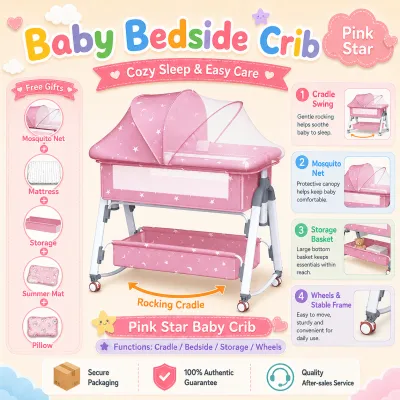
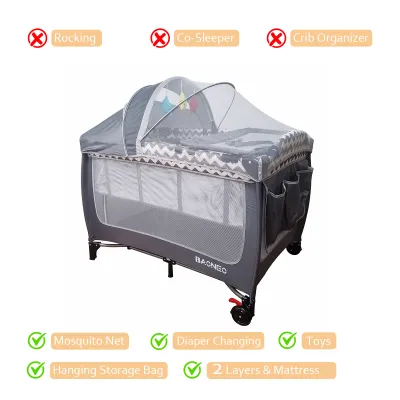
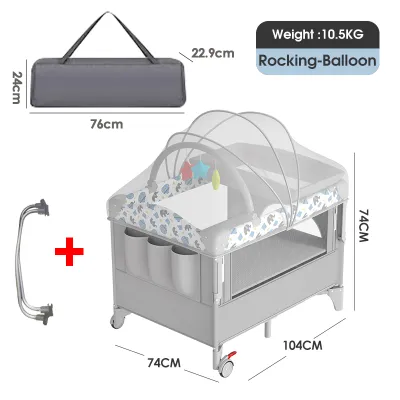
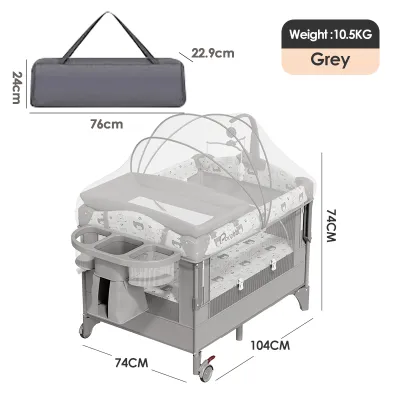
Prices are valid at publication and may change. Please refer to the product page for the latest price.
Crucial Safety and Design Features to Check Before Buying
Selecting nursery furniture requires a strict focus on safety standards, especially when the item features moving parts. Because a baby will spend unsupervised hours in their crib, every mechanical joint and structural element must be thoroughly vetted before purchase.

Lockable Rocking Mechanism The most critical feature of any rocking crib is a secure, heavy-duty locking system. This mechanism must completely immobilize the crib, converting it into a stable, stationary bed. Leaving an infant to sleep in an unlocked, rocking, or inclined crib is dangerous. If the baby rolls or shifts, the motion could trap them against the side, or cause positional asphyxiation if their chin drops to their chest. Always verify that the locking pins or brackets are robust, easy to engage, and cannot be accidentally released by older siblings or pets.
Slat Spacing and Structural Integrity To prevent head entrapment or limb injury, the spacing between crib slats must adhere to strict safety guidelines. Slats must be spaced no more than 2 3/8 inches (approximately 6 centimeters) apart. A simple way to check this is by attempting to pass a standard soda can between the slats; if the can fits through, the spacing is too wide. Additionally, inspect the wood or metal for smooth finishes, ensuring there are no splinters, sharp edges, or peeling paint. Any paint or finish used must be certified non-toxic and lead-free, as teething babies often chew on crib rails.
Mattress Fit and Firmness The mattress inside a rocking crib must be exceptionally firm and fit snugly within the frame. To test the fit, use the “two-finger rule”: if you can fit more than two fingers between the edge of the mattress and the crib frame, the mattress is too small, creating a dangerous gap where a baby could become wedged. The surface must remain completely flat and firm, resisting any indentation under the baby’s weight. Soft mattresses or extra mattress toppers increase the risk of suffocation and are not safe for infants.
Weight and Age Limits Every crib has specific manufacturer limits regarding the child’s weight and developmental stage. Caregivers must carefully check these specifications, as a crib that is safe for a newborn may become hazardous once the baby begins to move. When your baby reaches the maximum weight capacity, or when they hit milestones such as pushing up on their hands and knees or pulling themselves up to stand, you must lower the mattress base or transition them out of the rocking configuration entirely.
Top Baby Cribs with Rockers to Consider in the Philippines
Finding the right rocking crib in the Philippines involves balancing space constraints, material quality, and long-term utility. The local market offers various designs, from traditional wooden models with built-in rocking arcs to modern, portable travel cribs that adapt to tight condo spaces.
Below is a curated selection of three real, highly regarded rocking cribs available through official distributors, baby boutiques, and major online marketplaces in the Philippines. Each model serves a distinct nursery need, ensuring you can find an option that matches your home layout and lifestyle.
Best Overall for Daily Soothing and Sleep
The Pois Wooden Rocking Crib is an exceptional choice for parents seeking a classic, sturdy wooden crib that integrates a smooth, controlled rocking motion. Crafted from solid pine wood, this crib features dual-mode bottom runners. With the wheels flipped upward, the curved wooden base rests on the floor, allowing for a gentle, rhythmic manual sway. When it is time for stationary sleep, the caster wheels can be flipped down and locked securely, immobilizing the unit and allowing you to roll the crib easily from room to room.
This model features multiple adjustable mattress height levels, allowing you to lower the mattress as your baby grows and begins to sit or stand. The solid wood construction provides excellent structural integrity, and the non-toxic paint ensures a safe environment for teething infants. The crib typically fits standard compact mattresses, though you should verify the exact interior dimensions before purchasing.
- Pros: Solid pine wood construction; easy transition between rocking and wheel-locked stationary modes; adjustable mattress heights.
- Cons: Requires manual assembly which can be time-consuming; mattress is often sold separately.
- Ideal Buyer: Parents looking for a durable, traditional wooden crib that offers both mobility and a classic manual rocking motion for daily soothing.
Before You Buy Checklist:
- Measure your nursery doorway to ensure the crib can pass through when fully assembled.
- Verify the exact mattress size required by checking the manufacturer's manual.
- Confirm the warranty coverage and return policy with the local retailer.
Best Convertible Option for Long-Term Use
The Larkwood 4-in-1 Convertible Rocking Crib offers outstanding value by adapting to your child’s developmental stages over several years. This versatile wooden crib features detachable rocking arcs at the base. During the newborn stage, these arcs provide a soothing, gentle sway to help calm your baby. As your child grows, the rocking rails can be removed and replaced with stationary legs or lockable wheels, turning the unit into a standard stationary crib.
The true value of this model lies in its convertible design. It can transition from a rocking baby crib into a secure toddler bed, a cozy daybed, or even a child’s playpen and study desk later on. Built from high-density, durable wood with a smooth, non-toxic finish, it is engineered to withstand years of daily wear and tear. The weight limit increases significantly during the toddler bed phase, making it a long-term investment for growing families.
- Pros: Extremely versatile with a 4-in-1 design; long usable lifespan; robust construction that supports higher weight limits as a toddler bed.
- Cons: Takes up a larger footprint in the nursery; conversion kits or extra guardrails may need to be purchased separately.
- Ideal Buyer: Families looking to maximize their budget with a single piece of furniture that grows with their child from infancy through early childhood.
Before You Buy Checklist:
- Check if all conversion hardware and guardrails are included in the initial purchase package.
- Ensure you have adequate storage space for the unused conversion parts and rocking arcs.
- Confirm that the wood finish matches your existing nursery furniture set.
Best Space-Saving Rocking Crib for Compact Nurseries
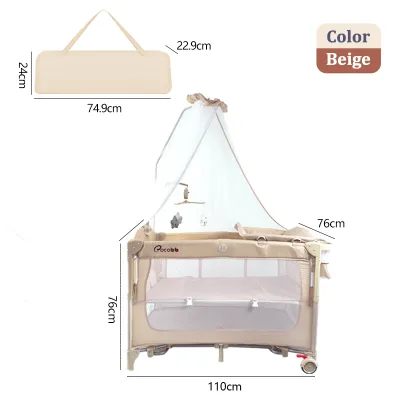
For families living in urban condos or those with limited bedroom space, the Akeeva Multi-Function Rocking Crib is a highly practical, space-saving solution. This modern, lightweight crib features a hybrid design that combines the portability of a travel bassinet with the soothing benefits of a rocker. The lower frame features integrated rocking bars that can be easily flipped up or down. When flipped, they allow the entire crib to rock gently on its curved legs; when locked, the crib stands firmly on stable, non-slip feet.
The Akeeva crib features breathable mesh side panels, which promote optimal airflow—a crucial feature in the warm, humid Philippine climate—while allowing parents to keep a close eye on their sleeping baby. It has a compact footprint and is incredibly lightweight, allowing you to move it effortlessly between the master bedroom and the living room. However, because of its compact size, it has a shorter usable lifespan and a lower weight limit compared to full-size wooden cribs.
- Pros: Excellent space-saving footprint; highly portable and lightweight; breathable mesh sides ideal for tropical weather.
- Cons: Shorter lifespan as babies will outgrow the compact dimensions quickly; not convertible into a toddler bed.
- Ideal Buyer: Condo-dwelling parents or those who need a portable, lightweight rocking sleeper that can easily move around the home.
Before You Buy Checklist:
- Verify the manufacturer's maximum weight limit to ensure it accommodates your growing baby.
- Measure the available floor space beside your bed to ensure there is enough clearance for the rocking motion.
- Check if a travel carry bag is included if you plan to use it for out-of-town trips.
Quick Comparison of Top Rocking Crib Features
To help you make an informed decision, the table below summarizes the key differences between these three popular rocking crib models. This quick reference guide highlights how each option performs across the most critical decision-making dimensions, such as rocking mechanism, lockability, and long-term convertibility.
| Product Name | Rocking Mechanism Type | Lockable Feature (Yes/No) | Mattress Size Compatibility | Convertible Capability | Best Suited For |
|---|---|---|---|---|---|
| Pois Wooden Rocking Crib | Curved wooden base runners with flip-down casters | Yes | Compact / Mid-size standard | No (Single-purpose crib) | Traditional nurseries requiring mobility and classic wood design |
| Larkwood 4-in-1 Convertible Rocking Crib | Detachable wooden rocking arcs | Yes | Standard full-size crib mattress | Yes (Converts to toddler bed, daybed, desk) | Long-term investment and growing children |
| Akeeva Multi-Function Rocking Crib | Flip-up curved metal/plastic rails | Yes | Custom compact mattress (included) | No (Bassinet/crib hybrid) | Compact condo living, travel, and maximum breathability |
How to Safely Set Up and Maintain Your Rocking Crib
Proper assembly and regular maintenance are vital to keeping your baby’s rocking crib safe and functional. Because rocking cribs experience continuous motion and vibration, their joints and fasteners are subject to more physical wear than standard stationary furniture.
Assembly and Placement Always follow the manufacturer’s assembly instructions precisely, using only the exact hardware provided in the package. Never substitute missing screws or bolts with hardware store alternatives; if you are missing parts, contact the official distributor for authorized replacements. When placing the crib in your nursery, position it far away from windows, blind cords, curtains, electrical outlets, and wall shelves. These present severe strangulation or falling-object hazards. Additionally, ensure there is ample clearance on all sides of the crib so that when it is in rocking mode, it does not strike walls, dressers, or other furniture.
Routine Maintenance Checks The repetitive swaying motion of a rocking crib can gradually loosen screws, bolts, and locking pins over time. Establish a habit of performing a safety inspection every two weeks. Gently shake the frame to check for any wobbling, and use the appropriate tools to tighten any loose fasteners. Inspect the locking mechanism regularly to ensure it still engages smoothly and holds the frame completely rigid when locked. If you notice any cracked wood, bent metal, or failing locks, stop using the crib immediately and contact the manufacturer.
Cleaning and Care To clean your rocking crib, wipe down the wooden, plastic, or metal frames with a soft cloth dampened with warm water and a mild, baby-safe soap. Avoid using harsh chemical cleaners, bleach, or abrasive scrubs, as these can strip away non-toxic finishes or leave behind harmful residues. Never lubricate the rocking joints or bearings with household oils or WD-40 unless specifically instructed to do so by the manufacturer. These lubricants can attract dust, hair, and grit, which can clog the mechanism or cause the locking pins to slip, compromising the crib’s safety.
Frequently Asked Questions (FAQ)
Is it safe for a baby to sleep in a rocking crib all night?
No, a baby should not sleep in an unlocked, actively rocking crib overnight or during unsupervised naps. While the gentle swaying motion is an excellent tool for calming a fussy baby and helping them drift off, the crib must be locked into a completely flat, stationary position once the baby is asleep. Unsupervised sleep on a moving, unstable, or inclined surface increases the risk of Sudden Infant Death Syndrome (SIDS) and positional asphyxiation. Always engage the locking mechanism to ensure a firm, stable, and flat sleeping surface before leaving your baby unattended.
When should I transition my baby out of the rocking crib?
You must transition your baby out of the rocking crib—or disable the rocking feature—as soon as they reach the manufacturer’s maximum weight limit or hit key developmental milestones. These milestones include pushing up on their hands and knees, sitting up independently, or pulling themselves up to a standing position. Once a baby is mobile, the rocking motion can cause the crib to tilt unexpectedly under their shifting weight, creating a fall hazard. If you have a convertible crib, consult the manufacturer’s manual to remove the rocking base and safely transition the unit into a stationary toddler bed.
Do rocking cribs require a specific type of mattress?
Yes, rocking cribs require a mattress that is specifically designed to fit the exact interior dimensions of the crib frame. There must be no gaps wider than two fingers between the mattress and the crib sides to prevent entrapment. Additionally, the mattress must be firm, flat, and designed specifically for infants; soft mattresses, memory foam, or aftermarket mattress toppers are highly dangerous and increase the risk of suffocation. Always check the manufacturer’s documentation for the recommended mattress thickness and dimensions to ensure a safe, snug fit.
Community discussion
Share your experience or ask a question. Comments are reviewed before publication.