
When your baby transitions from crawling to cruising, your home suddenly transforms into a landscape of potential hazards. Low coffee tables, TV consoles, and dining table corners that once seemed harmless now sit directly at your child’s eye and forehead level. To mitigate the risk of painful bumps and bruises, installing a high-quality pvc corner protector is one of the most practical steps you can take to secure your living spaces.
These protectors provide a reliable, firm buffer against sharp edges without compromising the aesthetic appeal of your home. By understanding the distinct material properties of polyvinyl chloride (PVC), evaluating key specifications, and matching the right guard design to your furniture, you can create a safer environment for your growing child to explore.
Why Choose PVC Corner Protectors for Baby Safety?
Selecting the right material for baby-proofing requires balancing safety, durability, and aesthetics. While foam and silicone are common alternatives, PVC offers distinct advantages that make it highly suitable for busy household environments.
Products mentioned in this guide
Prices are valid at publication and may change. Please refer to the product page for the latest price.
Compared to porous foam, PVC is exceptionally durable and easy to maintain. Foam protectors are soft, but their porous nature makes them highly susceptible to absorbing dirt, spills, and oils. In humid tropical climates, this moisture retention can lead to mold or mildew growth over time. Furthermore, teething babies can easily bite off chunks of soft foam, which presents an immediate choking hazard. PVC, by contrast, is non-porous, water-resistant, and can be wiped clean and sanitized with standard household cleaners.
In terms of shock absorption, PVC provides firm impact resistance rather than plush cushioning. When a child collides with a sharp corner, a soft foam or thin silicone protector can bottom out, allowing the sharp edge underneath to still cause injury. PVC is engineered to be structurally rigid yet slightly yielding. This firmness allows it to disperse the concentrated force of a sudden impact across a broader surface area, significantly reducing the severity of the blow. This makes PVC guards highly effective for hard, sharp edges on heavy furniture, though they are less suited for broad, flat surfaces where softer padding might be preferred.
From a visual standpoint, clear PVC preserves the natural look of your interior design. Many families invest in high-quality wooden furniture, such as narra or mahogany dining tables, or modern glass coffee tables. Opaque foam guards can clash with these designs, making the room look cluttered. Transparent PVC guards blend seamlessly into wood grains, glass, and metal, maintaining the aesthetic integrity of your living and dining areas while keeping your child safe.
Essential Features to Evaluate Before Buying
Not all PVC corner guards are created equal. To ensure long-lasting protection and prevent damage to your furniture, carefully evaluate several critical specifications before making a purchase.

Adhesive Quality and Residue-Free Removal
The effectiveness of any corner protector relies heavily on the adhesive that secures it. Look for guards that utilize high-quality, double-sided acrylic or gel tapes. In warm, high-humidity environments, low-grade adhesives can soften, lose their tack, and slide off the furniture surface. Moisture in the air can also interfere with the initial bonding process. Selecting a premium, moisture-resistant acrylic tape ensures the guard remains firmly in place even when subjected to tugging from curious toddlers. Additionally, check that the adhesive is formulated for clean removal, allowing you to peel it off later without stripping away wood finishes.
Thickness and Density
The level of protection a guard offers is directly related to its millimeter thickness. For standard household furniture, look for PVC guards with a thickness of at least 2mm to 4mm. Thicker guards provide a deeper physical buffer, which is essential for heavy furniture like solid wood dining tables or stone countertops. The density of the PVC should also be firm enough to resist deformation under pressure, ensuring that the guard does not flatten completely if a heavy impact occurs.
Transparency and Anti-Yellowing
Clear plastics can degrade and turn an unsightly yellow when exposed to ambient ultraviolet (UV) light over time. This is especially common in bright, sunlit rooms with large windows. To prevent this, check the product specifications for anti-yellowing or UV-resistant claims. High-quality PVC formulations include UV stabilizers that keep the protectors crystal clear and visually unobtrusive throughout their years of use.
Material Safety
Because infants and toddlers often explore their surroundings using their mouths, material safety is paramount. Caregivers must verify that the PVC and the accompanying adhesive are labeled as non-toxic, BPA-free, and free from harmful plasticizers such as phthalates, which are historically used to soften plastics. Always check the product packaging or the manufacturer’s official documentation for verified safety standards rather than relying solely on unverified online listing titles.
Recommended PVC Corner Guard Types for Different Furniture
Matching the shape of the corner guard to the specific geometry of your furniture is essential for both safety and adhesive longevity. Different furniture profiles require specialized guard designs.
L-Shaped and Right-Angle Guards
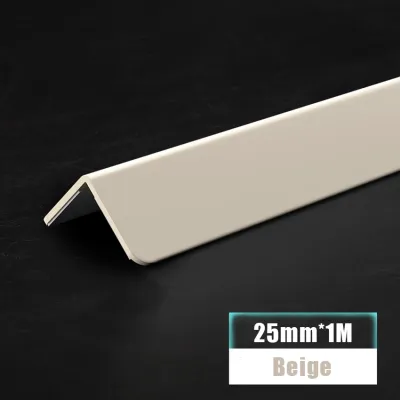
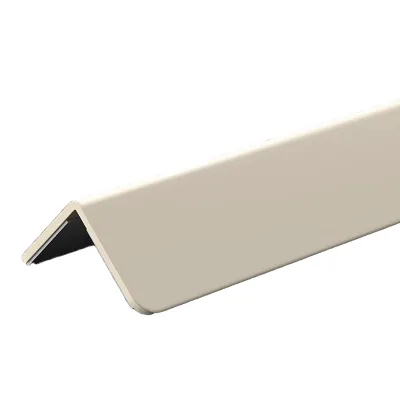
L-shaped protectors are the standard choice for classic 90-degree corners. They are designed to fit snugly over the sharp perpendicular joints found on wooden desks, TV stands, bookshelves, and dining tables.
- Target Applications: Standard rectangular or square wooden and laminate furniture.
- How They Work: They wrap directly around the apex of the corner, covering the sharpest point where two edges meet.
- Limitations: While they provide excellent protection at the corner itself, they do not cover the straight, sharp edges leading up to the corner. If your child is cruising along the entire side of a long table, you may need to combine these with matching edge strips.
U-Shaped and Edge Protectors
U-shaped guards are designed to wrap around the top, front, and bottom of a surface, providing continuous coverage along a flat edge.
- Target Applications: Glass coffee tables, thin stone countertops, and sliding cabinet doors.
- How They Work: The U-shape grips the entire edge of the material, offering multi-directional protection against bumps from both above and below the surface.
- Key Consideration: It is vital to measure the exact thickness of your furniture's edge before purchasing. If the U-shaped guard is too loose, it will slide and peel off easily; if it is too tight, the material will stretch, causing the adhesive to lift.
Spherical and Drop-Shaped Bumpers
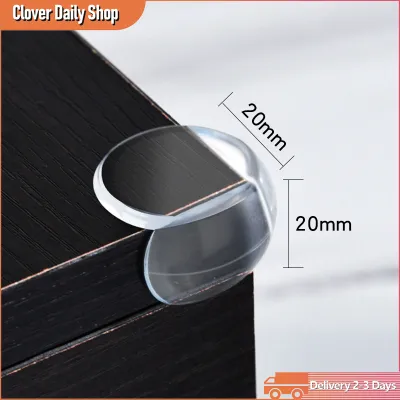
Spherical or bulbous bumpers feature a rounded, protruding design that provides a thick cushion over sharp angles.
- Target Applications: Highly acute or protruding corners on low cabinets, bed frames, or decorative metal hardware.
- How They Work: The rounded, spherical shape offers excellent multi-directional cushioning. If a child falls onto the corner from an angle, the curved surface helps deflect the force of the impact.
- Trade-Offs: These bumpers are bulkier and more prominent than flat L-shaped guards. Their semi-opaque or thicker design makes them more visible, which may affect the clean lines of minimalist furniture.
Step-by-Step Installation and Safe Removal
Proper installation ensures the corner guard stays firmly attached, while correct removal techniques prevent permanent damage to your furniture’s finish.
Surface Preparation
Before applying any adhesive, the furniture surface must be completely free of dust, skin oils, and wax-based polishes. These contaminants create a barrier that prevents the adhesive from forming a strong molecular bond.
- Wipe the corner thoroughly with a microfiber cloth dampened with isopropyl alcohol.
- Avoid using generic glass cleaners or multi-surface sprays, as they often leave behind a thin residue.
- Allow the surface to dry completely. In humid conditions, wait an extra few minutes or use a dry cloth to ensure no moisture remains on the surface.
Application and Curing
Once the surface is clean and dry, you can apply the protector.
- Apply the double-sided adhesive tape to the inside surfaces of the PVC guard.
- Align the guard carefully with the furniture corner and press it firmly into place.
- Apply even, firm pressure on all sides of the guard for at least 30 seconds to activate the pressure-sensitive adhesive.
- Allow the adhesive to cure undisturbed for 24 to 48 hours before allowing your baby near the furniture. In highly humid environments, letting the adhesive cure for the full 48 hours is highly recommended to achieve maximum bond strength.
Safe Removal Techniques
When your child outgrows the need for baby-proofing, removing the guards carelessly can peel away delicate wood veneers, varnish, or paint.
- Use a hairdryer on a low heat setting to gently warm the corner guard for one to two minutes. The heat softens the acrylic or gel adhesive, making it pliable.
- Gently slide a piece of dental floss, a thin plastic card, or fishing line underneath the edge of the guard to slice through the softened adhesive tape.
- Slowly peel the guard away, applying heat as needed if you encounter resistance.
- Clean any remaining sticky residue by rubbing it with a drop of vegetable oil or a mild adhesive remover, followed by a quick wipe with soapy water.
- Always test your removal method on a hidden area of the furniture first to ensure the heat and cleaning agents do not damage the specific finish.
Frequently Asked Questions (FAQ)
Are PVC corner guards safe if my baby chews on them?
While many high-quality PVC corner guards are manufactured using non-toxic, food-grade, and BPA-free formulations, they are not intended to be used as teething toys. If your baby is in a heavy teething phase, they may attempt to bite low-level furniture edges.
Caregivers should regularly inspect all installed corner protectors for any signs of damage, such as bite marks, tears, or loose edges. If a guard becomes damaged or loose, remove and replace it immediately. Small pieces of chewed PVC or detached adhesive tape present a severe choking hazard. Active adult supervision remains essential to ensure your child’s safety.
Will PVC corner guards damage my wooden furniture?
Damage to wooden furniture is rarely caused by the PVC material itself; instead, it typically occurs during the removal process or if the furniture has a delicate, pre-existing finish. Solid hardwoods with high-quality polyurethane finishes generally withstand adhesive application and removal very well.
However, furniture with cheap paper laminates, delicate wood veneers, or distressed paint finishes is highly susceptible to peeling. To minimize risk, always check the furniture manufacturer’s care instructions before applying any adhesive. When removing the guards, never pull them off forcefully; always use the heat-softening method with a hairdryer to protect the underlying finish.
Community discussion
Share your experience or ask a question. Comments are reviewed before publication.