
Finding the right pacifier 6 to 18 months in the Philippines requires balancing developmental support, comfort, and hygiene in a tropical climate. During this active growth phase, babies experience rapid changes in their jaw structure, oral motor skills, and teething patterns. Transitioning from newborn pacifiers to a model specifically sized for 6 to 18 months ensures that the nipple matches their expanding palate and the shield provides adequate ventilation to prevent drool rash in warm weather.
By selecting a high-quality, age-appropriate pacifier, parents can support their baby’s natural self-soothing instincts while protecting their emerging teeth and jaw alignment. This guide explores the essential features of mid-stage pacifiers, highlights top categories available in the local market, and provides practical advice on cleaning, safety checks, and gentle weaning strategies.
Why Your Baby Needs an Age-Appropriate Pacifier (6-18 Months)
As infants grow past the six-month mark, their oral cavity undergoes a remarkable transformation. The involuntary sucking reflex that dominated their first few months of life begins to transition into voluntary oral motor control. At the same time, the primary teeth—typically starting with the lower central incisors—begin to erupt through the gums. This physical shift means that a pacifier designed for a newborn is no longer suitable, as its smaller size and softer material cannot withstand the increased biting pressure or provide the necessary resistance for a growing jaw.
Products mentioned in this guide
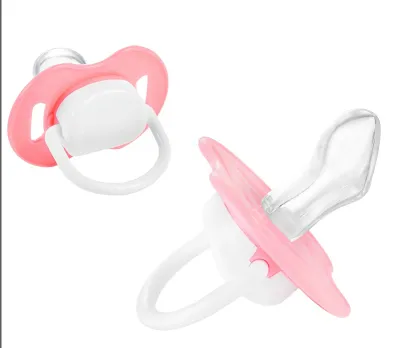
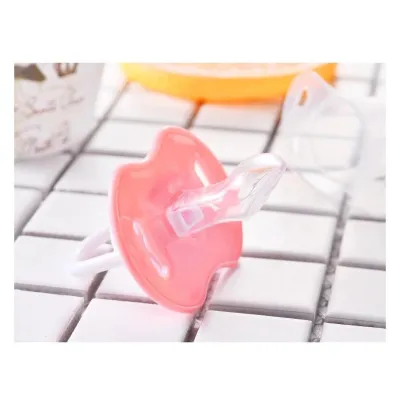
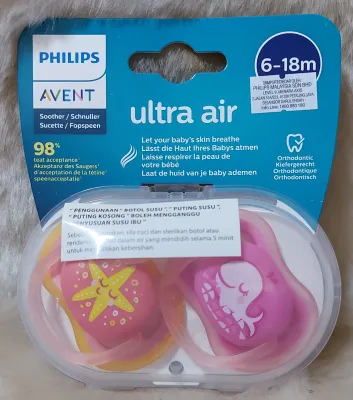
Prices are valid at publication and may change. Please refer to the product page for the latest price.
Continuing to use a newborn-sized pacifier for an older baby presents several safety and developmental risks. The most immediate concern is the choking hazard. A smaller shield can easily be drawn entirely into the mouth of an older, stronger baby who has a larger oral cavity. Additionally, a nipple that is too small does not fill the space in the mouth correctly, which can cause the baby to swallow excess air during sucking, leading to gas and discomfort. It can also trigger a gag reflex if the baby tries to pull the small pacifier deeper into their mouth to achieve a satisfying latch.
The shape and firmness of the pacifier nipple play a critical role in supporting healthy dental and jaw development. Between 6 and 18 months, the palate (the roof of the mouth) is highly malleable. A pacifier that is too narrow, too thick, or improperly shaped can exert uneven pressure on the gums and palate, potentially leading to dental misalignment, such as an open bite or a narrow upper arch. An age-appropriate pacifier 6 to 18 months is engineered with a wider, flatter, and firmer nipple that distributes sucking pressure evenly, allowing the tongue to rest in its natural position and supporting the jaw’s natural alignment as primary teeth emerge.
Essential Safety and Comfort Features to Check Before Buying
When shopping for a pacifier 6 to 18 months, parents should evaluate several key design elements to ensure both safety and comfort.

One-piece construction is highly recommended by pediatric health experts. Pacifiers molded from a single, continuous piece of medical-grade silicone eliminate the risk of the nipple separating from the shield, which is a common hazard in multi-piece designs. These seamless models also lack the tiny crevices and joints where saliva, milk residue, and environmental dust can accumulate, making them significantly easier to keep clean and sterile.
The choice between orthodontic and cherry-shaped nipples depends on your baby’s oral development and personal preference. Orthodontic nipples feature an asymmetrical design with a rounded top that fits against the palate and a flattened bottom that rests against the tongue. This shape is specifically engineered to mimic the compression of a mother’s breast during nursing, reducing pressure on the gums and emerging teeth. Cherry-shaped nipples are round and symmetrical, resembling traditional bottle nipples. While some babies find the round shape highly comforting, pediatric dentists generally recommend transitioning to orthodontic shapes for older babies to minimize the risk of long-term dental shifting.
In the tropical and humid climate of the Philippines, the shield design and ventilation of a pacifier are crucial for skin health. When a baby drools, moisture can easily become trapped behind a solid plastic shield. In warm weather, this trapped saliva creates a moist, warm environment that can quickly lead to drool rash, yeast infections, or skin irritation around the mouth. Parents should prioritize shields with large ventilation holes and a curved shape that minimizes direct contact with the baby’s delicate skin, allowing air to circulate freely and keep the area dry.
Material safety is another non-negotiable factor. Always verify that the pacifier is labeled as BPA-free, phthalate-free, and latex-free. Medical-grade silicone is the most common material used for modern pacifiers; it is durable, tasteless, odorless, and highly resistant to heat, allowing for frequent sterilization. Natural rubber (or latex) is softer and more flexible, which some babies prefer because it feels warmer and more natural in the mouth. However, natural rubber degrades much faster than silicone when exposed to heat and saliva, and parents must be mindful of potential latex allergies.
Top Pacifier Categories Based on Your Baby's Developmental Needs
To help you find the perfect fit for your child, we have categorized the top pacifier options available in the Philippines based on specific developmental priorities and design features. These categories address dental alignment, sensitive skin, and the durability required for teething babies.
Best Orthodontic Pacifiers for Dental Development
Orthodontic pacifiers are designed to support the natural growth of your baby’s jaw and teeth by minimizing pressure on the dental arch. These pacifiers feature an asymmetrical nipple that is flattened on the bottom and rounded on the top, encouraging proper tongue placement and natural swallowing patterns.
The NUK Space Pacifier (Size 2, 6-18 months) is a highly regarded orthodontic option widely available in Philippine baby specialty stores and online marketplaces. It features a particularly thin and narrow nipple neck, which reduces pressure on the baby’s emerging teeth and jaw. The flattened underside of the nipple allows the tongue plenty of room for natural sucking movements. When using asymmetrical pacifiers like the NUK Space, parents must ensure the angled side is facing downward toward the tongue to achieve the intended orthodontic benefits. Prices typically range from ₱350 to ₱500 for a pack of two.
Another excellent choice is the Chicco PhysioForma Soft Pacifier (6-12 months or 12-16 months). Made from 100% food-grade silicone, this one-piece pacifier is designed to actively support the physiological breathing of the baby by positioning the tongue forward and upward. This unique design helps keep the airway open while distributing pressure evenly across the palate. Because it is molded as a single piece, it is incredibly safe and easy to sanitize. It is available locally for approximately ₱400 to ₱600.
Best Lightweight and Breathable Options for Sensitive Skin
For babies prone to skin irritation, particularly during the hot and humid months in the Philippines, a lightweight pacifier with maximum ventilation is essential. These designs feature open shields that allow air to flow freely across the skin, preventing saliva buildup and friction.
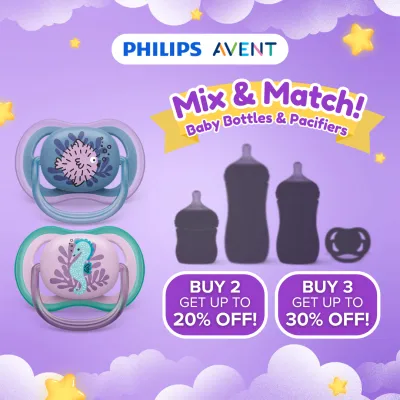
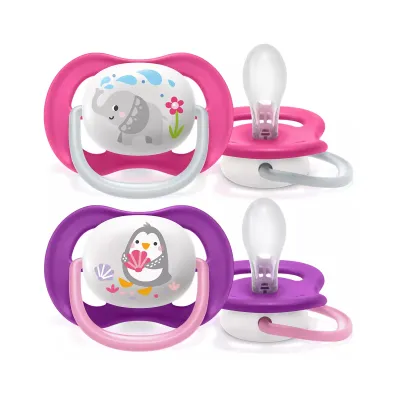
The Philips Avent Ultra Air Pacifier (6-18 months) is a standout model in this category. It features four extra-large air holes integrated into a lightweight shield with rounded edges, designed to keep the baby’s skin dry and comfortable. The nipple is made of silky, textured silicone that provides a comfortable soothe while maintaining a lightweight profile that does not drag down on the baby’s mouth. These pacifiers are widely accessible in the Philippines, with a two-pack retailing between ₱450 and ₱650 on major ecommerce platforms.
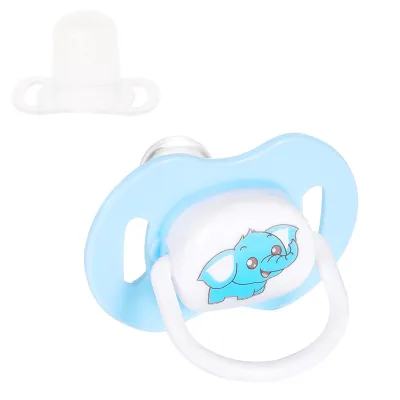
The Pigeon MiniLight Pacifier (Size L, 6-18 months) is another superb option engineered specifically for comfort and breathability. It is designed to be exceptionally light, reducing the physical effort required for an older baby to hold it in their mouth. The shield features wide ventilation slots that promote air circulation, minimizing the risk of drool rash. Pigeon’s reliable reputation in the local mother-and-baby market makes this a highly trusted and accessible choice, generally priced around ₱250 to ₱350 per piece.
Best Durable and Teething-Friendly Designs
As babies enter the 12 to 18-month range, their biting reflex becomes much stronger, and their sharp primary teeth can quickly damage standard pacifiers. For this stage, parents need durable, bite-resistant designs that can withstand active chewing without tearing or presenting a choking hazard.
The Tommee Tippee Breast-Like Pacifier (6-18 months) is designed with durability and natural feel in mind. Inspired by the brand’s award-winning bottle nipples, this pacifier features a breast-like shape that stretches and flexes naturally. The medical-grade silicone is thicker at the base of the nipple, providing excellent resistance against biting and chewing from older toddlers. The shield curves away from the face to ensure good airflow. You can find these in local baby stores and online platforms for about ₱350 to ₱500.
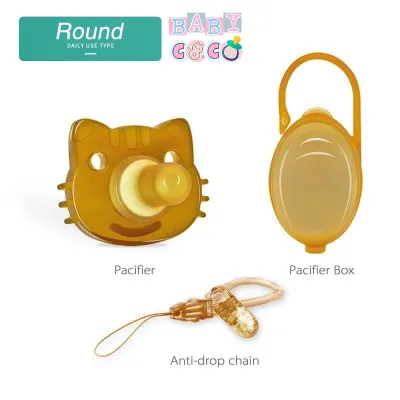
For parents who prefer natural materials, the Hevea Natural Rubber Pacifier (6-12 months or 12-18 months) offers outstanding durability. Made from 100% natural rubber, this pacifier is molded in one piece, making it incredibly resilient to the pressure of emerging teeth. The material is naturally soft and elastic, providing a comforting texture for teething babies who like to bite down on the shield as well as the nipple. Because it is completely plastic-free and biodegradable, it is also an eco-friendly choice. It is available in select premium baby boutiques in the Philippines, typically priced between ₱450 and ₱600.
Gentle Strategies for Weaning Your Toddler Off the Pacifier
As your baby approaches 18 months, it is beneficial to begin planning the transition away from the pacifier. While non-nutritive sucking is a natural self-soothing mechanism, prolonged use past 18 to 24 months can begin to impact dental alignment, palate development, and speech patterns. Weaning should be approached with patience, empathy, and consistency, respecting your child’s unique developmental pace.
Recognizing the signs of weaning readiness can make the transition much smoother. If your toddler is using the pacifier less frequently during the day, drops it without noticing, or is increasingly interested in exploring verbal sounds and babbling, they may be ready to reduce their dependency. Increased interest in solid foods and alternative comfort objects, such as a favorite stuffed animal or a soft blanket, are also positive indicators.
A gradual reduction method is often the most successful and least stressful approach for both parents and toddlers. Start by limiting pacifier use to specific times and environments, such as naptime, bedtime, or during long car rides. During the day, keep the pacifier out of sight in a designated “pacifier home,” like a high shelf or a specific drawer, and encourage your child to engage in active play, reading, or outdoor activities. If they ask for the pacifier during the day, gently redirect their attention to a fun game, a snack, or a comforting hug.
Introducing alternative soothing techniques is essential to help your toddler learn to self-soothe without a pacifier. Establish a consistent, calming bedtime routine that includes activities like a warm bath, reading a story together, singing a quiet lullaby, or offering a gentle back massage. Providing a transitional object, such as a small security blanket or a plush toy (ensuring it is safe for their age), can offer comfort and security during sleep transitions.
If your child is approaching 18 months and shows intense resistance to weaning, or if you notice visible changes in their dental alignment—such as their front teeth curving outward or a gap appearing between the upper and lower teeth when their mouth is closed—it is highly recommended to consult a pediatric dentist or a pediatrician. A professional can evaluate your child’s oral development, check for any speech articulation concerns, and provide personalized guidance to support a healthy transition.
Daily Cleaning, Safety Checks, and When to Replace
Maintaining strict hygiene and safety standards is vital when caring for your baby’s pacifier 6 to 18 months. Because older babies are highly mobile and constantly exploring their environment, their pacifiers are frequently exposed to household dust, floor surfaces, and outdoor dirt.
Daily cleaning is the first line of defense against harmful bacteria. Before using a brand-new pacifier, always sterilize it by boiling it in water for five minutes, ensuring it is completely submerged. Allow it to cool thoroughly, and gently squeeze any trapped water out of the nipple. For daily maintenance, wash the pacifier with warm water and a mild, baby-safe bottle cleanser. Avoid using harsh chemical disinfectants, bleach, or placing the pacifier in the dishwasher unless the manufacturer’s instructions explicitly state it is dishwasher-safe, as high temperatures and harsh detergents can degrade the materials.
Performing a physical safety check, commonly known as the “pull test,” should be part of your daily routine before giving the pacifier to your baby. Firmly pull the nipple in all directions, checking for any signs of wear, tiny tears, hairline cracks, or changes in texture. This step is especially critical once your baby’s primary teeth have erupted, as sharp incisors can easily puncture the silicone or rubber. If you notice any damage, stickiness, swelling, or discoloration, discard the pacifier immediately to prevent a choking hazard. Never tie a pacifier around your baby’s neck or to their crib, as this poses an immediate strangulation risk.
Even if a pacifier appears to be in perfect condition, manufacturers generally recommend replacing it every 4 to 8 weeks. Continuous exposure to warm saliva, biting pressure, and frequent washing gradually weakens the material, creating microscopic crevices where bacteria and mold can thrive. Natural rubber pacifiers tend to degrade faster than silicone models and may require more frequent replacement, especially in hot climates.
Proper storage is particularly important in the humid climate of the Philippines, where moisture can quickly lead to mold and mildew growth. After cleaning, ensure the pacifier is completely dry before storing it. Avoid placing damp pacifiers in sealed plastic bags or airtight containers. Instead, use a clean, dry, and well-ventilated pacifier case that allows air to circulate, keeping the pacifier hygienic and ready for use.
Frequently Asked Questions (FAQ)
Can a 6-month-old use a pacifier meant for older babies?
No, it is highly recommended to use pacifiers that match your baby’s current developmental stage. Pacifiers designed for older babies (such as those labeled 18+ months) feature larger, firmer nipples and wider shields. Using an oversized pacifier can trigger a strong gag reflex, cause jaw fatigue, and potentially block the baby’s nose if the shield is too large for their facial structure. Always check the manufacturer’s age guidelines on the packaging to ensure a safe and comfortable fit.
How often should I replace my baby's pacifier?
For safety and hygiene, you should replace your baby’s pacifier every 4 to 8 weeks, or immediately if you notice any signs of wear. Perform a daily pull test to check for tiny tears, cracks, stickiness, or discoloration, especially after your baby starts teething. Natural rubber pacifiers degrade faster than silicone and may need to be replaced closer to the 4-week mark, while high-quality silicone pacifiers can typically last up to 8 weeks if properly maintained.
Do pacifiers affect speech development in toddlers?
Prolonged pacifier use, particularly when continued past 18 to 24 months, can potentially impact speech development. When a toddler has a pacifier in their mouth for extended periods during the day, they have fewer opportunities to babble, speak, and practice the complex tongue and lip movements required for clear articulation. It can also affect dental alignment, which plays a role in how certain speech sounds are produced. Initiating gentle weaning by 18 months supports healthy speech and language milestones.
Community discussion
Share your experience or ask a question. Comments are reviewed before publication.