
Welcoming a newborn brings immense joy, but the physical demands of round-the-clock feeding sessions can quickly take a toll on your body. In the Philippines, where the warm, humid climate adds an extra layer of challenge to postpartum recovery, finding the right nursing pillow is essential for both your physical comfort and successful feeding. A dedicated nursing pillow supports your baby at the correct height, reducing the strain on your back, neck, and shoulders while helping your little one secure a proper latch.
Selecting the ideal nursing pillow involves balancing several factors, including the pillow’s shape, its firmness, the breathability of its fabric, and how easily it can be cleaned. Whether you are breastfeeding, bottle-feeding, recovering from a Caesarean section, or seeking a portable option for travel, the right support system can transform your feeding routine from a physically exhausting chore into a comfortable bonding experience. By understanding the specific features that suit your body type and lifestyle, you can make an informed decision that supports your long-term postpartum wellness.
Why the Right Nursing Pillow is Essential for New Moms
During the first few months of life, newborns feed up to twelve times a day, with each session lasting anywhere from fifteen to forty-five minutes. Holding a baby for this cumulative duration without proper support forces your body into a hunched, forward-leaning posture. Over time, this repetitive strain can lead to severe muscle fatigue in your upper back, cervical spine, shoulders, and wrists, a condition often referred to as postpartum back pain or wrist strain. A specialized nursing pillow acts as an ergonomic platform, lifting your baby to breast or bottle level so you can sit upright and relax your upper body.
Products mentioned in this guide
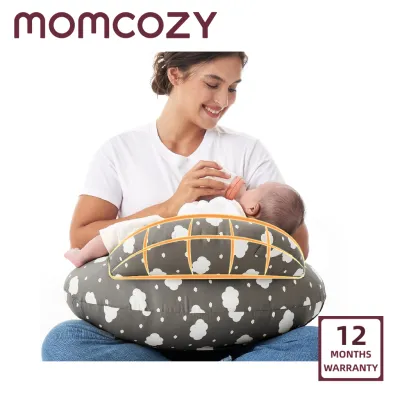
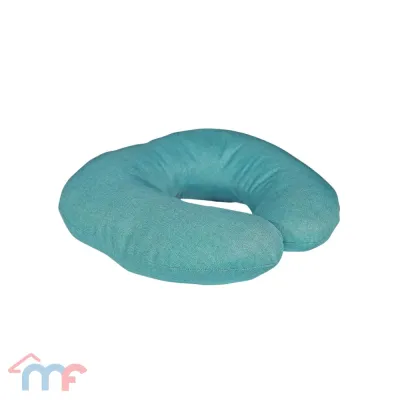
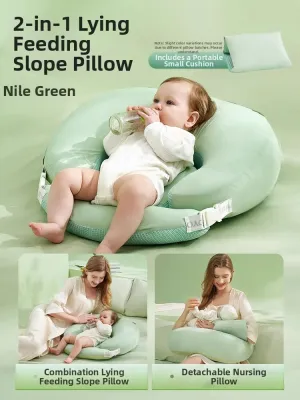
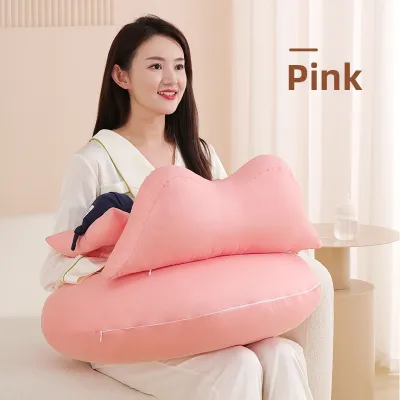
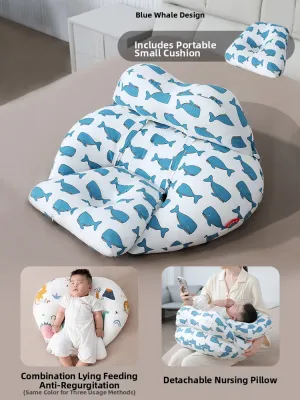
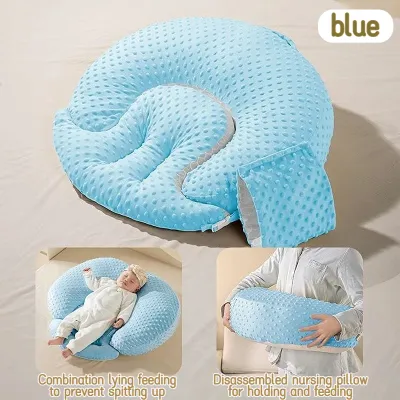
Prices are valid at publication and may change. Please refer to the product page for the latest price.
Proper elevation is also a critical factor in achieving a deep, comfortable latch. When a baby is positioned too low, mothers naturally lean forward to meet them, which alters the angle of the breast and can cause the baby to shallowly latch onto the nipple, leading to pain and cracked skin. By using a firm pillow to raise the baby to the level of your nipple, you allow the baby to tilt their head back slightly, which encourages a wider mouth opening and a more secure latch. This positioning also helps bottle-fed babies maintain an optimal, slightly elevated head position to reduce gas and spit-up.
While it is tempting to use standard bed pillows or couch cushions as makeshift supports, these household items rarely provide the necessary structural integrity. Standard pillows are designed to be soft and compressible, meaning they will quickly flatten under the concentrated weight of an infant. This compression forces you to constantly adjust, pull, or stack multiple pillows mid-feed, which disrupts the baby’s feeding flow and increases your physical fatigue. A dedicated nursing pillow is engineered with high-density fillings that maintain their shape and elevation throughout the entire feeding session, providing a stable, reliable foundation.
Key Features to Look for in a Nursing Pillow
When shopping for a nursing pillow, you must evaluate several key dimensions to ensure the product is safe, comfortable, and durable enough to withstand daily use.

Firmness and Core Support
The primary function of a nursing pillow is to provide a stable platform, which requires a firm inner core. If a pillow is too soft, your baby will sink into the material, which not only defeats the ergonomic purpose of lifting them but also poses a serious safety risk. A soft, sinking surface can cause the baby’s head to tilt forward, potentially chin-to-chest, which can compromise their delicate airway. Look for pillows filled with high-density foam or tightly packed polyester fiberfill that resist compression under pressure, keeping the baby’s body level and secure.
Cover Material and Breathability
The tropical climate of the Philippines means that both you and your baby will generate significant body heat during close physical contact. To prevent heat rashes, excessive sweating, and general discomfort, prioritize natural, breathable cover fabrics such as 100% cotton, organic cotton, or bamboo-derived rayon. These materials allow air to circulate and help wick moisture away from your baby’s sensitive skin. Avoid synthetic polyester covers that trap heat and moisture, which can irritate your baby’s skin and make feeding sessions uncomfortable for both of you.
Size, Fit, and Adjustability
A nursing pillow must fit comfortably around your torso to prevent gaps where the baby could slip down. Because postpartum bodies come in all shapes and sizes, a one-size-fits-all approach rarely works perfectly. Consider whether you prefer a pillow with an adjustable strap or buckle that secures the pillow tightly against your waist, or a flexible, springy design that expands to accommodate different waist sizes. Additionally, ensure the pillow’s height matches your torso length; taller mothers may require a thicker pillow, while petite mothers might find a lower-profile design more comfortable for keeping their elbows at a natural angle.
Ease of Cleaning
Feeding sessions are inevitably messy, characterized by milk spills, dribbles, and infant spit-up. To maintain proper hygiene and prevent the growth of bacteria or mold, a nursing pillow must be exceptionally easy to clean. Look for designs that feature a fully removable, zippered outer cover that is safe for machine washing and quick drying. Some premium options also include water-resistant inner slips or wipeable covers that protect the core filling from absorbing liquids, ensuring the structural core remains clean and odor-free over months of heavy use.
Best Nursing Pillow Shapes for Different Feeding Needs
The overall shape of a nursing pillow dictates how it distributes weight, how it fits your body, and how portable it is for daily life. Understanding the distinct structural designs will help you select the style that aligns with your specific feeding method and lifestyle.
C-Shaped and Wraparound Pillows
C-shaped and wraparound pillows are the most widely used designs, characterized by a semi-circular shape that hugs your waist. Many of these models feature an adjustable belt or strap with a silent-release buckle, allowing you to secure the pillow tightly around your torso. This secure fit ensures that the pillow does not drift away from your body when you shift positions, providing a stable platform where you can rest your forearms while guiding your baby.
This design is highly recommended for mothers recovering from a Caesarean section. Because the pillow wraps around the waist, you can position it slightly higher on your abdomen, completely bypassing and protecting your sensitive lower-incision site from any direct pressure or accidental kicks from the baby. It is also highly versatile, supporting classic feeding positions such as the cradle hold, cross-cradle hold, and the football hold (where the baby’s body is tucked under your arm along your side).
However, wraparound pillows do have a few limitations. Their structured, semi-rigid design makes them bulky to store and difficult to pack for travel outside the home. Additionally, some mothers find that the adjustable straps can feel restrictive or uncomfortable against a tender postpartum belly, especially during the first few weeks of recovery. It is important to try adjusting the strap to a looser setting or choosing a model with a soft, padded belt to mitigate this discomfort.
U-Shaped and Full-Body Pillows
U-shaped and full-body pillows offer a larger, more comprehensive support system that extends around your back and sides. Unlike compact cushions, these expansive pillows are designed to provide simultaneous support for your lower back, your elbows, and the baby. By filling the gap between your back and the chair or sofa, a U-shaped pillow encourages you to lean back comfortably rather than hunching forward, significantly reducing lumbar strain during long feeding sessions.
One of the main advantages of this design is its multi-functional utility throughout your motherhood journey. Many of these pillows are designed to be used during pregnancy as sleeping aids to support your growing belly and align your hips. Post-pregnancy, they transition into excellent nursing supports, and as your baby develops, they can be repurposed as a safe, supervised prop to assist with tummy time or to provide a soft barrier when your baby is learning to sit upright.
The primary trade-off of U-shaped and full-body pillows is their substantial physical footprint. They occupy a significant amount of space on a bed, couch, or nursing chair, which may not be practical for smaller bedrooms or living spaces. Their large size also makes them completely impractical for travel or trips outside the home. If you choose this style, you will likely need to designate a permanent spot for it in your primary nursing area.
Wedge and Compact Pillows
Wedge and compact pillows are minimalist, targeted support tools designed for portability and space efficiency. Typically shaped like a firm triangle, a half-moon, or a small incline wedge, these pillows do not wrap around your body. Instead, they are placed directly under your arm or under the baby’s head to provide localized elevation where it is needed most, without the bulk of a full-sized wrap.
For active families or those living in compact spaces, the wedge pillow is an incredibly practical option. It easily fits into a standard diaper bag or the under-seat basket of a stroller, making it a convenient companion for pediatric clinic visits, family gatherings, or travel. Because it does not rely on a waist-fitting mechanism, it can be easily shared between different caregivers, such as partners, grandparents, or nannies, regardless of their body size or shape.
The main drawback of a compact wedge pillow is that it provides limited independent support. Because it does not secure to your waist or support your back, you must use more of your own arm and shoulder strength to keep the baby and the pillow properly positioned during the feed. It does not offer the resting sensation of a wraparound pillow, meaning your arms may still experience some fatigue during extended or back-to-back feeding sessions.
Quick Comparison: Which Pillow Shape Fits Your Lifestyle?
To help you quickly evaluate the trade-offs of each design, the table below summarizes the key practical differences between the three primary nursing pillow shapes.
| Pillow Shape | Best For | Portability | Space Required | Key Advantage |
|---|---|---|---|---|
| C-Shaped / Wraparound | Hands-free support, C-section recovery, precise baby positioning | Moderate (bulky but manageable) | Moderate | Secures tightly to the waist to prevent slipping or shifting |
| U-Shaped / Full-Body | Lumbar support, multi-stage use (pregnancy to sitting), double-arm support | Low (very bulky and heavy) | High | Comprehensive back, arm, and infant support in one |
| Wedge / Compact | On-the-go feeding, travel, small living spaces, multiple caregivers | High (fits easily in diaper bags) | Low | Lightweight, highly portable, and highly adaptable to different bodies |
Smart Buying Tips for Moms in the Philippines
Navigating the baby product market requires a careful balance of practical features, local environmental factors, and strict safety guidelines. Keep the following tips in mind when selecting your nursing pillow.
Climate Considerations
The high humidity levels in the Philippines create an environment where mold, mildew, and dust mites can thrive, particularly within dense foam or fiber fillings. When purchasing a nursing pillow, look for materials that are explicitly labeled as breathable, hypoallergenic, and quick-drying. If you wash the pillow cover or the inner core, ensure they are dried completely in a well-ventilated area or under direct sunlight before reuse. Using a damp pillow can lead to mold development, which poses respiratory risks for both you and your infant.
Retailer Verification
With the rise of online marketplaces, counterfeit or substandard baby products have become increasingly common. Cheap, unbranded nursing pillows may use low-quality synthetic fillings that contain harmful chemical off-gassings or fail to provide adequate firmness, flattening within a few weeks. Always purchase your nursing pillow from authorized brand stores, reputable local baby boutiques, or verified flagship stores on established e-commerce platforms. Verify that the product meets international safety standards for infant products before making your purchase.
Safety Boundaries
It is critical to remember that nursing pillows are designed strictly for supervised feeding sessions and are never safe for infant sleep. According to pediatric safe sleep guidelines, infants must always sleep on a flat, firm, and clear surface without any pillows, blankets, or soft toys. Never leave your baby unattended on a nursing pillow, and do not allow them to sleep on it, even for short naps. The soft, inclined surface of a nursing pillow can cause a baby’s head to tilt forward, blocking their airway, or cause them to roll over into a position where they can suffocate. If your baby falls asleep during a feeding session, gently transfer them to a safe crib or bassinet immediately.
Return Policies
Because nursing pillows are classified as personal hygiene and sanitary items, many retailers enforce strict return and exchange policies. Once the original packaging, vacuum seal, or product tags are broken, the item is often non-returnable unless there is a clear manufacturing defect. Before purchasing, carefully measure your waist size and check the product dimensions. If possible, visit a physical baby store to test the fit of different shapes against your body type before committing to a final purchase online.
Frequently Asked Questions (FAQ)
Can I use a regular bed pillow instead of a nursing pillow?
While you can technically use a regular bed pillow, it is not recommended for regular feeding sessions. Standard bed pillows are designed to be soft and compressible, meaning they will flatten quickly under your baby’s weight and fail to provide the consistent elevation needed for a proper latch. Furthermore, bed pillows lack the structured shape or straps needed to stay secure against your body, causing them to slide away and forcing you to constantly readjust your posture, which leads to physical strain.
When should I stop using a nursing pillow?
You can generally phase out the use of a nursing pillow once your baby has developed strong head and neck control, can sit up independently, and can maintain a proper latch without needing extra elevation, which typically occurs around six to nine months of age. However, there is no strict rule, and many mothers continue to use the pillow for comfort during bottle-feeding sessions or repurpose it as a supportive prop during supervised floor play as the baby continues to grow. Always follow the manufacturer’s specific guidelines regarding weight limits and developmental stages for your particular pillow model.
Community discussion
Share your experience or ask a question. Comments are reviewed before publication.