
Quick Answer: Which Maternity Pillow Shape Should You Choose?
Finding comfortable sleep during pregnancy is a common challenge as your body undergoes rapid physical changes. Traditional sleeping positions can become uncomfortable or medically discouraged, making a specialized maternity pillow a highly practical investment. The ideal shape for your needs depends on your bed size, your preferred sleeping position, and whether you require targeted or full-body support.
To simplify your decision, you can use this straightforward selection framework:
- Choose a U-shaped pillow if you need maximum, symmetrical, full-body support, tend to toss and turn frequently throughout the night, and have a larger bed (such as a Queen or King mattress) that can easily accommodate its substantial bulk.
- Choose a C-shaped pillow if you want comprehensive head, back, and belly support but have a smaller sleeping space (such as a standard Double bed) or share your mattress with a partner and need to conserve room.
- Choose a wedge pillow if you only require targeted support for your growing belly or lower back, prefer to continue using your familiar standard pillows for your head and knees, or need a highly portable, travel-friendly option.
While side sleeping—particularly on your left side—is widely recommended by healthcare professionals during the second and third trimesters to optimize blood flow, your pillow must ultimately support your individual comfort. The right choice should ease joint strain, prevent back pain, and maintain safe, neutral spinal alignment so you can get the rest you need.
Products mentioned in this guide




Prices are valid at publication and may change. Please refer to the product page for the latest price.
U-Shaped Pillows: Full-Body Support for Side Sleepers
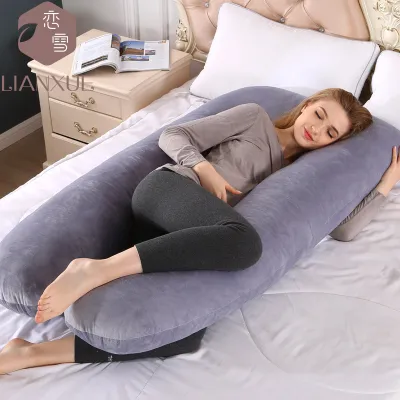
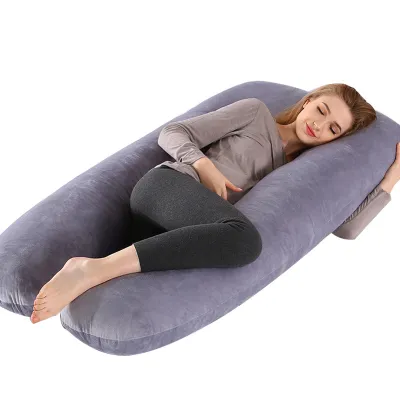
A U-shaped maternity pillow is designed as a massive, symmetrical horseshoe that cradles your entire body from head to toe. To use it, you place your head at the curved closed end of the U, allowing the two long legs of the pillow to run down both the front and back of your torso. This design provides a secure, cocoon-like sensation that addresses multiple pressure points simultaneously.

The primary benefit of the U-shape is its symmetry, making it the ultimate solution for restless sleepers. If you frequently switch from your left to your right side during the night, you do not have to drag a heavy pillow over with you; you simply turn over within the center of the cradle. The front leg of the pillow supports your growing belly and can be tucked between your knees to keep your hips stacked and parallel, which significantly reduces pelvic girdle pain. Meanwhile, the back leg provides firm, continuous support behind your spine, physically preventing you from rolling onto your back.
However, the comprehensive support of a U-shaped pillow comes with a significant spatial trade-off. In many households where standard double or queen-sized beds are the norm, a U-shaped pillow can easily consume more than half of the mattress. This leaves very little room for a partner and can make the bed feel cramped. Additionally, the sheer volume of fabric and filling can trap body heat, which is a major comfort consideration in warm, tropical climates.
Before purchasing a U-shaped pillow, it is highly advisable to measure your mattress to ensure you and your partner will both fit comfortably. If you choose this shape, look for models that feature flexible joints or detachable zippered legs. These designs allow you to unzip one side of the pillow to save space or fold the remaining sections to support your back while sitting up in bed to read or nurse.
C-Shaped Pillows: Balanced Support for Smaller Beds
A C-shaped maternity pillow offers a practical, space-saving alternative to the bulky U-shape while still providing excellent full-body support. Shaped like a large letter C, this pillow is designed to wrap around your body asymmetry. The top curve of the C supports your head and neck, the long middle section runs along either your back or your belly, and the bottom curve tucks neatly between your thighs or knees.
The standout advantage of the C-shape is its balanced footprint. It provides substantial support for your spine, hips, and bump without taking up excessive horizontal space on a standard double or queen bed. This makes it a much more partner-friendly option. Because one side of the pillow remains completely open, it also allows for better airflow, helping you stay cooler during warm, humid nights.
The main drawback of the C-shaped design is its asymmetry. If you prefer to switch sides during the night, you must physically rotate the entire pillow or roll over to face away from the back support, which can disrupt your sleep. Additionally, because the pillow curves inward at both ends, taller individuals may find that the bottom curve does not extend far enough down to comfortably support both the knees and the ankles at the same time.
To position a C-shaped pillow effectively, tuck the top curve securely under your head to align your neck, let the long middle section support your spine, and pull the bottom curve firmly between your knees to align your hips. If you find that your ankles are left dangling or clashing together—which can tilt your pelvis and cause lower back strain—keep a small, standard pillow at the foot of the bed to place between your ankles for complete lower-body alignment.
Wedge Pillows: Compact, Targeted Relief for Belly and Back
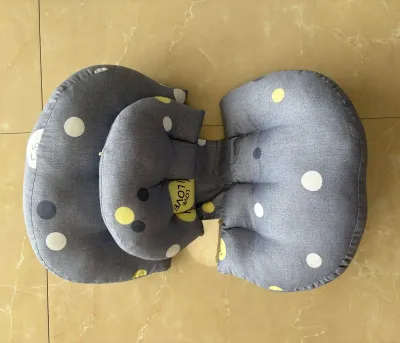
A wedge maternity pillow is a compact, firm, slope-shaped cushion typically made from high-density foam. Unlike full-body pillows, wedges are designed for highly localized support, targeting specific areas of discomfort rather than wrapping around your entire frame.
One of the greatest benefits of a wedge pillow is its sheer versatility and low profile. It takes up virtually no space in the bed, making it an excellent option for those who share a smaller mattress or travel frequently. You can easily slip a wedge under your belly while side sleeping to prevent your bump from pulling forward and straining your lower back. Alternatively, placing it directly behind your lower back acts as a gentle physical barrier, preventing you from rolling flat onto your spine during sleep. Wedges are also highly effective for elevating your upper body; placing one under your regular head pillow can ease pregnancy-induced acid reflux, heartburn, or nasal congestion.
On the downside, a wedge pillow does not offer any built-in head, neck, or leg support. If you suffer from severe hip pressure or pelvic alignment issues, a wedge alone will not be sufficient. You will need to coordinate multiple standard pillows alongside the wedge to achieve comfortable, neutral alignment for your entire body.
We recommend wedge pillows as an excellent entry-level option during the first trimester when your bump is small and you do not yet require heavy-duty support. It is also a great choice if you are highly attached to your existing head pillow and do not want to replace it. When shopping, look for a wedge with a moderate, gradual slope; a wedge that is too steep or excessively firm can force your pelvis or spine into an unnatural angle, causing muscle tension.
Matching Pillow Shapes to Your Sleeping Position and Trimester
To get the most out of your maternity pillow, it helps to align the shape of the pillow with your specific sleeping habits and your current stage of pregnancy.
Side Sleepers
Side sleeping is the gold standard during pregnancy, but it requires careful alignment to prevent joint strain. To keep your spine neutral, your head, neck, shoulders, hips, and knees must be held in a parallel plane. A U-shaped or C-shaped pillow achieves this by filling the physical gaps between your body and the mattress. For side sleepers, placing a pillow section between the knees is crucial because it prevents the upper leg from pulling the pelvis forward and twisting the lower spine. If you run hot or find full-body pillows too restrictive, placing a compact wedge directly under the slope of your belly provides the necessary lift to prevent that heavy, downward pulling sensation.
Back Sleepers Transitioning to the Side
Sleeping flat on your back after the 20th week of pregnancy is generally discouraged because the weight of the growing uterus can compress the inferior vena cava, potentially reducing blood flow to the placenta and causing dizziness. If you are a natural back sleeper, transitioning to your side can be incredibly difficult. You can use a wedge pillow placed at a 45-degree angle behind your back; this allows you to tilt slightly to the side while still feeling like you are resting on your back, providing a safe, supported compromise. Alternatively, placing a wedge or a propped-up U-shaped pillow under your upper torso can elevate your chest, reducing the pressure on your diaphragm and easing heartburn.
Trimester Progression
Your support needs will naturally evolve as your pregnancy progresses:
- First Trimester: Your body is undergoing massive hormonal changes, and you may experience breast tenderness, mild lower back fatigue, or early-stage fatigue. A small wedge pillow or a simple knee pillow is often sufficient at this stage, allowing you to maintain your usual sleeping habits while addressing minor discomforts.
- Second Trimester: As your baby bump becomes visible and your ligaments begin to loosen due to the hormone relaxin, hip and lower back pain often emerge. This is the ideal time to transition to a C-shaped or U-shaped pillow to establish a comfortable side-sleeping routine before the third trimester.
- Third Trimester: With the bump reaching its maximum size, physical discomfort, pelvic girdle pain, and frequent nighttime bathroom trips can severely disrupt sleep. A full-body U-shaped pillow provides the heavy-duty, bilateral support needed to stabilize your hips and belly, making it easier to rest comfortably.
Safety and Comfort Boundaries
Always listen to your body’s signals. If any pillow shape or sleeping position causes sharp pain, numbness in your limbs, or restricts your breathing, stop using it immediately and adjust your setup. If you experience severe, persistent sleep disturbances, intense pelvic girdle pain, or any other physical complications, consult your OB-GYN or a physical therapist for specialized guidance.
Essential Features to Verify Before Buying
When choosing a maternity pillow, look beyond marketing claims and verify the specific materials, care instructions, and physical properties listed on the product tag.
Cover Material
In warm, humid climates, heat retention is a major issue during sleep. Look for covers made from breathable, natural, or moisture-wicking fabrics such as 100% cotton, bamboo-derived rayon, or lightweight jersey. Avoid synthetic polyester covers that trap sweat. Ensure the cover features a long, high-quality zipper so it is easy to remove and machine-wash regularly to maintain hygiene.
Filling Type
The inner filling determines the firmness and durability of the pillow. Memory foam (either solid or shredded) offers excellent contouring and firm support, but solid memory foam tends to retain heat unless it is specifically formulated with cooling gel or ventilation channels. Polyester fiberfill is a softer, more cloud-like alternative that is highly adjustable and generally cooler, though it may clump over time and require manual fluffing.
Care and Maintenance
Always check the manufacturer’s care label before washing. While most covers are machine-washable, the inner pillow fill often requires special care. In highly humid environments, a thick pillow that is not dried thoroughly can quickly develop mold, mildew, or musty odors. If the inner fill is washable, ensure it can be thoroughly dried in a dryer or under direct sunlight.
Safety Checks
Because you will be spending hours with your face and body in close contact with the pillow, check the product tag for reputable non-toxic certifications, such as OEKO-TEX Standard 100 or CertiPUR-US. These certify that the foam or fabric is free from harmful levels of chemicals and heavy metals, protecting you and your baby from harsh off-gassing odors.
Frequently Asked Questions (FAQ)
Can I use regular pillows instead of a maternity pillow?
Yes, you can certainly arrange several standard pillows to support your head, back, and knees. However, standard pillows tend to shift, slide apart, and flatten out during the night, requiring you to constantly wake up and readjust them. A dedicated maternity pillow is specifically contoured to stay in place, providing continuous, targeted support that matches the curves of a pregnant body with a single, cohesive unit.
When should I start using a maternity pillow?
There is no fixed medical timeline for when you must start using one. Most expectant mothers find themselves reaching for a maternity pillow during the second trimester (around weeks 13 to 26) as the baby bump grows and side sleeping becomes more necessary. However, you can start using a small wedge pillow earlier in your first trimester if you need relief from breast tenderness, hip pressure, or early backaches.
How do I clean a maternity pillow to prevent mold or odors?
To prevent mold, mildew, and odors—especially in humid climates—always follow the manufacturer’s care instructions. Wash the removable cover at least once a week in warm water with a mild, hypoallergenic detergent. If the inner pillow is machine-washable, wash it on a gentle cycle and dry it completely. If it is not washable, spot-clean it with a damp cloth and baking soda, then air it out in a well-ventilated space or under indirect sunlight until every trace of moisture has evaporated.
Community discussion
Share your experience or ask a question. Comments are reviewed before publication.