
Securing a kitchen is one of the most challenging stages of baby-proofing, and the refrigerator is often a toddler’s primary target. Refrigerator doors contain heavy glass bottles, raw foods, and small items that pose immediate choking or physical hazards, all positioned at a child’s eye level. When standard baby latches fail under the strain of a determined toddler, parents must turn to a more robust solution. A high-quality refrigerator door lock heavy duty model is engineered to withstand both the physical leverage a child can apply and the demanding environmental conditions of a typical household.
Selecting the right lock requires a clear understanding of your appliance’s layout, its surface finish, and the physical limits of different locking mechanisms. In the Philippines, where high humidity and diverse kitchen layouts present unique challenges, choosing an inadequate lock can lead to damaged appliance finishes or, worse, a safety failure. By evaluating your refrigerator’s design and matching it with a lock built from durable materials, you can establish a secure kitchen environment while preserving the integrity of your appliance.
What Makes a Refrigerator Lock "Heavy-Duty"?
Standard child safety locks are designed for lightweight cabinet doors and drawers that offer minimal physical resistance. A refrigerator, however, presents a completely different set of mechanical challenges. To understand why a heavy-duty lock is necessary, one must look at the physics of a toddler’s pulling force and the design of modern refrigeration units.
Products mentioned in this guide
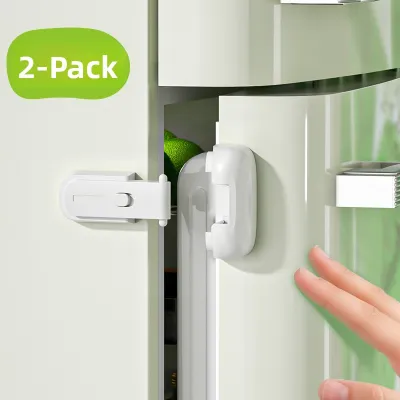
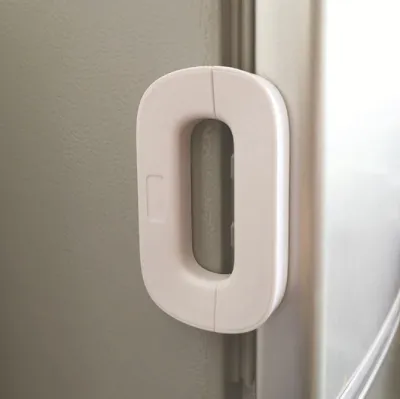
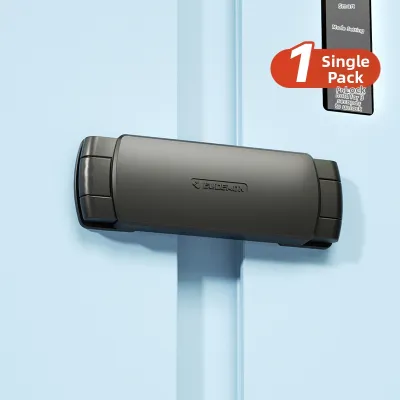
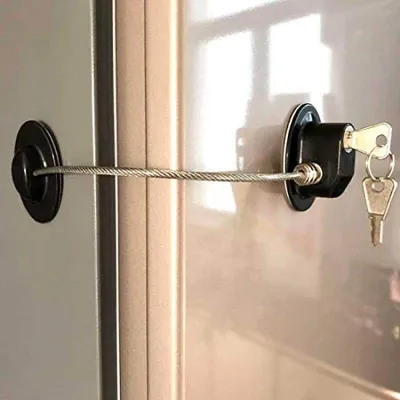
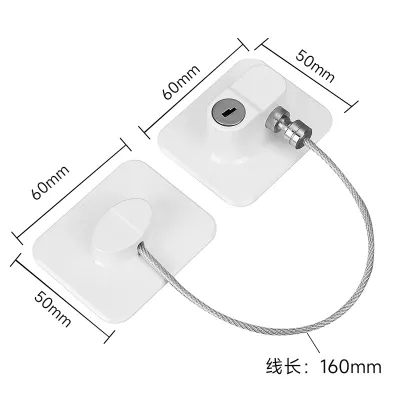
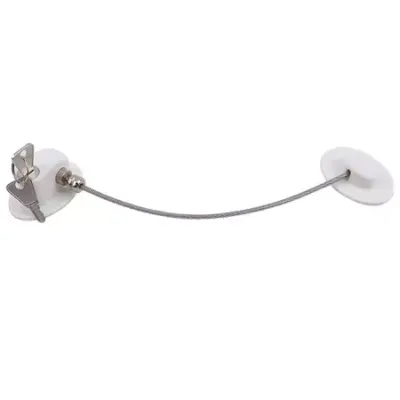
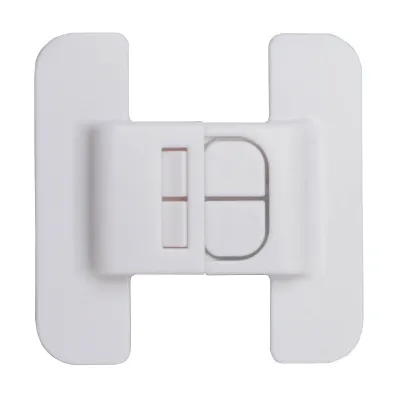
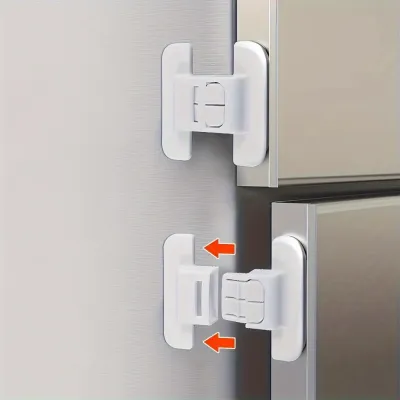
Prices are valid at publication and may change. Please refer to the product page for the latest price.
Toddlers do not merely pull on handles with their hand strength; they quickly learn to use their entire body weight for leverage. A toddler weighing 10 to 15 kilograms can exert a massive dynamic force when hanging from or repeatedly yanking on a refrigerator door handle. Standard plastic latches with narrow adhesive bases will quickly shear or snap under this type of sudden, concentrated load.
Furthermore, refrigerator doors are sealed with a strong magnetic gasket that creates a vacuum seal when closed. Breaking this seal requires a high peak force. When a toddler pulls on the door, they are fighting both the weight of the heavily loaded door and the suction of the gasket. Once the seal finally breaks, the door can swing open rapidly, causing the child to lose their balance or be struck by the door. A heavy-duty lock must be strong enough to keep the door completely immobile, preventing even the slightest gap from forming.
To withstand these forces, heavy-duty locks incorporate several specific engineering features:
- Wider Adhesive Bases: Larger mounting pads distribute the pulling force across a wider surface area. This prevents the adhesive tape from peeling at the edges, which is the most common point of failure for standard locks.
- Reinforced Materials: Instead of thin, brittle plastics, heavy-duty locks utilize high-impact ABS plastic, heavy-duty nylon straps, or aircraft-grade braided steel cables encased in protective vinyl.
- Complex Release Mechanisms: These locks feature multi-action opening systems, such as dual-button squeeze releases, press-and-slide latches, or magnetic keys. These mechanisms require manual dexterity and cognitive problem-solving skills that toddlers have not yet developed.
- High Tensile Strength: The materials and joints are rated to resist high-impact jerks without stretching, cracking, or releasing the latch unexpectedly.
Matching the Lock to Common Refrigerator Types in the Philippines
Philippine households utilize a wide variety of refrigerator configurations, ranging from compact single-door units to large double-door, side-by-side, or French-door models. The physical structure of your appliance dictates which heavy-duty lock design will function reliably and safely.

Double-Door and Side-by-Side Fridges
These models feature two doors that open outward from a central split. Securing them requires a lock that can bridge the central gap and hold both doors firmly together. Heavy-duty strap locks or rigid double-door latches are highly effective for this configuration. They anchor to both doors, preventing them from being pulled apart. If your refrigerator has long, vertical bar handles, a rigid handle lock that clamps the two bars together can bypass the need for adhesives entirely, utilizing the appliance’s existing structural strength.
Single-Door Fridges
Single-door units, common in smaller kitchens or condominiums, require a lock that anchors to the side panel of the refrigerator chassis and wraps around to the front door. This setup demands a flexible strap lock or a specialized corner latch. The lock must have sufficient length to clear the door’s rubber gasket without compressing or distorting it, as any deformation of the gasket can compromise the refrigerator’s cooling efficiency and increase electricity consumption.
Surface Considerations and Humidity
Philippine homes often experience high indoor humidity, especially during the rainy season. This ambient moisture can severely impact how adhesives cure and hold over time. Common refrigerator finishes include brushed stainless steel, tempered glass, and painted or powder-coated metal. Each of these surfaces interacts differently with industrial adhesives.
Before applying any adhesive-based lock, you must check your appliance’s user manual to ensure that strong adhesives will not damage the protective clear-coat, anti-fingerprint film, or paint finish. Damage to these surfaces can void your appliance’s warranty. If you are unsure of the finish or cannot locate the manual, perform a small patch test with a piece of high-quality tape on an inconspicuous area, such as the lower back or side panel of the unit, to check for peeling, discoloration, or residue.
Recommended Types of Heavy-Duty Fridge Locks
Understanding the different locking mechanisms available allows you to select the most practical and secure option for your kitchen layout. Each type offers distinct advantages and operational trade-offs.
Heavy-Duty Adhesive Strap Locks
Heavy-duty adhesive strap locks are among the most versatile and popular options for modern kitchens. They consist of two adhesive-backed mounting bases connected by a flexible, reinforced strap made of thick plastic, woven nylon, or vinyl-coated steel cable.
Key Features to Look For: Look for straps with adjustable lengths so you can customize the tension and fit. The adhesive pads should be wide—ideally utilizing industrial-grade acrylic foam tapes—to maximize contact surface. The buckle mechanism should require a dual-action motion, such as pressing two side buttons simultaneously while sliding a center release, to prevent toddlers from bypassing the lock through trial and error.
- Pros: Highly flexible; can easily navigate curved edges, uneven surfaces, and wide gaps. They work on almost all refrigerator configurations, including single-door and French-door models.
- Cons: If the strap is left unbuckled and dangling, it can pose a minor safety hazard or get caught when closing the door. Over time, flexible plastic straps can degrade, crack, or stretch under constant tension in warm climates, requiring regular inspection.
- Ideal Use Case: Best for French-door or single-door refrigerators with non-aligned surfaces where a rigid lock cannot reach.
Magnetic Locks with Heavy-Duty Adhesives
Magnetic locks offer a sleek, low-profile alternative to traditional strap locks. They utilize a powerful internal latch mechanism that remains locked until a specialized magnetic key is placed against the outside of the refrigerator door.
Key Features to Look For: Ensure the lock is specifically rated for heavy appliances. Standard cabinet magnetic locks are not strong enough to withstand the pulling force exerted on a heavy refrigerator door. The adhesive backing must be industrial-strength, and the internal catch must be reinforced with thick plastic or metal components.
- Pros: Completely hidden from view, preserving the clean aesthetic of your kitchen. Because there are no visible buttons or straps, toddlers are less likely to target or tamper with the lock, as they cannot see what is holding the door shut.
- Cons: If you lose the magnetic key, accessing your food becomes highly difficult. You must store the key on a high magnetic surface completely out of your child's reach. Additionally, aligning the internal latch and the external strike plate can be challenging on thick, insulated refrigerator doors.
- Ideal Use Case: Best for sleek, modern kitchens with flat-panel refrigerators where visual clutter is undesirable and caregivers are disciplined about key management.
Rigid Handle and Sliding Door Locks
For refrigerators equipped with prominent, protruding bar handles, rigid locks offer a mechanical solution that avoids the use of adhesives on the appliance’s main panels. These locks typically clamp onto or slide over the handles, physically preventing them from moving or separating.
Key Features to Look For: Look for locks made from heavy-duty, impact-resistant polycarbonate or reinforced metal. The clamping mechanism should have a soft, non-slip rubber lining to protect the handle’s finish from scratches. The release mechanism should require a complex hand motion or a key that a toddler cannot replicate.
- Pros: Completely adhesive-free, eliminating any risk of residue, paint peeling, or damage to the refrigerator's exterior. They are highly durable and can be easily removed or transferred to another appliance if needed.
- Cons: They are highly dependent on the exact shape, diameter, and spacing of your refrigerator's handles. If the handles are too thick, too thin, or set too far apart, the lock will not fit. Additionally, if the lock is not fully engaged, a toddler pulling on the handle could still partially open the door or damage the handle mounts.
- Ideal Use Case: Ideal for side-by-side or double-door refrigerators with parallel, vertical bar handles where preserving the appliance's surface finish is a priority.
Safe Installation and Maintenance for Fridge Locks
Proper installation is the single most critical factor in ensuring a heavy-duty lock performs as intended. Even the strongest lock will fail if the adhesive bond is weak or if the lock is positioned incorrectly.
Surface Preparation: Start by thoroughly cleaning the application area. Kitchen grease, dust, and condensation are common in tropical climates and will prevent adhesives from bonding securely. Wipe the area with isopropyl alcohol (70% concentration is ideal) and let it dry completely. Avoid using household glass cleaners or multi-surface sprays, as they often leave behind a thin residue that compromises the adhesive.
Curing Time: Once you apply the adhesive pads, press and hold them firmly against the surface for at least 30 to 60 seconds to activate the pressure-sensitive bond. Crucially, do not test or pull on the lock immediately. In the warm, humid climate of the Philippines, adhesives require more time to cure fully. Allow the adhesive to set undisturbed for 24 to 48 hours before subjecting it to any tension or allowing your toddler near the fridge.
Safety Checks: Childproofing is not a set-and-forget task. Routinely inspect the lock components at least once a month. Check plastic straps for signs of stress whitening, cracking, or fraying, which can lead to sudden failure and create small choking hazards if pieces snap off. Ensure that all small parts, including magnetic keys or spare latch covers, are stored securely out of reach of children. If you notice any degradation, replace the lock immediately. Remember that childproofing products are safety aids and do not replace active adult supervision.
Safe Removal: When your child outgrows the need for a fridge lock, removing it safely requires patience to avoid damaging your appliance. Use a handheld hairdryer on a medium-heat setting to gently warm the adhesive pad. This softens the glue. Once warmed, slide a piece of dental floss or strong fishing line behind the plastic base and use a sawing motion to slice through the foam tape. Clean up any remaining sticky residue using a mild adhesive remover or a few drops of eucalyptus oil, ensuring the product is safe for your refrigerator’s specific finish.
Frequently Asked Questions (FAQ)
Can I use standard cabinet locks for a refrigerator?
No, standard cabinet locks are generally unsuitable for heavy-duty refrigerator baby-proofing. Cabinet locks are engineered for lightweight, thin wooden doors that offer very little resistance. Refrigerator doors are thick, insulated, heavily loaded with items, and sealed with strong magnetic gaskets. When a toddler pulls on a fridge door, they use their entire body weight for leverage, creating high tensile stress. A standard cabinet lock or its adhesive backing will likely snap, crack, or peel off under this pressure, potentially leading to injuries if the door suddenly swings open.
Will heavy-duty adhesive locks ruin my stainless steel fridge?
There is a minor risk of surface damage, but it can be minimized with proper care. Heavy-duty adhesives are designed to hold under high tension, which means they bond very strongly to metal and glass surfaces. On some stainless steel appliances, especially those with a fingerprint-resistant or clear protective coating, aggressive adhesives can peel or discolor the coating upon removal. Always check your refrigerator’s user manual for adhesive restrictions before installation. To prevent damage when removing the lock, always use the heat-and-floss method to soften the adhesive rather than prying the lock off with force.
Community discussion
Share your experience or ask a question. Comments are reviewed before publication.