
Baby carriers are invaluable tools for parents seeking hands-free mobility while keeping their infants close and secure. However, as babies reach the teething stage—typically starting between three and six months of age—they begin to salivate heavily and instinctively explore their environment by chewing on whatever is closest to their mouths. When secured in a baby carrier, the padded shoulder straps, buckles, and fabric panels are positioned directly within your baby’s reach. A high-quality drooling pad for carrier use serves as a protective, washable barrier that keeps your baby gear clean, dry, and free from fabric-degrading moisture.
Selecting the right drooling pad is not a one-size-fits-all decision. The optimal style depends entirely on matching the specific design of your carrier—whether it is an ergonomic structured carrier, a flexible fabric wrap, or a structured hip seat—with breathable, quick-drying fabrics suited for a warm, humid climate. By choosing a compatible pad style, you protect your investment in high-quality baby gear, prevent painful drool rashes on your baby’s sensitive chin and neck, and maintain a hygienic environment for your little one.
How to Match Drooling Pads to Your Carrier Design and Climate
The structural architecture of your baby carrier dictates the type of drooling pad you need. Soft structured carriers feature thick, foam-padded shoulder straps and a defined central body panel that require wrap-around, snap-on protection. In contrast, stretchy and woven wraps consist of continuous, soft fabric without defined straps, meaning traditional clip-on pads have nothing to grip onto. Hip seat carriers feature a rigid, protruding shelf around the parent’s waist that shifts the baby’s seating position, directing saliva downward onto the parent’s chest or the seat’s base. Understanding these physical differences is the first step in choosing a pad that fits securely without sliding or bunching.
Products mentioned in this guide

Prices are valid at publication and may change. Please refer to the product page for the latest price.
In the tropical climate of the Philippines, heat and high humidity levels introduce unique challenges for babywearing. When a baby drools onto thick, padded carrier straps, the moisture can remain trapped inside the internal foam layers for days, creating an ideal breeding ground for bacteria, yeast, and mildew. This trapped moisture can cause unpleasant odors, degrade the carrier’s structural fibers, and lead to skin issues like prickly heat (bungang araw) or saliva dermatitis on your baby’s delicate face. To combat this, parents should prioritize lightweight, highly breathable, and quick-drying natural fibers such as organic cotton, cotton jersey, or bamboo-derived viscose. These materials absorb moisture rapidly while allowing adequate airflow to keep your baby cool and dry. Avoid heavy polyester backings or non-breathable synthetic plastics that trap body heat and sweat.
Furthermore, baby saliva contains digestive enzymes, such as amylase, which are designed to begin the breakdown of food. When left on carrier fabrics for extended periods, these enzymes, combined with the acidic nature of saliva, can gradually break down organic cotton or synthetic fibers, leading to premature wear, fading, and tearing of your expensive carrier. Thus, protecting these areas is a matter of physical preservation of the carrier’s fabric strength and safety.
Safety must always remain your primary boundary when adding any accessory to a baby carrier. Any drooling pad or teething cover must be installed in a way that does not interfere with the carrier’s structural integrity, safety buckles, or harness adjustments. Crucially, the pad must never block your baby’s face, restrict their neck movement, or press against their airway. Caregivers must always maintain a clear, unobstructed view of the baby’s nose and mouth to ensure safe breathing. Before using any new accessory, always verify the age, weight, and developmental suitability guidelines provided in your baby carrier’s official product documentation.
Best Drooling Pad Styles for Structured Carriers
Structured carriers, often referred to as soft structured carriers (SSCs), are highly popular for their ergonomic support and ease of use. They feature defined, padded shoulder straps and a central back panel. Because babies carried in an inward- or outward-facing position naturally rest their heads near these components, structured carriers require targeted protection.

Snap-On Shoulder Strap Covers
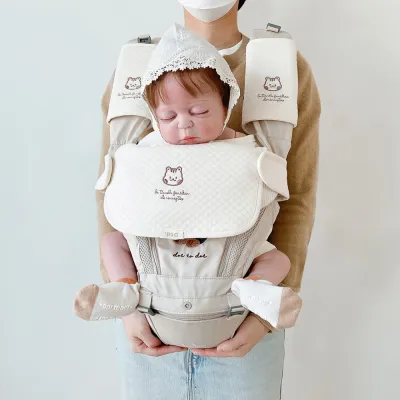
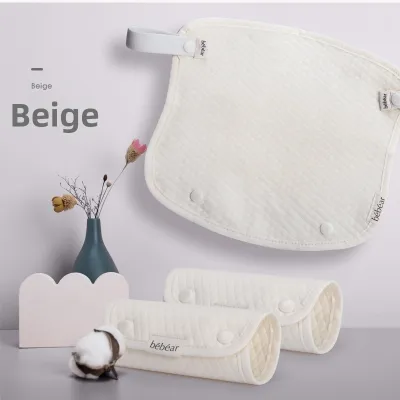
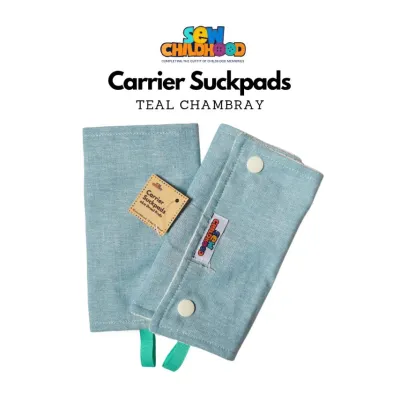
Snap-on shoulder strap covers, also known as suck pads or teething pads, are rectangular fabric wraps designed to fold around the carrier’s padded shoulder straps. They typically secure with high-quality, durable snap buttons. Because babies naturally turn their heads to the side when resting or sleeping in a carrier, they often place their mouths directly on the shoulder straps, using them as a soothing chewing surface during teething phases.
Many high-quality snap-on covers feature a reversible, multi-layer construction. They often sandwich an inner absorbent layer, such as cotton flannel or a thin waterproof TPU membrane, between two outer layers of soft knit cotton. This multi-layer design ensures that even heavy drool is absorbed and contained within the pad, preventing it from soaking through to the carrier strap beneath.
While snap-on covers are highly effective at protecting the shoulder straps, they have practical limitations. They do not protect the front chest panel of the carrier from saliva when your baby is facing forward or resting their chin directly on the main panel. Additionally, structured carriers vary widely in strap width and thickness. Before purchasing snap-on covers, it is essential to measure your carrier’s shoulder straps to ensure a secure, non-slip fit. If a cover is too loose, it will slide down the strap, failing to protect the chewing zone and potentially creating a bunching hazard near your baby’s face.
Wrap-Around Chest Panel Bibs
Wrap-around chest panel bibs are wider, specially shaped fabric covers designed to attach directly to the top edge of the carrier’s main body panel. Many modern structured carriers feature built-in buttons, loops, or toggles specifically designed to hold these proprietary bib attachments, though universal options are also available. These bibs are ideal for heavy droolers, as they prevent moisture from soaking into the core fabric of the carrier’s central panel.
Beyond protecting the carrier fabric, a chest panel bib can also provide a much softer resting surface for your baby’s face. In some structured carriers, the top edge of the panel can be relatively stiff or abrasive against a baby’s delicate skin. A padded, cotton chest bib adds a layer of cushioned comfort, significantly reducing friction on your baby’s forehead and cheeks when they fall asleep during a walk.
When selecting and installing a chest panel bib, safety and proper positioning are paramount. You must verify that the bib attaches securely and lies completely flat against the carrier panel. It must not bunch up, slide upward, or fold over your baby’s face. Ensure that the attachment mechanism does not press against your baby’s airway or restrict their natural neck movement, especially when they fall asleep. If the bib appears to ride up or restrict your baby’s breathing space, stop using it immediately and consult the carrier’s manufacturer instructions.
Best Drooling Pad Styles for Stretchy and Woven Wraps
Stretchy and woven wraps offer a snug, custom fit by wrapping long sheets of fabric around the parent and baby. Because wraps lack structured shoulder straps, buckles, or rigid panels, traditional snap-on teething pads cannot be attached. Protecting a wrap from drool requires alternative strategies that focus on the baby’s clothing and personal wear.
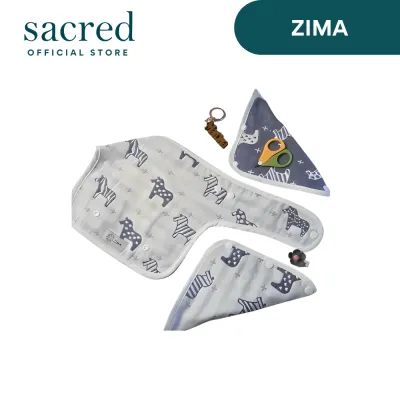
Absorbent Bandana Bibs
Since you cannot attach a pad to the wrap itself, the most practical solution is to have your baby wear a standalone, multi-layer bandana bib. As your baby moves with the wrap, the bandana bib stays securely positioned around their neck and chest, catching saliva at the source before it can drip onto the wrap fabric or your clothing.
When choosing bandana bibs for babywearing, look for designs with a highly absorbent core, such as bamboo or cotton fleece, paired with a soft, dry-touch top layer like organic cotton. Because the bib is worn directly against your baby’s skin, it is critical to monitor their comfort closely. In hot and humid weather, the combination of sweat, drool, and friction in the snug environment of a wrap can quickly lead to intertrigo (a yeast or bacterial infection in the skin folds) or severe heat rash. Caregivers should check the baby’s neck frequently, gently pat the skin dry during carrier transitions, and replace the bib with a clean, dry one as soon as it becomes damp.
Drool-Catching Smocks or Sleeved Bibs
For extended babywearing sessions or intense teething phases, a lightweight, breathable drool-catching smock or sleeved bib worn over your baby’s clothing can provide comprehensive protection. These smocks cover your baby’s entire chest and arms, preventing saliva from transferring to the overlapping fabric layers of the wrap or your own outfit.
To ensure your baby’s safety and comfort, select smocks made from ultra-lightweight, highly breathable fabrics that prevent overheating in tropical temperatures. It is vital to ensure the smock’s neckline fits properly and is not too loose. A loose neckline can allow the fabric to ride up and cover your baby’s nose or mouth while they are secured snugly inside the wrap. Always maintain constant visual supervision of your baby’s airway to ensure their breathing is never compromised.
Best Drooling Pad Styles for Hip Seats
Hip seat carriers feature a firm, padded shelf around the parent’s waist that supports the baby’s weight, often combined with a supportive shoulder harness. This design is excellent for older babies who enjoy looking around, but it presents unique drooling challenges. When a baby sits on a hip seat, particularly in an outward-facing position, their saliva tends to fall straight downward.
Extra-Large Coverage Bibs with Pocket Catchers
In a hip seat carrier, falling drool frequently soils the parent’s shirt or the rigid fabric base of the hip seat itself. Because the internal foam or plastic support insert of a hip seat cannot be easily washed, preventing saliva from soaking into the seat base is crucial for long-term hygiene. An extra-large coverage bib that hangs down over the front of the carrier is the most effective solution.
Some of these specialized bibs feature a soft fabric or food-grade silicone pocket catcher at the bottom to collect falling saliva. If you choose a model with a silicone pocket, verify that it is made from certified food-grade silicone that is completely free from BPA, phthalates, and PVC, as babies may lean forward and attempt to chew directly on the pocket itself.
When using this style, you must perform several safety and comfort checks. Verify that the bib’s length does not interfere with the hip seat’s waistbelt buckles, safety straps, or adjustment mechanisms. Additionally, ensure the bib does not restrict your baby’s natural leg positioning. Your baby should always maintain a healthy, hip-safe “M-position” where their knees are supported higher than their hips. The pocket catcher must not press uncomfortably against your baby’s abdomen or thighs.
Clip-On Teething Pads for Shoulder Harnesses
Many hip seat carriers are equipped with a detachable shoulder harness that allows for hands-free carrying. If your hip seat model features a harness, the straps can often accommodate standard snap-on teething pads.
Before purchasing, guide your selection by verifying the harness strap dimensions in your specific hip seat model’s documentation to ensure compatibility. It is important to clarify that while these clip-on pads protect the shoulder harness straps from being chewed, they do not address drool falling downward toward the seat base. For complete protection, a combination of shoulder strap pads and an extra-large front bib or personal bandana bib is often required.
Key Features and Safety Checks Before Buying
To make an informed and safe purchasing decision, use this practical checklist to evaluate materials, safety features, and maintenance requirements before buying a drooling pad for carrier use.
- Material Verification: Prioritize natural, breathable, and hypoallergenic fibers such as organic cotton, cotton jersey, or bamboo-derived viscose. Bamboo viscose has excellent natural thermal-regulating properties, making it feel cooler to the touch, which is highly beneficial in the warm Philippine climate. Organic cotton is exceptionally durable and can withstand frequent high-temperature washes. Avoid non-breathable synthetic plastics, heavy polyester backings, or scratchy embellishments that trap heat and sweat, which can quickly lead to skin irritation or prickly heat.
- Attachment Safety: Carefully inspect the attachment mechanisms of any drooling pad. Avoid pads with long ties, loose ribbons, or small, weakly attached decorative parts (such as plastic beads, tassels, or loose buttons) that could detach and pose a choking or strangulation hazard. Snap buttons should be heavy-duty, secure, rust-proof (especially important in humid coastal areas), and flat to prevent them from pressing uncomfortably against your baby's skin. Avoid hook-and-loop fasteners (Velcro) near your baby's face, as they can scratch delicate skin and snag the carrier's fabric during washing.
- Care and Maintenance: Drooling pads require frequent washing to maintain proper hygiene. Verify that the pads are machine washable and can withstand regular laundering. Because the high humidity in the Philippines can prolong air-drying times, it is highly practical to maintain a daily rotation of at least three to four sets of pads. This ensures you always have a clean, dry set available while others are in the wash.
- Limitations and Carrier Care: Remember that while drooling pads provide an excellent protective barrier, they do not replace proper carrier maintenance. If heavy saliva bypasses the pad and saturates the carrier's structural fabric, the carrier must be spot-cleaned and air-dried thoroughly in a well-ventilated area out of direct, harsh sunlight (which can fade and weaken fabric fibers). Storing a damp carrier in a closed closet or bag can lead to mold, mildew, and fabric degradation, compromising its safety. Always consult your carrier's manufacturer guidelines for specific cleaning instructions.
Frequently Asked Questions (FAQ)
Can I use a regular baby bib with a structured carrier?
While using a standard baby bib is a tempting and cost-effective option, regular bibs have significant practical limitations when used with baby carriers. Standard bibs are designed for feeding or everyday wear and tend to shift, bunch up, or get pushed aside as your baby moves inside the carrier, leaving the carrier’s fabric exposed to saliva. Furthermore, regular bibs do not cover the carrier’s shoulder straps, which are a primary target for chewing and gnawing. Carrier-specific drooling pads and chest bibs are engineered to attach securely to the carrier’s structure, ensuring they stay in place to provide targeted, reliable protection where it is needed most.
How do I clean drool off a baby carrier if it bypasses the pad?
If saliva penetrates your drooling pad and reaches the carrier fabric, prompt spot cleaning is recommended to prevent stains and odors. Use a clean, damp cloth with a small amount of mild, baby-safe laundry detergent to gently dab the affected area. Avoid using harsh chemicals, bleach, or vigorous scrubbing, which can damage the fabric fibers, weaken safety stitching, or fade colors.
After spot cleaning, allow the carrier to air dry completely in a well-ventilated space out of direct sunlight before using it again. Always consult your specific carrier’s instruction manual or manufacturer guidelines before attempting to machine wash the entire carrier. Some carriers feature internal structural foam, rigid plastic panels, or safety buckles that can be severely damaged by machine agitation or high heat, which may compromise the carrier’s safety and void the manufacturer’s warranty.
Community discussion
Share your experience or ask a question. Comments are reviewed before publication.