
A baby walker can be a delightful tool to support your child’s transitioning mobility, but choosing the right one requires balancing physical safety with developmental milestones. When searching for the ideal walker for baby girl, the priority must always shift from cute designs to structural safety, mechanical reliability, and developmental alignment. In the Philippines, where homes often feature smooth tiled floors and open-plan layouts, selecting a walker requires careful attention to wheel traction, stability, and speed control.
This guide will walk you through the essential differences between sit-in and push walkers, the critical safety features to inspect, and how to choose a model that safely supports your little one’s growth. By understanding what to look for, you can make an informed decision that keeps your baby safe while encouraging her natural physical progression.
Sit-In vs. Push Walkers: Understanding Safety and Development
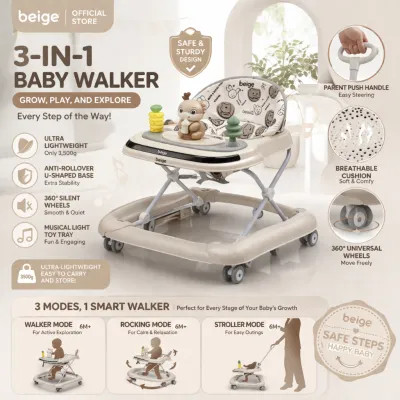
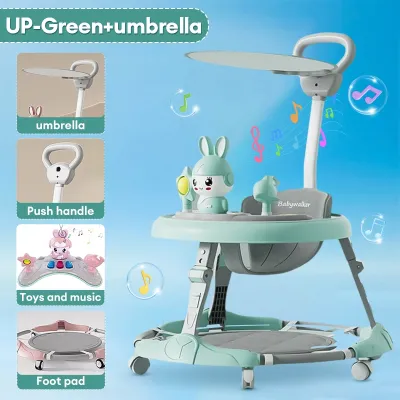
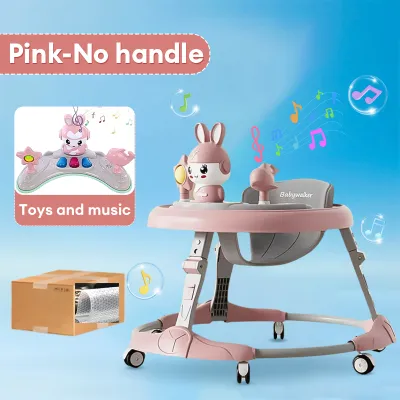
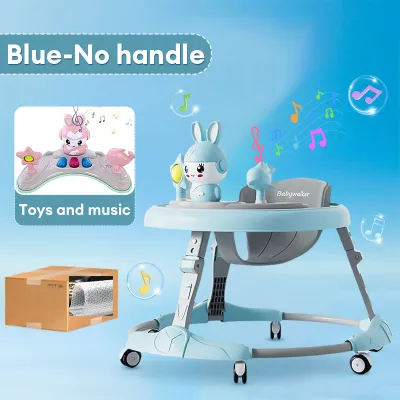
To make the best choice for your child, it is crucial to understand the structural and developmental differences between traditional sit-in walkers and modern push walkers. A sit-in walker features a suspended fabric seat inside a wheeled plastic frame, allowing a baby’s feet to touch the floor while their body weight is fully supported. In contrast, a push walker, also known as an activity walker, is an upright toy with wheels and a handlebar that a baby stands behind and pushes forward while supporting their own weight.
Products mentioned in this guide
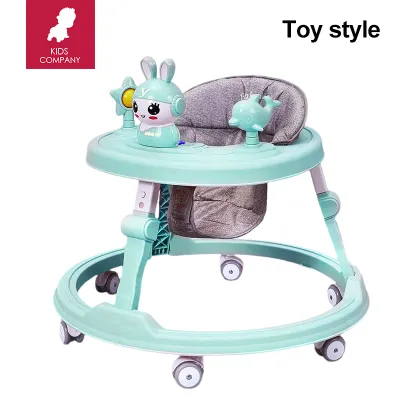
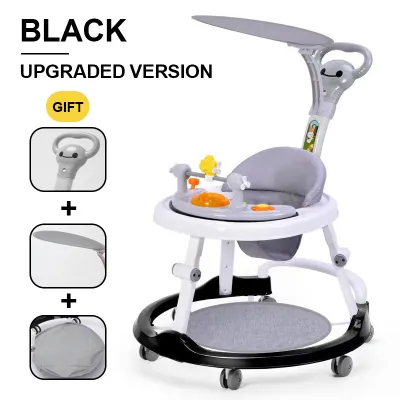
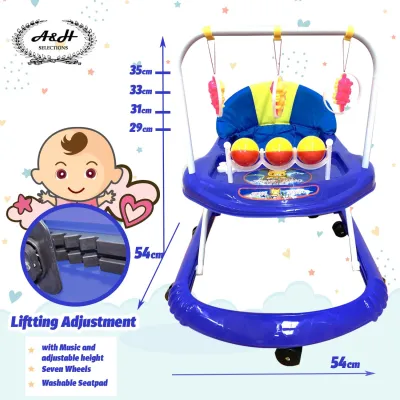
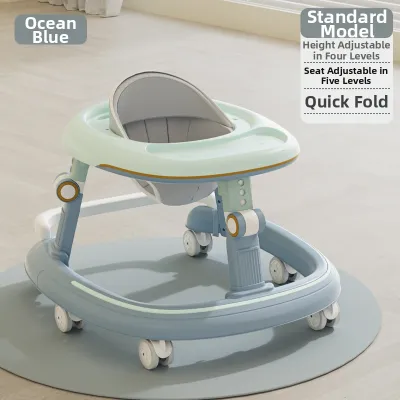
Prices are valid at publication and may change. Please refer to the product page for the latest price.
Pediatricians and child development experts worldwide raise significant safety and developmental concerns regarding traditional sit-in walkers. Because these devices give pre-walking infants rapid mobility, they dramatically increase the risk of tipping over, falling down steps, or reaching hazardous household items like hot liquids, electrical cords, and cleaning supplies. Furthermore, sit-in models can actually delay natural walking milestones. By suspending the baby in an artificial upright position before their muscles are ready, these walkers encourage toe-walking, which can tighten the Achilles tendon and strengthen the wrong leg muscles while neglecting the core and hip stability needed for independent walking.
Push walkers, on the other hand, are widely recommended by developmental specialists because they support natural motor progression. To use a push walker, a baby must actively pull themselves up to a stand, engage their core muscles, and balance their own weight. This process strengthens the back and leg muscles, encourages flat-foot placement, and helps develop the balance and spatial awareness necessary for independent steps.
When choosing the best option for your home, prioritizing safety and developmental support over traditional designs is key. Opting for a push walker, or a highly adjustable hybrid model that converts into a stationary play station, ensures that your baby’s physical development is supported rather than hindered.
Essential Safety and Mechanical Features to Verify
When evaluating any baby walker, parents must look past aesthetics and rigorously inspect its mechanical features. The base of the walker must be wide, heavy, and stable to prevent tipping when your baby leans or pushes against it. Look for wheels equipped with adjustable friction dials or speed control mechanisms, which allow you to increase resistance and prevent the walker from rolling too quickly. This is especially important on smooth, hard floors where slick plastic wheels can easily slide away and cause falls.

Height adjustability is another critical feature to verify, particularly for sit-in or hybrid models. Ensure the walker has multiple height settings so that you can adjust the frame as your baby grows. When positioned in the walker, your baby’s feet must be able to plant flat on the floor with their knees slightly bent. If only their toes can touch the floor, the walker is set too high, which can lead to poor posture and joint strain.
Never rely on visual estimation to determine if a walker is suitable for your child. Always check the manufacturer’s packaging and product documentation for the exact minimum age, maximum weight capacity, and developmental requirements. Most walkers are designed for babies who can sit up unassisted, typically around 6 to 9 months of age, up to a maximum weight limit of 11 to 15 kilograms.
Material safety is paramount, as babies frequently chew on walker handlebars and toy trays. Verify that all plastic components are non-toxic, BPA-free, and feature smooth, rounded edges with no sharp corners or pinch points. Given the hot, humid climate in the Philippines, look for fabric seats that are easily removable, machine-washable, and made of breathable, quick-drying materials to prevent the accumulation of sweat, mold, and bacteria.
If you plan to fold the walker for storage or travel, inspect the folding mechanism to ensure it includes a secure, secondary locking system. This safety lock prevents the frame from accidentally collapsing while your baby is using it or when you are moving the device around your home.
Engaging Themes and Sensory Activities: Choosing a Walker for Baby Girl
When shopping for a walker for baby girl, you will find an array of beautiful aesthetic themes, ranging from soft pastel pinks, lavenders, and floral patterns to neutral woodland animals and bright, high-contrast primary colors. While selecting a design that matches your personal taste is a fun part of the process, remember that high-contrast colors and diverse patterns are highly beneficial for a baby’s early visual tracking and cognitive development.
Interactive activity trays are excellent for keeping your baby engaged while stimulating their fine motor skills and hand-eye coordination. Look for trays that feature age-appropriate sensory toys, such as spinning gears, sliding beads, shape sorters, mirrors, and textured surfaces. These elements encourage your baby to practice their pincer grasp and explore cause-and-effect relationships through play.
To maximize the utility of your purchase, consider models that offer multi-functionality. Many high-quality walkers feature removable toy trays that convert the front area into a clean, flat snack table or a surface for drawing and other toys. This versatility makes the walker useful during different times of the day, extending its practical lifespan.
Auditory safety is another crucial consideration for interactive toys. Many activity trays include buttons that play music, animal sounds, or spoken words. Ensure the walker has a reliable volume control switch or an easily accessible mute button. High-volume toys can damage a baby’s sensitive hearing if held too close to their face, and adjustable volume settings are essential for keeping a peaceful home environment.
Matching the Walker to Your Baby’s Readiness and Stage
Before introducing your baby to a walker, you must verify that they have reached the necessary physical milestones. Your child should be able to sit upright completely unassisted with strong, steady head and neck control. For push walkers, they should be actively pulling themselves up to a standing position using furniture and showing a keen interest in cruising or taking assisted steps.
Placing a baby in a walker before they have developed adequate core, back, and neck strength can be highly counterproductive and unsafe. If your baby slumps forward, tilts to the side, or cannot support their head steadily, they are not yet ready for a walker. Forcing early use can put undue stress on their developing spine and joints.
Caregiver supervision must be constant and active whenever a baby is in or near a walker. Walkers should only be used in short, supervised bursts of 15 to 20 minutes per day. This ensures that your baby still receives plenty of unstructured floor time, tummy time, and crawling practice, which are vital for building the shoulder, back, and core strength required for independent walking.
It is equally important to know when to retire the walker. Once your baby begins taking independent steps without holding onto the walker, transition away from the device entirely. Continued reliance on a walker at this stage can interfere with their natural balance, gait development, and confidence. Encourage them to explore walking freely on flat, safe, and clear surfaces.
Buying Baby Walkers in the Philippines: Safe Channels and Checks
To ensure you are purchasing a genuine, safe, and high-quality product, always buy from official brand stores, authorized physical baby boutiques in major shopping centers, or verified flagship stores on reputable e-commerce platforms. Avoid buying from unverified third-party sellers, discount marketplaces, or secondhand listings where counterfeit, damaged, or non-compliant baby gear is common.
Be cautious of walkers sold at unusually low prices, such as under ₱1,000 for complex, multi-functional models. Extremely low prices often indicate the use of cheap, brittle plastics that can easily crack under pressure, creating sharp edges or choking hazards. Watch out for missing safety labels, poor-quality packaging, or product listings that lack clear manufacturer or local distributor contact details.
When inspecting the packaging or product manual, look for recognized international safety certification marks, such as ASTM (American Society for Testing and Materials) or EN (European Standards) certifications. In the local market, you can also look for official quality clearance marks. These certifications indicate that the product has undergone rigorous mechanical, physical, and chemical safety testing.
Finally, verify the retailer’s return policy and ask about local warranty coverage before making your purchase. Reliable brands often provide warranties for manufacturing defects and offer replacement parts, such as spare wheels, rubber friction pads, or replacement fabric seats. This is particularly valuable in the Philippines, where daily wear on tiled floors can wear out wheel treads over time, making the availability of spare parts essential for long-term safety.
Frequently Asked Questions (FAQ)
Are baby walkers safe for smooth tiled floors common in Philippine homes?
Smooth tiled floors can cause push walkers to slide or roll forward too quickly, which increases the risk of slips and falls. To prevent this, look for push walkers equipped with adjustable wheel resistance dials or rubberized traction strips that grip smooth surfaces. Additionally, placing the walker on a large, flat foam play mat or a low-pile rug can provide the necessary friction to keep your baby safe and in control.
At what age should a baby girl start using a push walker?
There is no single chronological age that fits every baby, as physical development varies widely. Most babies are developmentally ready to explore a push walker between 9 and 12 months, once they are actively pulling themselves up to stand and cruising along furniture. Always consult the specific manufacturer’s manual to verify the minimum age, weight, and developmental requirements before use.
Can a traditional sit-in walker be converted into a stationary play table?
Yes, many modern sit-in walkers are designed with multi-functionality in mind and can be converted into stationary activity centers. These models often feature lockable wheels, fold-out stabilizing legs, or removable seat inserts that transform the frame into a stationary play table. Utilizing these features allows your baby to enjoy the sensory toys and interactive trays safely without the mobility risks associated with rolling.
Community discussion
Share your experience or ask a question. Comments are reviewed before publication.