
When your baby girl reaches the 6-to-12-month mark, her physical development accelerates rapidly. This is the stage of sitting up, pulling to stand, and eventually taking those tentative first steps. To support this exciting transition, choosing the right gear is essential. If you are searching for a high-quality walker baby girl 6 12 months model, the most crucial decision you will make is selecting a design that prioritizes safety, physical development, and engaging play.
In the Philippines, home environments present unique considerations for early walking gear. Many local households feature smooth ceramic tile, polished marble, or glossy hardwood floors. While these surfaces are easy to clean in a tropical climate, they offer very little traction, making wheel speed control a vital safety feature. Additionally, the high humidity levels in the region mean that the materials you choose—whether durable plastics or treated wood—must be resilient and easy to sanitize. This guide breaks down how to select the safest walking aids for your baby girl, highlights the top models available on local e-commerce platforms, and outlines critical safety practices to protect your little one during play.
How to Choose a Safe Baby Walker for 6-12 Month Olds
Many parents naturally picture the classic sit-in walker when they think of baby gear. However, pediatric experts and safety advocates strongly advise against traditional sit-in walkers. These models suspend the baby in a fabric seat, allowing her feet to touch the ground at an unnatural angle. This often leads to “toe-walking,” which can tighten the Achilles tendons and alter natural gait development. Furthermore, sit-in walkers give babies artificial mobility before their muscles are strong enough to support their weight, allowing them to move at high speeds. This dramatically increases the risk of rolling down steps, tipping over on uneven thresholds, or reaching dangerous items like hot liquids, electrical cords, or household chemicals.
Products mentioned in this guide
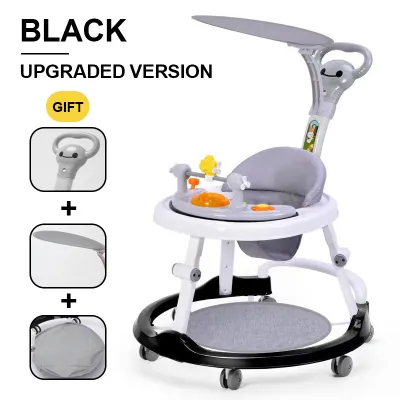
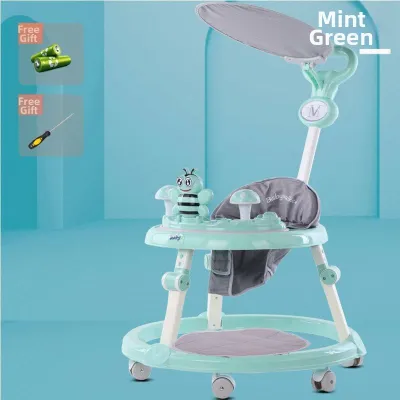
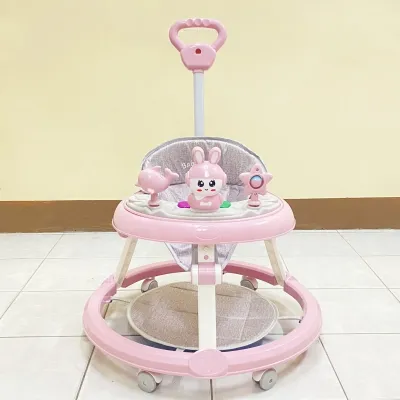
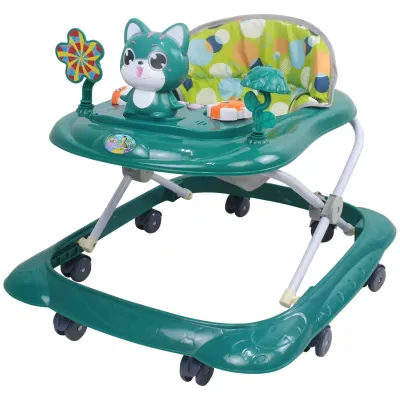
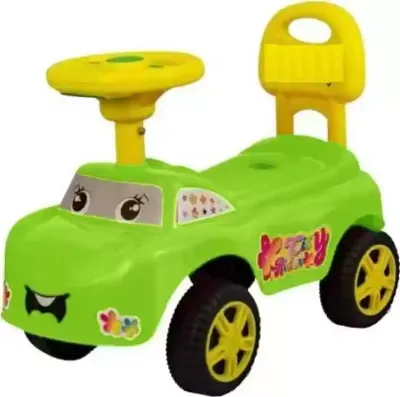
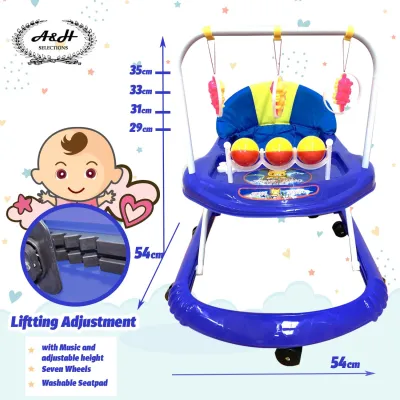
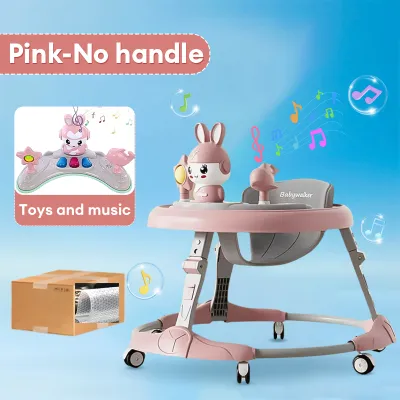
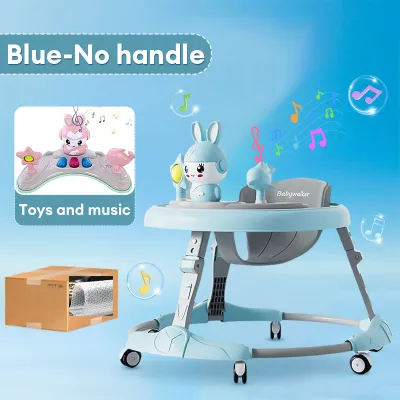
Prices are valid at publication and may change. Please refer to the product page for the latest price.
In contrast, push walkers (also known as walk-behind toys) require the baby to stand upright and actively push the toy forward. This design supports natural walking mechanics. The baby must engage her core, balance her weight, and use her entire foot to step forward. Because the baby is not suspended, she can sit down naturally whenever she gets tired, preventing muscle fatigue and encouraging self-regulation. Push walkers allow infants to build the actual strength and balance needed for independent walking.
When evaluating push walkers, several safety features require close inspection. First, look for a wide, heavy wheelbase. A wide base lowers the center of gravity, preventing the walker from tipping over when a baby pulls herself up using the handle. Second, check for adjustable wheel speed control. High-quality push walkers feature tension screws or dial locks on the wheels, allowing parents to increase resistance. This slows down the wheels so the walker does not slide away on smooth tile floors. Third, ensure the wheels are equipped with rubberized traction strips to provide essential grip on polished surfaces. Finally, verify that the walker contains no small detachable parts that could pose a choking hazard.
Before introducing any walking aid, assess your baby’s physical readiness. Generally, babies should be able to sit up completely unassisted and show signs of pulling themselves up to a standing position. For a 6-month-old who is still mastering sitting, an activity center that sits flat on the floor is ideal. As she approaches 9 to 12 months and begins to stand, the walker can be transitioned into its push-along mode. Always consult your pediatrician if you have questions about your baby’s physical development or readiness for walking toys.
Manufacturer weight and height limits are not mere suggestions; they are critical safety thresholds. Exceeding these limits compromises the structural integrity of the walker, making it prone to bending, breaking, or tipping. Always consult the product manual and inspect the manufacturer’s labels before purchase to ensure the model is appropriate for your baby’s current size.
Top Push Walkers: Finding the Ideal Walker Baby Girl 6 12 Months Options
When searching for a walker baby girl 6 12 months model, the goal is to find a balance between structural stability and engaging sensory play. The best options feature interactive elements—such as musical buttons, shape sorters, and colorful gears—that capture an infant’s attention while keeping her safe. Since product availability and pricing fluctuate on local e-commerce platforms, we recommend checking verified seller reviews, official brand flagship stores, and product specifications before making your final purchase. Below are four distinct types of walkers tailored to different developmental needs and home setups.

Best Overall Push Walker for Early Steps
For babies who are actively trying to stand and take their first steps, a dedicated push walker with customizable speed settings is the premier choice. This style of walker is specifically engineered to handle the transition from standing to walking. It provides a sturdy frame that supports your baby’s weight as she pushes forward, helping her build confidence in her balance.
The standout feature of this category is the adjustable wheel resistance system. By tightening the rear wheel tension, you can ensure the walker moves at a slow, controlled pace. This is incredibly important for homes with polished tile or smooth terrazzo floors, as it prevents the toy from rolling forward too quickly and causing the baby to slip. Additionally, many of these models feature a removable front activity panel. This allows a 6-month-old to play with the interactive toys on the floor, and once she reaches 9 to 12 months, the panel can be locked back onto the frame to serve as a walking motivator.
However, parents should note that these models typically require initial assembly. It is critical to follow the manufacturer’s instructions precisely to ensure all joints are secure. Furthermore, pay close attention to the handle height; if the handle is too low, your baby may slouch forward, which can negatively affect her developing posture. Ensure the handle height allows her to stand relatively upright while pushing.
Best Activity Walker for Sitting and Standing Play
If your baby girl is closer to the 6-month mark and is not yet ready to stand, a multi-functional 2-in-1 activity center that converts into a push walker offers excellent long-term value. This design focuses heavily on early cognitive and fine motor skill development before transitioning into a physical walking aid.
During the early months, the walker remains in a locked, stationary position. The front panel serves as a rich sensory hub, complete with flashing lights, cheerful melodies, spinning gears, and textured surfaces. These elements encourage your baby to reach, grasp, and press, building hand-eye coordination. Once your baby reaches the cruising stage, the base can be unlocked, transforming the stationary toy into a supportive push walker. This gradual transition helps your baby feel familiar and comfortable with the toy.
The primary advantage of this type of walker is its heavier, robust frame, which provides superior stability and prevents tipping. The trade-off, however, is its bulkiness. The wider footprint and heavier materials make it more challenging to lift and transport between rooms or pack up for family trips. It is best suited for spacious living areas where it can remain assembled.
Best Budget-Friendly Walker with Engaging Toys
For families seeking an affordable option that still provides essential safety and entertainment, lightweight plastic push walkers are widely available on local online marketplaces. These models are designed to be highly accessible while offering vibrant visual appeal to keep your baby engaged.
These budget-friendly options typically feature bright pastel colors, cute animal themes, and simple mechanical toys like spinning beads, page flippers, and clicking dials. Because they are made of lightweight molded plastic, they are easy to lift, clean, and store. They are highly portable, making them convenient for families who travel frequently or visit relatives.
Despite their convenience, budget models require extra vigilance from parents. Upon delivery, you must carefully inspect the plastic edges for any sharp burrs, check the security of the battery compartment, and test the sturdiness of the handle. Because these walkers are lightweight, they lack the heavy counterweight of premium models. They are best used on completely flat, level surfaces, as they may tip backward if a baby leans her entire body weight heavily onto the handle.
Best Wooden Push Walker for Stability
For parents who prefer eco-friendly materials and a classic aesthetic, a wooden push walker is an exceptional choice. These walkers are crafted from durable wood and feature a low center of gravity, making them incredibly stable and resistant to tipping.
The heavy wooden construction provides a natural counterweight that makes it nearly impossible for a baby to flip the walker backward when pulling herself up. The front panel often features beautifully painted wooden blocks, bead mazes, or xylophones, which promote open-ended, imaginative play and fine motor development without the need for batteries or electronic screens. This classic design fits beautifully into modern home decors.
The main limitation of wooden walkers is the wheel traction. Smooth wooden wheels can easily slide on polished ceramic tiles. To prevent this, look for wooden models that feature rubberized traction rims on the wheels, or restrict the walker’s use to large play mats, foam tiles, or low-pile rugs to ensure your baby has adequate grip. Additionally, in the humid Philippine climate, ensure the wood is wiped dry after cleaning to prevent moisture damage.
Quick Comparison of Recommended Baby Walkers
To help you decide which model best fits your home layout and your baby’s current developmental stage, we have summarized the key features of the four recommended walker types below.
| Walker Type | Best For | Key Safety Feature | Interactive Elements | Price Tier |
|---|---|---|---|---|
| Push Walker | Early Steps & Posture | Adjustable Wheel Resistance | Removable Activity Panel | Mid-range |
| 2-in-1 Activity Center | Sitting & Standing Play | Locking Base & Heavy Frame | Lights, Music, & Gears | Premium |
| Lightweight Plastic | Budget-Conscious Families | Wide Wheelbase | Animal Themes & Buttons | Budget |
| Wooden Walker | Maximum Stability | Heavy Base & Low Center of Gravity | Wooden Blocks & Bead Maze | Mid-range to Premium |
Safety Rules and Supervision Tips for Walker Use
No matter how safe or stable a walking toy is, it can never replace active adult supervision. “Supervision” means having a designated caregiver within arm’s reach at all times. A baby using a walker can gain speed quickly, making immediate intervention necessary if they head toward an obstacle. Never leave your baby unattended while she is using her walker.
Before letting your baby use a push walker, you must thoroughly prep the play area. This is especially important in Philippine households, where open layouts may lead directly to wet bathroom floors, kitchen areas, or outdoor steps. Keep all doors to bathrooms and kitchens firmly closed. Block access to stairs, balconies, and split-level steps using secure safety gates. Remove loose area rugs, electrical cords, and low-lying clutter that could catch the walker’s wheels and cause a fall. Ensure there are no hot liquids, heavy objects, or tablecloths within the baby’s elevated reach.
Regularly check and adjust the wheel tension based on your baby’s progress. For a beginner, tighten the tension to its maximum setting so the walker acts as a stable support rather than a fast-moving cart. As your baby’s leg strength and balance improve, you can gradually loosen the resistance to allow for smoother movement. Regularly inspect the wheels to ensure no hair, dust, or debris has wrapped around the axles, which can cause uneven rolling.
It is time to retire the push walker when your baby displays specific, observable milestones. Stop using the walker immediately if your baby can walk confidently and independently across the room without holding onto any support. You should also discontinue use if she attempts to climb onto or over the walker’s frame, which poses a severe fall hazard, or if she exceeds the manufacturer’s maximum weight or height limits specified in the product documentation. If you notice any signs of structural wear, such as cracked plastic, loose screws, or splintering wood, stop using the product immediately and consult the manufacturer.
Frequently Asked Questions (FAQ)
Are traditional sit-in baby walkers safe for 6-month-olds?
No, traditional sit-in baby walkers are not considered safe. Major global and local pediatric organizations strongly advise against their use. These walkers allow infants to move at dangerous speeds and reach hazardous heights, leading to high rates of head injuries, falls down stairs, and finger pinch accidents. Furthermore, they can delay natural muscle development by encouraging babies to stand on their tiptoes rather than flat on their feet. Modern push walkers are a much safer alternative that supports natural physical milestones.
When should my baby stop using a push walker?
Your baby should stop using a push walker once she can walk independently without any assistance or balance support. Additionally, you must discontinue use immediately if she attempts to climb on top of the walker, or if her height and weight exceed the limits specified by the manufacturer. Regularly inspect the handle height to ensure she is not slouching or overextending her back while pushing.
Do baby walkers help infants learn to walk faster?
No, baby walkers do not help infants learn to walk faster. In fact, studies show that overusing walkers—especially traditional sit-in models—can actually delay independent walking. Walkers bypass the essential core, hip, and pelvic stabilization that babies develop naturally through floor play. The most effective way to help your baby build the strength and balance required for walking is through unrestricted floor time, crawling, pulling herself up on sturdy furniture, and cruising.
Community discussion
Share your experience or ask a question. Comments are reviewed before publication.