
If your baby is just beginning to pull themselves up to stand, choosing the right developmental gear is a critical decision. The ideal choice for this milestone is a push-behind walker, also widely known as a push walker or walk-behind toy. Unlike traditional seated models, push-behind walkers provide the necessary physical support for your baby to practice standing and walking naturally.
Traditional sit-in baby walkers are strongly discouraged by pediatricians and child safety advocates due to severe safety risks and potential developmental delays. A push walker, by contrast, requires your baby to actively bear their own weight, engage their core muscles, and find their natural center of gravity. This active participation promotes healthy physical development and builds the confidence your child needs to take their very first independent steps.
Why Push-Behind Walkers Are Best for Early Standers
When a baby is learning to stand, their body is undergoing a complex neurological and muscular transition. Standing independently requires more than just leg strength; it demands the coordination of core abdominal muscles, pelvic stability, and rapid balance adjustments. Push-behind walkers are uniquely suited for this developmental stage because they require the baby to be an active participant in their own movement.
Products mentioned in this guide
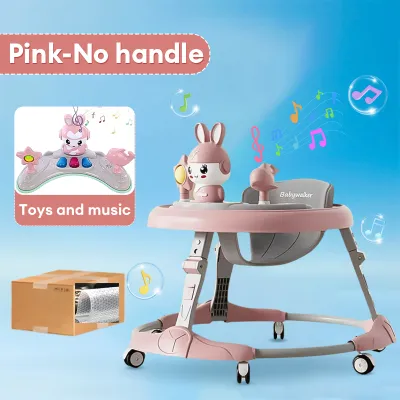
![[Easy To Walke] Bobbi Baby Walker walker for baby boy baby walker for girl SuitableFor 6-18 Months Infant Foldable walker for baby with Wheel Toddler Walk Learning Anti Rollove walker baby girl walker for baby With Music and Handle](https://img.lazcdn.com/g/p/e556e95d1e84b3034168d74ed603b3ce.jpg_400x400q80.jpg_.webp)
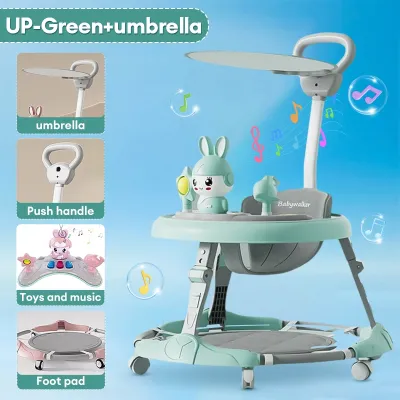
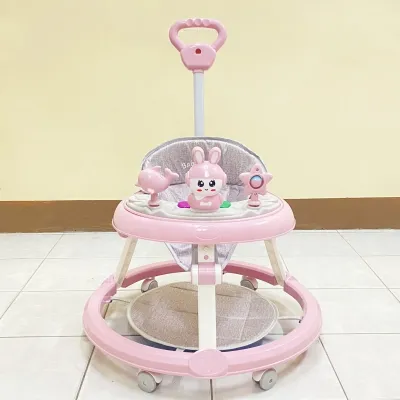
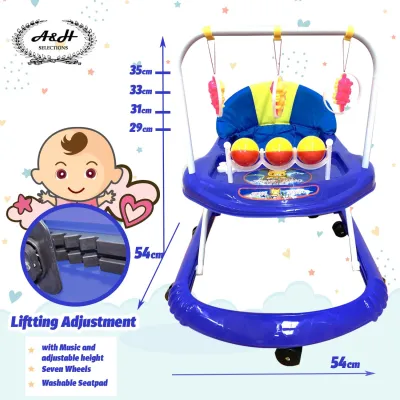
Prices are valid at publication and may change. Please refer to the product page for the latest price.
When using a push walker, your baby must actively pull themselves up into a standing position using the handle. This action strengthens the upper body, back, and thighs. Once upright, the baby supports 100 percent of their own body weight through their feet. In the Philippines, where homes often feature smooth tiled, polished concrete, or hardwood floors, practicing standing barefoot on these surfaces provides invaluable sensory feedback. The soles of the feet grip the floor directly, which helps to develop the arches of the feet and strengthens the ankles.
Furthermore, push walkers allow babies to control their own pace. If they feel unstable, they can simply sit down or let go, mimicking the natural “cruising” behavior where a baby moves sideways while holding onto a sofa or coffee table. This freedom of movement teaches the baby how to shift their weight from one foot to the other—a fundamental skill required for independent walking. By actively steering and pushing the toy forward, your baby develops spatial awareness and a realistic sense of speed and momentum, which passive baby gear simply cannot provide.
The Risks of Traditional Sit-In Walkers
Traditional sit-in walkers, which feature a suspended fabric seat inside a wheeled metal or plastic frame, present significant safety hazards. Because these devices allow babies to move at speeds far exceeding their natural physical capabilities, they frequently lead to serious accidents. A baby in a sit-in walker can travel across a room in seconds, making it incredibly difficult for a caregiver to intervene before a mishap occurs.

The most common and severe accidents associated with sit-in walkers involve falls down stairs, tipping over on uneven floor thresholds, or rolling off low steps. Additionally, the elevated height and mobility provided by a sit-in walker allow babies to reach hazards that would otherwise be far out of their grasp. This includes pulling down hot liquids from dining tables, reaching electrical cords, grabbing heavy objects from countertops, or accessing household cleaning chemicals.
Beyond physical safety hazards, sit-in walkers can actively hinder motor development. When suspended in a seat, a baby’s weight is supported by the crotch strap rather than their own legs and hips. This often leads to “toe-walking,” where the baby pushes off with their tiptoes rather than planting their feet flat on the ground. This unnatural posture can tighten the Achilles tendons and distort normal hip alignment. Because the device does the work of keeping the baby upright, the child does not develop the core strength, balance, or protective reflexes needed to fall safely. Consequently, many major pediatric associations worldwide strongly advise parents against using traditional sit-in walkers. If you have concerns about your baby’s motor development or posture, always consult a qualified pediatrician or physical therapist.
Must-Have Features for a Safe and Stable Walker
Selecting a high-quality push walker requires careful evaluation of its design, materials, and safety features. Before purchasing any model from an online marketplace or local baby boutique, check the manufacturer’s age, weight, and height specifications to ensure it matches your baby’s current physical stage.
Speed Control and Adjustable Resistance
A common hazard with basic push walkers is that they can roll away too quickly, causing a baby who is still learning to balance to fall forward. Look for models equipped with adjustable wheel resistance or speed control dials. These mechanisms allow you to tighten the wheels so they turn slowly, providing a stable resistance that matches your baby’s slow, tentative steps. As your baby’s balance improves, you can gradually loosen the resistance according to the manufacturer’s instructions.
Base Stability and Low Center of Gravity
The walker must have a wide, heavy base and a low center of gravity. When your baby is learning to stand, they will naturally use the walker’s handle to pull themselves up from a sitting position. If the base is too light or narrow, the walker will tip backward onto the baby. A stable walker should remain firmly planted on the ground even when vertical force is applied to the handle.
Ergonomic and Non-Slip Handle
The handle should be sturdy, easy to grip, and positioned at an appropriate height. Ideally, the handle height should allow your baby to stand upright with a slight bend in their elbows. If the handle is too low, your baby will hunch forward, putting unnatural strain on their shoulders and lower back. If it is too high, they will struggle to push the toy effectively. Non-slip materials, such as textured plastic or smooth, unfinished wood, are essential, particularly in humid tropical climates where little hands can easily become sweaty.
Build Quality and Material Safety
Inspect the walker for smooth, rounded edges and ensure there are no small, detachable parts that could pose a choking hazard. If the walker features electronic components, verify that the battery compartment is securely locked with a screw. In the Philippines, the high humidity can affect different materials over time. If choosing wood, ensure it has a non-toxic, moisture-resistant finish to prevent warping or mold. If choosing plastic, make sure it is durable, BPA-free, and kept out of direct sunlight to prevent the material from becoming brittle.
Wheel Locks and Braking Mechanisms
For babies who are still in the very early stages of standing, wheel locks are incredibly useful. Locking the wheels completely transforms the walker into a stationary play station. This allows your baby to pull themselves up and play with any front-panel activities without the risk of the walker rolling unexpectedly.
Recommended Walker Types for Your Baby's Current Stage
Push walkers come in several distinct styles, each offering unique benefits and trade-offs. Understanding these categories will help you select the best fit for your home environment and your baby’s personality.
Activity Push Walkers with Interactive Panels
Activity push walkers feature a vibrant front panel loaded with buttons, gears, lights, sounds, and mechanical toys. These walkers are designed to engage your baby’s fine motor skills and cognitive development while they are seated on the floor, as well as encouraging them to pull up to a standing position to continue playing.
The primary benefit of this style is its dual functionality. It serves as an entertaining sensory toy long before your baby is ready to take steps, and the interactive features provide a strong incentive for your baby to stand up and explore. This makes it highly cost-effective and engaging.
However, parents must carefully evaluate the design of these walkers. Ensure that the interactive panel does not obstruct your baby’s view of their feet or the floor directly in front of them, as seeing their own feet is crucial for developing spatial awareness and balance. Additionally, because these models are often made of lightweight plastic, you must verify that the base is sufficiently weighted or that the wheels can be locked to prevent the walker from slipping away when your baby leans heavily against the front panel.
Sturdy Wooden Push Carts
Classic wooden push carts offer a minimalist, heavy-duty alternative to plastic activity walkers. These carts typically feature a simple wooden frame with a flat tray or basket in the center, designed to hold blocks, stuffed animals, or other toys.
The greatest advantage of a wooden push cart is its natural weight and low center of gravity. Because wood is inherently heavier than plastic, these carts provide exceptional stability, making them highly resistant to tipping when your baby pulls themselves up. The added weight also naturally slows down the rolling speed, providing a steady, secure anchor for babies who are still building confidence in their balance. The open tray encourages creative, open-ended play, as toddlers love to load, transport, and unload their favorite belongings.
The main trade-off is that wooden carts lack electronic entertainment, which may make them less immediately distracting for some babies. They are also heavier to steer and turn, meaning they are generally best suited for babies who have already mastered basic pulling-up skills and need a solid, reliable support to practice walking straight lines across the room.
Convertible Sit-to-Stand Walkers
Convertible sit-to-stand walkers are multi-stage developmental toys designed to adapt as your baby grows. These devices often start as a low-to-the-ground, seated activity center or a detachable floor-play panel, eventually transforming into a sturdy push-behind walker when your baby reaches the appropriate milestone.
The obvious benefit of convertible models is their extended usability and cost-effectiveness. Parents can expect to get months of continuous use out of a single purchase, as the toy transitions seamlessly from the sitting stage (around 6 months) to the standing and walking stages (9 to 12 months and beyond). This versatility is highly practical for families looking to minimize household clutter.
To ensure safety, parents must strictly adhere to the manufacturer’s weight and developmental limits for each configuration. Before allowing your baby to use the toy as a push walker, verify that all conversion locks and safety latches are fully engaged. You must also completely remove any seat attachments or fabric slings used in the seated configuration to eliminate any tripping hazards or obstructions that could interfere with your baby’s stride.
Setting Up a Safe Walking Environment at Home
While selecting the right walker is important, creating a safe physical space for your baby to practice is even more critical. No piece of baby gear can ever replace active, arms-reach adult supervision. In busy Filipino households, where multiple family members, grandparents, or helpers may share caregiving duties, it is essential that everyone is educated on walker safety protocols.
Start by thoroughly babyproofing the designated walking area. Clear the floor of any small objects, loose rugs, toys, and electrical cords that could catch on the walker’s wheels and cause a sudden fall. Since push walkers can pick up speed on smooth surfaces, ensure that all access points to stairs, steps, or balconies are secured with hardware-mounted safety gates. Keep doors to high-risk areas, such as bathrooms, kitchens, and laundry rooms, firmly locked at all times.
When your baby is using the walker, always remain within arm’s reach. A baby learning to stand can lose their balance or tip the walker in an instant, and you must be close enough to catch them. Limit walker sessions to short, supervised intervals of 15 to 20 minutes. Prolonged use can lead to physical fatigue, which increases the risk of falls and can cause your baby to rely on the walker’s support rather than developing their own independent balance.
Pay close attention to your baby’s behavior and the condition of the toy. If your baby attempts to climb onto the frame of the walker, uses it to climb onto other furniture, or attempts to reach high, unsafe areas, stop using the walker immediately and store it out of reach. Regularly inspect the walker for loose screws, cracked plastic, or worn wheel mechanisms, and discontinue use if there are any signs of structural instability.
Frequently Asked Questions (FAQ)
At what age should a baby start using a push walker?
Readiness for a push walker is determined by physical milestones rather than a strict chronological age. Generally, a baby is ready to use a push walker when they can pull themselves up to a standing position independently and cruise along furniture while holding on for support. This milestone typically occurs between 9 and 12 months of age. If your baby cannot yet stand or support their own weight while holding onto a stable surface, they are not ready for a push walker. Always follow your baby’s unique developmental pace and consult your pediatrician if you have concerns about their motor skill progression.
Can a push walker delay my baby's walking milestones?
Unlike traditional sit-in walkers, push-behind walkers do not typically delay walking milestones when used correctly. Because push walkers require your baby to stand flat-footed, bear their own weight, and actively balance, they support natural motor development. However, excessive reliance on any baby gear can limit the essential floor time your baby needs. To prevent any developmental delays, ensure your baby has plenty of unassisted floor play, which is critical for crawling, sitting, and building the core strength necessary for independent walking.
What should I do if the walker rolls too fast for my baby?
If your baby’s walker rolls too quickly, first check if the wheels feature adjustable speed control dials or tension screws, and tighten them according to the manufacturer’s instructions. If the walker lacks built-in resistance, you can place it on a low-pile carpet or a textured play mat, which naturally increases friction and slows down the rolling speed. Another practical solution is to wrap thick rubber bands or silicone grip bands around the wheels to add traction, ensuring that any modification is secure and does not create a tripping hazard or damage your flooring.
Community discussion
Share your experience or ask a question. Comments are reviewed before publication.