
Deciding between a baby swing and a baby bouncer depends on your nursery’s physical layout, your daily routine, and your baby’s unique comfort preferences. While both items serve to soothe and contain your infant during supervised awake times, they operate on entirely different mechanical principles and occupy distinct footprints in your home. A baby swing offers automated, continuous motion powered by electricity or batteries, making it an excellent stationary soothing station if you have ample floor space. In contrast, a baby bouncer relies on your baby’s natural movements or a gentle manual tap to create a responsive, up-and-down motion, offering unmatched portability for compact living spaces.
Understanding the Core Differences Between Swings and Bouncers
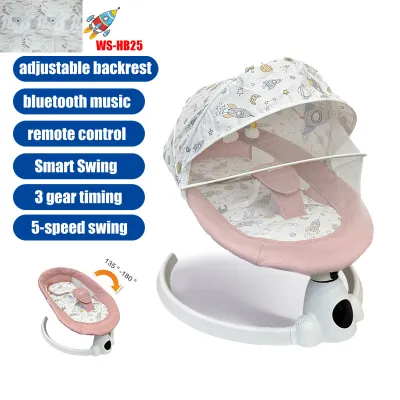
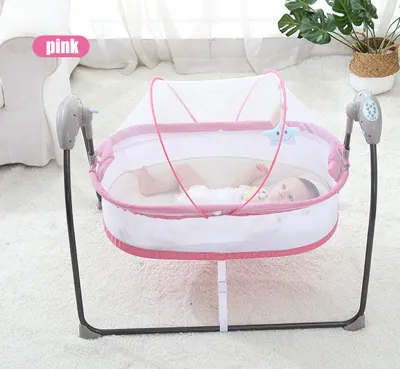
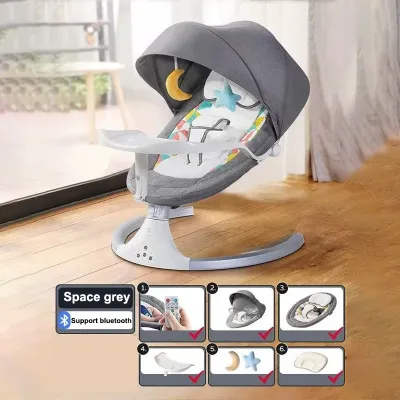
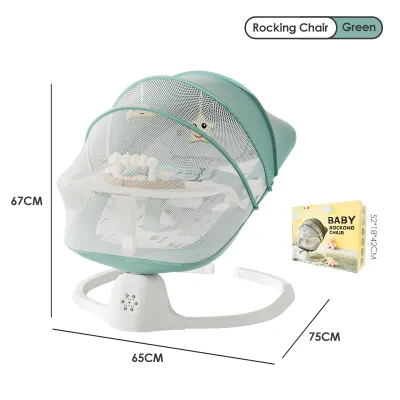
To make an informed decision, you must first understand how these two popular baby gear items function. A baby swing is a motorized unit designed to mimic the rhythmic, swaying motion of a parent’s arms. It requires a continuous power source, either through a direct wall outlet connection or multiple batteries, to drive its internal motor. This motorized design allows the swing to glide back and forth or side-to-side at various pre-set speeds without requiring constant physical intervention. Because of the heavy motor and the wide base needed to keep the unit stable during motion, swings are generally heavy, bulky, and intended to remain in a fixed location within your home.
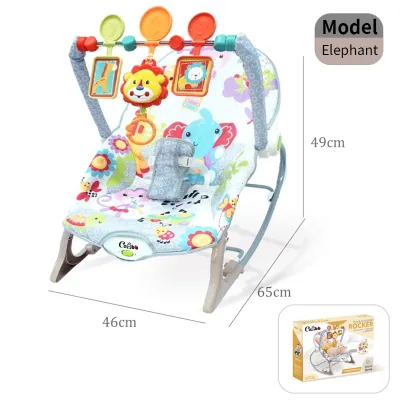
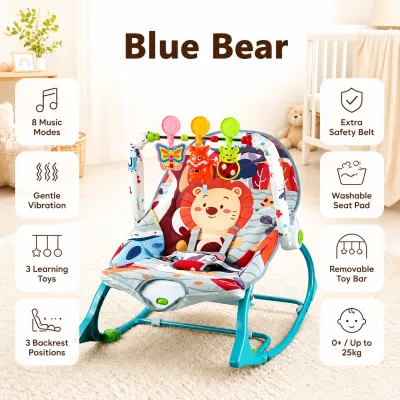
A baby bouncer, on the other hand, is a lightweight, non-motorized seat that responds directly to your baby’s physical movements. When your infant kicks their legs or wiggles their torso, the flexible frame of the bouncer yields, creating a gentle, springy up-and-down motion. You can also manually tap the frame with your hand or foot to initiate the bounce. Because they lack heavy motors and complex gear systems, bouncers are incredibly lightweight and highly portable. Many models are designed to fold completely flat, allowing you to slide them under a crib, store them behind a wardrobe, or pack them into a car trunk for family trips.
Products mentioned in this guide

Prices are valid at publication and may change. Please refer to the product page for the latest price.
Key Factors to Evaluate for Your Nursery Setup
When planning your nursery layout, physical space is often the deciding factor between these two items. A baby swing requires a substantial amount of dedicated floor space. Beyond the physical dimensions of the frame itself, you must account for the swing’s clearance zone—the empty space around the unit required to ensure the seat does not collide with walls, doors, or other furniture during its widest arc of motion. Placing a swing too close to a changing table or a crib can create a hazardous bottleneck in your nursery traffic flow, making it difficult to navigate the room safely in the dark.

Power accessibility is another critical layout consideration for motorized swings. Because relying solely on batteries can quickly become expensive, most parents prefer to plug their swings into a wall outlet. This requires careful cable management to prevent tripping hazards. You must ensure that the power cord is routed safely behind heavy furniture and kept entirely out of reach of curious infants or older siblings. If your nursery layout does not have a safe, out-of-the-way outlet near your desired placement spot, a swing may not be the most practical choice.
In contrast, a baby bouncer integrates seamlessly into almost any nursery configuration, regardless of size. Its compact footprint allows it to sit comfortably in tight corners, between a wardrobe and a nursing chair, or even in a small hallway. In urban homes or compact condominium units where space is at a premium, the ability to easily lift and relocate a bouncer is invaluable. Furthermore, because bouncers do not require power cords, you do not have to worry about outlet proximity or cable hazards, giving you complete freedom to position the seat wherever you need it most.
Matching the Product to Your Baby’s Needs and Development
Your baby’s physical development and personal preferences will ultimately dictate how much use you get out of either product. Every swing and bouncer comes with strict weight and developmental limits specified by the manufacturer. Generally, baby swings are suitable for newborns up to a weight limit of approximately 9 to 11 kilograms, though this varies by model. Bouncers often share similar weight limits for their bouncing mode, though some convertible models can transition into toddler chairs as your child grows. You must always check the product label and user manual to verify these exact limits before placing your baby in the seat.
Regardless of the weight limit, you must stop using both swings and bouncers the moment your baby reaches certain developmental milestones. If your infant attempts to sit up unassisted, roll over, or grasp the sides of the seat to pull themselves up, you must immediately discontinue use. Continuing to use these seats past these milestones poses a severe risk of the unit tipping over or the baby falling out.
Infant preference also plays a massive role in which product will successfully soothe your child. Some babies are highly responsive to the continuous, predictable glide of a motorized swing, which can help calm a fussy infant who craves constant motion. Other babies prefer the responsive, self-regulated movement of a bouncer, where their own kicks generate an immediate physical response. Because you cannot predict your baby’s preferences before they arrive, it is wise to look for models with adjustable recline angles and speed settings to maximize your chances of success.
Safety must always remain your top priority when using any baby seat. Neither a swing nor a bouncer is designed or approved for infant sleep. Both products require active, continuous adult supervision at all times. If your baby falls asleep in a swing or bouncer, you must immediately transfer them to a flat, firm sleep surface, such as a crib or bassinet, to minimize the risk of airway obstruction or positional asphyxiation.
Feature Comparison and Daily Usability
Daily maintenance and cleaning routines are essential factors to consider, especially in warm, humid climates. Babies are prone to diaper leaks, spit-ups, and drool, meaning the seat fabric will require frequent washing. When comparing models, look for seats with easily removable, machine-washable fabric covers. In tropical environments, choosing a seat with breathable mesh panels can help keep your baby cool and prevent heat rashes, while quick-drying synthetic fabrics make the frequent washing cycle much more manageable. The frame of the unit should also feature smooth, non-porous surfaces that can be easily wiped clean with a damp cloth and mild soap.
Operational noise is another factor that impacts daily usability. Motorized swings produce a continuous mechanical hum while operating. While some infants find this low-frequency sound comforting, acting as a form of white noise, others may find it distracting or irritating. If you or your baby are sensitive to noise, you may prefer the silent operation of a manual bouncer. Over time, some bouncer frames may develop minor squeaks, but these can usually be resolved by checking the assembly screws and ensuring the frame is resting on a flat, even surface.
Modern baby gear often comes packed with electronic add-on features, such as pre-programmed lullabies, nature sounds, vibration modes, overhead toy bars, and even Bluetooth connectivity for playing custom audio. While these features can provide extra entertainment, they also add to the overall cost and complexity of the product. Rather than assuming a seat includes these options, you should carefully review the specific product manual to verify what features are built-in and what accessories must be purchased separately.
Decision Framework: Which One Should You Choose?
To finalize your nursery setup, use this conditional framework to determine which option aligns best with your home environment and lifestyle. A baby swing is the ideal choice if you have a spacious nursery with a dedicated, permanent spot for the unit, easy access to a safe wall outlet, and a budget that accommodates a premium, motorized appliance. It is particularly beneficial for parents who need a reliable, hands-free soothing station that can provide continuous motion to calm a highly active or fussy infant.
Conversely, a baby bouncer is the superior choice if you are working with limited floor space, live in a multi-story home, or need a highly portable seat that you can easily carry from room to room. It is also the preferred option for families looking for a budget-friendly, low-maintenance solution that does not rely on electricity or batteries. If you plan to travel frequently or visit relatives, a folding bouncer is incredibly easy to pack and transport.
There are situations where you should delay or entirely skip purchasing either product. If your baby is already approaching the milestone of sitting up unassisted, or if your nursery is too small to accommodate a swing’s clearance zone safely, investing in these items may not be practical. In such cases, a spacious playpen or a padded playmat is a safer and more versatile alternative.
Before making any final purchase, always complete a thorough safety check. Verify that the seat features a robust three-point or five-point safety harness that fits snugly around your baby. Test the stability of the unit’s base on your specific home flooring, ensuring it does not slip or wobble on polished tiles or wooden floors. Finally, always check official consumer safety databases to ensure the specific model and manufacturing batch have no active safety recalls.
Frequently Asked Questions (FAQ)
Can a baby sleep overnight in a swing or bouncer?
No, a baby should never sleep overnight or unsupervised in a swing or bouncer. These products are designed solely for supervised awake time. Because of the semi-reclined angle of the seat, a sleeping infant’s heavy head can easily flop forward onto their chest, potentially compressing their windpipe and causing positional asphyxiation. If your baby falls asleep while in a swing or bouncer, you must immediately transfer them to a flat, firm, and empty sleep surface, such as a crib or bassinet, to ensure their airway remains completely clear.
At what age or weight should my baby stop using these seats?
You must stop using these seats as soon as your baby reaches the maximum weight limit specified on the manufacturer’s label, or when they hit key developmental milestones, whichever comes first. For most standard models, the weight limit is around 9 to 11 kilograms. However, developmental milestones are often the more critical trigger; you must immediately discontinue use the moment your baby attempts to sit up unassisted, roll over, or pull themselves up using the sides of the seat, as these actions can cause the unit to tip over.
Is it safe to move a baby bouncer to different rooms?
Yes, moving a baby bouncer to different rooms is safe, but only if you follow strict safety protocols. You must always remove your baby from the bouncer before lifting or carrying the seat. Never attempt to carry the bouncer with your baby inside, as the fabric or frame could slip, or the harness could fail, leading to a dangerous fall. Once relocated, always place the bouncer on a flat, stable, and level floor surface; never place it on elevated surfaces like tables, countertops, or sofas, where it could easily slide off.
Community discussion
Share your experience or ask a question. Comments are reviewed before publication.