
Choosing between a baby swing and a baby chair is one of the most common decisions you will face when setting up your nursery. While both items offer a secure spot to place your infant, they serve entirely different primary functions. A baby swing is designed to soothe a restless infant through automated, rhythmic motion, mimicking the comforting rock of a caregiver’s arms. A baby chair, on the other hand, provides a stationary, upright seat that is ideal for feeding, interactive play, and keeping your baby engaged with the family.
To make the right choice for your household, you must evaluate your daily routine, the physical layout of your home, and your baby’s unique temperament. Some infants find immediate comfort in the continuous swaying of a motorized swing, while others prefer the gentle, self-regulated bounce of a lightweight chair. Understanding how each option fits into your lifestyle will help you invest in the gear that truly supports your parenting journey.
Understanding the Core Differences
Baby swings are motorized or manual devices engineered primarily for automated, rhythmic soothing. They feature a suspended seat that sways side-to-side or glides front-to-back, powered by an electric motor or batteries. The main purpose of a swing is to calm a fussy baby by replicating the repetitive motion they experienced in the womb. This automated movement allows caregivers to place their baby in a safe, supervised environment while taking a brief, hands-free break to manage other household tasks.
Products mentioned in this guide
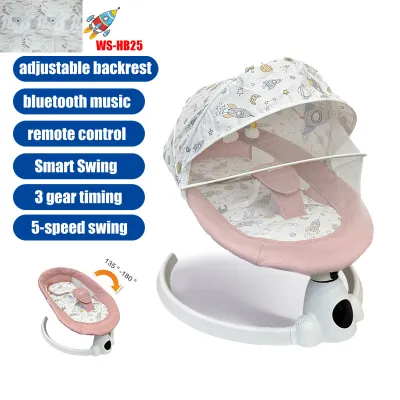
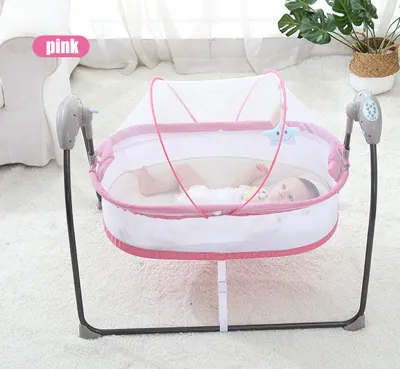
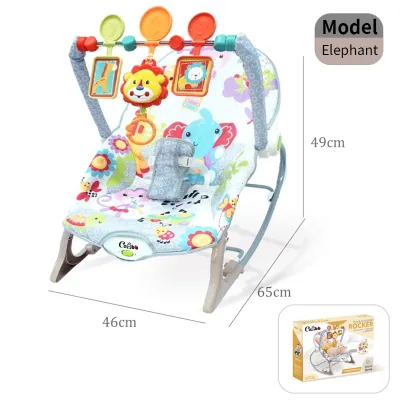
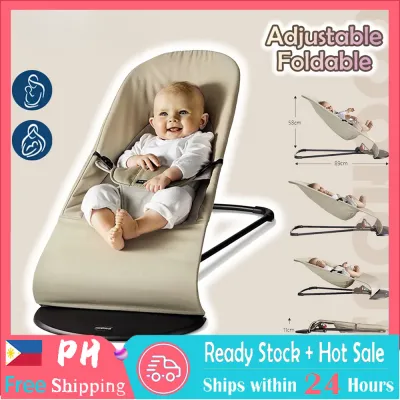
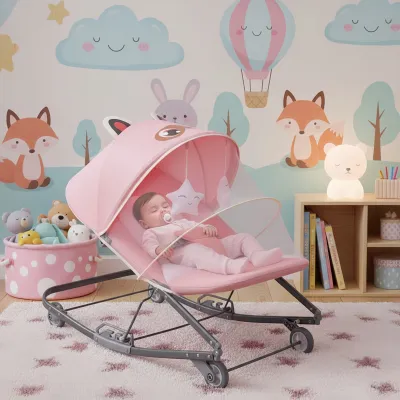

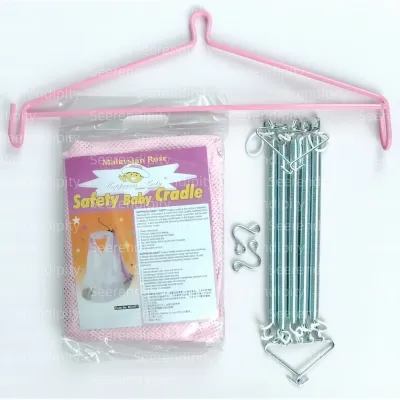
Prices are valid at publication and may change. Please refer to the product page for the latest price.
Baby chairs, which include bouncers, rockers, and stationary infant seats, are designed for multi-functional daily use. Unlike swings, they do not rely on heavy motorized frames to generate continuous motion. Instead, they bounce gently in response to your baby’s natural leg kicks or remain completely stationary. This stable, upright design makes baby chairs highly versatile, serving as an excellent platform for bottle-feeding, introducing early solid foods, playing with attached toy bars, or practicing face-to-face interaction.
Key Factors to Consider Before Buying
Selecting the ideal seat for your nursery requires looking beyond aesthetics and color schemes. You must carefully assess how each product aligns with your living space, your daily caregiving tasks, and the practicalities of maintaining baby gear in a tropical climate.

Space and Portability
The physical footprint of your baby gear is a major consideration, especially if you are managing a cozy nursery or a compact living area. Motorized baby swings typically require a wide, sturdy base to remain stable during operation, which means they occupy a significant amount of floor space. Even models that feature folding frames can be bulky to store and difficult to move between rooms. If you plan to keep the swing in a single, dedicated spot near a power outlet, this larger footprint may not be an issue.
In contrast, baby chairs and bouncers are exceptionally lightweight and highly portable. They feature minimalist frames that can be easily picked up with one hand and carried from the nursery to the kitchen or living room. Many models fold completely flat, allowing you to slide them under a crib, tuck them behind a sofa, or pack them into the car for trips to visit family. This ease of movement makes the baby chair a highly flexible option for dynamic households.
Soothing vs. Feeding and Interaction
Your choice should also depend on the specific times of day you need assistance most. If your baby is highly sensitive, prone to fussiness, or struggles to settle down without constant rocking, a swing can be an invaluable soothing tool. The automated motion provides consistent comfort, allowing you to keep your baby calm and supervised while you attend to work, prepare meals, or care for older siblings.
However, if you need a seat that supports active daily routines, a baby chair is far more practical. Because swings are constantly in motion and often reclined, they are not safe environments for feeding due to the risk of choking. A baby chair keeps your infant in a stable, upright position that is perfect for bottle-feeding or early spoon-feeding. This stationary posture also encourages active play with developmental toys and allows your baby to easily make eye contact with you, fostering early communication and social bonding.
Power Source and Maintenance
Operating costs and daily upkeep are practical details that can impact your long-term satisfaction with the product. Motorized swings require a reliable power source, operating via a wall plug or batteries. If you choose a battery-only model, you must factor in the ongoing cost of replacements, which can add up quickly over several months of daily use. In areas prone to power fluctuations or brownouts, having a swing that offers both plug-in and battery options provides helpful versatility. Baby chairs require no electricity or batteries, making them highly reliable and cost-effective.
Daily maintenance is another crucial factor, particularly in warm, humid environments where sweat, milk spills, and diaper leaks can quickly lead to hygiene issues. Before buying, always check the product label to ensure the fabric cover is fully removable and machine-washable. Frames and toy bars should feature smooth, wipe-clean surfaces that do not trap dust or moisture. Keeping the seat clean and dry is essential for protecting your baby’s sensitive skin and ensuring the longevity of the gear.
Feature Comparison: What to Check on the Label
When comparing different models in an online marketplace or a local baby store, you should always verify the technical specifications printed on the manufacturer’s label. Do not rely on general assumptions, as weight limits, safety features, and adjustment mechanisms vary significantly between brands.
| Feature to Verify | Baby Swing Typical Specs | Baby Chair Typical Specs |
|---|---|---|
| Maximum Weight Limit | Typically up to 9 kg to 11 kg; check the label for exact limits | Typically up to 9 kg for bouncers; some convert to toddler chairs up to 18 kg |
| Harness Type | 5-point harness is standard for motorized models to prevent slipping | 3-point harness is common; some multi-stage chairs feature 5-point harnesses |
| Recline Positions | Multiple recline angles, adjustable only when the swing is stationary | Fixed semi-recline or adjustable multi-position backrests |
| Motion & Vibration | Motorized multi-speed swaying, gliding, or rocking motions | Baby-activated bouncing, manual rocking, or battery-operated gentle vibration |
Always read the specific product manual and packaging before assembling or using any nursery seat. Pay close attention to the manufacturer’s guidelines regarding age limits and physical milestones, as these are critical for ensuring your baby’s safety. Never use a product if your baby exceeds the stated weight limit or has reached a developmental stage that makes the seat unstable.
Decision Framework: Which One Fits Your Nursery?
To determine which option is the best investment for your family, you can use a simple decision framework based on your primary needs and household constraints.
You should choose a baby swing if:
- Your primary goal is hands-free, automated soothing for a highly active or fussy infant.
- You have a spacious nursery or living room with a dedicated area near a wall outlet.
- You want a reliable way to calm your baby while you supervise them from a nearby workstation or kitchen counter.
You should choose a baby chair if:
- You need a versatile, multi-functional seat that supports bottle-feeding, early solid feeding, and interactive play.
- You live in a compact home or need a lightweight seat that you can easily carry from room to room.
- You prefer a budget-friendly option that does not rely on electricity, charging cables, or continuous battery replacements.
Keep in mind that neither option may be suitable if your baby has specific medical conditions, such as severe gastroesophageal reflux or muscle tone issues, which require specialized orthopedic or respiratory positioning. In these situations, you must consult your pediatrician or a pediatric physical therapist for professional guidance. Furthermore, neither a swing nor a chair is a safe substitute for a dedicated sleep space; if your baby needs to sleep unsupervised, they must be placed in a flat, firm crib or bassinet.
Safety and Usage Boundaries
Ensuring your baby’s safety requires strict adherence to usage guidelines and an understanding of when to transition away from these nursery seats. The most critical safety rule is that neither a baby swing nor a baby chair should ever be used for unsupervised, extended, or overnight sleep. Because these devices keep your baby at an inclined angle, a sleeping infant’s head can easily tilt forward onto their chest. This position can compress their airway and lead to positional asphyxiation. If your baby falls asleep while in a swing or chair, you must gently transfer them to a firm, flat crib or bassinet immediately.
Always secure your baby using the built-in harness, ensuring the straps are adjusted snugly according to the manufacturer’s instructions. Even if you are only placing your baby in the seat for a few minutes, the harness is essential to prevent them from sliding down or tipping over. Additionally, you must always place the swing or chair on a flat, stable floor surface. Never place these seats on elevated surfaces like tables, kitchen counters, sofas, or beds, as the baby’s movements or the device’s vibrations can cause the seat to slide off the edge, resulting in severe fall injuries.
Caregivers must also monitor their baby’s physical development to know exactly when to stop using these seats. You must discontinue use immediately once your baby reaches the manufacturer’s maximum weight or height limit, or when they achieve the developmental milestone of sitting up unassisted. If your baby begins to roll over, push up on their hands and knees, or actively attempts to climb out of the seat, continuing to use the device poses a serious risk of tipping and falls.
Frequently Asked Questions (FAQ)
Can a baby sleep overnight in a swing or chair?
No, a baby should never sleep overnight or unsupervised in a swing or chair. Seated and inclined devices are not safe environments for infant sleep. When an infant sleeps at an incline, their weak neck muscles cannot support their head if it falls forward, which can lead to airway obstruction and positional asphyxiation. For all sleep periods, always place your baby on their back on a firm, flat mattress in a crib, cot, or bassinet that meets current safety standards.
At what age or weight should you stop using them?
You must stop using these devices as soon as your baby reaches the maximum weight or height limit specified on the product label, or when they reach certain developmental milestones. For most standard swings and bouncers, the weight limit is around 9 kg, though some convertible chairs can support heavier toddlers. Regardless of weight, you must discontinue use immediately if your baby can sit up unassisted, starts trying to roll over, or attempts to climb out of the seat, as these actions can cause the seat to tip over.
Community discussion
Share your experience or ask a question. Comments are reviewed before publication.