
Selecting a baby sleeping nest bed requires balancing a newborn’s need for a cozy, secure environment with an older infant’s rapid physical development. In the first few months of life, a baby benefits from a snug space that mimics the comforting confines of the womb. However, as your baby grows, gains strength, and begins to move independently, a sleeping nest that once felt secure can quickly present safety hazards if it does not match their developmental stage.
To make an informed decision, caregivers must evaluate specific design features, material properties, and structural dimensions. The ideal sleeping nest is not a one-size-fits-all product; its suitability changes dramatically between the newborn phase and the transition to older infancy. By understanding how these needs evolve, you can select a product that supports your baby’s comfort while strictly adhering to safe sleep principles.
Safe Sleep Baselines and Age-Related Risks
Before comparing aesthetic designs or soft fabrics, every caregiver must establish a non-negotiable foundation of safe sleep principles. The primary requirement for any infant sleep surface is that it must be flat and firm. A firm surface ensures that the baby’s head does not sink into the material, which could compromise their airway. You can assess mattress firmness by pressing your hand firmly onto the center of the pad; if the mattress conforms to your hand or takes time to spring back, it is too soft for an infant.
Products mentioned in this guide



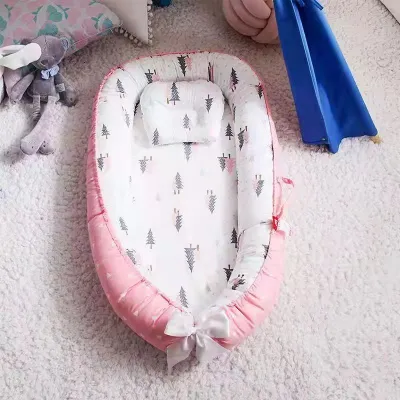
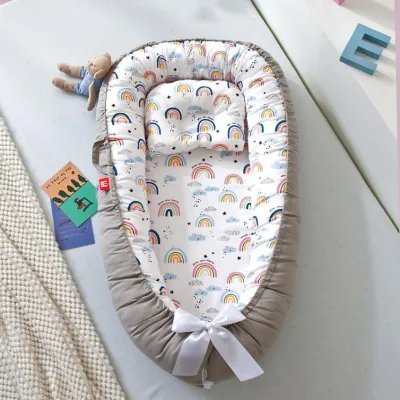
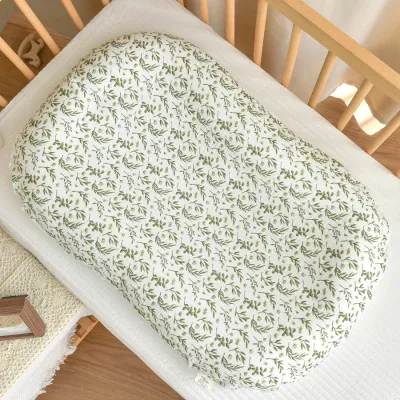
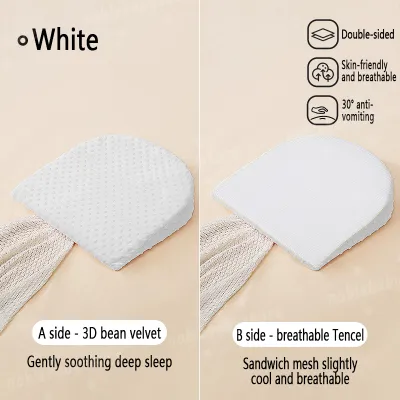
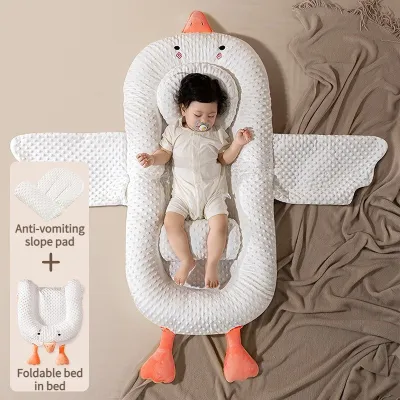
Prices are valid at publication and may change. Please refer to the product page for the latest price.
Soft, plush bumpers and loose padding present significant suffocation and entrapment risks. While these cushioned edges are often marketed as cozy barriers, they can block airflow if a baby’s face presses against them. In warm and humid tropical climates, such as in the Philippines, dense and non-breathable padding also traps body heat, increasing the risk of overheating. Caregivers must ensure that any raised edges are constructed from highly breathable, firm materials rather than soft, pillowy fiberfill.
Physical milestones dictate exactly when a baby sleeping nest bed must be retired or transitioned to a different use. The moment an infant shows signs of attempting to roll over, or begins pushing up on their hands and knees, the risk of entrapment against the side bumpers increases. Because these milestones can occur unexpectedly, caregivers must monitor their baby’s daily physical progress and stop using the nest immediately once these movements begin.
Key Features to Prioritize for Newborns
For a newborn, a sleeping nest should offer a snug fit that provides security without restricting natural physical development. The interior dimensions should gently cradle the baby, but there must still be ample room for their hips and legs to move freely. Restricting leg movement or forcing the legs into a straight position can interfere with healthy hip joint development, so look for a design that allows the baby’s legs to bend and splay naturally in a \”frog-like\” position.

Breathability is the most critical material specification for newborns, who cannot yet regulate their body temperature efficiently. In tropical environments where humidity is consistently high, sweat and moisture can quickly accumulate on non-breathable fabrics. Look for product labels that specify the use of 3D mesh technology, open-cell foam, or 100% organic cotton covers. These materials facilitate continuous airflow around the baby’s face and body, helping to wick away moisture and prevent heat rash.
The base pad of the nest must remain completely flat and rigid under the baby’s weight. Newborns have soft, developing skulls, and resting on an uneven or overly soft surface can contribute to positional plagiocephaly (flat head syndrome). Verify that the base pad is made of high-density foam that supports the spine evenly from head to toe, without any sagging or dipping in the center.
Finally, always review the manufacturer’s explicit weight and length limits for the newborn stage. Some nests are designed exclusively for the first few weeks of life, while others feature adjustable bottom clasps that can be opened to accommodate growth. Checking these specifications on the packaging prevents you from using a product that your newborn has already outgrown, ensuring their head and feet remain safely within the designated boundaries.
Adjusting Your Criteria for Older, Mobile Infants
As your baby transitions out of the newborn stage and becomes more active, their sleep postures and movement patterns change. An older infant requires significantly more interior space to accommodate stretching, arm-waving, and leg-kicking. If the nest is too narrow, the baby may constantly bump against the sides, disrupting their rest and increasing the likelihood that they will attempt to reposition themselves in a hazardous way.
The introduction of mobility brings new structural hazards that caregivers must actively mitigate. When an older infant rolls or shifts during sleep, they may press their face directly against the side bumpers of the nest. To minimize this risk, look for nests that feature low-profile, firm side walls rather than high, puffy barriers. The structural design should allow air to pass through easily, even if the baby’s nose and mouth come into direct contact with the sides.
Many modern sleeping nests feature adjustable, removable, or fold-down bumpers that allow the product to adapt to a growing child. For example, some designs use heavy-duty snaps or buckle systems at the bottom that can be left open to extend the length of the sleeping surface. Others allow you to detach the outer bumper entirely, transforming the flat base pad into a simple play mat for supervised tummy time. These adaptable features extend the usable lifespan of the product and offer better value for your nursery budget.
Despite these adjustable features, caregivers must remain vigilant for the clear physical and behavioral signals that indicate the nest is no longer safe for sleep. If your baby can easily roll from back to front, or if they are strong enough to pull themselves up using the side bumpers, the nest has officially become a climbing hazard. At this stage, the product must be retired from sleep use entirely, regardless of any remaining length or weight allowance specified by the manufacturer.
Universal Design and Maintenance Features to Check
Regardless of your baby’s age, everyday usability and maintenance features will determine how practical the sleeping nest is in daily life. A fully removable, machine-washable cover is an absolute necessity for managing inevitable diaper leaks, spit-up, and sweat. When evaluating a nest, inspect the zipper system; the zipper should be sturdy, glide smoothly, and be completely covered by a fabric guard to prevent the metal or plastic teeth from scratching your baby’s sensitive skin.
Portability is another key feature for busy households. If you plan to move the nest from the bedroom to the living room for supervised daytime lounging, look for lightweight frames equipped with integrated carry handles. However, safety must always come first: never carry or transport the nest while your baby is inside it. If you travel frequently or visit family, a nest that comes with a dedicated, dust-proof travel bag will help keep the sleeping surface clean during transit.
Material safety should be verified through recognized, independent certifications rather than generic marketing claims. Look for labels on the packaging indicating that the fabrics and foams have been tested for harmful substances and chemical emissions. These certifications provide peace of mind that the materials surrounding your baby’s airway are free from heavy metals, formaldehyde, and flame retardants.
Lastly, check the structural integrity of the seams and the overall stability of the base. The stitching along the bumpers and handles must be tight and reinforced, with no loose threads that could wrap around a baby’s fingers or toes. The bottom of the nest should feature a non-slip texture or a stable, flat design that prevents it from sliding when placed on a flat, low-level surface. Never place a sleeping nest on elevated surfaces like tables, countertops, sofas, or beds, as an infant’s movements could cause the nest to slide off the edge.
How to Build Your Shortlist and Verify Safety Labels
Building a safe shortlist of baby sleeping nest beds requires a systematic approach to filtering options and verifying manufacturer claims. Start by carefully reading the product packaging and user manuals, paying close attention to the age, weight, and developmental warnings. If a manufacturer does not clearly state the maximum weight limit or the developmental milestones at which use must stop, exclude that product from your list.
Do not rely on generic marketing badges that claim a product is \”pediatrician-approved\” or \”100% safe\” without specifying the standards met. Legitimate products will reference specific national or international safety standards, which you can cross-reference online. Look for clear, printed compliance marks on the permanent care labels sewn into the nest itself, rather than relying solely on the cardboard packaging or online product descriptions.
While purchasing second-hand baby gear can save money, buying a pre-owned sleeping nest carries hidden risks. Over time, the inner foam or fiberfill can degrade, losing its essential firmness and creating soft spots that pose a suffocation hazard. Furthermore, frequent washing by a previous owner may have compromised the structural seams, or the nest may have accumulated hidden mold and mildew in humid tropical conditions. If you cannot verify the exact history, storage conditions, and age of a second-hand nest, it is safer to purchase a new one.
Ultimately, your selection process must prioritize your baby’s unique health needs and standard safe sleep guidelines. If a specific nest design conflicts with the advice of your pediatrician or standard pediatric health recommendations, stop the selection process immediately. Always consult a qualified healthcare professional if your baby has specific medical conditions, such as gastroesophageal reflux or respiratory issues, before introducing any new sleep or lounging product into their routine.
Frequently Asked Questions (FAQ)
Can a baby sleep in a nest overnight?
No, baby sleeping nests are generally not recommended for unsupervised, overnight sleep. Standard safe sleep guidelines emphasize that infants should sleep on a flat, firm, and bare mattress in a crib or bassinet to minimize the risk of sudden infant death syndrome (SIDS). Always check your specific product’s instruction manual and warning labels, as most manufacturers explicitly state that their nests are designed only for supervised daytime lounging or resting. Never leave your baby unattended in a sleeping nest overnight.
How do I clean a baby sleeping nest bed properly?
To clean a baby sleeping nest bed properly, always start by checking the care label sewn into the cover for specific washing temperatures and cycle instructions. Most outer covers can be removed and machine-washed on a gentle cycle with a mild, hypoallergenic baby detergent. If the inner mattress pad or bumper filling is not machine-washable, spot-clean it using a damp cloth and mild soap, then allow it to air-dry completely in a well-ventilated area. In humid climates, ensure the inner components are entirely dry before reassembling to prevent the growth of mold and mildew. Avoid using harsh chemical bleaches or fabric softeners, which can degrade breathable fibers and irritate your baby’s skin.
Is it safe to use a sleeping nest inside a crib or bassinet?
No, it is not safe to place a sleeping nest inside a crib or bassinet. Doing so reduces the available flat sleep surface and creates dangerous gaps between the nest’s soft bumpers and the rigid sides of the crib or bassinet, where a baby’s head could become trapped. Additionally, the raised sides of the nest can restrict airflow and interfere with the breathable mesh or wooden slats of your standard crib or bassinet. To ensure a safe sleep environment, consult the user manuals for both your sleeping nest and your crib or bassinet, and adhere strictly to the rule of keeping the crib mattress completely clear of any extra inserts, pillows, or loungers.
Community discussion
Share your experience or ask a question. Comments are reviewed before publication.