
When you are looking for convenient baby gear, a lightweight, portable baby inflatable chair often seems like a practical solution. However, the short answer to whether these chairs are safe is a definitive no for young infants, and a highly qualified, heavily supervised maybe for older babies who have already mastered sitting unassisted.
For young infants who lack independent sitting skills, inflatable chairs present severe safety hazards, including suffocation, positional asphyxia, and spinal strain. Because their bodies are still developing, they require firm, flat surfaces to grow safely rather than soft, yielding plastic seats.
Even for older babies who have reached the necessary developmental milestones, these seats should only be used on the floor for very short periods under direct adult supervision. They must never be used as a substitute for a crib during sleep, a proper high chair during feeding, or active floor play.
Products mentioned in this guide
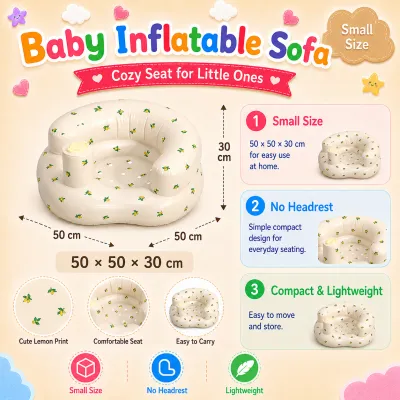
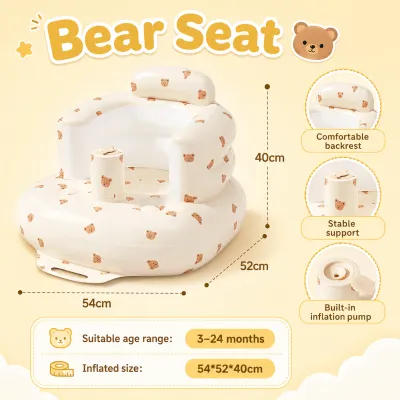
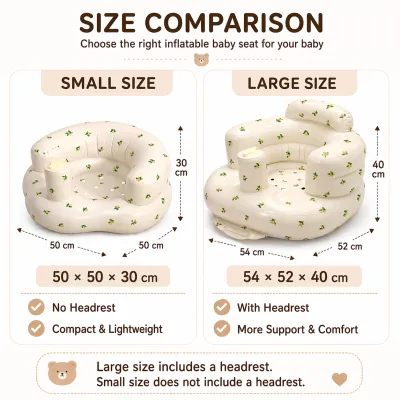
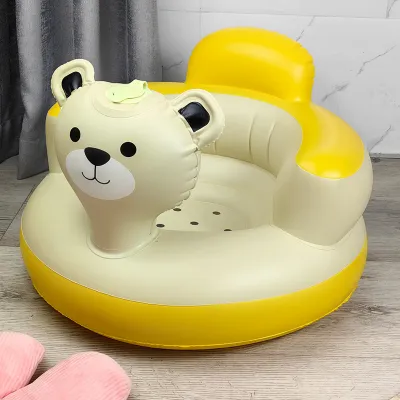
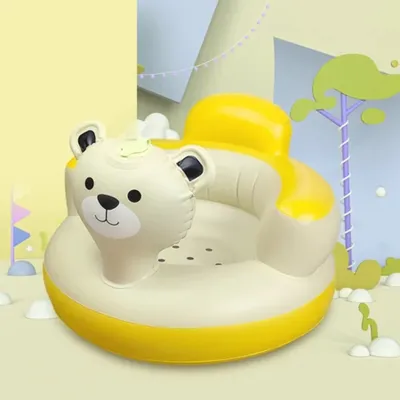
Prices are valid at publication and may change. Please refer to the product page for the latest price.
Primary Safety Risks of Inflatable Baby Seats
While inflatable chairs are marketed as convenient and portable, their physical design and material composition introduce several distinct hazards. Understanding these risks is essential for making an informed decision about your child’s nursery furniture.
Suffocation and Entrapment Hazards
The material composition of inflatable seats—usually flexible polyvinyl chloride (PVC) or soft vinyl—presents a unique hazard for young infants. Unlike rigid wooden or hard plastic furniture, an inflatable chair yields under a baby’s weight, creating deep folds and soft surfaces.
If a young baby slumps forward, topples sideways, or leans back, their nose and mouth can easily become pressed against the soft plastic. Because infants have limited neck strength, they may be unable to lift or turn their heads to clear their airway, leading to silent suffocation.
Furthermore, positional asphyxia is a critical risk when a baby’s head slumps forward toward their chest. This chin-to-chest position can constrict their narrow airway, restricting oxygen flow without the baby making any noise or showing obvious signs of struggle.
Poor Posture and Lack of Spinal Support
An infant’s spine undergoes rapid development during the first year of life, transitioning from a continuous C-shaped curve at birth to the strong S-shaped curve needed for walking. To support this growth, babies require firm, flat surfaces that allow their muscles and bones to align naturally.
Inflatable chairs often suffer from a “hammocking” effect, where the center of the seat sags under the infant’s weight, especially if the chair is not fully inflated. This lack of structural support forces the baby’s pelvis to tilt backward and rounds their spine into an unnatural curve.
Placing a baby in a slumped position before their muscles are developmentally ready can strain their soft tissues and hinder the natural progression of their motor skills. This passive sitting prevents the baby from engaging their core abdominal and back muscles, which are vital for learning to sit up independently.
Tipping, Slipping, and Fall Risks
Inflatable chairs are exceptionally lightweight, which makes them highly unstable when subjected to sudden shifts in weight. When a baby leans over to reach for a toy or kicks their legs, the rounded, air-filled base can easily roll or tip over.
The slick surface of vinyl or PVC also increases the risk of slipping. Without a rigid, multi-point harness system, a baby can easily slide downward, trapping their hips or legs in awkward, dangerous angles.
If the chair is placed on an elevated surface like a bed, sofa, or table, a single tilt can result in a catastrophic fall. Even on a flat floor, tipping over can cause the baby’s head to strike the hard ground, leading to serious injury.
Overheating and Skin Irritation in Humid Climates
In tropical regions like the Philippines, the material properties of inflatable chairs present comfort and health challenges. Non-porous materials such as PVC and vinyl do not allow air to circulate, trapping body heat and moisture against the baby’s skin.
During hot, humid afternoons, a baby sitting in an inflatable chair can quickly sweat, leading to discomfort and the development of heat rash, locally known as bungang-araw. This skin irritation most commonly occurs in the skin folds of the neck, thighs, and back where the plastic directly contacts the skin.
To mitigate this, parents must limit the chair’s use to air-conditioned rooms or place a breathable, light cotton sheet over the seat. However, adding loose fabric introduces its own set of safety risks, making constant monitoring even more critical.
Age and Developmental Readiness: When Is It Appropriate?
Relying solely on the age recommendation printed on a product’s box can be a dangerous mistake for parents. Every child develops at their own pace, meaning chronological age is a poor indicator of whether a baby can safely use alternative seating.

Before considering any unsupported seat, your baby must consistently demonstrate several non-negotiable motor milestones. The baby must possess complete head and neck control, have the ability to roll over in both directions, and be able to sit upright unassisted for extended periods without toppling over.
Always cross-reference your baby’s physical development with the specific weight and age limits detailed on the manufacturer’s product label. If your baby is exceptionally active, has reached the maximum weight limit, or is beginning to pull themselves up to stand, you must stop using the chair immediately to prevent tipping.
If you have any concerns regarding your baby’s muscle tone, motor coordination, or spinal development, consult your pediatrician before introducing any alternative or soft seating options. A professional assessment ensures you do not inadvertently delay your child’s physical milestones.
Essential Safety Rules If You Use an Inflatable Chair
If you choose to use an inflatable chair for an older baby who meets all developmental milestones, strict safety protocols must be followed to minimize inherent risks.
- Constant Supervision: You must never leave your baby unattended in an inflatable chair, even for a few seconds to grab a wipe or answer the door. These chairs are not containment devices, and an accident can occur in the blink of an eye; always remain within arm's reach.
- Placement: The chair must only be placed on a flat, clean, stable floor. Never place an inflatable seat on elevated surfaces like sofas, beds, countertops, or dining tables, and keep it far away from stairs, open water sources, and swimming pools.
- Inflation and Inspection: Always inflate the chair firmly according to the manufacturer's user manual to reduce the sagging hammock effect. Inspect the seams regularly for slow leaks, and ensure all air valves are pushed completely flat into the body of the chair to prevent them from scratching the baby's delicate skin.
- Time Limits: Limit your baby's time in the chair to short intervals of no more than 15 to 20 minutes per day. This prevents physical fatigue, reduces the risk of overheating, and ensures your baby has plenty of time for active, unstructured movement.
- Sleep Rule: If your baby shows signs of drowsiness or falls asleep while in the chair, transfer them immediately to a firm, flat, approved sleeping surface such as a crib or bassinet. Inflatable chairs are soft, inclined surfaces that are highly unsafe for infant sleep and pose a severe risk of sudden infant death syndrome (SIDS).
Safer Alternatives for Infant Seating and Play
For parents seeking safer, more developmentally beneficial ways to support or entertain their infants, several excellent alternatives exist.
- Supervised Floor Time: Placing your baby on a clean, firm play mat on the floor is the gold standard for physical development. Floor play allows babies to stretch, roll, reach, and push up, which naturally strengthens the neck, back, and core muscles needed for sitting and crawling.
- Rigid Infant Seats and Bouncers: If you need a safe place to put your baby down while you complete quick chores, look for structurally supported infant seats or bouncers. Choose models with a rigid frame, a wide, stable base, and a secure three-point or five-point harness system that meets international safety standards, and always use them on the floor.
- Proper High Chairs: When it is time for feeding or interactive play at the table, transition your baby to a sturdy, hard-backed high chair. These chairs provide the necessary upright spinal support and secure harness systems designed specifically for safe swallowing and digestion, unlike soft, slouched inflatable loungers.
Frequently Asked Questions (FAQ)
Can a newborn or young infant use an inflatable seat?
No, newborns and young infants should never be placed in an inflatable seat. Because they lack the neck strength and core stability to support themselves, they are at an extremely high risk of positional asphyxia, suffocation against the soft vinyl, and spinal strain.
Is it safe to use an inflatable chair in the bathtub?
No, standard inflatable floor chairs are not designed for water use and can easily capsize, creating a severe drowning hazard. If you require a bath aid, only use products explicitly certified and engineered as infant bath seats, and never leave your baby unattended in the water for any reason.
What should I do if my baby falls asleep in the inflatable chair?
If your baby falls asleep in an inflatable chair, you must gently pick them up and move them to a firm, flat, approved sleep surface like a crib or bassinet immediately. Soft, inclined surfaces can cause the baby’s head to tilt forward, blocking their airway and posing a life-threatening safety risk.
Community discussion
Share your experience or ask a question. Comments are reviewed before publication.