
Finding the right spot to safely set your baby down can be a daily challenge for busy parents. In many households, a baby bouncer, swing, or rocker is affectionately referred to as a modern “tumba tumba.” While these three types of baby gear might look similar at first glance, they serve very different purposes, operate on distinct mechanisms, and suit different household spaces.
To make the best choice, you need to balance your baby’s temperament with your home’s layout and your daily routine. A bouncer is ideal if you have limited space and need a lightweight, highly portable seat that responds to your baby’s natural movements. A motorized swing is the better option if your baby is easily fussed and requires continuous, automated motion to soothe them, provided you have the floor space to accommodate its larger footprint. A rocker offers a middle ground, providing a gentle, manual rocking motion that mimics being cradled in your arms.
Before making any purchase, always verify that the specific model matches your baby’s current weight and developmental stage. Checking the manufacturer’s guidelines on the packaging or instruction manual is the most reliable way to ensure a safe fit for your little one.
Products mentioned in this guide
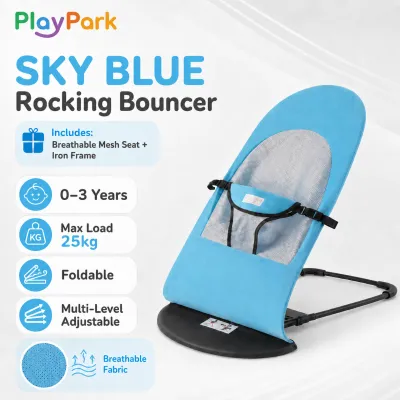
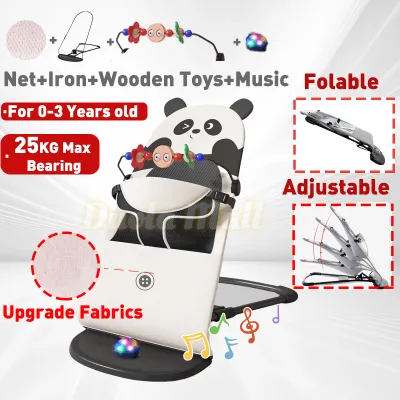
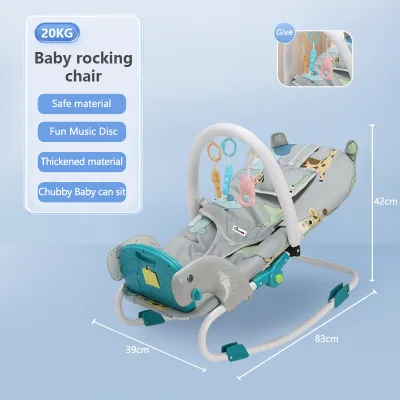
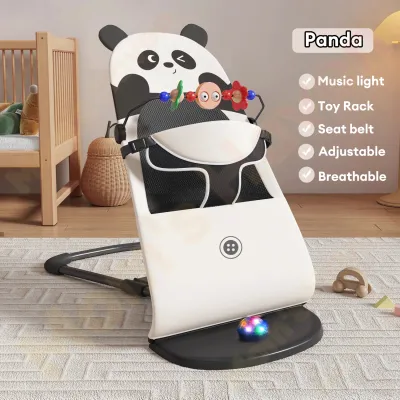
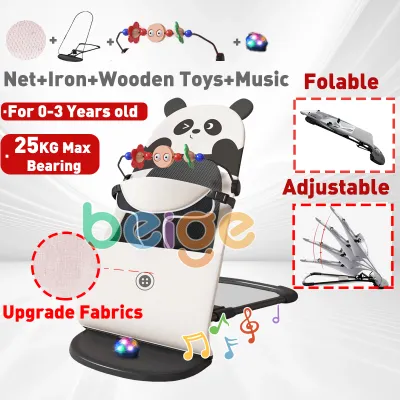
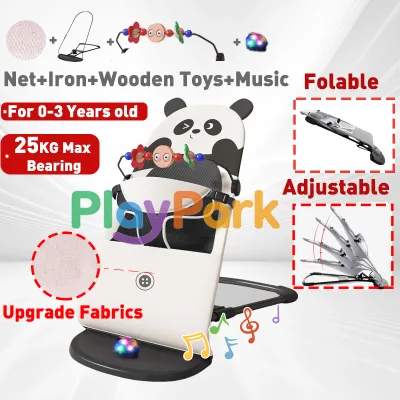
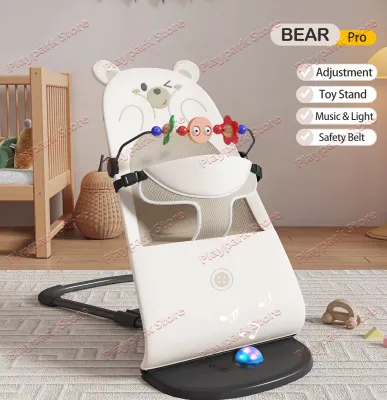
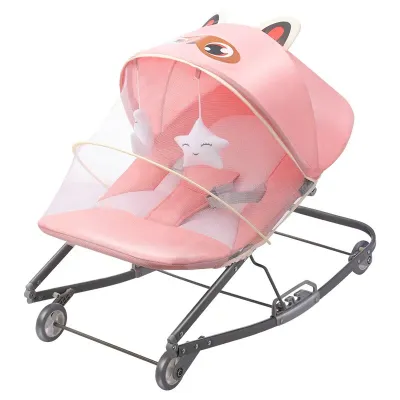
Prices are valid at publication and may change. Please refer to the product page for the latest price.
How Bouncers, Swings, and Rockers Actually Work
While all three seats keep your baby secure and elevated off the floor, they rely on completely different mechanical designs to soothe or entertain. Understanding these mechanical differences will help you determine which seat aligns best with your parenting style and daily household flow.
Baby Bouncers: Bounce and Portability
Baby bouncers operate on a simple, non-motorized frame designed to respond directly to physical movement. When your baby kicks their legs or wiggles their torso, the flexible frame moves up and down, creating a gentle bouncing motion. Caregivers can also give the top of the frame a soft tap with their hand or foot to keep the bounce going.
Because they do not require heavy motors, gears, or power cords, bouncers are exceptionally lightweight and compact. Many models are designed to fold completely flat, making them easy to slide under a bed, tuck behind a sofa, or pack into the car for trips to visit family. This high level of portability makes the bouncer a favorite for parents who need to move the seat from room to room throughout the day.
Key Features of Bouncers:
- Baby-Powered Motion: Encourages physical activity as the baby learns that their own kicks cause the seat to move.
- Compact Footprint: Takes up minimal floor space, making it excellent for smaller living areas or narrow hallways.
- Easy Portability: Lightweight frame allows you to carry it effortlessly with one hand while holding your baby in the other.
- Supervised Play: Best used as a safe, nearby spot for your baby to look around while you wash dishes, fold laundry, or work at your desk.
Baby Swings: Motorized Soothing
Baby swings are fully automated, motorized units designed to provide continuous, rhythmic motion without requiring constant physical effort from the caregiver. These devices run on either household electricity via a plug-in adapter or standard batteries. They typically offer multiple speed settings, allowing you to adjust the pace of the swing to match your baby’s preference.
Because of the heavy motor and wide base required to keep the unit stable while swinging, these seats have a much larger footprint and are significantly heavier than bouncers or rockers. They are generally meant to stay in one dedicated spot in your living room or nursery. Many modern swings also come equipped with extra sensory features, such as built-in music players, white noise machines, overhead toy bars, or gentle seat vibrations.
Key Features of Swings:
- Automated Motion: Provides consistent, hands-free swaying that can mimic the constant motion of a moving car or a parent's rocking arms.
- Multi-Directional Movement: Some models swing front-to-back, while others glide side-to-side, giving you options to see which direction your baby prefers.
- Sturdy, Stationary Base: Designed to remain firmly in one place, preventing the unit from sliding or tipping during operation.
- Sensory Integration: Built-in sounds and vibrations offer additional ways to calm a restless or fussy infant.
- Power Dependency: Requires proximity to an electrical outlet or a steady supply of replacement batteries to operate the motorized features.
Baby Rockers: Gentle Manual Rocking
Baby rockers feature a curved base similar to a traditional rocking chair, allowing the seat to sway gently back and forth. This motion can be initiated by a caregiver’s gentle push or by the baby’s own shifting weight. Unlike bouncers, which move vertically, rockers provide a classic horizontal rocking sensation.
Rockers occupy a middle ground in terms of size and portability. They are sturdier and slightly heavier than basic bouncers, but they are far more compact and easier to move than motorized swings. Many rockers also feature a kickstand or locking mechanism on the frame, allowing you to convert the rocking seat into a stationary chair when it is time for feeding or quiet play.
Key Features of Rockers:
- Classic Rocking Motion: Delivers a smooth, back-and-forth sway that closely mimics the natural rhythm of being held and rocked.
- Convertible Design: Many models can lock into a stationary position, offering versatility for different daily activities.
- Moderate Portability: Easier to move around the house than a bulky swing, though they do not always fold as flat as a bouncer.
- Extended Use: Some convertible rockers are designed to transition into toddler chairs as your child grows, offering a longer usable lifespan.
Matching the Right Tumba Tumba to Your Home and Baby
Choosing between these three options requires looking closely at your living space, your daily habits, and your baby’s unique personality. What works perfectly for one household might feel cumbersome or ineffective in another.

Space Constraints In many homes, floor space is a primary consideration. If you live in a compact apartment or need to navigate narrow doorways, a bulky motorized swing can quickly become an obstacle. A foldable bouncer or a compact rocker is much easier to integrate into smaller rooms. Additionally, if you prefer to keep your baby close by while you move between the kitchen, bedroom, and living room, the lightweight portability of a bouncer is a major advantage.
Power and Maintenance Consider how you plan to power your baby gear. Motorized swings require a reliable power source. If you choose a plug-in model, you will need to position the swing near a wall outlet, ensuring the power cord does not present a tripping hazard. If you opt for a battery-powered model, you must factor in the ongoing cost of replacement batteries. Manual bouncers and rockers require no electricity or batteries, making them highly reliable, silent, and cost-effective over time.
Baby’s Temperament Observe how your baby responds to different types of movement. Some babies are highly active and enjoy the self-regulated, springy motion of a bouncer, which allows them to entertain themselves through play. Other babies are easily overstimulated and prefer the predictable, continuous glide of a motorized swing to help them settle down. If your baby is comforted by a slow, gentle sway but does not need constant motion, a manual rocker provides a soothing, low-tech solution.
Budget Considerations Prices for a tumba tumba chair for baby can vary significantly in the local market. Basic manual bouncers and rockers are generally more budget-friendly, making them accessible options for families looking to manage their expenses. Motorized swings with advanced features, multiple speed settings, and integrated sound systems represent a larger financial investment. To get the most value out of your purchase, look for convertible models that can transition from an infant seat to a toddler rocking chair, extending the product’s usefulness for several years.
Critical Safety Rules and When to Stop Using the Seat
No matter which type of seat you choose, safety must always be your top priority. Baby activity seats are wonderful tools for awake, supervised time, but they must be used strictly in accordance with safety guidelines to prevent accidents.
Sleep Safety It is critical to understand that bouncers, swings, and rockers are not approved for safe, unsupervised infant sleep. If your baby falls asleep while in their seat, you must transfer them immediately to a firm, flat sleep surface, such as a crib, cot, or playpen. The inclined position of these activity seats can cause an infant’s heavy head to tilt forward onto their chest, which can restrict their airway and lead to positional asphyxiation.
Weight and Age Limits Every baby seat comes with specific weight limits and developmental milestones printed on the product label or detailed in the user manual. You must check these limits before placing your baby in the seat. As a general rule, you must stop using a bouncer or rocker the moment your baby attempts to sit up unassisted, roll over, or reaches the maximum weight capacity. Continuing to use the seat past these milestones increases the risk of the unit tipping over.
Placement Hazards Always place your baby’s seat directly on the flat floor. Never place a bouncer, swing, or rocker on elevated surfaces such as tables, kitchen countertops, beds, or sofas. The physical vibrations of a motor or the baby’s own vigorous movements can cause the seat to slide, shift, or tip off the edge of elevated furniture, resulting in serious falls.
Harness Usage Always secure your baby using the built-in safety harness every single time you place them in the seat, even if it is only for a few moments. A properly adjusted three-point or five-point harness prevents your baby from sliding down, twisting sideways, or climbing out of the seat. Never leave your baby unattended while they are in any activity seat; a caregiver should always remain in the same room to supervise.
Frequently Asked Questions (FAQ)
Can my newborn use a bouncer, swing, or rocker right away?
Caregivers must check the specific manufacturer’s label for minimum weight, age, and developmental requirements before placing a newborn in any seat. Newborns lack the neck strength to support their own heads, meaning they require a seat that reclines sufficiently and provides adequate lateral support. Some models are suitable from birth only when used with a specific, manufacturer-approved infant insert, while other models are designed strictly for older infants who have already developed basic head control.
How do I clean the fabric seat of a tumba tumba?
Always check the care label attached directly to the fabric cover for specific washing instructions. In warm, humid climates, regular cleaning is essential to manage sweat, drool, and diaper spills. Most modern baby seats feature a removable fabric cover that can be machine washed on a gentle cycle with mild baby detergent. After washing, ensure the fabric cover is completely dry before reattaching it to the frame, as damp fabric can quickly encourage the growth of mold or mildew.
Community discussion
Share your experience or ask a question. Comments are reviewed before publication.