
Introducing a pillow to your baby’s sleep space too early poses serious safety hazards, and pediatric health organizations globally advise keeping all pillows out of an infant’s crib. While shopping for nursery essentials, you will frequently encounter a baby bed set with pillow packaged together as a convenient bundle. However, the inclusion of a pillow in these retail sets does not mean it is safe for immediate use by a newborn or infant. Understanding when and how to safely introduce bedding is one of the most critical decisions you will make for your child’s sleep environment.
Many parents receive these bedding sets as gifts or purchase them to coordinate the nursery’s aesthetic. While the fitted sheets and mattress protectors in these packages are highly useful from day one, the coordinating pillow must be set aside. Knowing the physical risks and developmental milestones associated with pillow use allows you to protect your baby while planning for their future bedding needs.
Understanding the Safety Risks of Pillows for Infants
An infant’s physical anatomy is vastly different from that of an adult, making pillows highly dangerous during the first year of life. A baby’s head is proportionally larger and heavier than their body, and their neck muscles are still developing. When a baby lies on a flat, firm surface, their airway remains naturally open and aligned. Placing a pillow under an infant’s head can force their chin downward toward their chest, easily crimping and obstructing their narrow trachea.
Products mentioned in this guide
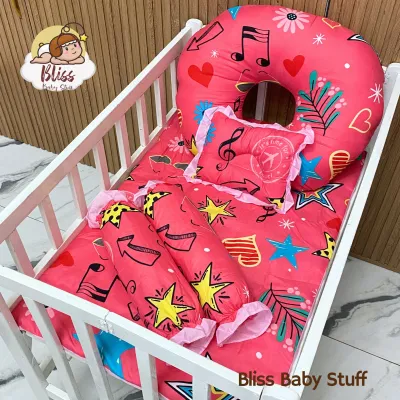
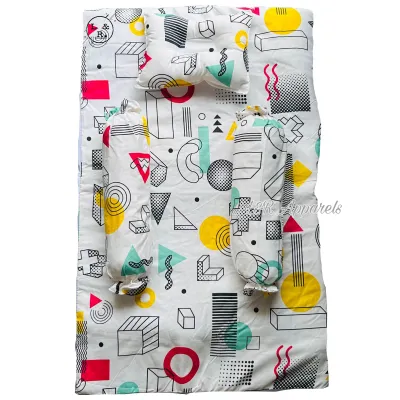
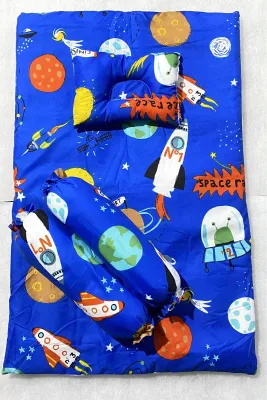
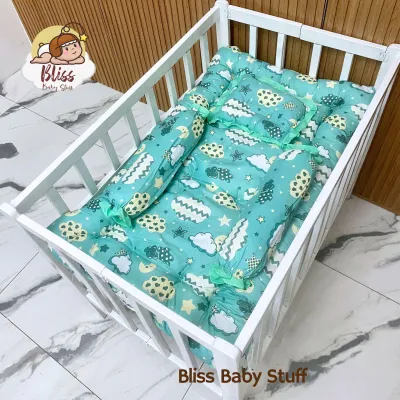
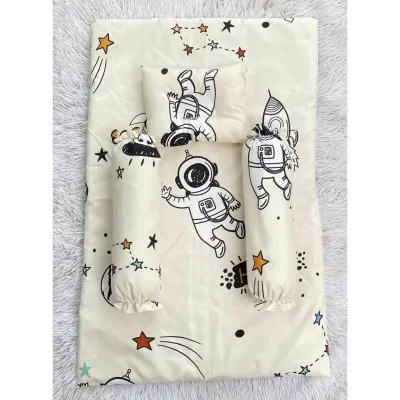
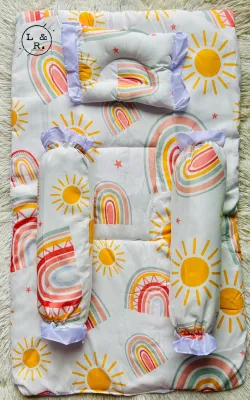
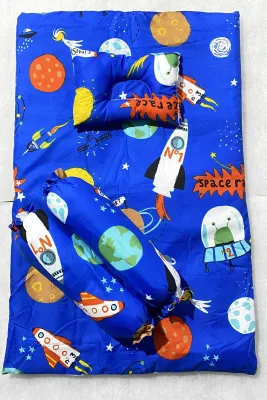
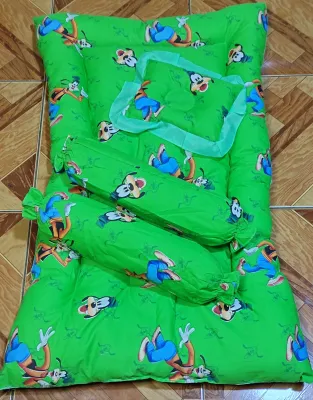
Prices are valid at publication and may change. Please refer to the product page for the latest price.
In addition to airway obstruction, soft bedding is a primary contributor to accidental suffocation. If an infant rolls over onto a soft pillow, they may lack the motor skills and neck strength to lift their head or turn their face away. Their nose and mouth can easily become blocked by the plush fabric, leading to rapid oxygen deprivation. This physical vulnerability is why safe sleep guidelines emphasize a completely bare sleep surface.
There is also a strong, documented association between soft bedding and Sudden Infant Death Syndrome (SIDS). When a baby’s face sinks into a soft pillow, a pocket of exhaled air can become trapped around their nose and mouth. The infant then breathes in this trapped carbon dioxide instead of fresh oxygen, a phenomenon known as rebreathing. This lack of fresh oxygen can cause carbon dioxide levels in the blood to rise, which can be fatal for an infant who cannot yet wake themselves up to escape the hazard.
Because infants cannot communicate distress or easily reposition their bodies, parents must eliminate these environmental risks entirely. Even pillows marketed specifically for babies can pose these exact dangers if left in an unsupervised sleep area. Keeping the crib free of any soft objects is the most effective way to prevent these silent and preventable sleep accidents.
Age Milestones and Developmental Readiness for a Pillow
To determine when your child can safely transition to using a pillow, you must consult the latest safe sleep guidelines from authoritative pediatric organizations. Most major pediatric associations recommend keeping the sleep surface entirely free of pillows, blankets, and soft toys for at least the first twelve months of life. Many experts suggest waiting even longer, recommending that parents delay the introduction of a pillow until the child is at least two years old.

An excellent practical milestone for introducing a pillow is the transition from a crib to a toddler bed. This transition typically occurs between the ages of one and a half and three years, depending on your child’s height and climbing habits. At this stage, the child’s physical proportions have changed, their neck muscles are significantly stronger, and they are much better equipped to manage bedding safely.
Before introducing any pillow, you must observe your child’s gross motor milestones. Your child should demonstrate consistent, strong head control and the ability to roll over easily in both directions. They must also possess the coordination and strength to push objects away from their face and adjust their own sleeping position throughout the night. If your child still struggles to reposition themselves, they are not yet ready for a pillow.
Because every child develops at a unique pace, there is no single chronological age that fits every toddler. It is always best to consult your pediatrician during regular well-child visits before adding a pillow to your child’s bed. Your pediatrician can evaluate your child’s physical development, muscle tone, and overall health to provide personalized advice on when it is safe to make this transition.
Evaluating a Baby Bed Set With Pillow Before Purchase
When shopping for a baby bed set with pillow, you must carefully evaluate the individual components rather than assuming the entire set is ready for immediate use. If you decide to purchase a coordinated set for its design, mattress cover, or fitted sheets, look closely at the pillow’s physical characteristics. A safe toddler pillow should be very firm, flat, and small. Avoid any pillows that are overly plush, thick, or filled with loose materials that allow the head to sink deeply.
If you purchase a set that includes a pillow before your child is developmentally ready, you must plan for safe storage. Place the pillow in a secure closet or storage bin completely out of your baby’s reach. Never place the pillow in the crib as a decorative accent while the baby is sleeping, as it can easily fall or be pulled over the baby’s face.
It is also wise to compare the financial and practical value of complete sets versus pillow-free alternatives. In the Philippines, nursery items can range widely in price, and you may find that purchasing high-quality fitted sheets and a separate waterproof mattress protector is more cost-effective than buying a complete set with a pillow you cannot use for many months. Evaluating your current nursery needs can help you allocate your budget toward essential safety items first.
Always check the product labels, manufacturer warnings, and age recommendations printed on the packaging. Responsible manufacturers will clearly state the minimum age for which the pillow is intended. Do not rely solely on product titles or marketing images that show sleeping infants on pillows; instead, verify that the product complies with recognized safety standards and has not been subject to any safety recalls.
Safe Sleep Environment Checklist for the Nursery
Creating a safe sleep space requires a holistic approach that goes beyond simply removing the pillow. Use this actionable checklist to ensure your baby’s crib remains a secure environment:
- Verify Mattress Firmness: The mattress must be firm and flat, showing no signs of sagging. When you press your hand down and lift it, the mattress surface should immediately snap back into place.
- Secure the Fitted Sheet: Use only a tight, secure fitted sheet designed specifically for your mattress size. The sheet should wrap tightly around the corners without any loose fabric or bunching.
- Remove All Soft Items: Keep the crib completely free of stuffed toys, loose blankets, quilts, comforters, and crib bumpers. These items are common suffocation hazards and are unnecessary for a safe sleep.
- Manage Room Temperature and Ventilation: In the tropical climate of the Philippines, high humidity and heat can lead to overheating, which is a known risk factor for SIDS. Ensure the nursery is well-ventilated using a fan or air conditioning, keeping the airflow indirect so it does not blow directly on your baby.
- Use Wearable Blankets: Instead of loose covers, dress your baby in a lightweight, breathable wearable blanket or sleep sack appropriate for the room's temperature.
- Maintain a Clear Surface: Ensure the sleep surface remains entirely bare. Do not use sleep positioners, rolled-up towels, or decorative accessories in the crib while your baby is sleeping.
By consistently maintaining these standards, you can provide a comfortable and secure sleep environment that supports your baby’s healthy development.
Frequently Asked Questions (FAQ)
Can I use the pillow from the bed set for supervised tummy time?
Yes, you may be able to use the small pillow from a baby bed set with pillow for awake, supervised activities, provided the manufacturer’s instructions support this use. Tummy time is essential for helping your baby build the neck, shoulder, and arm muscles needed for rolling and sitting. If you use a small pillow or prop to support your baby’s chest during tummy time, you must maintain constant, active adult supervision. You must watch your baby every second to ensure their face does not slip forward into the fabric or block their airway. Never leave your baby unattended during tummy time, and stop using the pillow immediately if they show signs of fatigue or begin to fall asleep.
What type of pillow is safest when my toddler is finally ready?
When your child has reached the appropriate age and developmental milestones, choose a pillow designed specifically for toddlers. These pillows are much smaller, flatter, and firmer than standard adult pillows, preventing the child’s neck from bending at an unnatural angle. Avoid adult-sized pillows, down-filled pillows, or memory foam options that are overly soft and can envelop the child’s head. Look for pillows with breathable outer covers to prevent sweating and heat retention, which is especially important in warm, humid tropical climates. Additionally, prioritize hypoallergenic, machine-washable fillings to ensure you can easily clean the pillow and keep the sleep environment free of dust mites and allergens.
Community discussion
Share your experience or ask a question. Comments are reviewed before publication.