
During the rainy season in the Philippines, the sudden rise in humidity and frequent downpours create ideal breeding grounds for mosquitoes, making dengue prevention a top priority for parents. Among the many protective tools available, the new mosquito repellent bracelet has emerged as a highly popular option on local store shelves and online marketplaces. These wearable bands are often marketed as a convenient, mess-free alternative to traditional topical lotions and sprays. However, determining whether a new mosquito repellent bracelet is safe for your baby depends entirely on its active ingredients, your infant’s age, and their individual skin sensitivity. While these colorful accessories are widely sought after during peak dengue months, they are not universally risk-free. They require careful inspection of product labels, strict adherence to safety guidelines, and direct consultation with your pediatrician before use.
Understanding the Ingredients in Mosquito Repellent Bracelets
To evaluate the safety of any new mosquito repellent bracelet, you must first look closely at what makes it work. Wearable bands generally fall into two categories based on their active ingredients: plant-based essential oils and synthetic chemical repellents. The vast majority of bracelets designed for children rely on volatile essential oils such as citronella, lemongrass, peppermint, geraniol, or rosemary. These oils work by slowly evaporating, creating a localized scent barrier that masks the human odors—like carbon dioxide and lactic acid—that naturally attract mosquitoes.
In contrast, traditional topical repellents often utilize synthetic active ingredients like DEET, picaridin, or IR3535. While these synthetic chemicals are highly effective when applied directly to the skin, they are rarely used in wearable bracelets due to the way the bands are designed to disperse scent. When choosing a wearable product, parents must carefully inspect the packaging to identify the exact concentration of these active ingredients and check for any specific age restrictions or safety warnings printed by the manufacturer.
Products mentioned in this guide
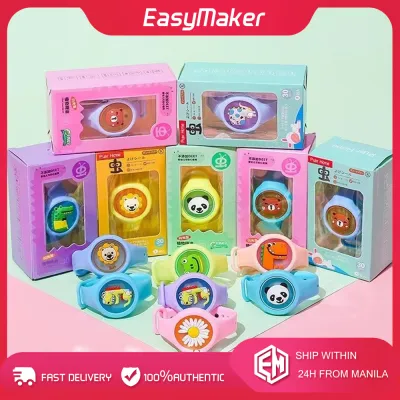
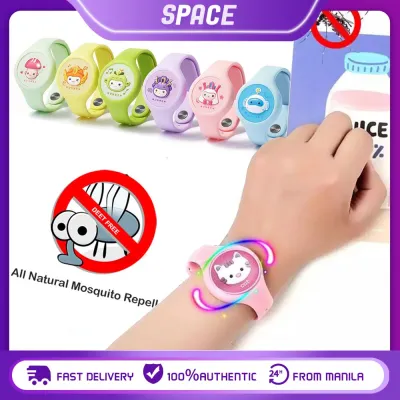
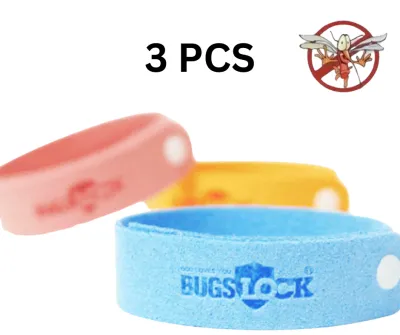
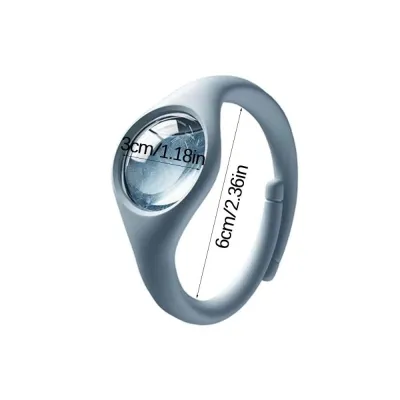
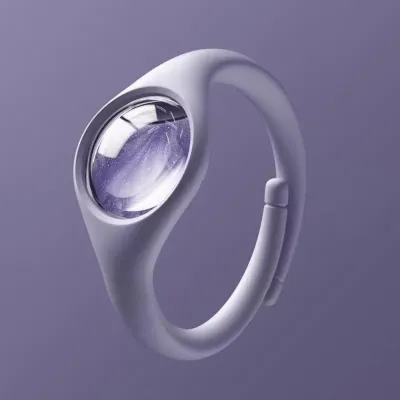
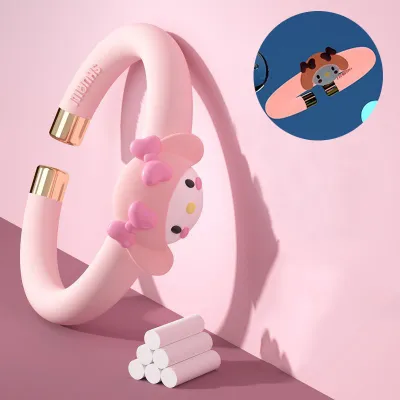
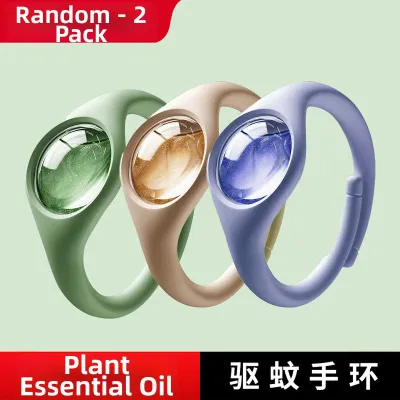
Prices are valid at publication and may change. Please refer to the product page for the latest price.
It is a common misconception that marketing terms like “natural,” “organic,” or “plant-derived” automatically mean a product is completely safe for an infant. Essential oils are highly concentrated chemical compounds. When vaporized in close proximity to a baby’s delicate skin or respiratory system, these natural substances can still trigger adverse reactions. Because safety standards and ingredient formulations can vary widely between brands, you should treat all marketing claims with caution and verify the safety profile of each ingredient individually.
Potential Safety Risks and Skin Sensitivities for Infants
Infants have unique physiological characteristics that make them far more vulnerable to external substances than older children or adults. The first major concern is dermatological. A baby’s skin is significantly thinner, more fragile, and more permeable than adult skin. If a concentrated essential oil or chemical from a repellent bracelet comes into direct contact with their skin, it can easily disrupt the skin barrier. This can lead to contact dermatitis, characterized by localized redness, itching, swelling, or even tiny blisters. Tropical heat and sweat can also cause these active ingredients to leach out of the band, increasing the risk of skin irritation.

Beyond skin sensitivity, wearable bands present physical hazards that require constant vigilance. Babies naturally explore their world by putting objects into their mouths. A loose bracelet worn on a wrist or ankle is an immediate choking hazard if the baby manages to pull it off. Many new mosquito repellent bracelets feature bright colors, cartoon characters, or removable active-ingredient pellets. These design elements can attract a baby’s attention, tempting them to chew on or swallow parts of the band, which could lead to accidental poisoning or airway obstruction.
Inhalation risks represent another critical safety dimension. The strong, volatile scents emitted by these bracelets are designed to be potent enough to deter insects. However, in enclosed spaces—such as a car, a small nursery, or under a stroller canopy—these concentrated vapors can easily irritate an infant’s highly sensitive and still-developing respiratory tract. This irritation can manifest as sudden coughing, sneezing, watery eyes, or mild breathing discomfort, particularly in babies with a family history of asthma or sensitive airways.
Age Recommendations and Pediatric Guidelines
When deciding whether to use a new mosquito repellent bracelet, age is the most critical screening factor. Pediatricians and global health organizations generally advise extreme caution when introducing any repellent products to very young infants. Many commercial repellent bands carry explicit manufacturer warnings stating they are not suitable for infants under six months of age, and some are restricted to children over three years old. Parents must verify these age and development limits on the product packaging rather than assuming a product is safe simply because it is marketed for babies.
Consulting your pediatrician before using any new repellent product is highly recommended, especially for infants under six months. A pediatrician can evaluate your baby’s individual health profile, skin sensitivity, and the specific dengue risk in your local area to help you make an informed decision. They can also guide you on the appropriate concentration of active ingredients if you choose to use topical repellents alongside or instead of wearable devices.
For newborns and very young infants, non-chemical physical barriers remain the safest and most reliable defense against mosquito bites. Instead of relying on wearable bands, parents should prioritize physical protection. This includes draping fine-mesh mosquito nets over strollers, cribs, and playpens to keep insects at bay without exposing the baby to strong vapors. Dressing your baby in lightweight, light-colored clothing that covers their arms and legs is another highly effective, risk-free way to minimize exposed skin during outdoor activities.
Precautions for Using Repellent Bracelets During Dengue Season
If you and your pediatrician decide that a new mosquito repellent bracelet is appropriate for your situation, implementing strict safety precautions can help minimize potential risks. The most important rule is to avoid direct skin contact. Instead of fastening the band around your baby’s wrist or ankle, utilize indirect placement strategies. Securely attach the bracelet to the frame of your stroller, the exterior of a diaper bag, or the canopy of a carrier, ensuring it is completely out of your baby’s physical reach. You can also clip or pin the band to the back of their outer clothing where they cannot grab, pull, or mouth it.
Continuous caregiver supervision is absolutely essential whenever a repellent bracelet is in use. Never leave your baby unattended with a wearable band, even for a few minutes. Monitor them closely to ensure they do not manipulate the bracelet, rub their eyes after touching it, or attempt to put it in their mouth. As soon as you transition indoors or when your baby is getting ready to sleep, remove the bracelet immediately and store it in a sealed container out of reach.
Remember that a mosquito repellent bracelet should never be your sole line of defense against dengue-carrying mosquitoes. The protection offered by these bands is highly localized and can be easily compromised by wind, movement, and high tropical humidity. To protect your baby effectively during peak dengue season, combine indirect bracelet placement with primary physical defenses. This integrated approach includes maintaining secure window screens at home, using mosquito nets, and actively participating in community efforts to eliminate standing water where mosquitoes breed.
When to Stop Using the Bracelet and Seek Medical Help
Parents must remain highly observant for any signs of an adverse reaction while using a repellent bracelet. Stop using the product immediately if you notice any physical signs of discomfort or irritation. On the skin, this includes redness, swelling, hives, or a rash where the band was placed or where the vapor drifted. Respiratory warning signs include persistent coughing, wheezing, sneezing, watery eyes, or any sudden change in your baby’s breathing pattern.
If you observe any of these symptoms, take immediate first-aid action. Remove the bracelet from the baby’s vicinity right away and move them to a well-ventilated area with fresh air. If the active ingredients have touched the baby’s skin, wash the affected area thoroughly with mild baby soap and cool water to remove any remaining chemical or oil residues. Avoid applying self-prescribed anti-itch creams or home remedies without professional guidance, as these can sometimes worsen infant skin irritation.
Seek immediate medical attention or contact a local healthcare professional if the skin irritation does not improve within a few hours, if the rash spreads, or if your baby shows signs of a severe allergic reaction, such as swelling of the face, lips, or tongue. You must also seek urgent medical care if you suspect your baby has swallowed any part of the bracelet, its active-ingredient pellet, or its liquid contents. Always keep the original product packaging handy so you can show the medical staff the exact list of ingredients and manufacturer details.
Frequently Asked Questions (FAQ)
Can I put a mosquito repellent bracelet directly on my newborn's skin?
No, you should not place a mosquito repellent bracelet directly on a newborn’s skin. A newborn’s skin is exceptionally thin, delicate, and highly permeable, making it extremely vulnerable to irritation and chemical absorption from concentrated essential oils or synthetic ingredients. Direct contact can easily cause contact dermatitis or localized allergic reactions. Instead of direct skin application, secure the repellent band to external gear such as the stroller frame, canopy, or diaper bag, ensuring it remains completely out of your baby’s physical reach while still providing a localized scent barrier.
Do natural essential oil bracelets guarantee protection against dengue-carrying mosquitoes?
No, natural essential oil bracelets do not guarantee absolute protection against dengue-carrying mosquitoes (Aedes aegypti). While ingredients like citronella or lemongrass can help deter insects, their protective vapor zone is highly localized, temporary, and easily disrupted by wind, movement, and tropical humidity. They cannot replace comprehensive preventive measures. To protect your baby from dengue, combine multiple strategies, including physical mosquito nets, protective clothing, eliminating standing water around your home, and using pediatrician-approved topical repellents when age-appropriate.
How long can a baby safely wear a repellent bracelet each day?
There is no universal safe duration, as wear limits depend entirely on the manufacturer’s specifications and the active ingredients used. Parents must carefully read the product packaging for specific usage instructions. However, as a general safety rule, a baby should never wear or be near a repellent bracelet during sleep, naps, or any unsupervised periods. Always remove the band as soon as you return indoors, wash any skin areas that may have come into contact with the vapor, and store the bracelet safely out of reach of children.
Community discussion
Share your experience or ask a question. Comments are reviewed before publication.