
Direct Answer: The Safety Reality of a Foldable Baby Walker
When you are looking for ways to keep your baby entertained and help them take their first steps, a foldable baby walker often looks like a convenient, space-saving solution. However, major pediatric and child safety organizations worldwide, including the American Academy of Pediatrics, strongly advise against the use of any mobile baby walkers. The consensus among medical professionals is clear: mobile walkers do not teach babies how to walk, and they pose severe, preventable safety risks.
Choosing a foldable baby walker introduces additional mechanical variables to an already high-risk product category. While a standard walker relies on a rigid frame, a foldable model incorporates hinges, joints, and locking pins designed to collapse for easy storage. These moving parts introduce mechanical hazards, such as accidental frame collapse or severe finger pinches, on top of the standard risks of rapid mobility.
Many parents believe that constant adult supervision can prevent accidents, but studies show that most walker injuries occur while a caregiver is in the same room. A baby in a walker can move at speeds exceeding one meter per second, which is far faster than an adult can react to a sudden mechanical failure, a tipped frame, or an open doorway. No foldable walker is entirely risk-free, and understanding these mechanical and structural vulnerabilities is essential before bringing one into your home.
Products mentioned in this guide
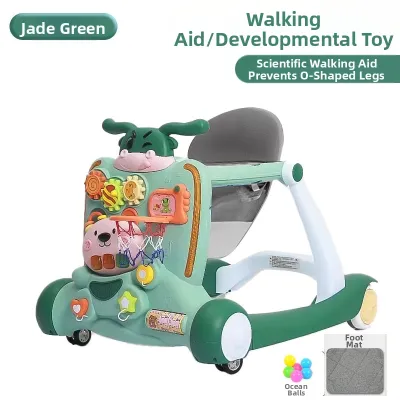
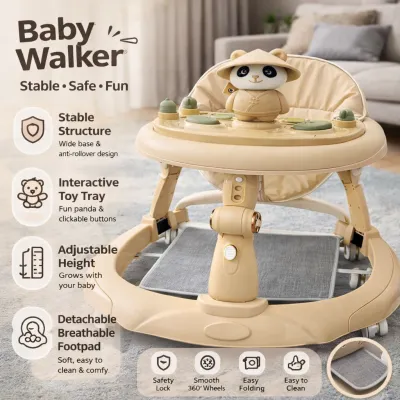
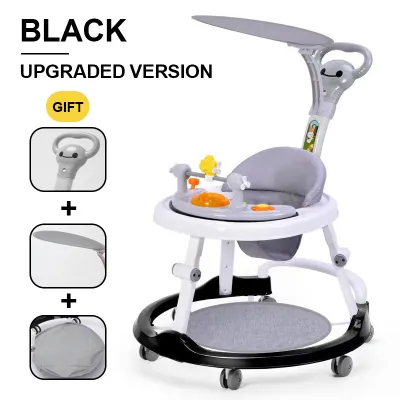
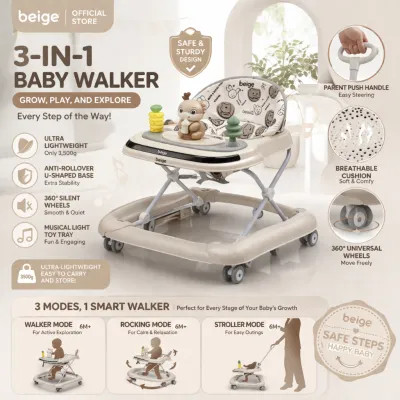
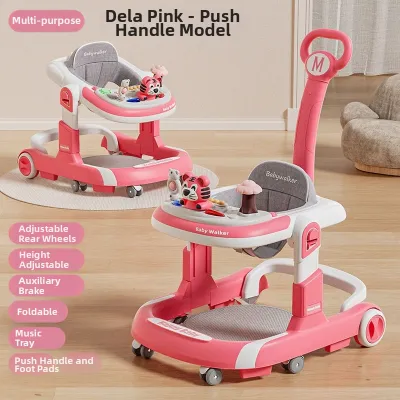
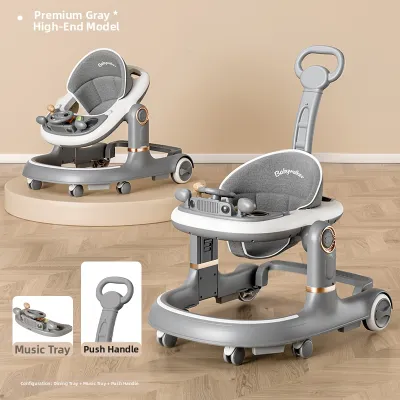
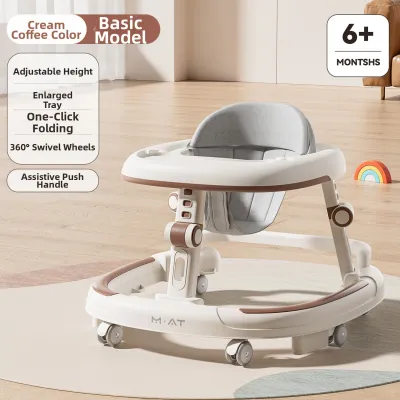
Prices are valid at publication and may change. Please refer to the product page for the latest price.
Universal Hazards: Why Pediatricians Advise Against Baby Walkers
Before examining the specific mechanics of folding models, it is crucial to understand the fundamental dangers inherent to all mobile baby walkers. These hazards exist regardless of whether the frame is rigid, foldable, premium, or budget-friendly. Pediatricians and safety advocates have long campaigned for bans on these devices because they alter a baby’s environment in ways that their developmental stage cannot handle.

Mobility and Fall Hazards
The primary danger of a mobile walker is the unnatural speed and mobility it grants to an infant who cannot yet walk independently. On smooth tiled floors, which are highly common in homes in the Philippines, a baby can zip across a room in the blink of an eye. This rapid movement frequently leads to severe falls when the walker encounters minor obstacles like raised door thresholds, rug edges, or the transition to a native woven mat. If the walker reaches a step, such as the drop-off to a split-level living room or a dirty kitchen, it can tumble down headfirst, causing serious head and neck injuries.
Access to Household Hazards
A walker artificially elevates a baby, placing them at a height where they can reach items that would normally be far out of their grasp. From this elevated position, a baby can pull down hot coffee mugs, reach electrical cords, grab heavy objects on low countertops, or access household cleaning agents stored on lower shelves. In a tropical environment, this also increases the risk of them reaching mosquito coils, standing water containers, or electrical fans that are placed on the floor to keep rooms cool.
Developmental Concerns
Contrary to the popular belief that walkers help babies learn to walk, they actually delay independent walking and can negatively impact muscle development. Walkers do not teach the essential balance, core strength, and weight-bearing coordination required for natural walking. Instead, they encourage babies to stand on their tiptoes and push forward, which can tighten the calf muscles and lead to abnormal walking patterns. A baby needs to spend time crawling, sitting up, and pulling themselves up to a standing position naturally to build the core and leg strength necessary for independent movement.
Specific Risks of Folding Mechanisms and Hinges
While all mobile walkers carry inherent risks, a foldable baby walker adds a layer of mechanical complexity that introduces unique structural vulnerabilities. The very design that makes these products appealing for compact homes—the ability to collapse down to a flat profile—creates several physical hazards that can compromise your child’s safety.
Accidental Collapse
The most significant mechanical risk of a foldable baby walker is the sudden, accidental collapse of the frame while the baby is suspended inside. This can occur if the locking mechanism fails, wears out, or is improperly engaged during setup. Active babies often bounce, kick, and rock back and forth while playing, placing dynamic physical stress on the locking pins or plastic latches. If these locks slip or fail under pressure, the entire frame can fold down instantly, trapping the baby’s legs, compressing their torso, or causing their head to strike the floor.
Pinch and Entrapment Points
The scissor hinges, sliding joints, and folding seams required to make a walker collapsible are prime locations for pinch injuries. A baby’s fingers and toes are incredibly small and delicate, making them highly susceptible to getting caught in these moving parts. These pinch points can cause severe lacerations, bruising, or even fractures. These injuries can happen not only when a parent is actively folding or unfolding the unit, but also if the baby reaches down to explore the frame while sitting in the seat, or if the joints shift slightly under the baby’s weight.
Structural Wobbliness
A fixed-frame walker benefits from a solid, continuous structure that distributes weight evenly and resists tipping. In contrast, a foldable baby walker relies on multiple joint connections, which naturally introduce a small amount of play or looseness into the frame. Over time, this structural wobbliness can worsen, reducing the overall stability of the walker. When a baby leans heavily to one side or attempts to reach for an object, a less rigid, foldable frame is much more likely to flex and tip over, especially when navigating uneven floor surfaces.
Wear and Tear on Locks
Repeatedly folding and unfolding a walker for storage or transport causes gradual degradation of the safety latches, spring-loaded buttons, and locking pins. In highly humid tropical climates, metal components inside these mechanisms can slowly rust, stick, or corrode, while plastic tabs can become brittle and crack over time. This wear and tear often occurs deep within the joint housing, creating a hidden failure point that may not be visible during a superficial check before use.
Harm Reduction: What to Inspect If You Use a Foldable Walker
If you already own a foldable baby walker or are in a situation where you must evaluate one, it is vital to prioritize risk mitigation. While no inspection can eliminate the inherent dangers of a mobile walker, performing rigorous safety checks can help you identify mechanical failures before they lead to an accident. Always begin by thoroughly reading the manufacturer’s manual and checking the product’s warning labels. If the instructions are unclear, or if you notice any damaged parts, stop using the walker immediately and consult the manufacturer.
Locking Mechanism Verification
Before placing your baby in the walker, physically test the locking mechanisms to ensure they are fully engaged. A safe foldable walker should feature a dual-action lock, which requires two distinct, deliberate physical actions to release (such as pressing a safety button while simultaneously pulling a lever). This design prevents the lock from being accidentally triggered by the baby’s kicking or by an older sibling playing nearby. Once locked, apply firm downward and sideways pressure on the tray to verify that the frame remains completely rigid and does not slip or wobble.
Hinge and Joint Inspection
Regularly inspect all folding joints, scissor hinges, and sliding tracks for signs of wear, damage, or loose hardware. Check that all protective plastic covers over the hinges are intact and securely fastened; these covers are designed to block a baby’s fingers from reaching the actual pinch points. Look for any loose screws, bent metal bars, or cracked plastic components along the frame. In humid environments, pay close attention to any signs of rust on the locking pins or springs, which can prevent them from snapping fully into place.
Base Width and Wheel Friction
Examine the physical dimensions of the walker’s base. The bottom frame should be significantly wider than the top tray to provide a lower center of gravity and reduce the risk of tipping. If the walker is equipped with friction strips or automatic stair-stops on the underside, inspect them to ensure they are clean and free of dust, hair, or floor wax. Be aware that these safety strips are highly limited; they are designed to grab the floor and stop the walker at the edge of a step, but they can easily fail if the floor is slippery, wet, or if the wheels are dirty.
Strict Adherence to Limits
Never exceed the manufacturer’s specified weight, height, and developmental limits, which should be clearly printed on the product label. Walkers are typically designed only for babies who can sit up unassisted but cannot yet walk on their own. Once your baby reaches the maximum weight limit, can stand up independently, or is tall enough that their feet sit flat on the floor with their knees bent while in the seat, stop using the device immediately. Using a walker beyond these limits increases the risk of structural collapse and makes it easier for the baby to climb or fall out of the seat.
Safer Alternatives for Mobility and Developmental Play
Fortunately, you do not need to rely on a mobile walker to keep your baby entertained or to support their physical development. There are several highly effective, pediatrician-approved alternatives that fulfill the same parental needs—providing a safe space for play and encouraging movement—without exposing your child to the severe risks of a mobile wheeled device.
Stationary Activity Centers
A stationary activity center, often called an exersaucer, offers the same upright posture and interactive toys as a walker, but without the wheels. These devices feature a stable, solid base that keeps your baby in one safe spot, completely eliminating the risk of falling down stairs, tipping over on uneven floors, or rolling into dangerous household areas. Many models feature seats that rotate 360 degrees, allowing your baby to access various toys and build core stability. To protect your baby’s developing hips and joints, limit use to short sessions of 15 to 20 minutes per day.
Push Walkers (Walk-Behind Toys)
For babies who are already pulling themselves up to stand and are eager to take steps, a push walker is an excellent alternative. Unlike sit-in walkers, push toys require the baby to actively balance, engage their core, and place their weight naturally on their feet. This active engagement supports healthy motor development, posture, and spatial awareness. Look for a sturdy, wide-based push toy with weighted wheels or an adjustable tension setting that prevents the toy from rolling away too quickly on smooth floors.
Unrestricted Floor Time
The absolute safest and most beneficial environment for your baby’s physical progression is supervised floor play. Placing your baby on a clean play mat on the floor encourages them to roll, crawl, sit up, and cruise along furniture at their own pace. This unrestricted movement allows them to naturally build the muscle groups, coordination, and balance needed for independent walking. You can set up a dedicated, fully baby-proofed play area using sturdy playpens or safety gates, giving your baby the freedom to explore safely while giving you peace of mind.
Frequently Asked Questions (FAQ)
Do stair-fall safety features on foldable walkers guarantee protection?
No, stair-fall safety features or friction strips do not guarantee protection. These mechanisms are designed to stop the walker at the edge of a step, but they often fail if the floor is wet, dusty, or highly polished, or if the walker approaches the step at an angle. They are never a substitute for physical, hardware-mounted safety gates at the top and bottom of all stairways.
At what age or weight should I stop using a foldable baby walker?
You must stop using a foldable baby walker immediately when your baby reaches the manufacturer’s maximum weight or height limit, can stand or walk independently, or is able to climb out of the seat. For most babies, this milestone occurs around 9 to 12 months of age, or when they reach a weight of approximately 11 to 13 kilograms.
Can I leave my baby in a foldable walker for a few minutes while I do chores?
No, you should never leave your baby unattended in a baby walker, even for a few seconds. Accidents, including tipping over, structural collapses, or reaching dangerous household items, happen incredibly fast. Because babies can move at high speeds in a walker, a caregiver cannot react quickly enough from another room or even from across the same room.
Community discussion
Share your experience or ask a question. Comments are reviewed before publication.